Wedding stationery comes in three stages. Before the wedding you send save the dates, invitations, RSVP cards and details cards. On the day you set out the order of service, menus, place cards, a seating chart, table numbers and signs. Afterwards you send thank-you cards.
The pieces almost every wedding needs are the invitations, a way for guests to RSVP and the thank-you cards. Everything else depends on the size and style of your day.
These pieces go out in the post, and together they make up your invitation suite.
A save the date asks guests to hold the date before the invitation arrives. Keep it short: your names, the date, the city and your wedding website address. It is optional, but worth sending when guests need to travel or the date falls in a busy season.
The invitation sets the visual tone for everything that follows. It names the hosts and the two of you, with the date, time and ceremony venue. Add the reception venue if it is different, how and when to RSVP, and the dress code if it isn't obvious. For wording ideas, see our guide to destination wedding invitations.
The RSVP card tells guests how and by when to reply. Online RSVPs through a wedding website are increasingly common, and the card can point guests there instead. Our guide to managing wedding RSVPs covers reply dates and chasing late replies.
A details card carries the practical information that would crowd the invitation, such as accommodation, transport, parking or your wedding website. Keep it smaller than the invitation itself. You can also add a wishing well card to share your gift preference.

Photo: StudioFriluma via Pixabay
Some celebrations before the wedding have their own invitations:
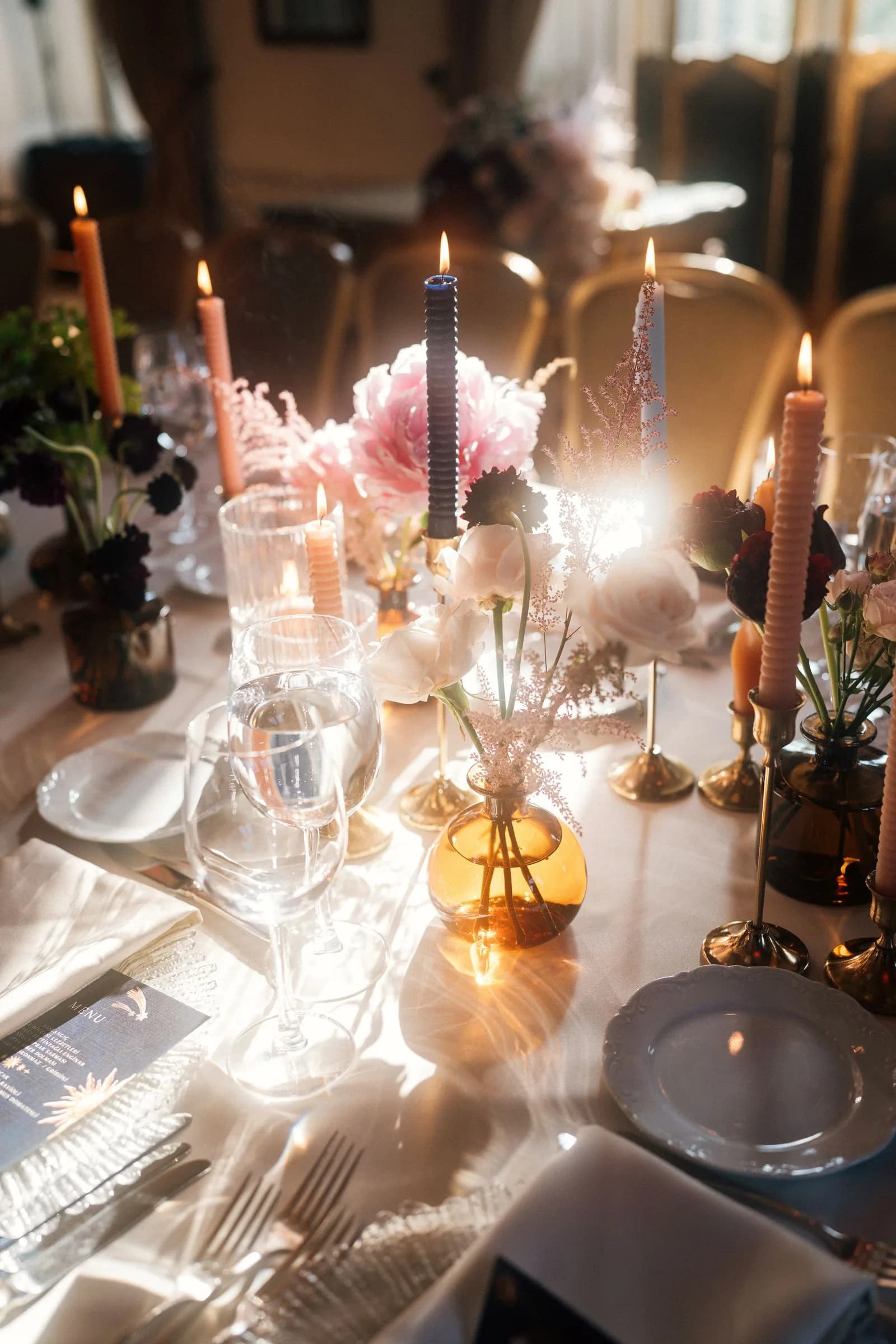
Day-of stationery guides guests through the ceremony and reception, and it ties the room together visually:

Photo: Inlighten Photography
Seating pieces depend on your seating plan, so read our guide to wedding seating etiquette before you order them.
Thank-you cards close out your stationery. Send one to every guest who gave you a gift, and consider thanking everyone who came. Order them with the rest of your stationery so they are ready when you get home. Our wedding thank-you card wording guide has 50 examples to start from.
Timing depends on how far your guests travel, so work backwards from the date your venue needs final numbers. Our guide to when to send wedding invitations covers every deadline in detail.
A wedding website can carry what a printed suite struggles to fit: travel details, accommodation, FAQs and your RSVP form. In Wonderland Studio, you can collect RSVPs and meal choices on a wedding RSVP website, keep the guest list in one place and plan the seating.

Image: Wonderland Studio
Replies land in your RSVP dashboard, which counts confirmed, invited and declined guests as they come in. You can add guests one by one, import a spreadsheet or invite them by email or link.

Image: Wonderland Studio
If you are building your site for the first time, our guide on how to create a wedding website walks through it in seven steps.
Cover photo: hudsoncrafted via Pixabay
Written by

Senior SEO Specialist, Wedded Wonderland
Mark Tuason is the Senior SEO Specialist at Wedded Wonderland, where he writes and refreshes the brand's guides to destination weddings and cultural wedding traditions. He starts with the questions couples search for, checks the answers against trusted sources, and shapes each guide to help them plan, compare and book with confidence. Based in the Philippines, he specialises in content strategy and on-page SEO.
Search real weddings, venues and vendors from around the world.
Search Wedded Wonderland