The question "How long is a honeymoon?" is usually answered depending on how you want the journey to feel. At Wedded Wonderland, we curate bespoke destination celebrations and honeymoons, from week-long escapes to slower multi-destination journeys. This guide explores how to find the right pace for yours.
Most honeymoons last about a week, and five to seven days is the most common length. For long-haul and multi-destination journeys, we see 10 to 14 nights as the natural fit, and couples departing from Australia often stay longer still.
A typical range on how long is a honeymoon is five to seven days, with exactly one week the single most popular choice, on most markets. A smaller share of couples travel for one to two weeks, and very few go beyond a fortnight.
Shorter trips of two to five days, often called mini-moons, sit at the other end of the range. They usually follow the wedding directly, with a longer journey planned for later.
Most averages draw on North American couples, and the United States sets no legal minimum for paid holiday leave. Many couples there work with two weeks of leave or less, which keeps the average close to seven days.
Elsewhere, the starting point is more generous. Full-time employees in Australia are entitled to four weeks of paid annual leave, the UK sets a statutory 5.6 weeks, and private-sector employees in the UAE receive 30 days after a year of service. These particular regions allow couples a flexible time on how long is a honeymoon for them without giving up the rest of the year.

For a honeymoon that involves a long flight, we recommend 10 to 14 nights. That leaves time to arrive, settle in and still enjoy a full week of rest. Research on holiday wellbeing supports a trip that reaches past the first week, though the journey itself should always set the final number.
A study of employees on long summer holidays found that health and wellbeing rose quickly and peaked around the eighth day away. The researchers noted that this does not make eight days the ideal length, since trip lengths could not be tested directly against one another.
The same study found that the benefits faded within the first week back at work. We take two lessons from this. A honeymoon should reach comfortably past its first week, and a quiet day or two at home before returning to work helps the rest last longer.
There is a happier finding too. Separate research shows that people feel happier in the weeks before a holiday, so the planning itself is part of the pleasure.
The first two days of a long-haul honeymoon belong to arrival, sleep and adjusting to a new time zone. By the third day, most couples have settled into the rhythm of the place, and the days that follow are the ones they remember.
A ten-night honeymoon gives you around a week in that settled middle stretch. Seven nights after a long flight leaves closer to four or five.
Five things shape the right length more than any average. They are where you're flying from, how you fly, the time you can step away, the season and the way you like to travel. Together, they turn a general guide into a number that suits your journey.
The same honeymoon can call for a very different length depending on the departure city. A week in Italy is generous from London and brief from Sydney.
Departure city | Flight time to Italy | Flight time to the Maldives | Our suggested minimum |
|---|---|---|---|
Sydney or Melbourne | 22 to 24 hours, with a connection | 13 to 15 hours, with a connection | 14 nights for Europe, 8 for the Maldives |
Dubai or Abu Dhabi | About 6 hours | About 4 hours | 7 nights for Europe, 5 for the Maldives |
London | About 2.5 hours | About 10 hours | 5 to 7 nights for Europe, 8 for the Maldives |
New York | About 9 hours | 20 hours or more, with a connection | 10 nights for Europe, 12 for the Maldives |
Flight times are approximate and vary by route, airline and season.
Lie-flat seats and private aviation make a long journey far more comfortable, and most couples arrive in better shape for it. They do not remove jet lag, which follows the number of time zones crossed.
As a general guide, the body adjusts by about an hour a day after flying east and a little faster after flying west. That makes the return to Australia from Europe, an eastward journey across eight to ten time zones, the leg that needs the most recovery. A stopover night in Singapore, Dubai or Doha on the way out can soften the first few days.
We aim to keep travel days to about a quarter of the honeymoon or less. A travel day includes the flight, the transfers and the first evening spent finding your feet.
By that measure, a long-haul trip with a full travel day at each end, plus a day of recovery on arrival, needs 12 nights or more to stay in proportion. A short flight from Dubai or London leaves far more room within a week.
For many of the couples we work with, the limit on a honeymoon is how long work can run without them. A clear handover before the wedding, and an agreed point of contact while you are away, makes a longer trip far easier to take.
Some destinations are at their best for only part of the year, and the season can decide whether a long honeymoon belongs straight after the wedding or a few months later. We cover the timing question in our guide on when to go on your honeymoon.
Couples who want stillness can settle happily into one place for a week. Couples who want to explore, eat their way through a region or combine a city with the coast will need more nights to do it without rushing.
Some destinations reward a short, still stay, while others need time to move between regions or islands. Here, we match the honeymoon destinations we know best with the number of nights we'd plan for each.
Destination | Suggested nights | How we'd plan it |
|---|---|---|
Lake Como | 3 to 4 | One lakeside villa or hotel, often paired with a second Italian region |
Tuscany | 4 to 5 | One estate or borgo, with day trips by private driver |
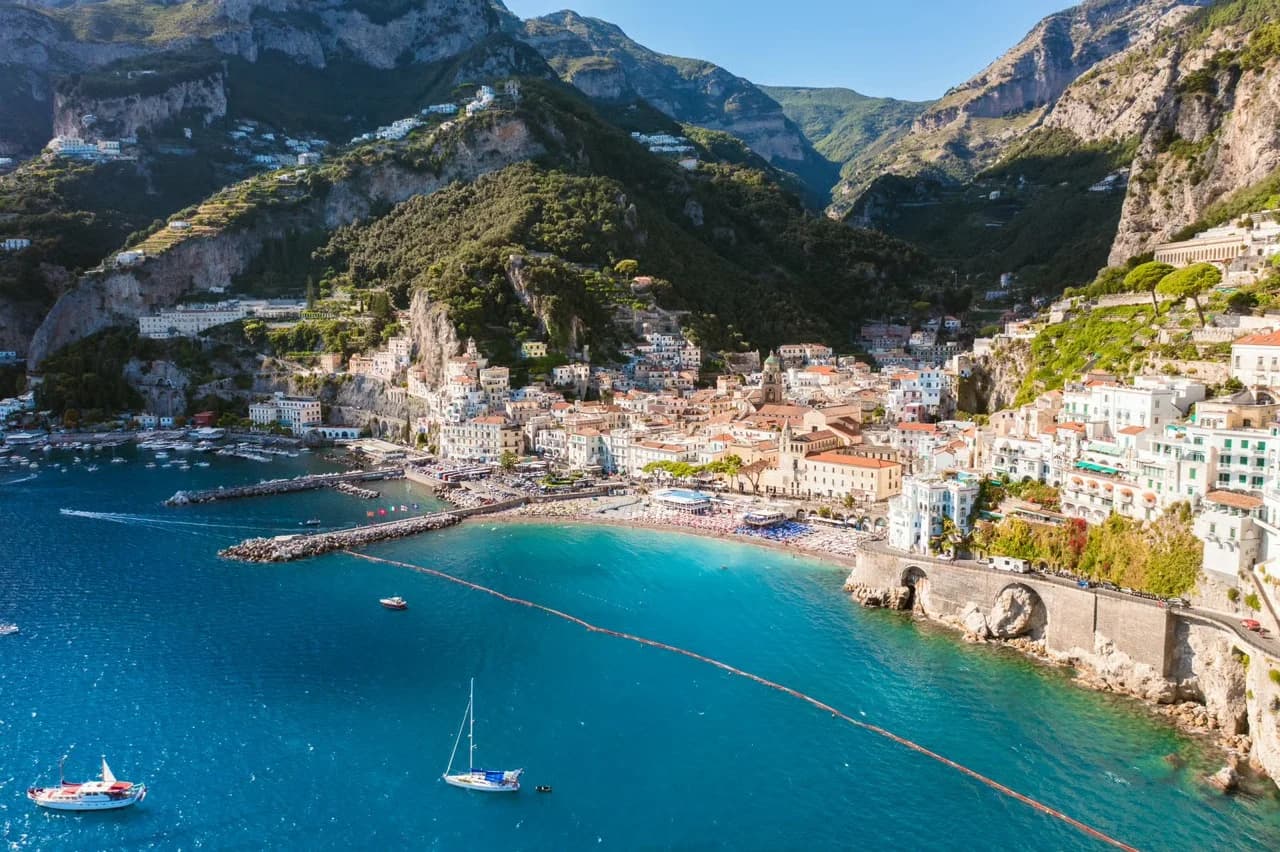
Amalfi Coast and Capri | 5 to 6 | Four nights on the coast and one or two on Capri |
Puglia | 4 to 5 | A masseria inland, with a final night or two by the sea |
Santorini and the Cyclades | 6 to 7 | Three nights on Santorini, then three or four on a quieter island |
The Maldives | 5 to 7 | One overwater or beach villa for the whole stay |
French Polynesia | 8 to 10 | Two islands, such as Bora Bora with Moorea |
Japan | 12 to 14 | Tokyo, Kyoto and a ryokan stay in between |
East African safari | 7 to 10 | Two or three camps at three nights each, often finished on the coast |
Italy rewards a longer stay because each region keeps its own pace. We often suggest four nights on Lake Como, four in Tuscany and five on the Amalfi Coast, with a final night in Rome or Naples close to the airport.
Private drivers and the train between Florence and Naples keep each move to half a day. For couples weighing how the spend divides across a trip like this, our luxury honeymoon budget guide sets out what each destination costs.
Santorini is at its most rewarding over three or four nights, long enough for evenings on the caldera without the busiest days wearing thin. Pairing it with a quieter island such as Milos or Folegandros gives the second half of the trip more space.
In the Maldives, one villa for five to seven nights is usually enough, since the pleasure lies in staying still. Safari works differently, with most camps best experienced over three nights so you see the landscape across several game drives.
Many couples finish a safari with a few nights on the coast, in Zanzibar, the Seychelles or Mauritius. Ten nights covers two camps and a beach stay comfortably.
In the Mediterranean, crewed yachts are usually chartered by the week, often from Saturday to Saturday. A week at sea pairs well with a few nights ashore at either end, which brings the honeymoon to around ten nights.

A longer honeymoon only feels unhurried when the number of moves stays in check. We plan around three nights as the minimum for any one stay, with no more than two or three bases across a fortnight.
Each move takes most of a day once packing, transfers and check-in are counted. Three nights in a place gives you two full days there, which is when a hotel starts to feel like your own.
Two-night stays work well as a bridge, such as a night near the airport before the flight home. Used across a whole trip, they leave a honeymoon feeling like a series of arrivals.
A Maldivian villa, a Tuscan estate or a masseria in Puglia can hold a couple happily for a week. Beyond ten nights or so, even the finest resorts benefit from a change of scene, which keeps the second week as fresh as the first.
On any honeymoon of ten nights or more, we keep at least one day with nothing planned. It leaves room to return to a favourite beach or restaurant, or to stay in.
Couples who marry abroad are already halfway there, and that changes how they should plan their honeymoon's length. We usually suggest 7 to 10 nights after the wedding, often at a second, quieter base once the guests head home.
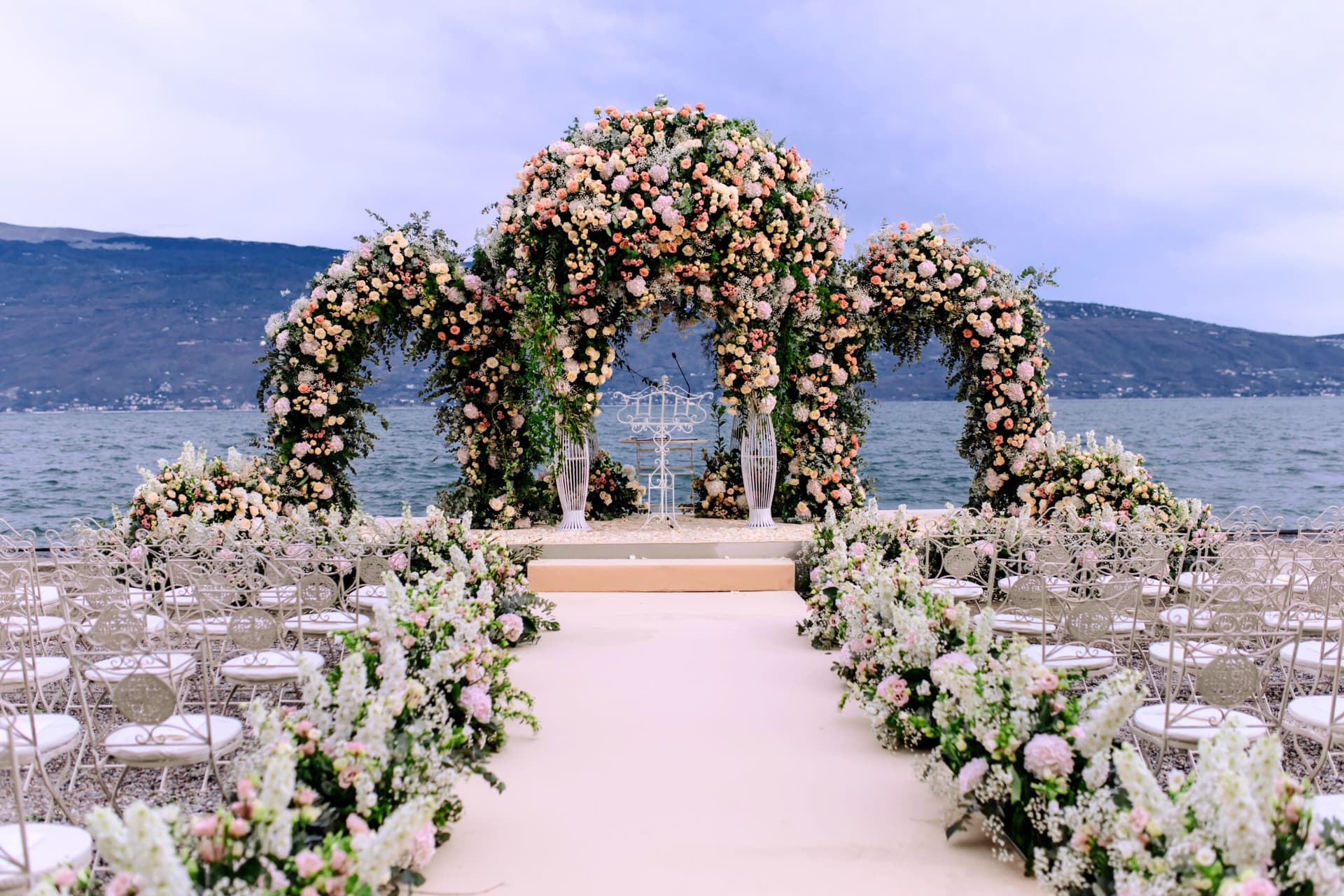
A destination wedding often runs across three or four days, as Sofia Franklyn's wedding weekend on Lake Como showed, with dinners, the ceremony and a farewell gathering. Those days are full and joyful, and they belong to your guests as much as to the two of you.
We count the honeymoon from the morning after the last guest leaves. Planning it that way protects the time that is yours alone.
Because the long-haul flight is already behind you, the usual travel-day maths no longer applies. Seven nights is often enough to rest fully, and ten allows a second region.
A move to a new property, even a short drive away, helps mark the change. Our guide to planning a luxury honeymoon budget suggests pairings across Italy and Greece that work well after a wedding.
Some couples take a few quiet days straight after the wedding and save the longer journey for its ideal season. Splitting the time this way often gives the main honeymoon the length it deserves.
A mini-moon of two to four nights works best close to home or close to the wedding, with no long flight on either side. The main honeymoon can then run to 10 to 14 nights, timed for the destination at its best.
Whether to travel straight away or wait is a question of its own, and our guide to the best time to take your honeymoon covers it in detail.
When the wedding and honeymoon are planned together, the timing, transfers and pacing fall into place far more easily. Wedded Wonderland Concierge begins with a dedicated strategy session, where we map the full journey before making any recommendations.
In that session, we look at where you're flying from, how much time you have and how you like to travel, then shape a honeymoon length that suits all three. Every property we recommend has been visited by our team, whether it hosts the wedding, the honeymoon or both.
Mini-moon: A short trip of two to five days, usually taken straight after the wedding.
Long-haul: A flight of roughly eight hours or more, typically crossing several time zones.
Base: A single place you stay for several nights, such as a hotel, villa or yacht.
Stay-on honeymoon: A honeymoon that begins in the same region as a destination wedding.
Crewed charter: A yacht hired with a captain and crew, usually by the week.
Buffer day: A free day at home between the end of the honeymoon and the return to work.
Written by

Editor & Content Writer
Jillian Arambulo is the Editorial and Content Writer at Wedded Wonderland, specialising in branded content and editorial strategy. Her writing spans travel, lifestyle, culture, beauty and emerging trends, bringing together comprehensive guides and features that connect readers with the places, ideas and experiences worth discovering.
Search real weddings, venues and vendors from around the world.
Search Wedded Wonderland