At Wedded Wonderland, we plan celebrations from proposal to honeymoon, and one question comes up often: how far will a luxury honeymoon budget go? This guide explores what to spend, how to allocate it, and which destinations reward a slower, more considered stay.
A luxury honeymoon budget begins where mainstream averages end. Most couples planning at this level spend between USD 15,000 and 35,000 for seven to ten nights, roughly AUD 23,000 to 53,000, with longer private stays rising beyond that.
That range covers five-star accommodation, flights in a premium cabin, private transfers, fine dining and a handful of guided experiences. Where a couple sits within it depends largely on the room category, the cabin class and the length of stay.
Time shapes the experience as much as the room. Ten nights in one exceptional place allows the stay to settle into its own rhythm, with mornings that begin whenever you are ready.
We separate land costs from flights because the departure city can change the total more than the destination does. A couple flying business class to Italy from Dubai or London pays a fraction of the fare from Sydney or Los Angeles.
Separating the two keeps comparisons clear. A villa in Puglia and a suite in Santorini can then be weighed on what each stay offers.
Tier | Land cost per couple, 10 nights (indicative) | What it includes |
Refined | USD 12,000 to 20,000 | Five-star rooms with views, breakfast included, private airport transfers and two or three guided experiences |
Signature | USD 20,000 to 35,000 | Suites or premium view categories, private guides and boat days, several fine-dining evenings and spa time |
Private | USD 35,000 and above | Top suites or villa buyouts, butler service, private yacht days and an itinerary shaped entirely around you |
Business-class flights add anywhere from USD 2,000 for a short regional return to USD 20,000 or more for a long-haul journey for two. All figures in this guide are indicative high-season rates and move with exchange rates and availability.
At the luxury level, accommodation and flights take a larger share than averages suggest. A clear allocation keeps the spend where it adds most to the experience and leaves room for the moments couples remember.
Category | Share of total |
Accommodation | 40 to 50% |
Flights | 20 to 30% |
Dining | 10 to 15% |
Experiences and spa | 10 to 15% |
Transfers, taxes and gratuities | 5 to 10% |
These shares shift with the destination. A long-haul flight pushes the flight share up, while a property with full board folds dining into accommodation.
The room category is usually the most meaningful upgrade. A sea- or lake-facing suite with a private terrace shapes every morning and evening of the trip.
Private boats and drivers come next, particularly on the Amalfi Coast and Lake Como, where they turn a transfer into part of the day. We then suggest a few signature experiences, such as a day on the water or dinner at a property's best table, with open days left around them.
A luxury honeymoon is measured in time as much as in rooms. We suggest one base for a week to ten nights, adding a second only on a trip of two weeks or more, so that most of the honeymoon budget is spent unpacked and at ease.
Our guide to planning your honeymoon covers the steps that come before the bookings.
Each level of spend opens a different style of honeymoon, and our signature destinations show this most clearly. Lake Como, Tuscany, the Amalfi Coast, Puglia and Santorini each reward a particular kind of couple, and each is at its best when given a week or more.
Nightly figures below are indicative high-season rates for five-star rooms. Suites and villas sit above them.

Lake Como suits couples who value stillness, heritage and gracious service. The grand villa hotels around Cernobbio, Tremezzo and Bellagio open from spring to autumn, with high-season rooms typically from €1,200 to €3,000 a night and lake-view suites well above that.
The spend goes furthest on a private boat, which turns the lake into a series of gardens, villages and long lunches. Most couples settle into the Signature tier here, and a Lake Como wedding at Villa Balbiano shows how easily the lake moves between celebration and retreat. May, June and September bring warm days and quieter water.

Tuscany rewards couples who put food, wine and space first. Restored borghi and private estates in Chianti, the Val d'Orcia and the hills near Siena typically range from €800 to €2,000 a night, and a full villa can be reserved for two.
The experiences are where Tuscany earns its place, from vineyard lunches and truffle hunts to cooking with a local chef. Late April to June and the September harvest are the strongest months.

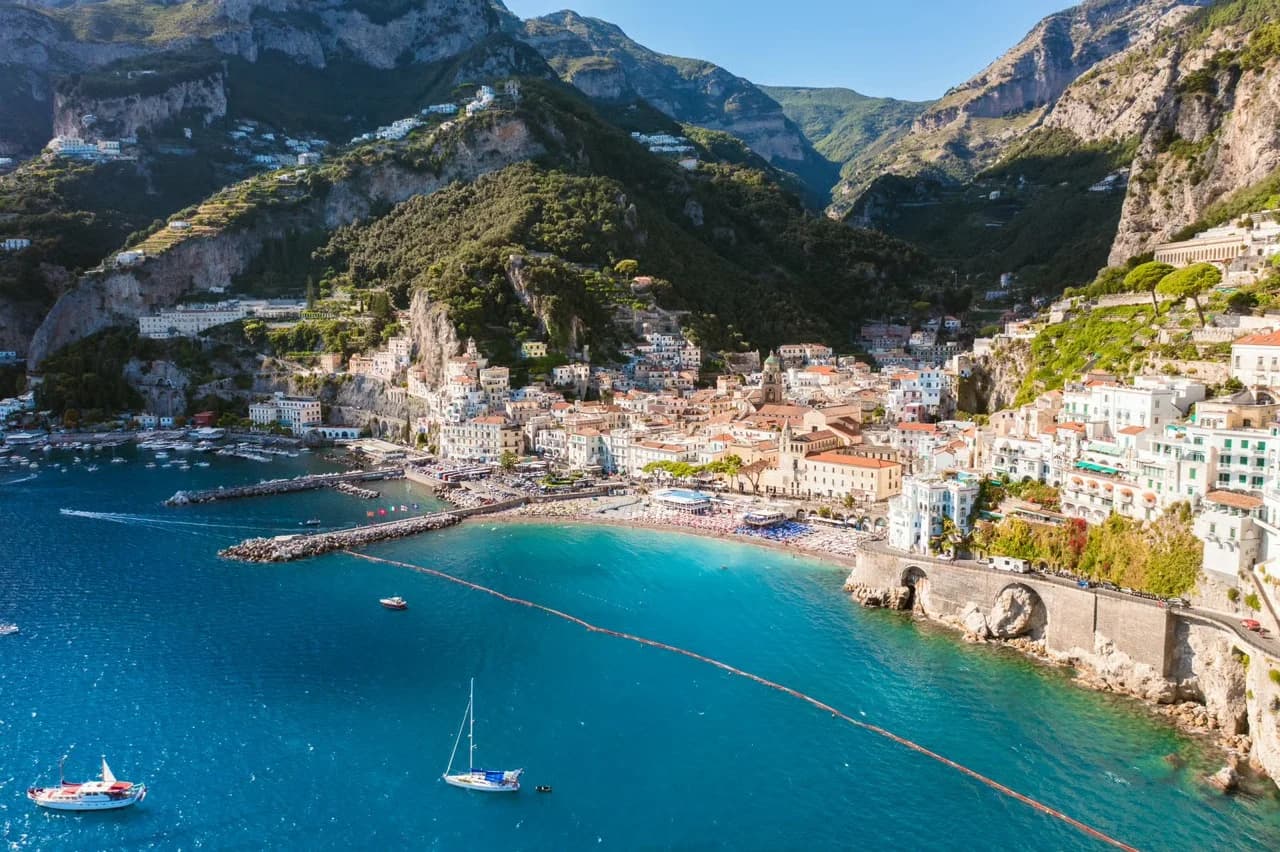
The Amalfi Coast is the classic Italian coastline, and its luxury is concentrated in a handful of cliffside hotels in Positano, Ravello and Amalfi. High-season rooms typically start around €1,500 a night, and suites with private terraces often exceed €3,500.
A private boat is the most graceful way to spend a day here, whether drifting towards Capri or finding a quiet cove for lunch. An Amalfi Coast wedding weekend in Ravello shows how a Capri boat day can set the tone for the days that follow. May, June and September offer the best balance of weather and space, and most hotels close from November to March.

Puglia suits couples who want privacy and an understated rhythm. Its masserie, fortified farmhouses set among olive groves, typically range from €600 to €1,800 a night, with whole-property stays available for couples who want the estate to themselves.
Days move between hilltop towns such as Ostuni, quiet coves on the Adriatic and long dinners outdoors. The region is at its best from May to early October.

Santorini places the view at the centre of the honeymoon. Caldera-facing suites in Oia and Imerovigli typically range from €800 to €2,000 a night in high season, and private plunge pools and cave suites carry the top rates.
A week allows the island to reveal itself slowly, through sunset sails, long lunches above the caldera and mornings on your own terrace. Our guide to Santorini and the Greek islands covers the caldera properties our team knows personally, and late May, June and September give long evenings without peak crowds.
Further afield, the Maldives offers single-resort seclusion in overwater villas, with seaplane transfers often priced separately. Bali delivers private pool villas and full-service stays at a lower nightly rate than comparable properties elsewhere, while Japan and an African safari reward couples who want one exceptional experience at the heart of the trip.
For more ideas, our edit of honeymoon destinations for every type of couple spans beaches, cities and wilderness.
If you value | Consider |
Stillness and heritage | Lake Como |
Food and wine | Tuscany, Puglia |
The classic Italian coastline | Amalfi Coast |
Privacy and space | Puglia, Tuscany |
The view above all | Santorini |
Seclusion by the sea | Maldives |
Private pool villas | Bali |
At the top end, the most significant extras are often taxes, transfers and property policies that sit outside the nightly rate. Knowing them early keeps the final figure close to the plan.
Private transfers are the extra most couples underestimate. A boat taxi on Lake Como, a private boat to Capri or a helicopter between Cycladic islands is charged separately, and each can run from hundreds to thousands of euros.
Moving between Italian regions takes longer than a map suggests. A drive from the Amalfi Coast to Puglia fills most of a day, which is one reason we favour fewer bases and longer stays.
In Italy, each town sets its own tourist tax, charged per person per night and rising with the hotel's star rating. Many towns cap the number of nights charged, and the tax is usually paid directly at the property.
Greece charges a climate resilience fee per room per night, which reaches €15 at five-star hotels between April and October. It is rarely included in quoted rates, so it belongs in the honeymoon budget from the start.
Minimum stays are common in high season, particularly for suites and villas. Some properties add peak supplements, service charges or required meal plans, and cancellation terms tend to be stricter for the top room categories.

The finest suites and villas in our signature destinations are reserved long before the wedding date. Booking well ahead secures the room categories that define a luxury honeymoon, and choosing the right month brings warmer evenings and more space, whichever hemisphere you travel from.
We suggest reserving caldera suites, Amalfi cliffside rooms and Lake Como villas 9 to 12 months ahead for May, June or September. Premium cabins open for booking roughly a year out, which makes it worth securing flights at the same time.
Our guide on when to go on your honeymoon sets out a timeline that runs alongside wedding preparations.
The Mediterranean shoulder months of May, June and September offer the best balance of weather, space and availability across all five destinations. July and August bring the highest rates and the busiest coastlines, while many Lake Como and Amalfi hotels close from November to March.
Couples marrying in the Southern Hemisphere summer, in Australia for instance, often hold a European honeymoon over to the following northern spring. From the Gulf and much of Europe, the Mediterranean sits within a short flight at almost any point in the season.
Some couples leave the day after the celebration, while others wait for the right season or split the trip into a short escape now and a longer journey later. Each approach works, provided the honeymoon budget accounts for the timing.
For couples marrying abroad, the honeymoon can begin where the celebration ends. Staying on after the celebration avoids a second long-haul journey, gives the region time to reveal itself and lets the honeymoon budget work alongside the wedding spend.
Each of our five destinations rewards staying on once the guests have gone. Lake Como's quieter shores, the hills above the Amalfi Coast and Santorini's terraces feel different in the days after a celebration, when the only schedule is your own.
For couples still choosing where to marry, our guide to planning a destination wedding in Italy explains how to plan from overseas.
A quiet night after guests depart helps mark the change of pace. Moving to a second property, even nearby, gives the honeymoon its own beginning.
Many couples invite guests to contribute to specific experiences, such as a private boat day or dinner at a celebrated table. Framed around experiences, a honeymoon registry feels personal and lets guests see exactly what their gift becomes.
A significant booking deserves the same care as any major commitment. Clear payment terms, the right insurance and an understanding of local booking protections keep the honeymoon secure.
Luxury properties often require a substantial deposit at booking and full payment 60 to 90 days before arrival. Reading the cancellation terms for each room category before paying avoids surprises if dates change.
Cancellation cover varies widely between policies, and some cap prepaid costs below the value of a luxury trip. Buying cover when the first deposit is paid protects the booking from that day.
Protections depend on where you book. In the UK, ATOL covers many holiday packages that include flights, while in Australia protection rests on consumer law and agency accreditation such as ATAS. Paying by credit card adds a further layer in many countries.
The questions that shape a honeymoon budget are the same ones that shape a destination celebration. Wedded Concierge begins with a dedicated and thoughtful conversation prior to any recommendations, so every choice reflects your priorities from the outset.
In that session, we talk through destination, timing, pacing and how the spend is divided, drawing on properties our team has visited across Italy, Greece and beyond. From there, we shape a honeymoon that sits naturally beside your celebration.
Land-only: The cost of accommodation, transfers and experiences, excluding flights.
Half board: A rate that includes breakfast and one other meal, usually dinner.
Shoulder season: The months either side of peak season, with warm weather and more space.
Tourist tax: A local nightly charge per person or per room, set by the town or country.
Climate resilience fee: Greece's nightly charge per room, which rises with hotel category and season.
Caldera suite: A Santorini suite facing the volcanic caldera, often with a private terrace or plunge pool.
Masseria: A fortified farmhouse in Puglia, many now restored as boutique hotels.
Borgo: A restored medieval hamlet, often run as a single estate hotel in Tuscany.
Villa buyout: Reserving an entire villa or property for private use.
Full board: A rate that includes breakfast, lunch and dinner.
Stopover: A planned break of a night or more in a connecting city on a long-haul journey.
Written by

Editor & Content Writer
Jillian Arambulo is the Editorial and Content Writer at Wedded Wonderland, specialising in branded content and editorial strategy. Her writing spans travel, lifestyle, culture, beauty and emerging trends, bringing together comprehensive guides and features that connect readers with the places, ideas and experiences worth discovering.
Search real weddings, venues and vendors from around the world.
Search Wedded Wonderland