To marry in Australia, you need two wedding witnesses who are, or appear to your celebrant to be, over 18 and are physically present (section 44 of the Marriage Act 1961). Invite as many guests as you like, but only those two sign. This Wedded Wonderland guide covers who can be a witness, what they sign and how the rules change abroad.
Two. The law asks for two people who are, or appear to be, over 18 and are present. Your celebrant, both of you and both witnesses must be physically present, so a witness cannot join by video link, according to the Attorney-General's Department (AGD).
Everyone else in the room is a guest. AGD's guidelines say no one other than the two witnesses adds a signature to your certificate, so if you love the idea of everyone signing, use a guest book instead.
The good news for most families: Births, Deaths and Marriages Victoria says your witnesses can be any family member or friend who is at least 18. That covers parents, siblings, grandparents and your partner's relatives. The Brisbane Registry adds that witnesses do not need to be Australian citizens, which matters when your closest friend flies in from abroad.

Age is the firm line. According to AGD's guidelines, your own children can sign as witnesses only if they are 18 or over. A 16-year-old can stand beside you, read, or carry the rings, but cannot sign.
AGD also notes that it is best practice, though not a legal requirement, for your witnesses to know you, since their evidence can later be used to confirm who you are and how the ceremony took place; the NSW registry gives the same advice. Finding them is your job: your celebrant is not responsible for providing witnesses, and the Brisbane Registry says it cannot supply them.
Practically, choose two people who will certainly be there, on time and clear-headed, and name a third adult as a backup marriage witness. The Brisbane Registry asks that witnesses attend the entire ceremony, so a late arrival is a real problem.
Here the official sources do not quite agree. The NSW and Queensland registries ask that witnesses speak and understand English, while AGD's guidelines for celebrants allow an interpreter under section 112 when a witness does not understand the language of the ceremony. Your celebrant decides whether an interpreter is used. At its own ceremonies, the Brisbane Registry asks that the interpreter is not one of your witnesses. If a parent or friend you would love to have sign is more at home in another language, raise it with your celebrant early.
Section 44 names no professions; it asks only for two people who are, or appear to be, over 18 and are present. Plan on two people besides your celebrant, and ask your celebrant before you choose anyone working on the day.
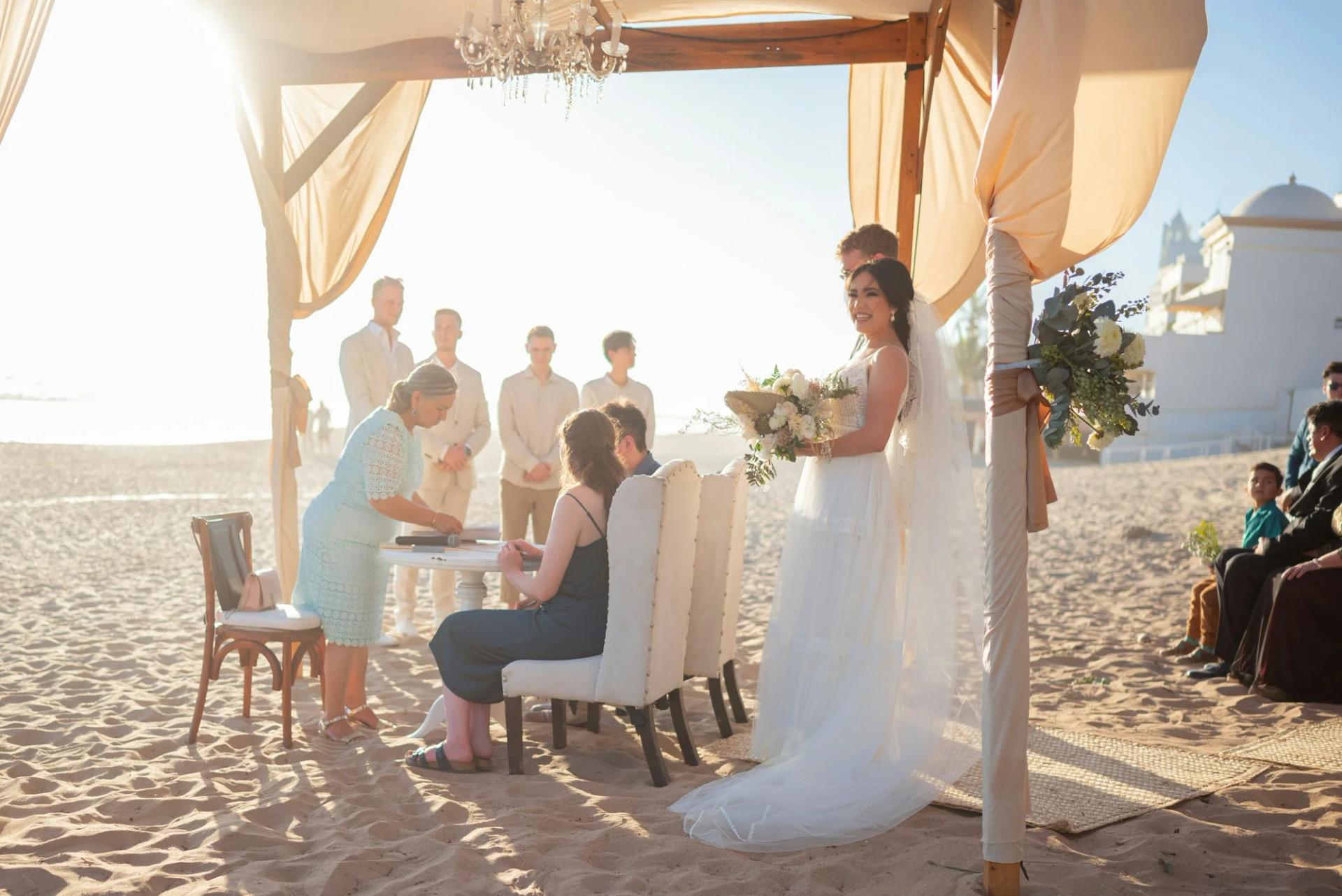
Your witnesses watch the ceremony itself: the vows and the celebrant's statement are said in their presence. Then the two of you, your celebrant and both witnesses sign three certificates: two official certificates of marriage (one your celebrant keeps, one for the registry) and the certificate of marriage you take home on the day. Within 14 days, your celebrant sends the paperwork to the registry in the state or territory where you married.

AGD's guidelines ask witnesses to write their names in full, including middle names. Brief them before the day so nobody signs a nickname. One more reason to linger: your celebrant can correct an error on the certificates only while you and your witnesses are still there. Once everyone has left, a correction becomes a matter for the registry.
The choreography is simple: your witnesses sit in the front row, step up to the signing table after the vows, and sign in turn. Is the role important? Legally, yes: section 44 of the Marriage Act says a marriage cannot be solemnised unless two witnesses over 18 are present.
The person who witnesses your Notice of Intended Marriage (NOIM) is not one of your ceremony witnesses. They are an authorised official from a set list, and by signing they confirm they have identified you. Your friends cannot do it unless they hold one of the listed roles, and a different list applies if you sign overseas. Our pillar guide explains who can witness your notice and how it works from overseas.
When the legal ceremony takes place overseas, the destination's rules replace Australia's. The count, the age and the ID your witnesses carry all change. Rules change; confirm the requirements for your own passports with the destination's authorities (the town hall, comune, municipality or civil registry) and the Australian embassy before booking.

Destination | Witnesses | Age | ID | Language | Official source | Our guide |
|---|---|---|---|---|---|---|
France | Two to four | 18 or over | Original ID on the day; details declared in advance | A witness may bring an interpreter | ||
Italy | Four unrelated for the Atto Notorio; two at the ceremony (US Embassy page) | Over 18 (ceremony) | Valid photo ID (ceremony) | A witness cannot be the interpreter | ||
Greece | One for each partner | Adult | ID card, or passport for foreigners | Confirm with the municipality | ||
Bali (Indonesia) | Two | Confirm locally | Confirm locally | Confirm locally | ||
Fiji | Two | Confirm locally | Photo ID | Confirm locally |
A legal wedding there needs at least one of you to be a French citizen or legal resident. If that applies, your witnesses can be family or not, of any nationality, declared in advance and carrying original ID on the day.
Australians first need an Atto Notorio, signed by the Australian partner and four witnesses not related to the couple. According to the Italian Consulate in Adelaide's 2022 guide, it is signed at the Italian consulate for their state or at a tribunal in Italy. These four are paperwork witnesses, separate from the two at your ceremony. The Atto Notorio leads to a Nulla Osta from the Australian Embassy in Rome and is valid for six months, so it cannot be requested more than six months before the wedding. For the ceremony itself, the US Embassy in Italy says you need two witnesses of any nationality, over 18, with valid photo ID, and that a witness cannot double as interpreter. Confirm the current rules with your consulate and comune.
Heraklion's municipality asks for one adult witness for each of you, and says a witness may be a relative, even a parent. Rules can differ between municipalities, so ask yours.
Indonesia's marriage regulation requires two witnesses, and for non-Muslim couples the marriage must be registered with the Civil Registry Office to be legal. Fiji asks for two witnesses with photo ID. Neither official source we read sets an age, so confirm with the local registry.
You might sign the legal paperwork in Australia and hold the ceremony everyone remembers in Bali or on the Amalfi Coast. If so, your two legal witnesses belong at the Australian ceremony, which can be small: the two of you, your celebrant and two adults.
The ceremony abroad is then symbolic. According to AGD's guidelines, a commitment ceremony is not a marriage, needs no witnesses and produces no certificate of marriage. That frees the honour to go to anyone: a 12-year-old niece, or a grandparent who could not make the legal ceremony. Some ways to honour symbolic witnesses, none of which carry legal weight:
A reading or a blessing in their own language.
Signing a keepsake certificate you design yourselves.
Holding the rings, or standing beside you during the vows.
Our guide to how symbolic and civil rites differ in Italy explains the choice in more depth.
Two adults with the right ID in the right room at the right time sounds simple. Across two countries, it rarely is. This is the checklist we would work through:
Passports and ID: check both witnesses hold the ID the authority asks for, valid for travel.
Details in advance: if the authority wants witness details before the day, as France does, gather them early.
Arrival: fly witnesses in at least a day before the civil appointment, not the morning of it.
A backup: name a third adult already on the guest list who meets the same rules.
Language: if an interpreter is needed, the deciding authority sets who can act, so ask before you book anyone.
Put both witnesses in the same hotel as you, with a private transfer to the ceremony, so neither is stuck in traffic while the registrar waits. See our notes on wedding and guest travel, and read how we plan destination weddings.

Wedded Wonderland Concierge gives you one dedicated point of contact for the wedding and the travel, so your witnesses' flights and rooms move with the rest of your guests. For weddings abroad, your concierge also handles deposits, payments and currency across borders. The legal answers still come from your celebrant, registry or the authority abroad.
Written by

SEO Specialist
Ayrton Christian Braga is an SEO Specialist at Wedded Wonderland, where he writes optimized articles and web pages that center on destination weddings, cultural wedding traditions, and guides for everything in between.
Search real weddings, venues and vendors from around the world.
Search Wedded Wonderland