As at November 2026, same-sex marriage is legal in Greece. Since 16 February 2024, Greek law has allowed civil marriage between two people of the same sex. This Wedded Wonderland guide covers the documents, the ceremony and recognition back home in Australia. Still comparing countries? Start with where same-sex couples can legally marry abroad.
Yes, as at November 2026. The law is Law 5089/2024, titled "Equality in civil marriage, amendment of the Civil Code and other provisions". It was voted on 15 February 2024 and published in the Government Gazette on 16 February 2024, coming into force on publication.
The heart of it is one sentence in the Greek Civil Code. Article 1350(1) now begins: "Marriage is contracted between two persons of different or the same sex. Marriage requires the agreement of the intending spouses." You can read the official text of Law 5089/2024 in Greek.
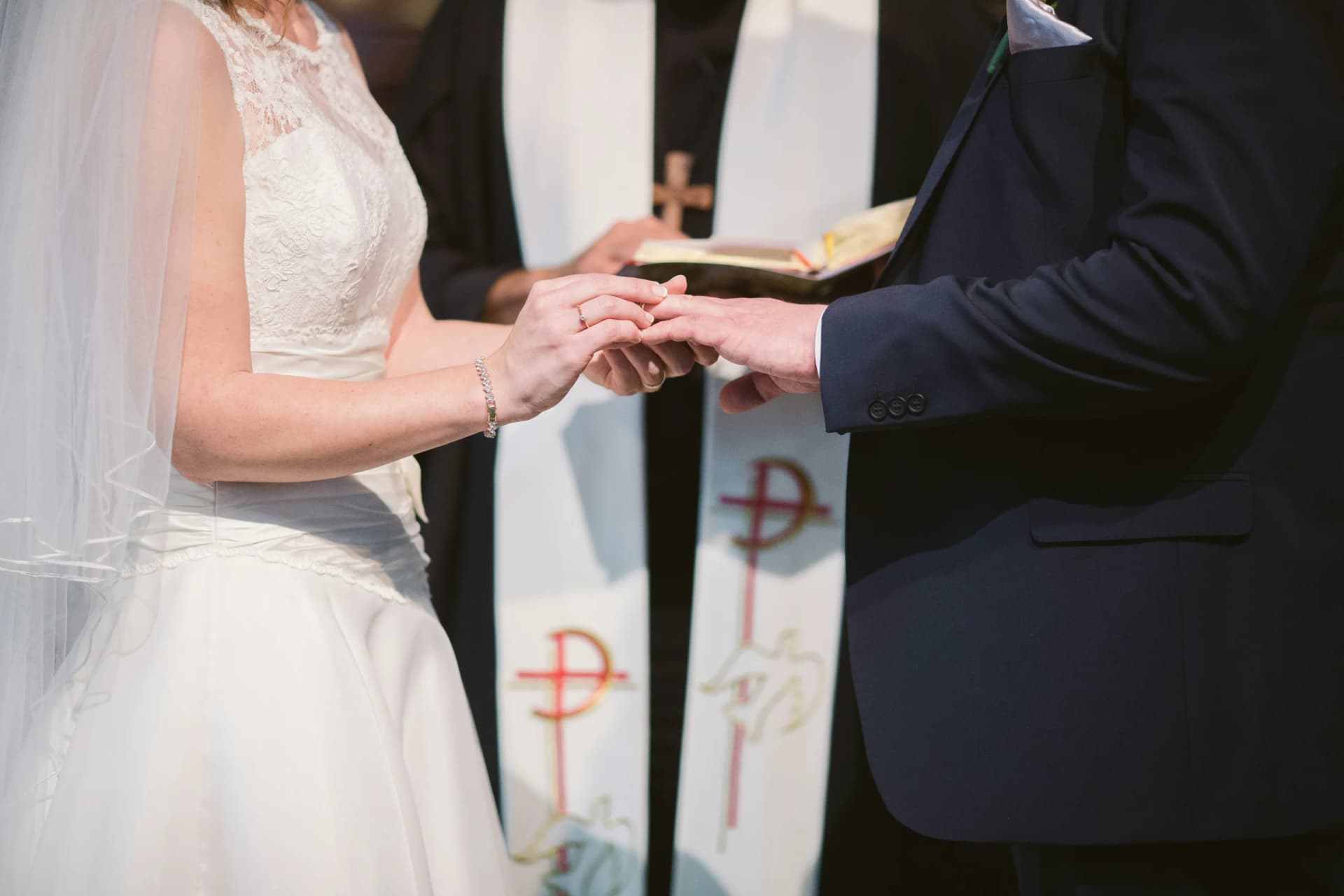
A few weeks later, the Ministry of Interior wrote to every municipality, registry office and Greek consulate. Its circular confirms that a marriage between two persons of the same sex is valid in the Greek legal order and is entered in the civil registry and recorded in the Citizens' Register. What matters for your plans is the word civil: the marriage is made under the Civil Code, and any church or religious element sits outside it.
The short answer is that the civil route is the one open to you, and it runs through the municipality where you marry. Confirm each step with the municipality and its registry office.

Law 5089/2024 states no residency or nationality condition of its own, and neither the law nor the Ministry of Interior circular sets out how a foreign national's freedom to marry is assessed. Ask the municipality and its registry office what they require.
So the question to put to the municipality is direct: what do two Australian citizens, neither of them resident in Greece, need to give you, and by when? Ask the same of the Australian Embassy in Athens, including any fees.
For the trip itself, Greece is in the Schengen area. Australians can visit for short stays without a visa for up to 90 days in any 180-day period, and on arrival you register fingerprints and a photo under the European Entry/Exit System.
On Rhodes, the Town Hall ceremony takes place every Wednesday and Friday, two adult witnesses over 18 must be present, and the couple returns to the registry office the next working day to sign and have the marriage certificate drawn up.
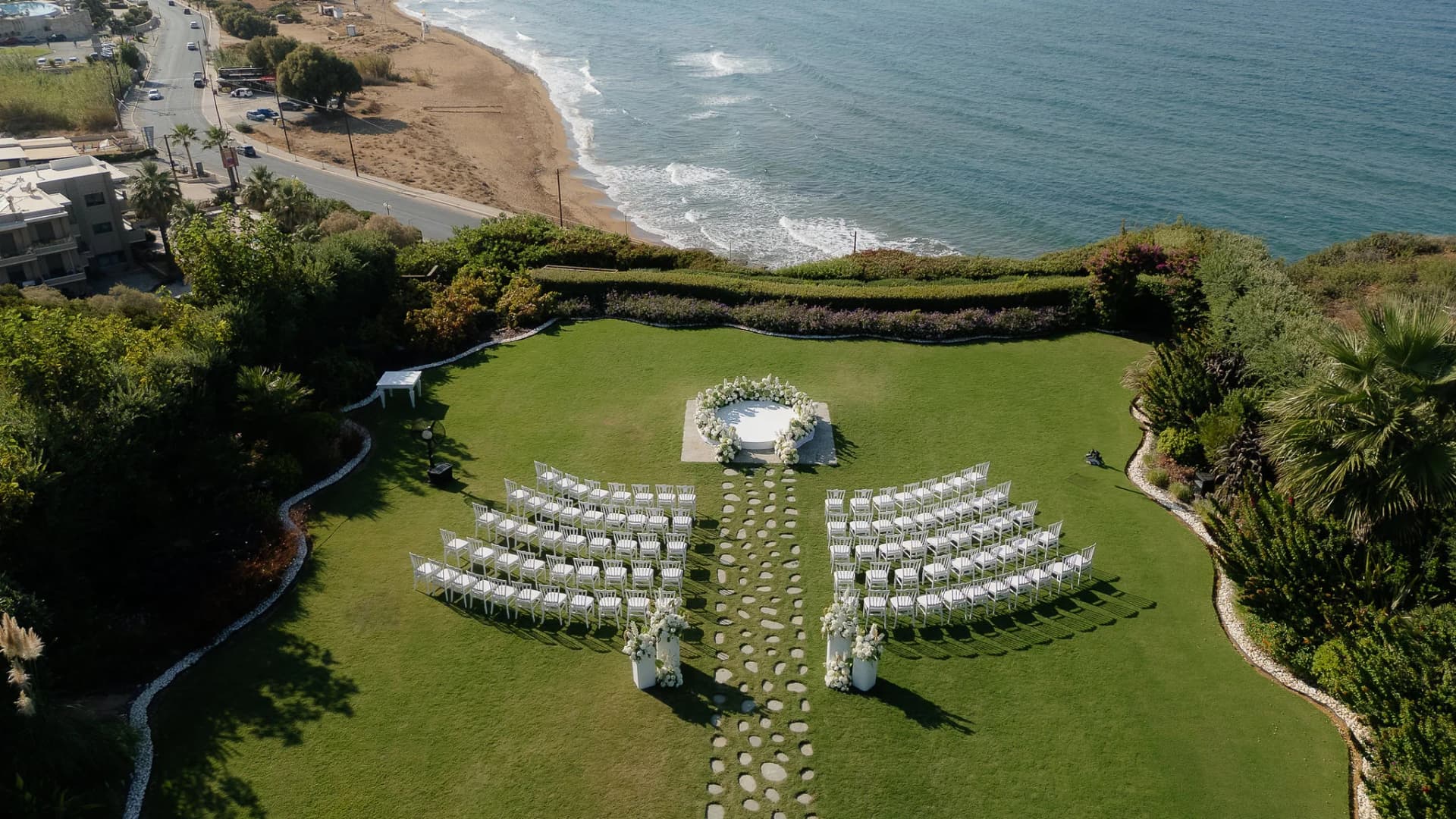
The town hall is not the only setting. The Municipality of Rhodes, for one, names outdoor ceremony locations served by its registrars, from beaches to chapels and parks. More on that below.
Build your timeline around the registry, not the venue. Hold the next working day free, and keep your departure flights well clear of it.
Ask your municipality for its list. The Municipality of Rhodes, for example, lists the following for a civil marriage of foreign nationals:
a joint application from the couple
a marriage licence or certificate of no impediment to marriage for each of you, issued by your consular or other public authority, naming the person you will marry and valid for six months
a copy of each passport
a form with your details as newlyweds
the municipal fee
Documents issued by foreign authorities must be recent originals, officially translated into Greek by a Greek lawyer, the Greek Embassy abroad or the Greek Ministry of Foreign Affairs. For countries outside the European Union, they also need an Apostille. Details missing from your documents can be recorded by a solemn declaration on the municipality's template.
Other municipalities may ask for different documents. Confirm the current list with the municipality where you marry and with the Australian Embassy in Athens, including any fees.
These steps are for Australian citizens. If either of you holds another passport, ask your own embassy in Athens what it issues in place of a CNI. The key document is the Certificate of No Impediment, or CNI. The Australian Embassy in Athens witnesses CNI application forms, issues CNIs and can legalise documents by apostille. At the embassy:
Every notarial service needs an appointment, Monday to Friday, 9:00am to 12:30pm.
Apostille and CNI documents can be submitted by post.
Apostilled documents and CNIs are ready for collection within two working days, unless same-day collection is arranged in advance, or they can be returned by mail.
A fee applies.
The embassy does not give legal advice, and you are responsible for knowing which service you need. DFAT can also issue a CNI in Australia, but some local authorities only accept CNIs issued in their own country, so ask first whether yours must come from Athens and whether it needs an apostille.
Local authorities may also ask for your original birth certificate and passport, and for divorce papers or a late spouse's death certificate if either of you has been married before. The civil paperwork sits with you, the municipality where you marry and the Australian Embassy in Athens, so you may wish to ask a legal adviser to check your documents.
As at November 2026, yes in most cases. Since 9 December 2017 the Marriage Act 1961 has defined marriage as "the union of 2 people to the exclusion of all others, voluntarily entered into for life", and same-sex marriages that took place overseas are generally recognised in Australia. Recognised same-sex couples are treated the same as other married couples.
You cannot register an overseas marriage in Australia. It is generally recognised if it was valid under Greek law when it took place and would have been valid under Australian law had it taken place here. Australia does not recognise an overseas marriage where either person is already married, too young, too closely related or forced to marry.
Your Greek marriage certificate is usually accepted as proof of the marriage, but may not work as proof of a change of name, so check that with your state or territory registry of births, deaths and marriages. If Australia recognises your marriage, you cannot marry again at home, but you can hold a confirmation of vows or a recommitment ceremony. Read the Attorney-General's Department guidance on marriage equality for the detail.
Law 5089/2024 extends marriage to same-sex couples and strengthens protection from discrimination. Beyond the wedding itself, a few points are useful to know.
Adoption. The adoption provisions of the Civil Code now apply to married same-sex couples.
Assisted reproduction. The law does not amend the Civil Code provisions on medically assisted reproduction.
Parentage recorded abroad. A parent-child relationship recorded in another country's public documents or court decision is recognised in Greece regardless of the parents' sex.
Children's surnames. Couples declare their future children's surname before the wedding, to a notary or to the officiant, who must ask for it. Without a declaration, children take both surnames, in alphabetical order.
The surname declaration is easy to miss in the rush of a wedding week. Ask the registrar about it when you lodge your documents.
The law is a civil reform. It leaves the Orthodox Church and other religions in Greece free to set the conditions of their own religious ceremonies. The Greek Orthodox Archdiocese of Australia describes its sacrament of marriage as the union of a man and a woman.
A symbolic ceremony at your venue can follow the civil wedding, as set out below. For background on the Church's own service, read what a Greek Orthodox wedding involves.
As at November 2026, Smartraveller's advice for Greece puts it this way: "Same-sex relationships are legal, though attitudes vary throughout the country. Avoid public displays of affection, especially in rural areas. Attitudes are generally more accepting on Greek islands such as Mykonos, Santorini and Ios."
Racially motivated and homophobic attacks have occurred. Serious physical and sexual assaults have occurred in Athens and on islands including Mykonos, Santorini, Zakynthos and Ios, and there is a risk of drink spiking. Share that advice with your guests along with the itinerary.
If either of you travels on an Australian passport with an "X" in the sex field, the Australian Government can't guarantee entry or transit, so ask the embassy or consulate of Greece and of every transit country whether they will accept it.
Start with the island, because the island decides the municipality, and the municipality decides the paperwork and the ceremony settings. Then choose the venue. Our curated Greece wedding collection and our guide to Greece wedding venues from the islands to Athens are good places to begin.

Smartraveller notes that attitudes are generally more accepting on Santorini, as on Mykonos and Ios. For the logistics of the island itself, from the caldera villages to guest stays, read how to plan a Santorini wedding. Confirm the documents, ceremony days and settings with that municipality before you hold a date.
Smartraveller names Mykonos, too, among the Greek islands where attitudes are generally more accepting. Our Mykonos wedding guide covers the island, its seasons and its venues. As with Santorini, confirm the documents, ceremony days and settings with that municipality before you hold a date.
The Municipality of Rhodes publishes a long list of civil ceremony locations, each served by a named registrar. In Rhodes City they include Rodini park and the Town Hall's central entrance staircase. In Lindos, the municipality lists St Paul's chapel platform, a tiny chapel below a cliff in the shadow of the Acropolis of Lindos, beside the turquoise water of St Paul's Bay.
Further afield, the list runs to Filerimos, Kallithea Springs, beaches from Faliraki to Prasonisi, and the Valley of Butterflies. Choose the registrar's area first, then the venue nearby. For venues across the island, see Rhodes wedding venues from Lindos to Rhodes Town.

Ask early, and ask in writing, whether the venue hosts same-sex weddings.
Have you hosted same-sex weddings before, and will you put that in writing?
Can the civil ceremony take place here, or at a municipal location nearby, on the same day as the celebration?
Which municipality and registrar cover your venue, and on which days do they officiate?
Who leads a symbolic ceremony on your grounds, and can we choose our own celebrant?
Can the registrar officiate privately here or at a nearby municipal location, and who else can be present?
How private is the ceremony space, and can we take the whole venue or a section of it?
How do you manage privacy, guest photography and social media on the day?
Is the ceremony spot step-free, and how do older guests reach it?
Where do guests stay, and how close are those rooms to the celebration?

There are three ways to shape the day, and each suits a different couple.
The legal ceremony in Greece. You marry before the registrar, then celebrate. You might keep the civil ceremony small, with the two witnesses and close family, and hold the larger celebration that evening or the next day.
Legal at home, celebration in Greece. You marry in Australia first, then hold a symbolic ceremony at your Greek venue with no registry paperwork on the island. The day is written by you, led by a celebrant you choose, wherever the venue allows.
Both, in the one week. A civil ceremony at the town hall or a municipal setting, then a symbolic ceremony with vows, readings and music at the venue. It gives guests a ceremony to witness and you a legal marriage in the country you chose.
Whichever you choose, remember the rule on recognition. If your Greek marriage is recognised, a later ceremony in Australia is a recommitment or confirmation of vows, not a second marriage.
Written by

SEO Specialist
Ayrton Christian Braga is an SEO Specialist at Wedded Wonderland, where he writes optimized articles and web pages that center on destination weddings, cultural wedding traditions, and guides for everything in between.
Search real weddings, venues and vendors from around the world.
Search Wedded Wonderland