A Greek Orthodox wedding is a sacrament, not a ceremony you write yourselves. Its service has two parts, the Betrothal and the Crowning, and no spoken vows. Before you book a venue, check with your parish priest that the Church can marry you on your date. This Wedded Wonderland guide covers who can marry, the paperwork and every step of the ceremony.
In the Orthodox Church, marriage is a sacrament, not a juridical contract, and the rite contains no vows or oaths. It has two parts: the Betrothal Service blesses the rings, and the Marriage Service, called stepsis or crowning in Greek, crowns the bride and groom.

As the Archdiocese of Australia describes it, a priest leads the rite before a covered ceremonial table in the middle of the Soleas, the raised area in front of the Holy Altar. On the table rest the Holy Gospel, a cup of wine, the betrothal rings and the wedding crowns. The groom stands on the right and the bride on the left.
The priest and chanter sing and pray the words, while the couple receives the blessings and shares the cup. Your koumbaros or koumbara, the sponsor, has the most active role, exchanging the rings and the crowns. For the customs around the service, from the krevati to the koufeta, read our guide to Greek wedding traditions and customs.
These rules come from the Greek Orthodox Archdiocese of Australia's regulations, which apply the Holy Canons of the Orthodox Church to every Greek Orthodox priest in Australia. Marrying elsewhere? Ask your parish priest which rules apply, and for a wedding in Greece, confirm them with the local Metropolis too.
If you are both Greek Orthodox, you must both have been baptised in a canonical Orthodox Church. If either of you was baptised in a non-canonical church, speak to a canonical priest first. Marriages with members of the Oriental Orthodox Churches, such as the Coptic, Syrian, Armenian and Indian Orthodox Churches, are permitted.
There must also be no impediment of relationship under Church and civil law. That rules out close family and in-laws, first cousins, foster relationships, and godparents and godchildren, including two godchildren of the same godparent, so raise it early if one godparent baptised several cousins.
The non-Orthodox partner must be a baptised Christian of a denomination the Church accepts, such as Roman Catholic, Anglican, Uniting, Lutheran or Presbyterian. A non-Christian or unbaptised partner can marry in the Church only after baptism in one of these. A baptism performed by a female pastor or member of clergy is not accepted, so ask your parish of baptism for the certificate early.
You will both be asked to declare that any children will be baptised and raised in the Orthodox faith. The non-Orthodox spouse does not join the Church through the wedding and may not receive Holy Communion. Clergy from their church may not co-celebrate, but they are welcome as guests or to speak at the reception.
Under the Archdiocese's rules, the Church allows divorce and remarriage, but no more than two times. Second and third weddings are usually not considered sacraments, and their prayers have a penitential character.
A divorced partner needs a civil divorce certificate and then an ecclesiastical divorce, the Church's own dissolution of the earlier marriage. For a second or third marriage, both must be issued at least one calendar month before the new wedding. A widowed partner provides the late spouse's death certificate.
Once the priest has confirmed that the Church can marry you, the Archdiocese's requirements come down to papers, timing, a sponsor and a date the Church allows. The parish priest gives directions on documents and on Archdiocese and local church fees, which vary with each couple's circumstances.
Both partners present:
A birth certificate if born in Australia, or a passport if born overseas.
A baptismal certificate.
For an Orthodox partner who has never married, a Certificate of Celibacy (Agamias) from their local parish priest, signed by two witnesses.
If widowed, the late spouse's death certificate.
If divorced, the civil divorce certificate and the ecclesiastical divorce.
Order baptismal certificates early, especially from parishes overseas or from another denomination.
In Australia, one service covers both the Church and the State. Every Greek Orthodox priest in Australia is also a registered civil celebrant, authorised to marry you under both State and Ecclesiastical law. The priest performs the civil marriage only together with the religious service, on the same day.
Two forms start the process: the Notice of Intended Marriage, for the Registry of Births, Deaths and Marriages, and the Application to the Archdiocese. Both are completed in the presence of the priest at least one calendar month before the wedding, and preferably three. Build that window into your planning, particularly if you live interstate or overseas.
A wedding in Greece follows its own steps, which you confirm with the local Metropolis and your venue. That track is covered in the Greece section below.
The koumbaros or koumbara, the sponsor who stands beside you, is usually Orthodox. A non-Orthodox Christian of an acceptable denomination may stand as sponsor at the wedding, but may not become godparent at the christenings of the couple's children.
That second point matters if you hope your sponsor will also baptise your children, so choose with both roles in mind.
The sponsor's practical job on the day is to exchange the rings and the crowns.
Under the Archdiocese of Australia's rules, marriages are not permitted:
From 13 December until Christmas Day.
On 5 January, the eve of Epiphany.
From Great Lent until Easter Sunday, which moves each year.
From 1 to 15 August, for the Dormition of the Theotokos.
On 29 August.
On 14 September.
Easter falls on a different date each year, so confirm the calendar with your priest for your year before you hold any date. For a wedding in Greece, check the closed dates with the Metropolis as well.
The order below follows the service as the Archdiocese sets it out. Each parish has its own pace and its own chanter, so walk through it with your priest at the rehearsal.

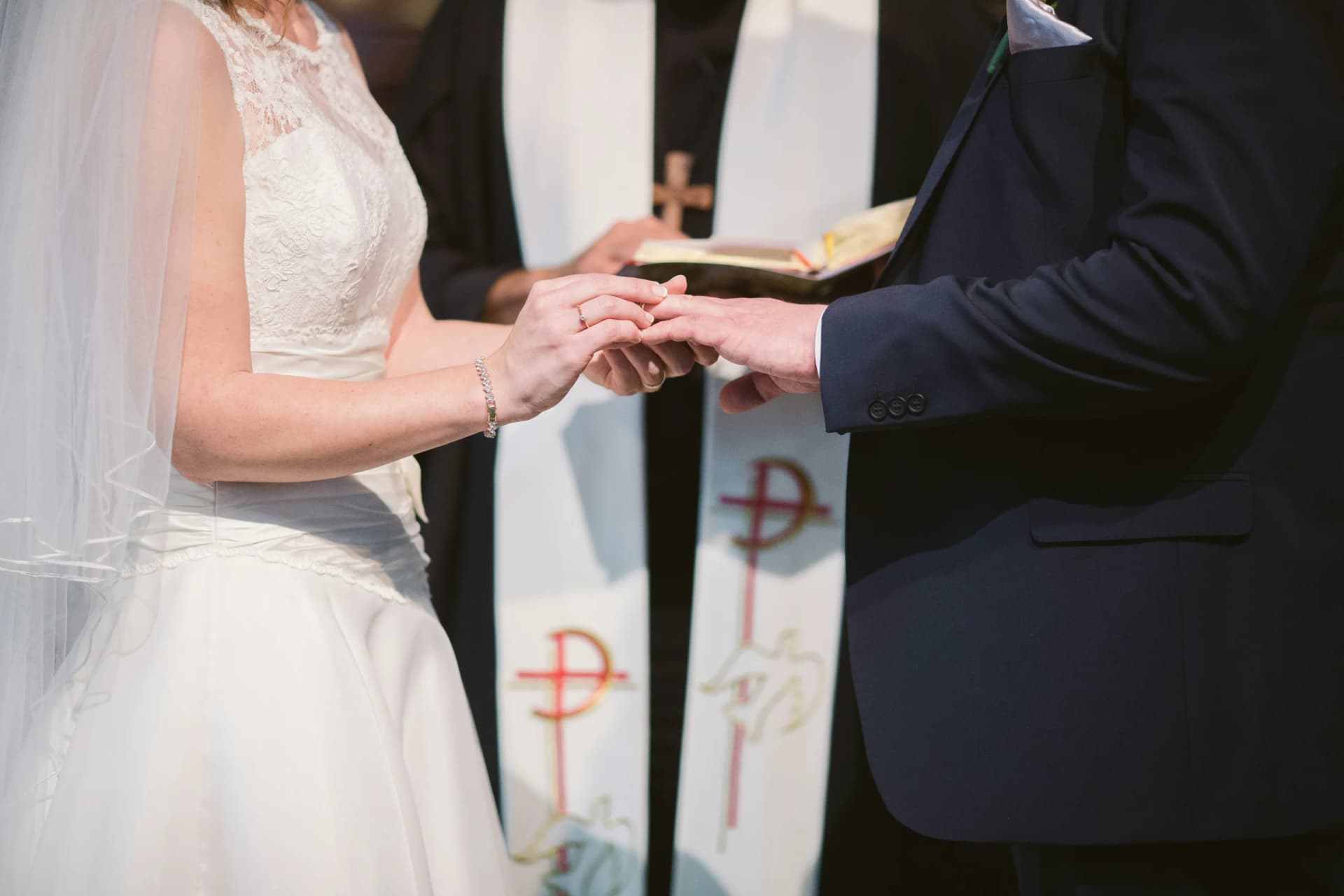
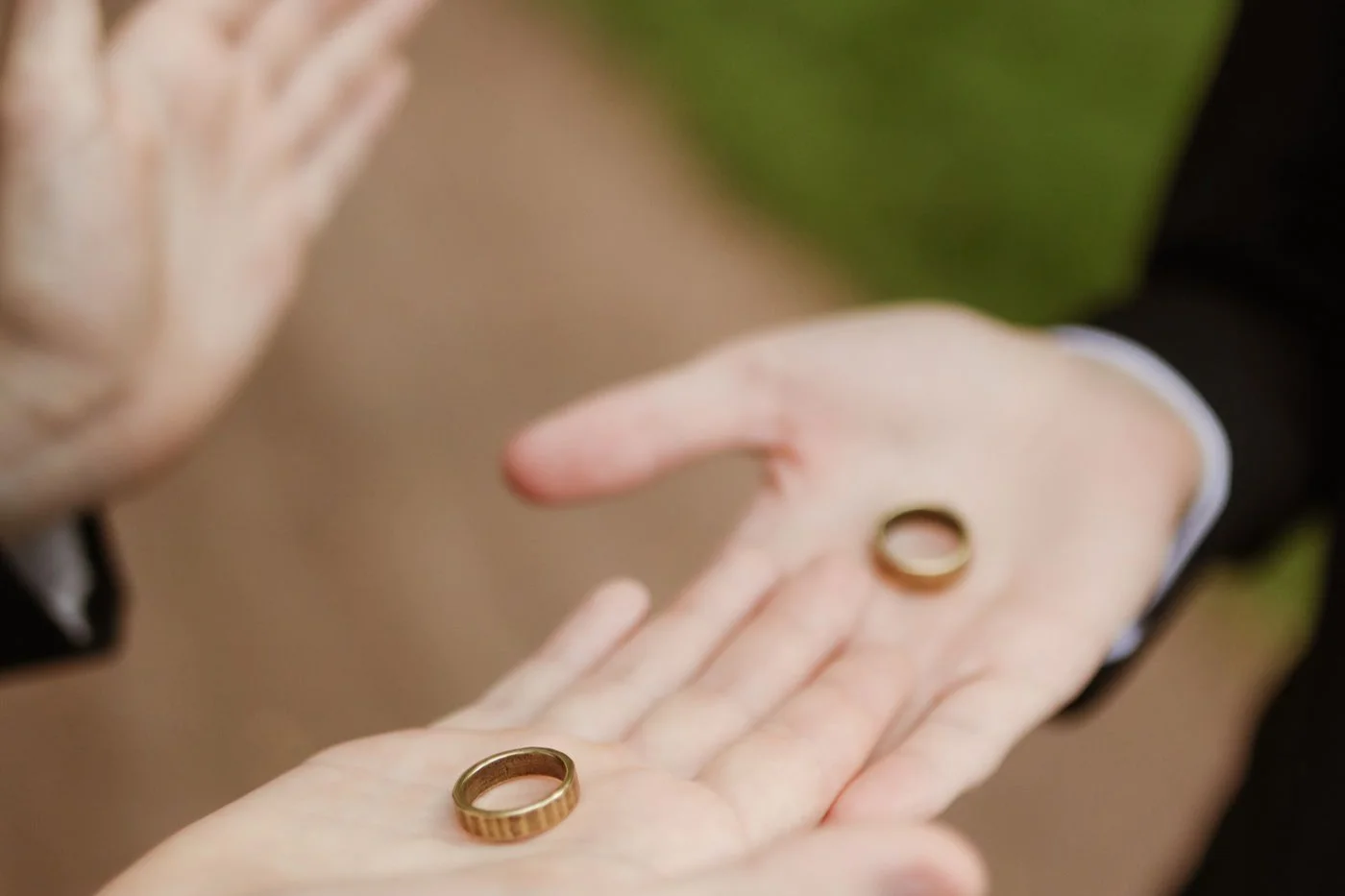
Every Orthodox betrothal is a double ring ceremony. The priest blesses each of you with the rings three times, and the rings are placed on the fourth finger of the right hand. The koumbaros then exchanges them between you, over and under, three times.
There is no moment when you slip a ring onto each other's hand. Tell your photographer, so they are watching the sponsor's hands and not waiting for the couple.
Two candles are lit as a reminder that Christ is "the Light of the world". Ask your priest who holds them and how your parish dresses them.
The Marriage Service then begins. The priest joins your right hands, and they stay joined for the rest of the service, a sign of the couple's "oneness".
The crowning is the climax of the Marriage Service. The priest crowns you both, and the koumbaros exchanges the crowns three times between your heads while the priest and chanter sing "Lord our God, crown them in glory and honour."
This is the moment for the photographer, and for the people in the front rows. Seat your parents where they can see it.
Two readings follow: the Epistle from St Paul's Letter to the Ephesians 5:20-33, and the Gospel from John 2:1-11, the wedding at Cana.
In remembrance of Christ's first miracle at Cana, you share a cup of wine as a sign of unity with each other and with Christ. It is not Holy Communion. It stands for the "common cup of life", the sharing of joy and sorrow. The priest offers it first to the groom, then to the bride.

The priest, holding the Holy Gospel, leads you in a procession in a circle, a symbolic dance for the joy of God's presence, while the priest and chanter sing "Rejoice, Isaiah".
These are your first steps as a married couple. Keep the train and the veil manageable for the slow procession.
After the procession the priest blesses the groom and the bride and removes the crowns during a prayer. Before congratulating you, he separates your joined right hands with the Holy Gospel, signifying that nothing and no one except God should come between you.
Then the line forms. Guests come forward to congratulate you, and the celebration can begin.
Stefana are the wedding crowns. They are a sign of the bond between bride and groom, and represent the glory and honour God bestows on the couple. Crowns were once usually plaited from lemon blossoms or flowers; today they are often silver or gold.

The crowns are not optional. Under the Archdiocese's rules, without the rings and the crowns, the wedding cannot commence.
Who buys the stefana is a family conversation. Agree it early, so no one arrives with a second pair.
No. The Orthodox Church in America describes the sacrament as containing no vows or oaths. The prayers, the blessings, the crowning and the shared cup carry the meaning instead.
If personal words matter to you, keep them for the reception. A letter read at the welcome dinner, or a few lines in the speeches, sits comfortably beside the service rather than inside it.
There is no fixed length, so ask your priest for your church's running time. The service is made up of the Betrothal and the rings, the joining of hands, the crowning, the readings and the common cup, the Dance of Isaiah, and the removal of the crowns.
If older guests will be in the church, ask whether there is seating for them.
The Archdiocese fixes two timings. The groom and groomsmen should arrive at least 15 minutes before the service, and the bride's party at least five minutes before. The custom of the bride arriving late has no basis in religious tradition.
The church is a place of worship first. Smartraveller advises dressing modestly in churches and religious buildings in Greece. Ask your priest whether your parish has a dress expectation, and pass it on to guests with the invitation.
For the bride, covered shoulders inside the church are the simplest choice: a sleeve, a bolero or a light wrap that comes off for the reception. Consider the length of the train, too, with the Dance of Isaiah in mind.
For guests, a short note on the invitation saves awkward moments at the door. A shawl for the church, a change of shoes for the island streets, and lighter layers for the evening cover most summer weddings in Greece.
Some couples hope to marry on the island where a grandparent was baptised. It is possible, but it adds a second set of authorities to the first. For the wider picture, browse our curated Greece wedding collection.

Start with your parish priest in Australia, then confirm every step with the Metropolis where you will marry. Venues frame the process in their own terms. Elounda SA Hotels & Resorts in Crete, which offers Orthodox, civil and symbolic ceremonies, lists these steps for its Orthodox weddings:
Each document except passports gets its own Apostille.
Then a Greek translation.
Copies go for approval at least four weeks before the date, with the Orthodox approval coming from the Metropolis.
All documents must be issued within three months of the wedding date.
After the ceremony, the couple registers the marriage at the local Registry Office within 40 days.
These are one venue's steps, not the rule for all of Greece, and Elounda SA charges the Metropolis fee separately. Some venues set their own rules too: Mykonos Grand holds religious weddings on its premises only when both partners are Christian Orthodox.
As at November 2026, the civil side starts with proof that neither of you is already married, usually a Certificate of No Impediment (CNI). DFAT can issue one in Australia, but some authorities only accept a CNI issued locally, which the Australian Embassy in Athens provides by appointment, along with apostilles, for a fee. Back home, an overseas marriage cannot be registered in Australia but is usually recognised if it was valid where it took place, and Smartraveller's guide to getting married overseas explains what to check.
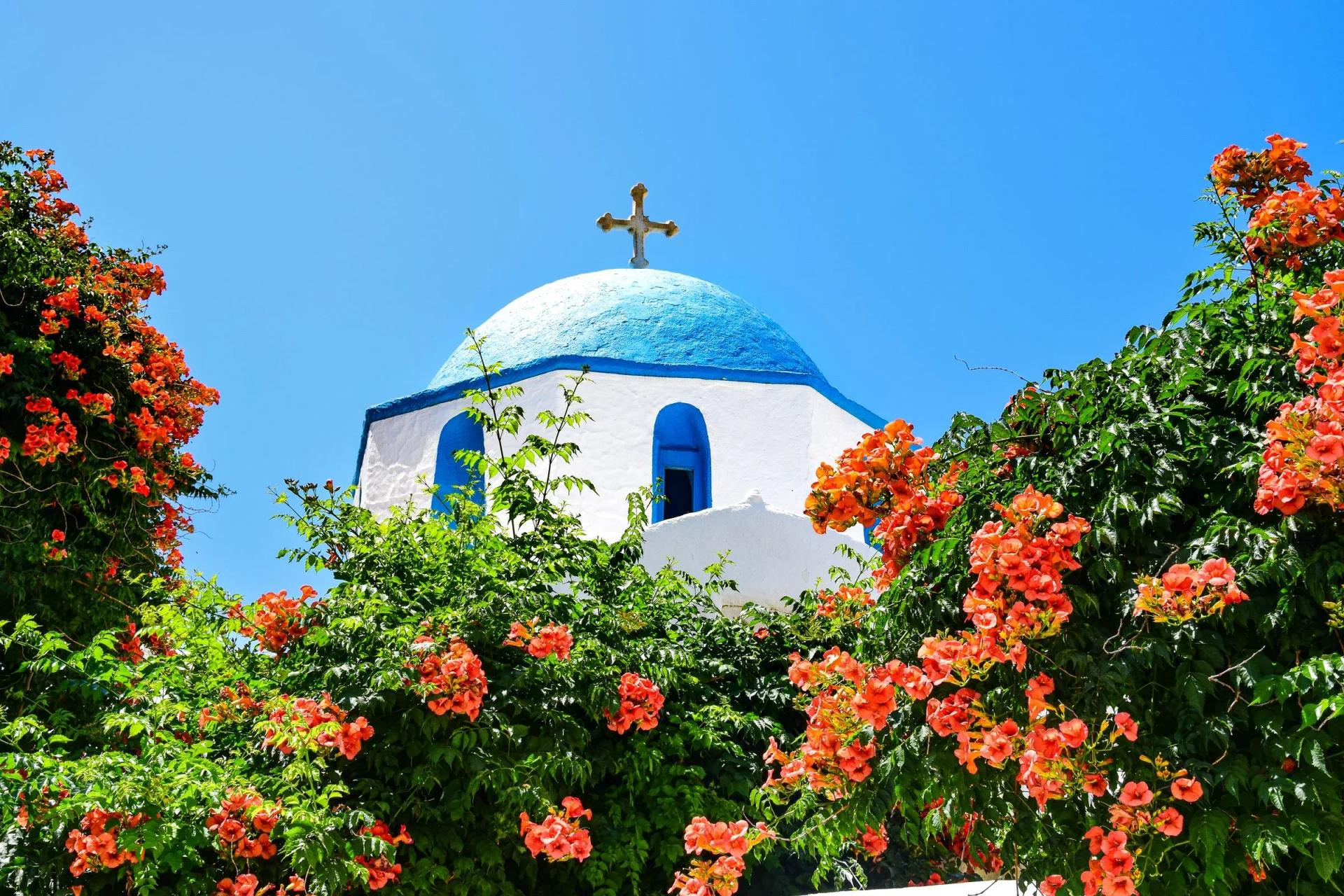
Several Greek resorts have their own Orthodox chapel. Nana Princess in Crete holds Greek Orthodox weddings in its private Chapel of St George. Costa Navarino in the Peloponnese holds religious weddings at the chapel of St Samson or St Eleni. On the islands, Grecotel Mykonos Lolita offers religious weddings at its chapel above the water. A venue chapel keeps everyone in one place, from the ceremony to the last toast.
A village or parish church brings the island into the day. On Paros, the municipality names Panagia Ekatontapiliani and a string of country chapels as favourite wedding churches, with guests arriving by boat, carriage or on foot with musicians.

To compare settings, see Greece wedding venues from the islands to Athens, how to plan a Santorini wedding, our Mykonos wedding guide and Rhodes wedding venues from Lindos to Rhodes Town.
Music. Will the chanter be provided, and can musicians play outside the church before and after?
Photography and video. Where may the photographer stand during the crowning, is flash allowed, and can guests be asked to keep phones away during the service?
Dress. Are covered shoulders expected inside the church?
Timing. What time does the priest serve, and how long should we allow?
Language. Will the service be in Greek, or partly in English for guests?
Guest numbers. How many people fit inside the church, and where do the rest stand? If your guest list is larger than the chapel, ask the venue and the priest how they handle the guests who do not fit inside.
Access. Is there step-free access to the church or chapel?
Written by

SEO Specialist
Ayrton Christian Braga is an SEO Specialist at Wedded Wonderland, where he writes optimized articles and web pages that center on destination weddings, cultural wedding traditions, and guides for everything in between.
Search real weddings, venues and vendors from around the world.
Search Wedded Wonderland