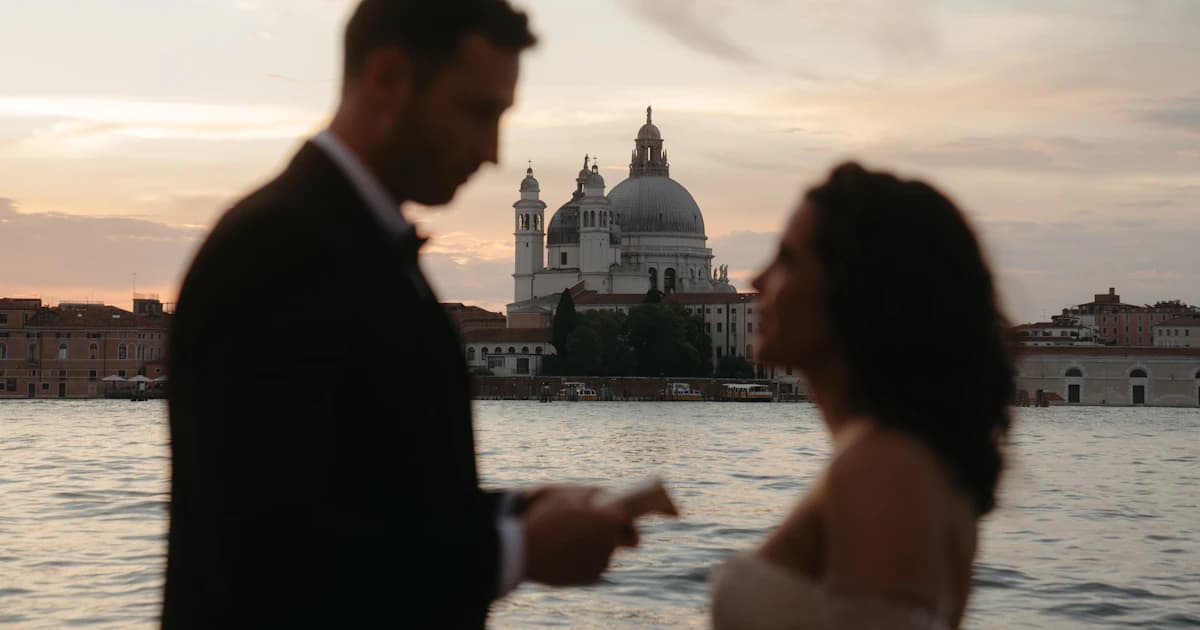
A Malta wedding can be legal for Australians who live at home. Malta's Public Registry (Identita) publishes a process for couples living abroad and states no residency requirement. This Wedded Wonderland guide covers the forms, Australian documents, banns timing and how the marriage counts back home. Confirm current requirements with the Public Registry before you book anything.
Yes. The Public Registry's guideline for EU and non-EU citizens living abroad sets out the documents and steps for couples who live outside Malta. It calls itself indicative, so treat it as your starting list and confirm the detail with the Marriage Registry Section.
Marry legally in Malta | Marry in Australia, celebrate in Malta | |
Who it suits | Couples who want the legal moment and the celebration on the same day, in Malta | Couples who would rather keep every legal step at home |
Where the legal part happens | The Marriage Registry, or a place open to the public that the Registrar accepts | In Australia, before an authorised celebrant |
Extra paperwork | RZ1 (the request to publish your banns) and RZ2 (your sworn declaration), full birth certificates, free-status evidence, DFAT apostilles, a banns deadline | A Notice of Intended Marriage (NOIM) |
The Malta day | Your legal civil ceremony, led by a Registry officer | A symbolic ceremony with no legal effect, shaped as you like |
France requires a residence link that two non-resident Australians lack; Malta, like Italy, opens a route to couples living abroad (see how the Italian legal process compares).
The guideline asks for copies of both passports and of a valid visa or Schengen entry stamp.
The Marriage Act (Cap. 255) sets the minimum age at 18. If either of you holds, or is entitled to, a second nationality, Maltese-Australians included, capacity to marry must be shown for both. Same-sex couples can marry on the same terms (see the FAQ).
Smartraveller's Malta page explains that Australians can visit the Schengen area, Malta included, without a visa for up to 90 days in any 180, so a Malta wedding and a European honeymoon share one allowance. Expect fingerprints and a photo at the border. Entry rules can change at short notice; confirm visa details with the High Commission of Malta.
The Attorney-General's Department sets the steps. You give a NOIM to an authorised celebrant no more than 18 months and at least one month before the legal ceremony. The celebrant must be physically present with you and two witnesses over 18 (no video-link weddings), and an Australian celebrant cannot marry you overseas.
Within 14 days the celebrant lodges the paperwork with the registry in the state or territory where you marry. For the detail, see how to marry legally in Australia first.
This route removes the Registry forms and notary, the apostilles, the three-month validity window and the six-week banns deadline, and gives you an Australian certificate for any name change.
The Public Registry sets the final list and may ask for more case by case, so confirm yours with the Marriage Registry Section before ordering. Documents must be originals from a competent civil authority, and the Registry keeps them, so order spare certified copies.
Document | Issued by | Apostille | Validity |
RZ1 (request for banns) and RZ2 (sworn declaration) | You; RZ2 signed by both of you before a notary, solicitor or Commissioner for Oaths | Ask the Public Registry | Up to three months from endorsement |
Full birth certificate (or adoption certificate) | Your state or territory registry | Yes, DFAT | Ask the Public Registry |
Free-status evidence: DFAT CNI or third-party affidavit | DFAT (CNI) or a person over 18 who knows you well (affidavit) | Ask the Public Registry | Up to three months from issue |
If divorced: previous marriage certificate and proof of divorce (ask the Public Registry which); if widowed: previous marriage certificate and your late spouse's death certificate | The issuing court or registry | Yes, DFAT | Ask the Public Registry |

DFAT issues Certificates of No Impediment to Marriage (CNIs) in Australia, by mail and through its overseas missions; ask the Australian High Commission in Malta whether it issues them in person. DFAT's CNI guide says at least one of you must be an Australian citizen or permanent resident. The fee is AUD 181 (2026 fee), and DFAT's notarial fees rise with CPI each 1 January.
Because Malta and Australia are both parties to the Apostille Convention, an Australian public document for use in Malta is legalised by an apostille from DFAT rather than by consular legalisation, according to the Hague Conference status table.
Identita's policy on foreign public documents says documents from outside the EU must be apostilled or fully legalised. The order: get the certificate from the issuing registry or court, have DFAT apostille it (AUD 105 per document, 2026 fee), then send it to the Marriage Registry Section. DFAT says processing times vary, so leave room.
Documents must be in English or Maltese, so standard Australian certificates need no translation. Check that every name is spelt identically across passports, certificates and forms. Questions to ask the Public Registry:
Do Australians bring a DFAT CNI or a third-party affidavit as free-status evidence?
Does a sworn declaration signed before an Australian notary need an apostille?
How do we order copies of our marriage certificate, and do they need an apostille for Australian use?
What are the Gozo Marriage Registry's contact details?
Banns are the public notice of your intended marriage, posted at the Marriage Registry for at least eight consecutive days, not counting weekends and public holidays. Two dates anchor your file, from the Marriage Registry FAQs and the guideline for couples abroad:
At least three months before: contact the Marriage Registry Section with the place, the date and the surname or surnames you will use after marriage.
No later than six weeks before: your complete file must be in. Late files are rejected.
The forms and free-status evidence are valid for three months and must still be valid on the day, so prepare them between three months and six weeks out. Once the paperwork is approved, a Registry officer confirms by email, you pay, and a celebrant is assigned. Your appointment with the Registrar is typically one or two days before the wedding, and you both bring original passports and any visa or Schengen entry stamps, so plan to arrive at least two days ahead.
As an illustration only (the Public Registry and your celebrant set the real timeline):
When | Marry legally in Malta | Marry in Australia |
12 months out | Choose the route; check passports have six months' validity beyond the trip; email the Registry to confirm your document list | Choose your celebrant and give the NOIM (no more than 18 months and at least one month before the legal ceremony) |
Nine to four months out | Order full birth certificates and any divorce or death certificates; DFAT apostilles | Plan the celebration in Malta |
At least three months out | Contact the Marriage Registry Section to request the banns (place, date, married surname) | Meet your celebrant; fix the legal ceremony date |
Three months to six weeks out | Sign the banns request and sworn declaration (before a notary); CNI or affidavit; apostilles as the Registry directs; file complete by six weeks | The legal ceremony in Australia, a few weeks before you fly |
Wedding week | Registrar appointment one or two days before; civil ceremony | The celebration in Malta (no legal step) |
Under the Marriage Act, a civil marriage is led by the Registrar or an officer the Registrar authorises, at the Marriage Registry, on a Maltese registered ship, or at another place open to the public that the Registrar accepts. A private villa is not automatically suitable.
You may propose your own words, readings or music by asking no later than seven days before. The act of marriage is lodged for registration straight after the ceremony. You need at least two witnesses over 18, relatives included, and the Registry asks for copies of their ID (see who can act as a witness and what they do).
Registry fees (fee schedule published 2024), payable by card or exact cash, cover the Registry only, not your venue, notary, apostilles or translations:
Ceremony | Registry fee |
Civil marriage at the Marriage Registry | EUR 76.95 |
Civil marriage at another location | EUR 102.60 |
Religious marriage in a Roman Catholic church | EUR 51.30 |
Marriage under another religious denomination | EUR 102.60 |
A church wedding in Malta can carry civil effect, but the civil banns come first. For a Catholic marriage, ten days before you collect two copies of the Act of Marriage and the Certificate of Banns for the parish priest, who returns the signed act to the Public Registry. For church-side preparation, ask the parish.
A symbolic ceremony has no legal effect. If you married in Australia first, your Malta celebration can be in a palazzo courtyard, at the hour and in the words you choose.

If you married in Malta, Smartraveller's advice on marrying overseas says the marriage cannot be registered in Australia, but in most cases it is recognised if it was valid where it happened and would have been valid under Australian law. The certificate is usually accepted as proof of the marriage, though some states and territories do not accept overseas certificates for a change of name. See what to do with a marriage certificate issued overseas.
You can keep travelling on your current passport; the Australian Passport Office recommends booking travel in the name on it. For a passport in a married name, a spouse born in Australia who married overseas needs a change of name certificate from their state or territory registry. A foreign certificate is accepted only where no Australian equivalent exists, and it must be legalised.
By contrast, in NSW a person legally married in Australia can take their spouse's family name without registering a change of name. Check your own registry.
The Public Registry and your celebrant set the legal timings, so build the social plan around them. One way the week could run, as an illustration, never a promise:
Monday and Tuesday: guests arrive in Valletta or Mdina.
Thursday or Friday: for the Maltese route, your Registrar appointment.
Thursday evening: welcome dinner.
Saturday: ceremony and celebration, with a wet-weather plan.
Sunday: a slow recovery day.

For a legal ceremony, the first test is legal: the place must be open to the public and accepted by the Registrar, and you want that answer before any deposit. Then the practical tests: a covered space if rain arrives and shade if it is hot, guest rooms on site or nearby, and the transfer time from the airport. Smartraveller notes that some roads are prone to flash flooding in heavy rain, and that weather can cancel or delay Gozo ferries, so a Gozo venue needs a guest buffer day.
We profile The Phoenicia Malta, and for a sense of a Malta celebration, read about Delta Goodrem's wedding in Malta. For the wider region, browse our Europe destination wedding guide.
Plan guest stays through wedding and honeymoon travel, and keep euro and Australian dollar costs side by side in the free Wonderland Studio. Sources current as at November 2026.
Written by

SEO Specialist
Ayrton Christian Braga is an SEO Specialist at Wedded Wonderland, where he writes optimized articles and web pages that center on destination weddings, cultural wedding traditions, and guides for everything in between.
Search real weddings, venues and vendors from around the world.
Search Wedded Wonderland