You've probably never had to learn them, and yet most people can finish the line. "For better, for worse, for richer, for poorer..." These words have appeared in so many films, ceremonies and family stories that they feel familiar even to people who have never been to a church wedding.
That familiarity is a big part of why traditional vows still matter. They are short, they are rhythmic, and millions of couples have said them before you.
Traditional wedding vows are the set promises couples make during a ceremony, passed down through religious or cultural tradition.
In the Western tradition, they include the well-known phrases "to have and to hold," "for better, for worse," "in sickness and in health," and "till death us do part."
The key word is set. Traditional vows are not written by the couple. They are agreed wording, often repeated after an officiant, line by line. That is what separates them from personal vows, which you write yourselves.
The best-known English version traces back to the Book of Common Prayer, first published in the 16th century.
Over time, other Christian denominations, secular ceremonies and civil celebrants have borrowed from it. That's why the same phrases appear at so many weddings, even when the ceremony is not religious.

Here is the most familiar version, in the older style:
I, ___, take thee, ___, to be my wedded wife/husband, to have and to hold from this day forward, for better, for worse, for richer, for poorer, in sickness and in health, to love and to cherish, till death us do part.
You'll hear small differences from place to place. Modern services often say "you" instead of "thee." The Church of England's current version adds closing words about God's holy law and making the vow in God's presence.
Older versions also included a promise by the bride to obey, which most modern services leave out, but the core is the same everywhere.
It's easy to say these words without thinking about them. Taking a moment to understand each one can make them land differently on the day.
This line is a choice. You are not being assigned a partner, and you are not being pressured. You are freely choosing this person, and saying so in front of everyone. In many places, this act of consent is also the legal heart of the ceremony.
"From this day forward" marks a starting line. Everything before today is history, and everything after it is shared. "To have and to hold" is older language that means belonging together. The word "hold" originally meant to keep and watch over, as you would tend a garden. It is less about ownership and more about care.
These three pairs are the practical core of the vow. Each one names something that tests a relationship: general ups and downs, money, and health.
Imagine a couple a few years in. One of them loses a job, and the other picks up extra shifts. Later, one gets seriously ill, and the other cancels everything to be there. Nobody planned for these moments on the wedding day. The vow says you promise to stay anyway.
Love here is a verb, something you do rather than something you feel. To cherish is to hold someone dear and treat them as precious. Put together, the line asks for both affection and respect, every day, not just on good ones.
This is the promise of a lifelong commitment. The phrasing sounds old because it is old. "Us do part" is older grammar for "parts us." Many couples find that this is the line that means the most years later.
These closing phrases appear in Christian versions. They place the promise before God as well as before family and friends. In civil and secular ceremonies, they are usually replaced with a line about making the vow before witnesses, or left out.
The Western version above is only one tradition. Here is how others handle it.
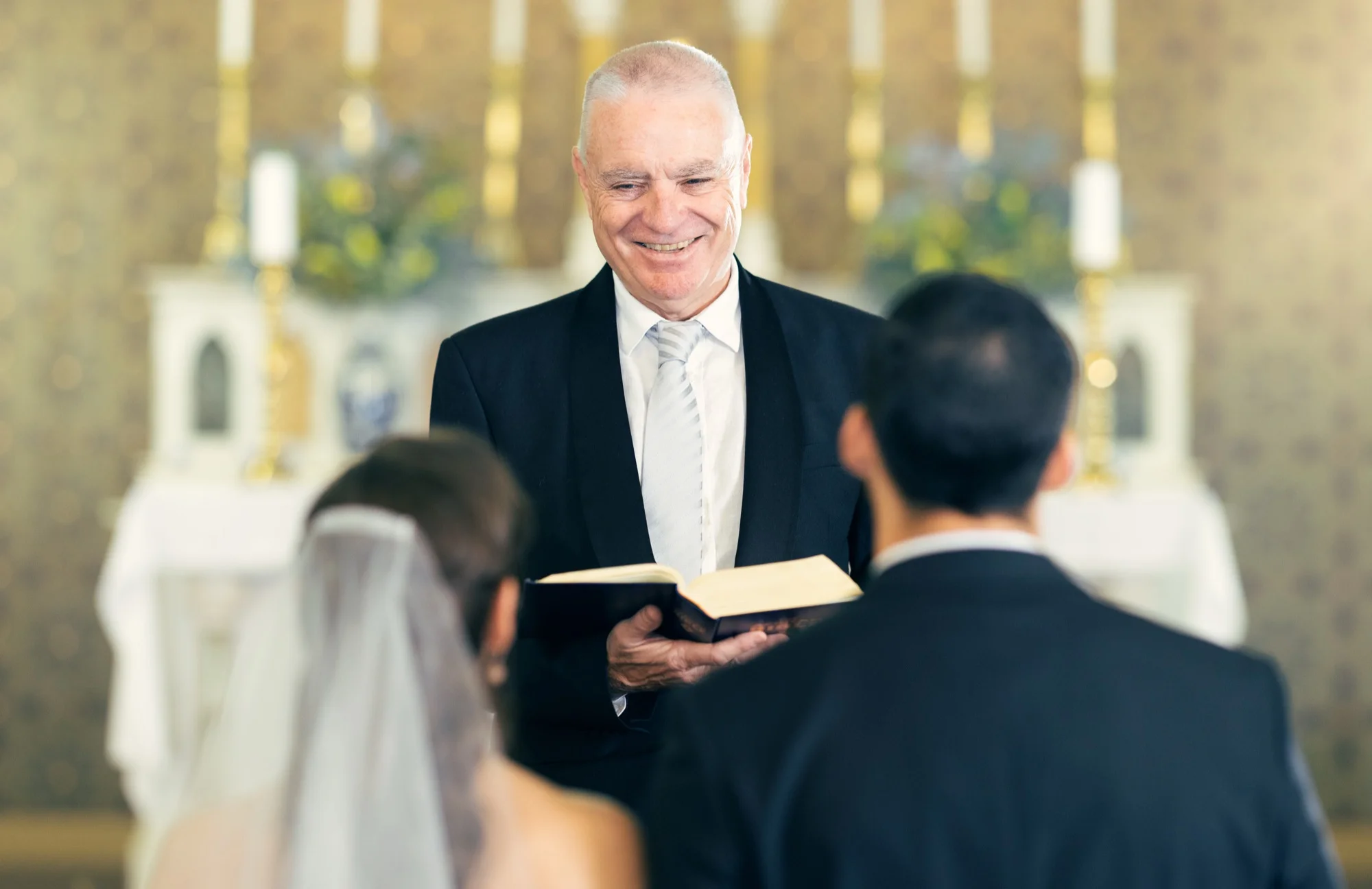
Christian vows vary by denomination, but the pattern is similar. Each partner promises to be faithful through good times and bad, in the presence of God and of those gathered.
Some denominations, such as Baptist, have the officiant ask a question and the couple answer "I will." Others have the couple repeat the promise line by line.
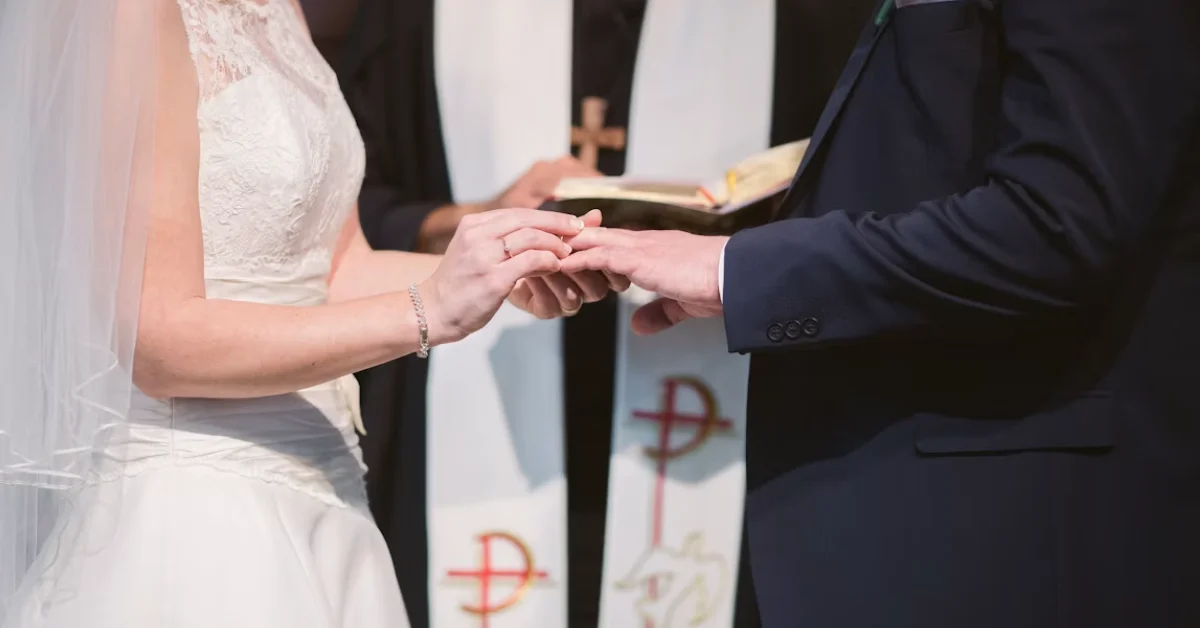
The Church of England's vows are fixed in law, so they cannot be reworded. The couple turns to face each other, takes each other's right hand and speaks the vow. The ring exchange follows, and it completes the marriage, so the couple can then sign the official paperwork.
Most non-religious traditional vows borrow from the Christian version. The common approach is to keep the parts that ring true and leave out what doesn't, such as references to God.
A civil version might promise love and care "before these witnesses," or promise to help each other in good times and bad.
Vows were not originally part of a Jewish wedding. Instead, a single declaration is made during the ring exchange, in which the groom says that the bride is consecrated to him with the ring according to Jewish law.
Today, many modern couples add spoken vows alongside the traditional elements.
In a Muslim wedding, the Nikah is built around offer and acceptance. The couple is asked three times whether they accept each other and the terms of the marriage contract, and each time replies "I accept." Couples may add further promises of faithfulness and support.
Buddhist vows don't have to be said aloud. A couple may read them silently, or speak them for their guests. Some are individual, and each partner answers "I do." Others are joint, and the couple answers together with "we do." They often focus on compassion, understanding and growing together.
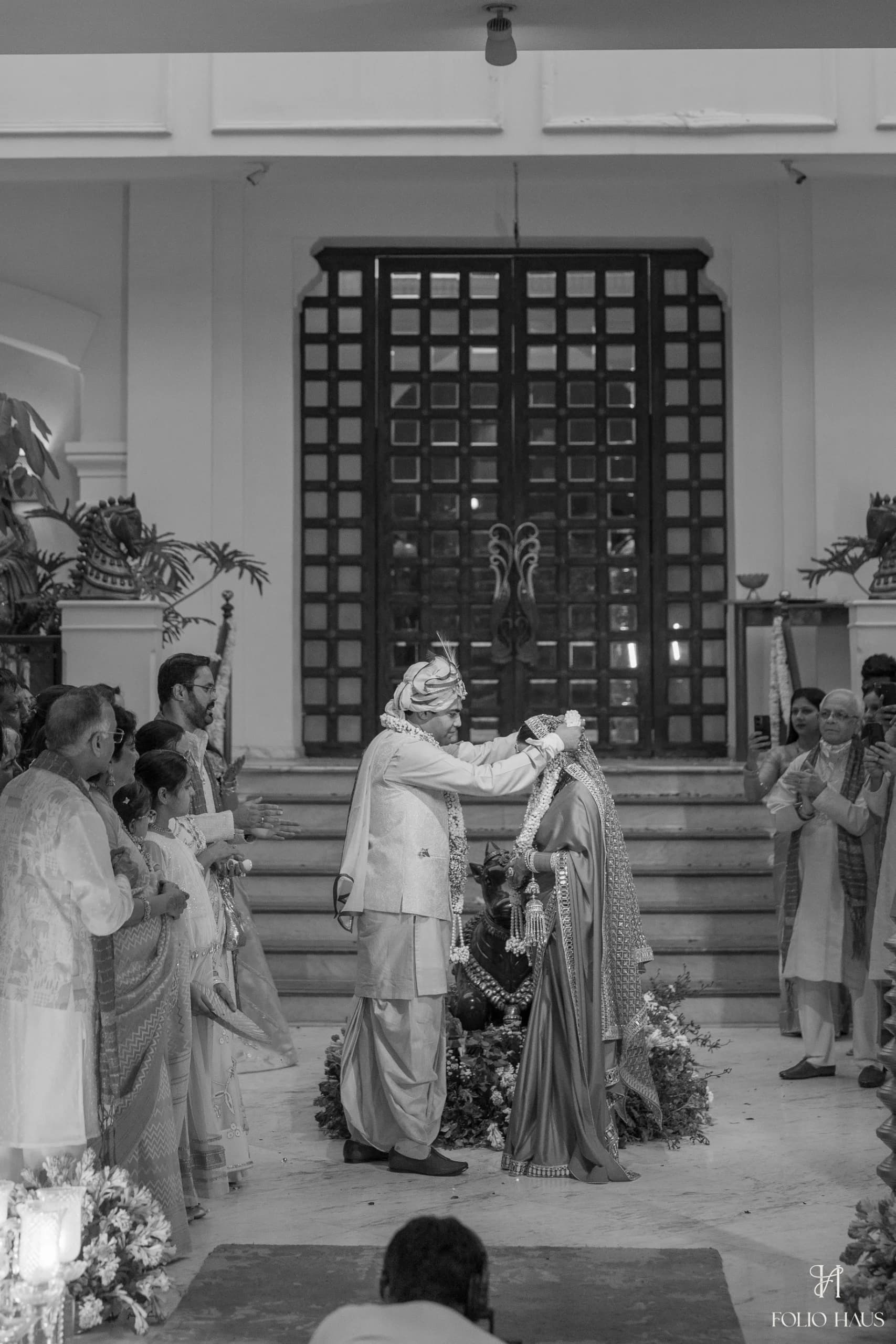
Hindu vows are known as the saptapadi, or seven vows. The couple takes seven steps around a sacred fire, and each step carries a promise. These cover things such as nourishment, strength, prosperity, knowledge, family, longevity and lifelong companionship. They are usually spoken in Hindi, often with a translation for guests.

It depends on where and how you're marrying.
In a Church of England wedding, the answer is no. The vows are legally binding and cannot be changed. But that doesn't mean you can't add anything of your own. Couples sometimes include a personal reading, a poem or an extract from a book to say the extra things they want to say. The vicar can advise on how it could fit into the service.
Other religious traditions may be just as firm. If you're marrying in a church, synagogue, mosque or temple, ask early how much freedom you have.
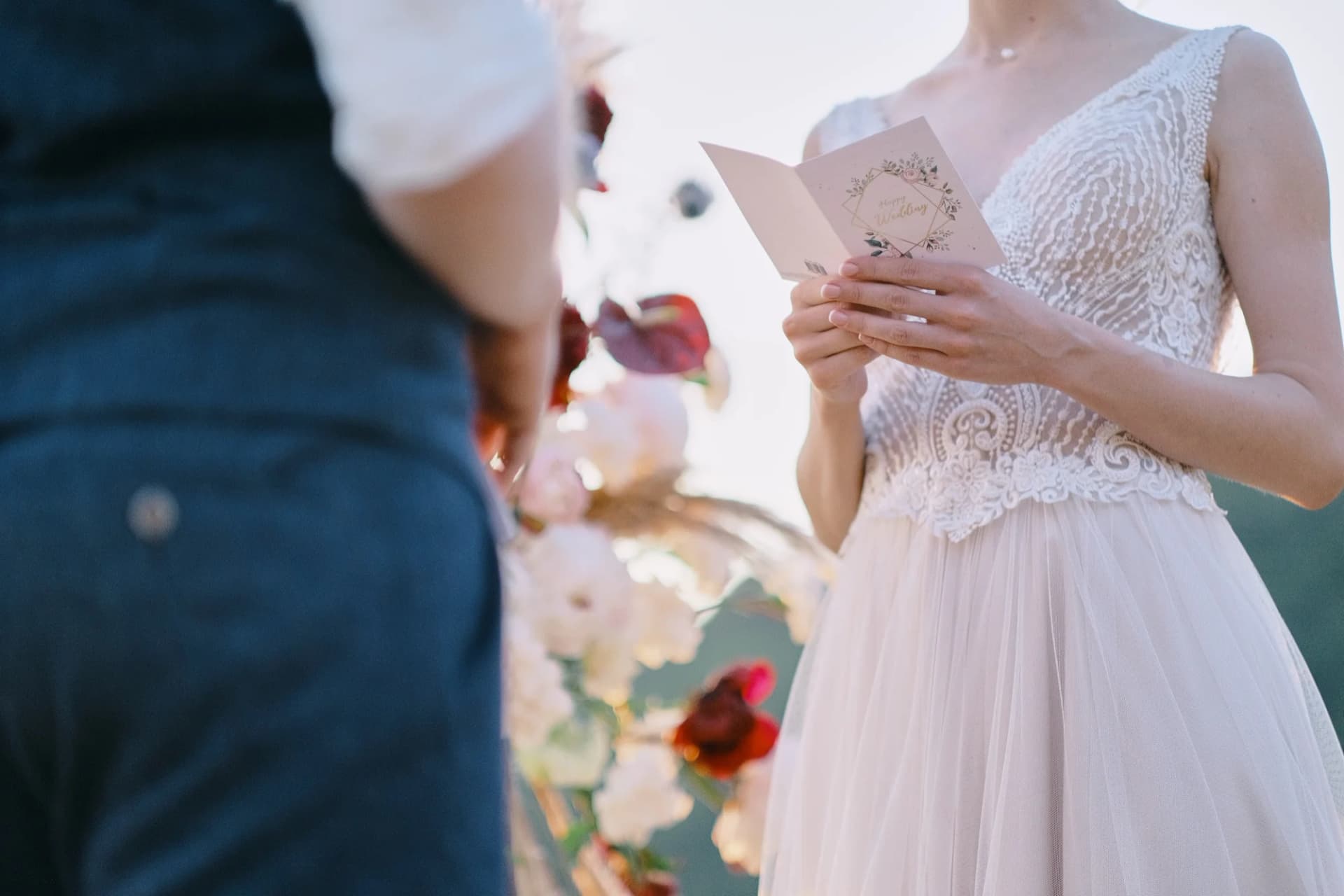
Civil and secular ceremonies tend to be more flexible. Here, many couples choose a hybrid. They say the classic vow, then add a short personal promise of their own.
I, ___, take you, ___, to be my husband/wife, to have and to hold, for better, for worse, in sickness and in health, as long as we both shall live. And I promise to always make you coffee on Monday mornings.
It is small and a little funny, and it keeps the weight of the tradition. If you want to go deeper, our guide on how to write your own wedding vows walks you through it.
Both options can work, and you don't always have to choose just one. Traditional vows are short, familiar and rooted in history. Personal vows are more specific and give you a chance to speak in your own words.
Many couples use the traditional vows and add a few personal words of their own.
A few things can help you decide:
Your ceremony: A church wedding may require traditional vows, while a more relaxed ceremony gives you more freedom.
Your comfort level: If talking about your feelings in front of everyone makes you nervous, traditional vows can take some of the pressure off.
Your guests: Family members may find traditional vows especially meaningful, particularly if they used the same words at their own wedding.
Length can also be a factor. Traditional vows usually take between 30 seconds and three minutes, making them a simple way to keep the ceremony moving.
Written by

SEO Specialist
Gino Reichert is an SEO specialist and content strategist who helps brands improve their online visibility. He enjoys creating useful, engaging content and staying up to date with the latest trends in search and digital marketing.
Search real weddings, venues and vendors from around the world.
Search Wedded Wonderland