On your wedding day, one person will stand beside you for the most important half hour of the day. They’ll welcome your guests, guide you through your vows and announce that you’re officially married. Yet many couples choose their celebrant with little more than a quick search and a few clicks.
There’s a better way. With a little thought, you can find someone who suits your style, ceremony and budget.
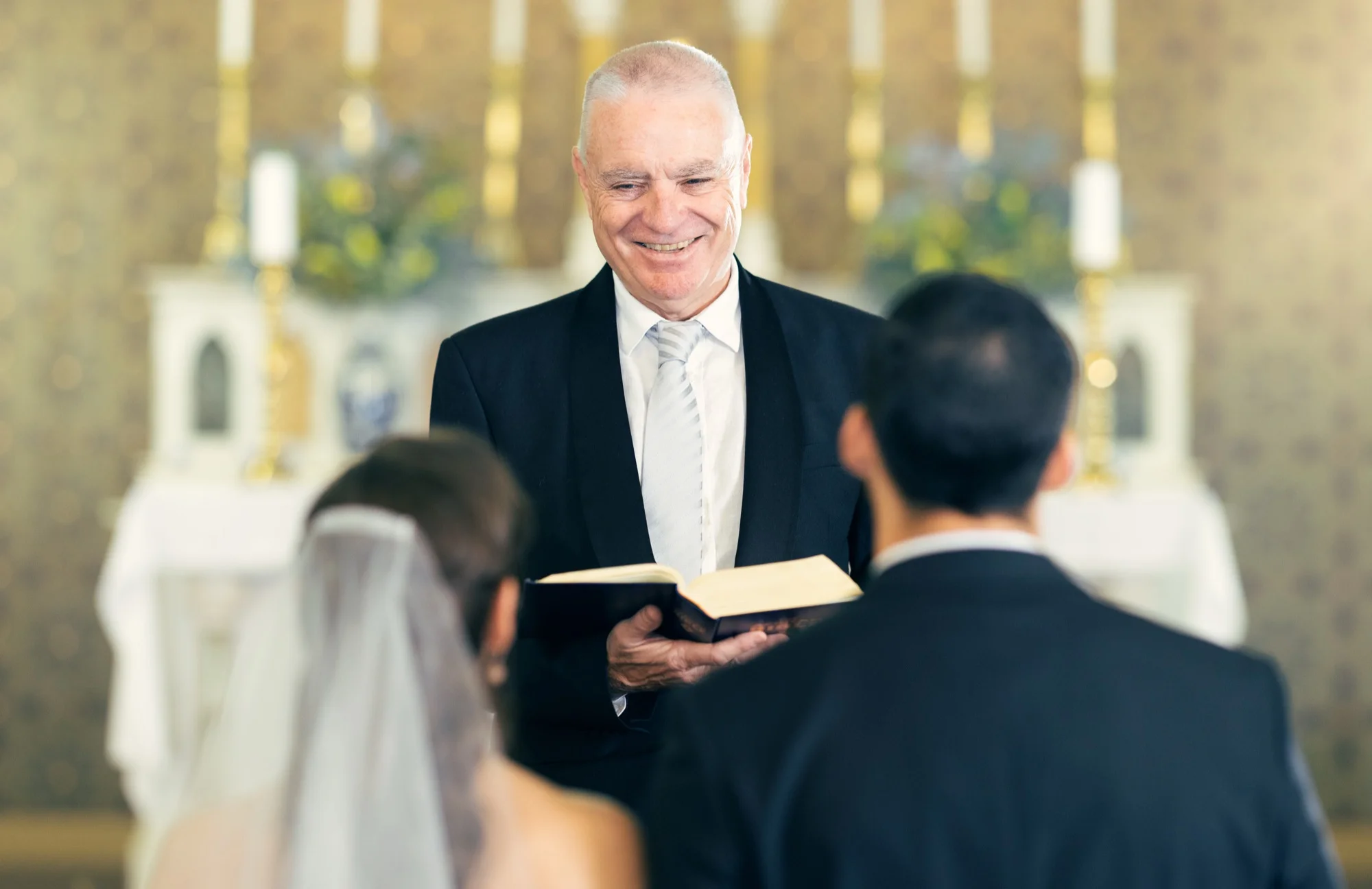
A wedding celebrant is the person who leads your ceremony. They welcome guests, guide you through the vows and ring exchange, declare you married, and, if they are legally authorized, complete the marriage paperwork.
The role has a practical side and a personal side. On the practical side, they make sure the ceremony meets the legal requirements where you are marrying.
On the personal side, they set the tone. A good officiant can make a room laugh, settle nervous couples and turn a standard script into something that sounds like you.
That second part is why the choice matters. As one Australian celebrant puts it, the ceremony may be a small part of your day, but it is one of the most important, and it sets the tone for everything after it.
You will see both words in your search results, and they overlap. "Officiant" is the general term for anyone who leads a wedding ceremony. "Celebrant" is more commonly used in places like Ireland, the UK and Australia, usually for an independent person who creates a ceremony around the couple rather than following a fixed religious script.
Confusingly, the words used depend on the organization a celebrant belongs to and where they work. One Irish celebrant notes that titles range from minister to reverend to layperson, which can feel bewildering at first.
There is one distinction worth knowing early. Some celebrants are solemnizers, meaning they can complete your legal marriage paperwork on the day.
Others cannot, and the couple must register the marriage separately. Rules differ by country and even by state, so ask about this before you book.
Before you start searching, it helps to know who you could choose. The main options are:
A religious leader, such as a priest, minister, rabbi, imam or pandit, who leads a ceremony within a faith tradition.
A civil registrar or judge, who conducts a short, legally focused ceremony.
An independent or secular celebrant, who writes a personalized ceremony that can be as traditional or unusual as you like.
A humanist celebrant, who leads a non-religious ceremony built around your story and values.
A friend or family member, who may be able to officiate if they are ordained or licensed for the day, depending on local law.
Choosing a celebrant does not mean giving up on faith. One celebrant points out that you do not have to be non-religious to have a celebrant-led ceremony, and that many clients were raised in a faith and still hold some belief, even if they no longer feel tied to a church.
In those cases, a celebrant can include religious readings or blessings while keeping the ceremony flexible.
Religious ceremonies work differently. Many traditions have set structures and requirements, so if a religious ceremony matters to you, speak to your church or faith leader before anything else.
Now for the process itself. The steps below are ordered on purpose. Each one narrows your options so the next is easier.
Most couples skip this step, and it costs them time. If you don't know what you're after, every officiant looks the same.
Start with what you don't want. Think about weddings you have attended. Was there anything you disliked, and how could it have been done better? Then think about style. Do you want a traditional ceremony, something relaxed, or something emotional and creative?
Personality matters too. Some celebrants love to entertain and bring energy to the room. Others are warm but quieter, acting more as a guide than a performer. Neither is better. The right one depends on whether you want your officiant to be part of the show or to stay in the background.
Working style counts as well. You will deal with your officiant far more before the wedding than on the day itself, so think about how you like to work. Do you want lots of communication and a clear process, or someone more laid back?
Once you know the feel you want, check the basics. Can this person legally marry you where you are getting married? Are they a solemnizer? How far will they travel?
Your values matter here as well. If faith, inclusivity or a particular tradition is important to you, make sure the person's beliefs line up with yours.
Now you can start searching. Look online, browse Instagram, read wedding blogs and ask friends, family and colleagues. Word of mouth is often the most reliable source, because a friend can tell you what the ceremony actually felt like.
When you find someone you like, ask whether they fit your brief. Admiring someone's work isn't the same as being the right match.
If they have videos on their website, watch them. If they write a blog, read it. You will learn a lot about their voice, humor and approach before you have spoken a word.
Next, look at reviews on Google and Facebook, and any testimonials on their website. Count how many there are. Then read what people say, and look for common themes.
The question to ask yourself is simple. Do other couples describe an experience that matches what you want? If every review mentions a calm, personal ceremony and you want a lively one, that is a useful signal.
With a shortlist, contact your favorites and ask whether they are free on your date. It saves heartbreak. There's nothing worse than falling for someone and then finding they were never available.
This first conversation also tells you a lot. Did they reply promptly? Did they answer your questions? Does the price suit your budget?
One tip helps here. Don't simply ask, "How much do you charge?" Most celebrants set their fees based on location, date, time of day and the type of ceremony. Share your plans, and they can give you an accurate answer, and they'll be more invested in your day.
By this point you should have a clear favorite. A meeting, whether in person, by phone or on video, confirms whether the connection works in real life.
Use it to ask questions, but also to get to know them. You will spend a lot of time together, and your officiant will be standing with you at a very emotional moment. A good connection usually leads to a good ceremony.
Many celebrants offer a free discovery call before you commit, and it is worth taking one. One celebrant advises that after speaking with them, you should come away knowing they are definitely right for you or definitely not.
Some couples meet only one officiant and book on the spot. Others meet several first. Either is fine. It's an important decision, so use whichever approach makes you comfortable.
A first meeting goes further with a few good questions ready. Here are some to consider:
Are you available on our date, at our venue and at our time?
Are you legally authorized to conduct our marriage, or will we need to register separately?
What does your fee include, and what could add to it?
How do you work with couples, and what will you need from us?
Can we see a sample ceremony or watch a video?
How do you handle personal vows and readings?
Do you take one ceremony per day, or several?
What happens if you are ill on the day?
How much of the ceremony can we change?
Some of these come straight from what celebrants say matters. One, for example, only takes one ceremony per day so each couple gets undivided attention. Whether that matters to you is a personal call, but it is worth asking.
Sooner than you might expect. One planning timeline suggests booking nine to twelve months ahead, which gives you time to shape the ceremony, choose readings and start on your vows. Popular dates and busy seasons fill up quickly, so if you have your heart set on someone, ask about availability early.
Search real weddings, venues and vendors from around the world.
Search Wedded Wonderland