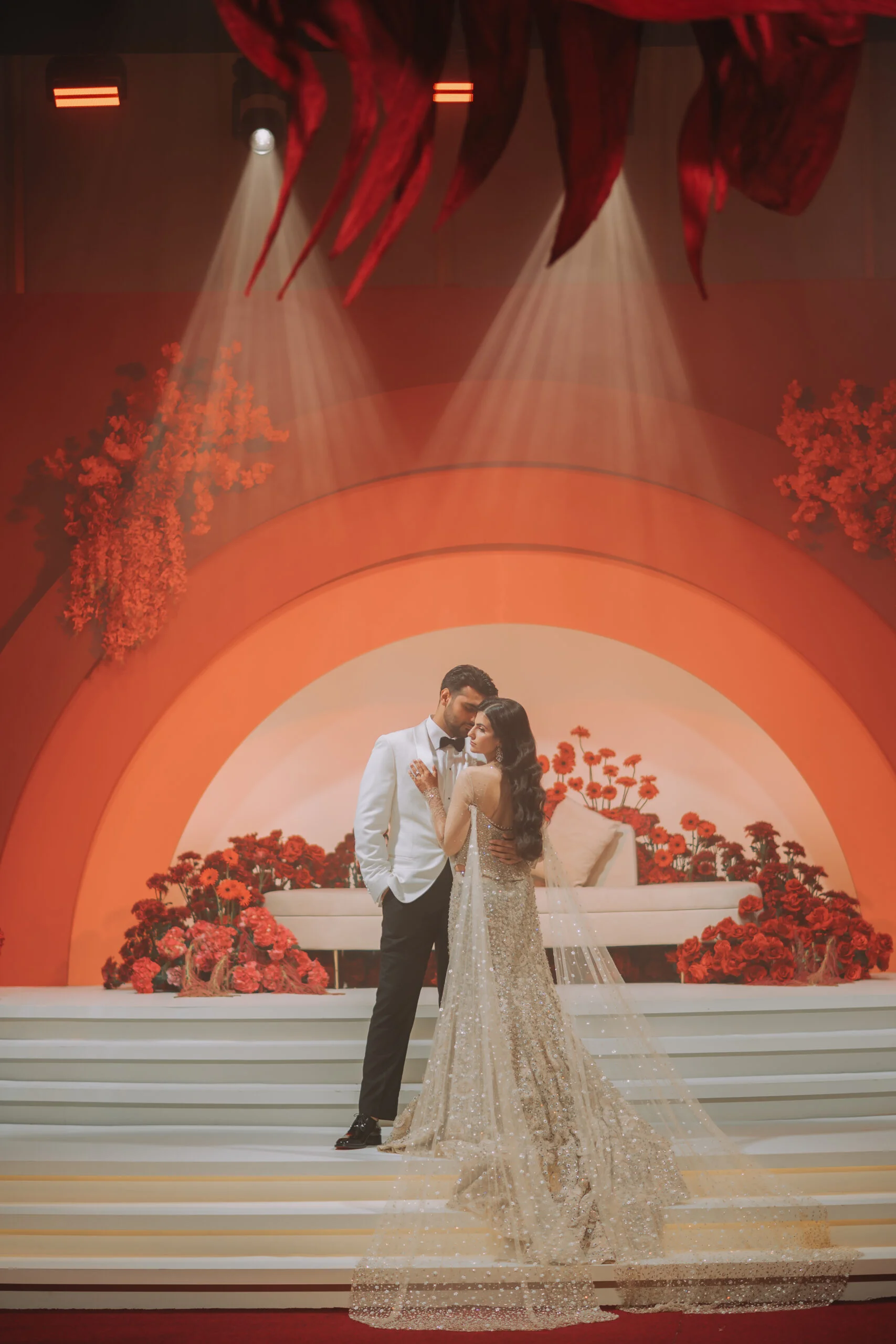
If you’ve never attended a Hindu ceremony before, you’re missing out! The ancient rituals that take place are both mesmerising and symbolic. Colourful and with more jewels than most jewellery stores, the ceremony easily takes you to another time and place.
There are variations and not all ceremonies will include all elements, but as a general rule there are 10 elements that make up the ceremony.
The Barat, an all singing and dancing procession of the groom and his family, make their way to the wedding venue. The bride’s family welcomes them with traditional sweets, as a symbol of happiness and all the good things to come.
The ceremony starts with prayers to Lord Ganesh. He is asked to bless the ceremony and keep it free from any troubles or obstacles. Blessings of elders and forefathers are also sought.
The bride is brought to the mandap. This is a covered structure that is made for the wedding and the majority of the ceremony takes place underneath it. Traditionally, the bride is brought in by her maternal uncle. Bridesmaids and Groomsmen join them.
At this stage, a cloth called an antarpat separates the Bride and Groom. This represents their separate existence before their marriage.
To show their willingness to proceed with the ceremony, the Bride and Groom garland each other. Under the watchful eye of the Pandit (traditionally a scholar or teacher who oversees the ceremony) they then propose to marry each other.
Giving away the Bride is one of the most significant acts for the Bride’s parents. As part of this, the Mother of the Bride pours holy water on her partner’s palms which then flows onto the Groom and Bride’s palms too. This symbolises the continuity of life and the passing of family heritage from one generation to the next.
The Bride and the Groom share their expectations of married life and show their consent by showering rice on each other. They accept each other’s hands and tie each other’s wrists with a sacred thread called Sutrabandhanam. This indicates their willingness to spend the rest of their lives together.
The Groom adorns Bride’s neck with the Mangalsutra, a necklace symbolising good luck, love and friendship. He also applies kumkum on Bride’s forehead, the powder used for religious and social markings in India. She then applies chandan tilak on his forehead, another traditional marking. They are then joined together in a marriage knot by the Groom’s sister or mother, as a symbol of their permanent bond
This is the start of Grihasthashram or family life for the couple. Together, they light a holy fire called Agni that symbolises light, power and knowledge, and acts as a witness to the ceremony. They repeat their marriage pledge and ask Agni to be a messenger for their prayers.
Together, the Bride and Groom circle the sacred fire four times. This indicates their transition into married life and they are often accompanied by the Bride’s brother.
Afterwards the Bride moves to the left side of the Groom; indicating her transition to the Groom’s family.
The couple takes seven steps together as part of their marriage vows. Each step indicates another hope for their marriage.
With the first step, we will provide for and support each other.
With the second step, we will develop mental, physical & spiritual strength.
With the third step, we will share the worldly possessions.
With the fourth step, we will acquire knowledge, happiness and peace.
With the fifth step, we will raise strong and virtuous children.
With the sixth step, we will enjoy the fruits of all seasons.
With the seventh step, we will always remain friends and cherish each other.