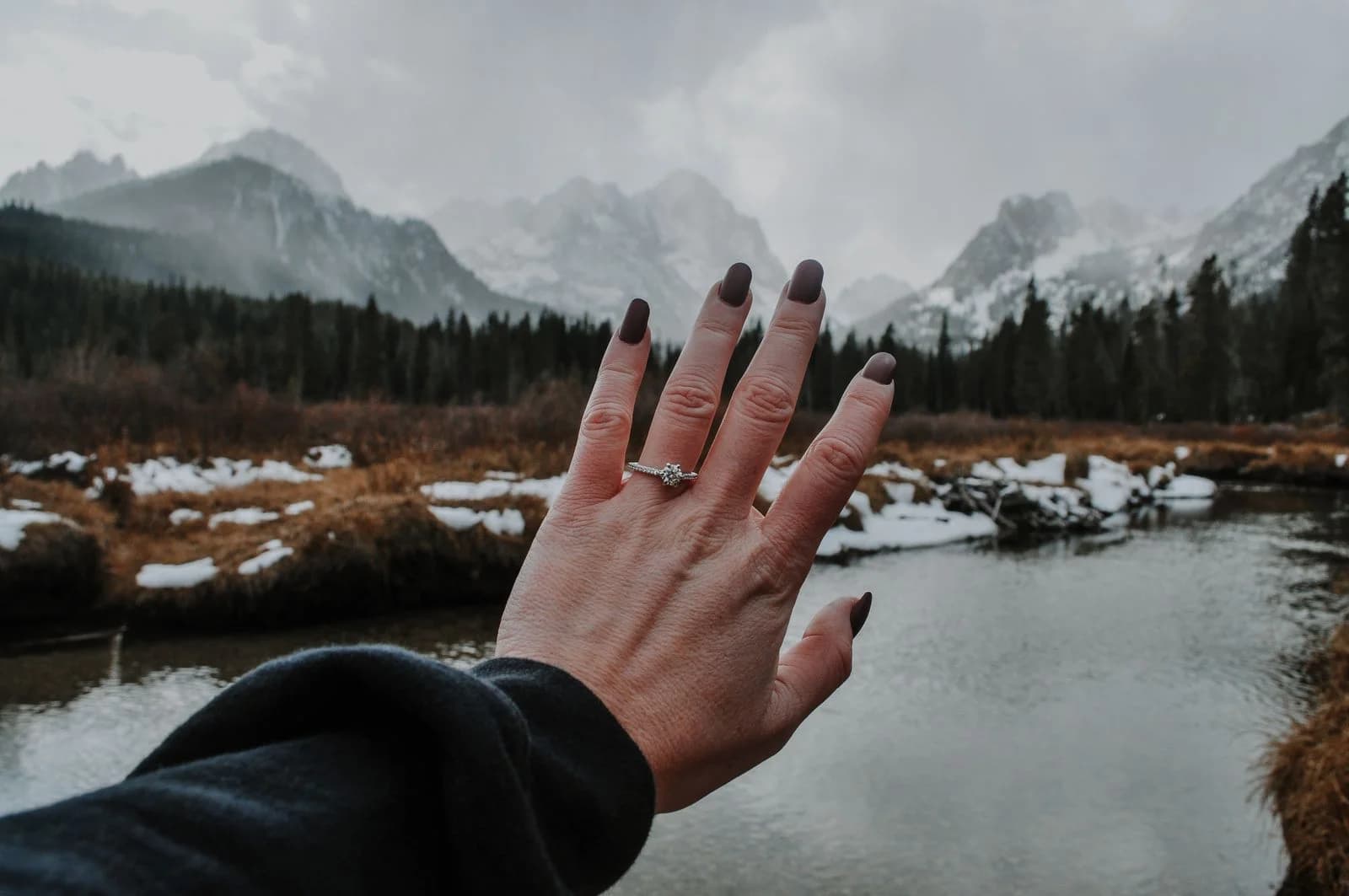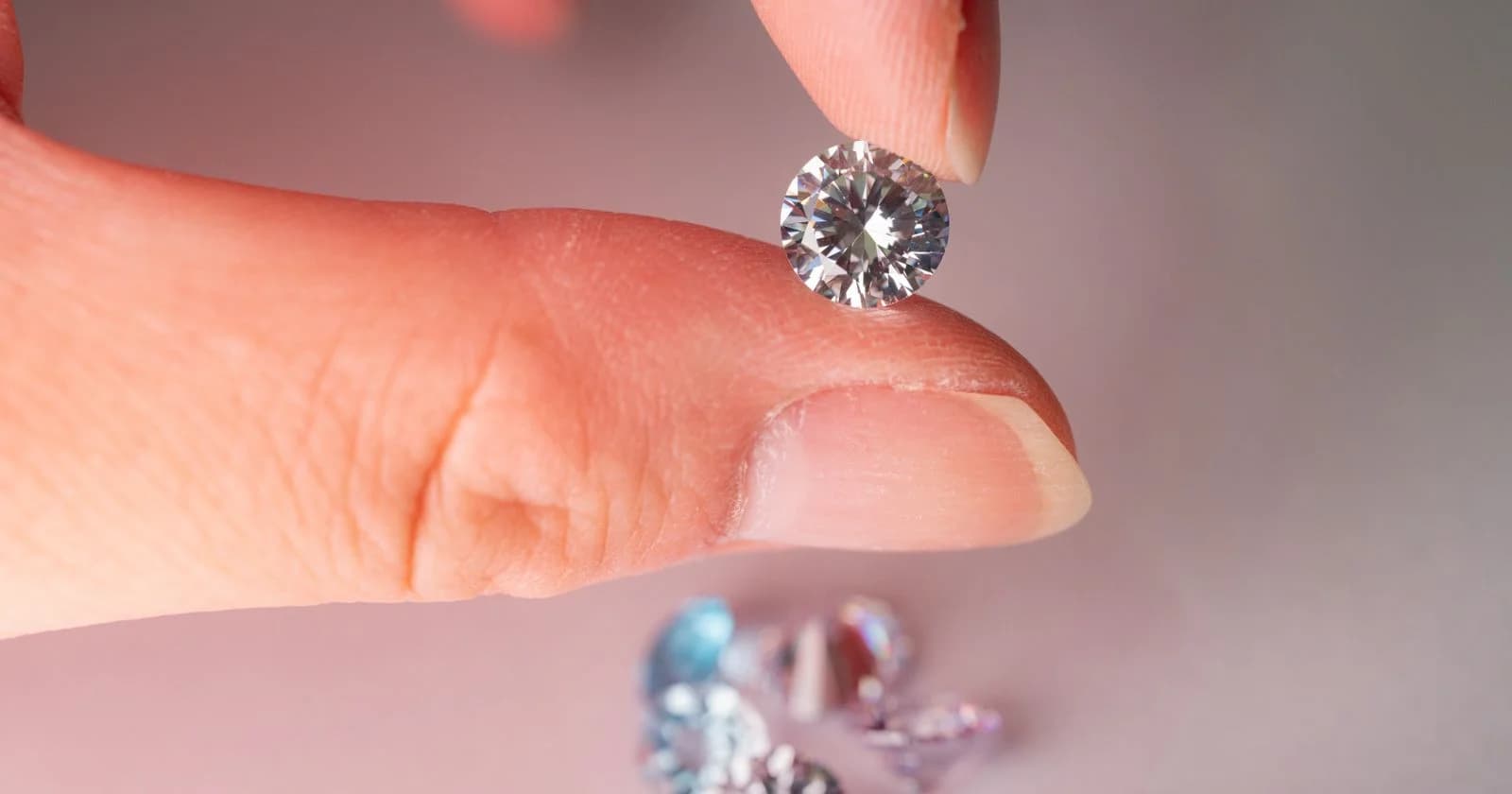
Lab grown diamonds have moved from curiosity to the centre of the engagement ring conversation, and almost everything written about them comes from someone selling one side. If you can comfortably choose either stone, the question is not whether you can afford natural. It is whether a lab-grown stone gives you what you actually care about. Wedded Wonderland plans destination weddings, so this guide is written from the planning side: it separates what is settled (the material, the hardness, the grading and the naming rules) from what is genuinely uncertain, then answers "worth it" as a question of values, with the paperwork to insist on either way.
For many couples, yes, provided they are buying the stone for what it is rather than for a promise of future value. GIA notes that lab-grown diamonds are offered at a reduced price point, and that demand has risen in recent years.
What you give up is not sparkle or strength. It is the natural origin, the very different growth history that a mined stone carries. What either stone might be worth if you ever sell it is a separate question, and neither should be bought as an investment. Decide which of those you care about, and the answer usually follows.
Yes. GIA explains that laboratory-grown diamonds have the same crystal structure as natural diamonds, tightly bonded carbon atoms, which gives them nearly the same chemical, optical and physical properties. What separates the two is their growth history, not what they are made of.
The US Federal Trade Commission defines a diamond as a mineral of essentially pure carbon crystallised in the isometric system, with a hardness of 10, a specific gravity of about 3.52 and a refractive index of 2.42.
A simulant is a different thing entirely. GIA lists glass, moissanite and cubic zirconia as common simulants, which are completely unrelated to diamond at the atomic level and easy to identify by their optical and physical characteristics.
GIA is also clear that choosing a simulant can be a great option, as long as it is an informed decision.
Under the FTC Jewelry Guides (16 CFR Part 23), a stone with essentially the same properties as a mined diamond can be described as "cultured" only with a clear and conspicuous qualifier such as "laboratory-created", "laboratory-grown" or "[manufacturer name]-created", conveying that it was not mined. In practice, the honest names are "lab-grown diamond" and "lab-created diamond".

GIA describes two main processes: high pressure, high temperature (HPHT) and chemical vapour deposition (CVD).
HPHT recreates some of the key conditions of natural diamond formation. A capsule holding a carbon source and a mix of metals is heated to about 1300 to 1600°C under extreme pressure.
A CVD diamond grows quite differently. At near-vacuum pressure, a microwave-activated plasma releases carbon that settles on diamond seeds and crystallises layer by layer at about 700 to 1200°C, and the final size depends on the seed and the growing time.
GIA traces the first CVD diamonds to 1952 and the first gem-quality lab-grown diamonds to the 1970s, with colourless stones available in commercial quantities from the mid-2010s.
Some lab-grown diamonds are treated after growth to improve their appearance, and GIA can determine whether a stone was grown by HPHT or CVD using spectroscopy and other testing. If treatment matters to you, ask the seller to state in writing whether the stone has been treated after growth.
The lab grown vs natural diamond question is easier once you separate the stone from its story. Here is how they compare. Relative cost varies stone by stone, so compare like-for-like quotes (same lab, same report type, same spec), and see how much to spend on an engagement ring when you decide what to spend.
Lab-grown | Natural | |
|---|---|---|
Material | Carbon in the diamond crystal structure | Carbon in the diamond crystal structure |
Look to the eye | Potentially indistinguishable | Potentially indistinguishable |
Hardness | 10 on the Mohs scale | 10 on the Mohs scale |
Origin | Grown by HPHT or CVD | Formed in the Earth |
How GIA describes quality | "Premium" or "Standard" (since 1 October 2025) | Colour and clarity grades |
Relative cost | Offered at a reduced price point | Compare like-for-like quotes, stone by stone |
Sources: GIA and the FTC Jewelry Guides.
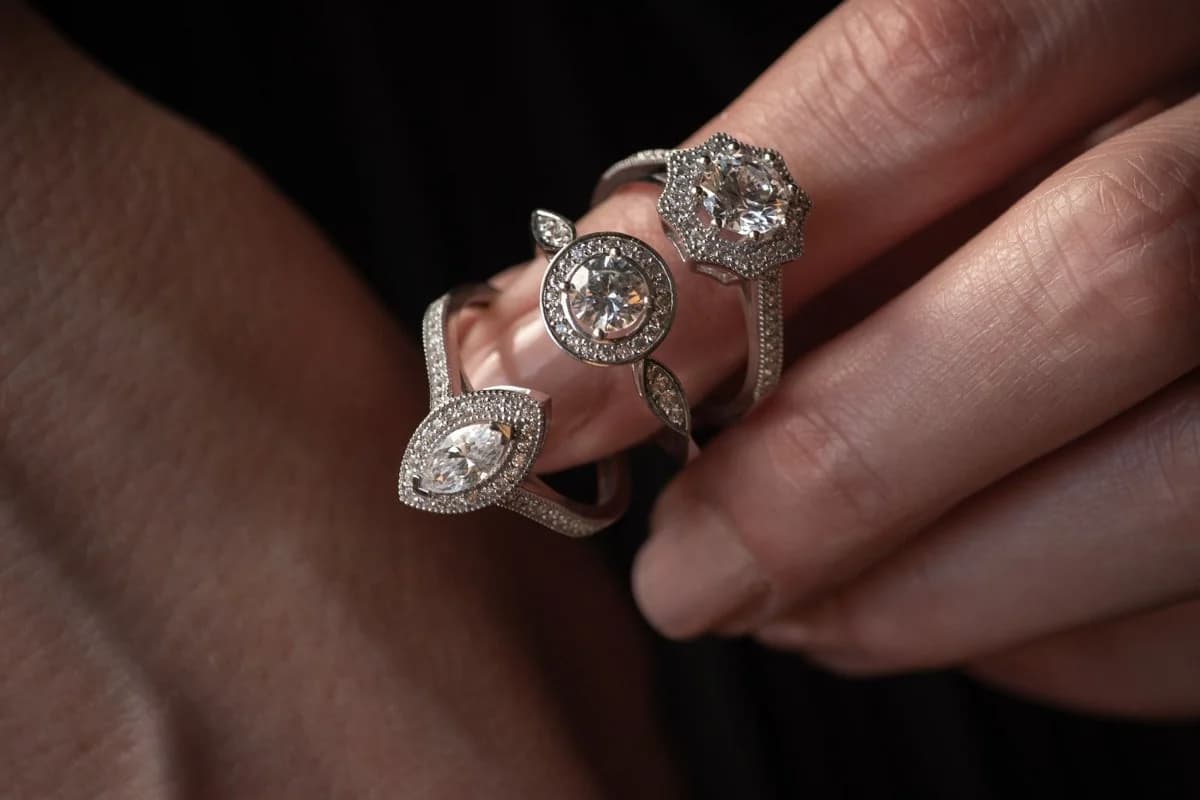
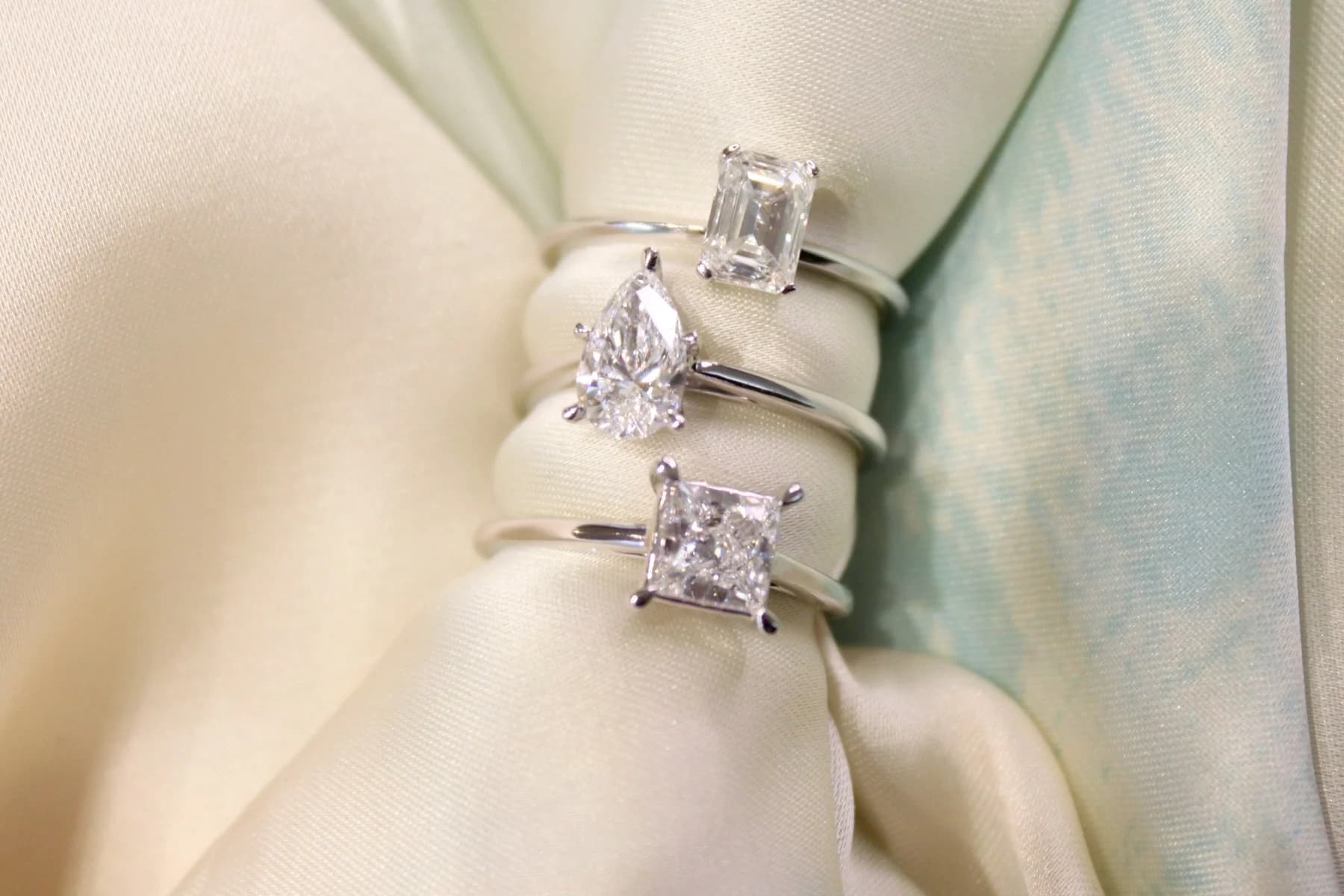
Shape and cut are the same choice for both. A lab-grown oval and a natural oval are cut to the same patterns, so read how each diamond cut changes the look before you decide on origin.
Diamond sits at 10 on the Mohs scale of scratch resistance, but it is not the toughest gem and can be cleaved or fractured by a hard blow. That is true of lab-grown and natural alike.
If the wearer swims, climbs, cooks or works with their hands, the setting does more to protect the stone than its origin. A bezel or low profile matters more than where the carbon came from, so read our guide to engagement ring settings for an active lifestyle.

Not by eye. GIA says the difference can be indistinguishable to the naked eye, and the two are separated by their growth histories, which experienced labs detect with advanced instruments.
Natural and lab-grown diamonds differ in the types, distributions and concentrations of atomic-level defects and impurities, and screening equipment plus advanced gemmological and spectroscopic testing allow labs like GIA to separate them confidently. GIA also makes a desktop instrument, the iD100, that helps jewellers distinguish natural from lab-grown diamonds, simulants and some treated diamonds.
The simplest check is on the stone itself. Under GIA's current service, each lab-grown diamond's girdle (the thin outer edge) is laser inscribed "Laboratory-Grown" with its GIA quality assessment number. IGI also issues lab-grown reports, and inscribes an "LG" prefix ahead of the report number on the girdle; check both on IGI's own site.
Ask to see the inscription under a loupe and match it to the paperwork. For a proposal abroad, carry the report and receipt, and check with your insurer that the ring is covered while you travel.

In June 2025, GIA announced it would stop using the colour and clarity nomenclature it developed for natural diamonds when describing lab-grown stones, and would instead use descriptive terms. Its reasoning: most lab-grown diamonds entering the market fall into a very narrow colour and clarity range.
The GIA Laboratory-Grown Diamond Quality Assessment launched on 1 October 2025. It describes each loose colourless to near-colourless lab-grown diamond of 0.15 ct or more as "Premium" or "Standard" from an overall assessment of clarity, colour and cut. Stones below the "Standard" minimum receive no GIA assessment. Lab-grown coloured diamonds have separate reports that include growth type and post-growth treatment.
Existing GIA lab-grown reports issued under the older format remain valid. A ring from existing stock may carry the earlier paperwork, so look the number up on GIA's Report Check, or the GIA App, rather than relying on the paper alone.
A GIA "Premium" stone and a stone graded elsewhere on colour and clarity scales are not described on the same terms, so ask which lab and which document type before comparing quotes.
In Australia, the ACCC says any claim a business makes about its products must be accurate, truthful and based on reasonable grounds, whether or not it intends to mislead. That covers advertising, websites, social media and anything staff say, and the ACCC can require a business to back up its claims. In some circumstances, failing to disclose relevant information can itself be misleading.
As at October 2026, we found no ACCC guidance specific to lab-grown diamonds; the general rules on false or misleading claims apply. This is general information, not legal advice.
The FTC updated its Jewelry Guides in July 2018 to cover non-deceptive claims for mined, laboratory-created and simulated diamonds. The Guides say it is unfair or deceptive to use a precious stone name for a laboratory-grown stone unless it is immediately preceded, with equal conspicuousness, by "laboratory-grown", "laboratory-created", "[manufacturer name]-created" or words of like meaning.
In 2019, FTC staff sent warning letters to eight companies. Their points included placing the lab or simulant disclosure close to the word "diamond" and to product images (including on social media), avoiding confusing proprietary terms, and not burying disclosures in FAQs or links. These are US rules, as at October 2026, but they are the clearest naming benchmark the industry has.
GIA says lab-grown diamonds are offered at a reduced price point. How either kind of stone holds its value over time is a separate question, and neither should be bought as an investment.
If resale matters to you, make it part of the conversation before you buy:
Ask the seller about buy-back or upgrade terms, and get them in writing.
Ask whether those terms differ for lab-grown and natural stones.
Ask what document the stone would need to accompany it if you ever sold it.
For the money side of the decision, see how much to spend on an engagement ring.
Neither option is automatically the more ethical one. Lab-grown avoids mining; natural stones from legitimate trade sit within the Kimberley Process, which since 2003 has aimed to keep conflict diamonds out of the rough diamond trade. Our diamond buying guide covers the natural side in more detail.
The trouble is the language. In its 2019 letters, FTC staff noted sellers describing lab-grown products as "eco-friendly", "eco-conscious" or "sustainable", and reminded them that environmental claims need a reasonable basis, and that general environmental benefit claims should be avoided because they are unlikely to be substantiated. The ACCC says green claims must be true, accurate, specific and based on reasonable grounds, as broad, vague terms may mislead.
What exactly does "sustainable" or "ethical" mean for this stone, and where is the evidence in writing?
Where was the stone grown, and what energy source was used?
Has the claim been independently checked, and by whom?
For a natural stone, what does the seller document about its origin?
A vague answer tells you how much weight to give the claim.
GIA notes that colourless lab-grown stones have been available in commercial quantities only since the mid-2010s. For some couples, a stone formed deep in the Earth is the whole point. For others, the meaning sits in the proposal, the person and the years ahead, not the geology.
You may hear firm opinions on both sides, from jewellers and from family. Neither view makes the other wrong. If the ring may be handed down, talk about it with whoever will one day wear it, and choose the story you would be happy to tell.
A lab grown diamond is worth it if:
You want the look and the size you love, and would rather put the difference towards the proposal, the honeymoon or the wedding itself.
Resale is not part of your thinking, and you see the ring as something to wear, not hold as an asset.
You are comfortable with a GIA "Premium" or "Standard" description, or an equivalent report you have checked on the lab's own site.
You are drawn to engagement ring styles and who each suits more than to the stone's origin.
Think twice if:
A natural origin is a large part of what the ring means to you or your family.
You expect the stone to be sold, traded or valued later, and the seller cannot give you buy-back or upgrade terms in writing.
An environmental claim is the main reason you are choosing it, and the seller cannot substantiate it.
Someone who will inherit or wear the ring has strong feelings, and you have not yet had that conversation.
Lab grown diamond engagement rings and natural ones can look the same across a dinner table; the difference is in what you value.
Whichever you choose, the paperwork protects you:
Origin in writing. "Laboratory-grown" or "lab-created" (or "natural") on the receipt, next to the word "diamond", with equal prominence.
A report number you have checked yourself. Use GIA's Report Check or the GIA App, or IGI's own site for an IGI document.
The inscription seen under a loupe, matched to the report number.
Any treatment, buy-back or upgrade terms in writing before you pay.
For the 4Cs and a full shortlist checklist, use our diamond buying guide and shortlist checklist rather than starting from scratch.
Once the ring is decided, the next question is where you will ask, and where you might marry. If you are picturing a proposal or wedding overseas, browse destination wedding locations by region to see what each place offers in the season you have in mind.
When you are ready, your Wedded Advisor plans venue, travel, vendors and payments as your one point of contact, and the fee is agreed in writing before any work begins.
The right stone is the one you can explain with a clear conscience and real pleasure, whichever it turns out to be. When the ring is sorted and your thoughts turn to where you will ask or marry, a Wedded Advisor is there to start that conversation with you.
Written by

SEO Specialist
Ayrton Christian Braga is an SEO Specialist at Wedded Wonderland, where he writes optimized articles and web pages that center on destination weddings, cultural wedding traditions, and guides for everything in between.
Search real weddings, venues and vendors from around the world.
Search Wedded Wonderland