Most ring galleries name a look and stop there. This Wedded Wonderland guide goes a step further and matches 15 engagement ring styles to the people they suit. Each style is judged on personality, everyday life, the hand and how it travels to a wedding abroad, with a "suits you if", "think twice if" and "on the trip" note for every one. Use it to shortlist two or three styles before you meet a jeweller.
Style | The look | Suits | Travel note |
|---|---|---|---|
Solitaire | One stone, nothing else | Minimalists | Easiest; keep it low |
Halo | Stone framed by small stones | Sparkle lovers | Check before flying |
Hidden halo | Solitaire on top, detail below | Private romantics | Made for side shots |
Three-stone | Centre plus two side stones | Sentimental couples | Wide, photogenic face |
Toi et moi | Two stones side by side | Story-led couples | Two stones to watch |
East-west | Long stone set sideways | Classic with a twist | Low, discreet profile |
Cluster | Small stones as one shape | Texture lovers | Check before flying |
Vintage-inspired | Milgrain, engraving | History lovers | Pack carefully |
Art deco | Geometric, high contrast | Architectural taste | Crisp in hard light |
Pavé band | Sparkle along the band | Sparkle all round | Check small stones |
Bezel style | Metal rim round the stone | Active wearers | Most relaxed |
Split shank | Band divides at the stone | Bold statements | Show the shoulders |
Eternity-style | Stones round the band | Band-first wearers | Half eternity easier |
Bypass | Overlapping, open band | Design-led wearers | Watch for snags |
Coloured centre | Sapphire, ruby, emerald | Individualists | Swap softer stones |
Every style below is judged on the same four lenses:
Personality: classic or contrarian, minimal or expressive, sentimental or design-led.
Lifestyle: desk days, hands-on work, sport, gardening and the gym.
Hand and finger: proportion and preference, never "fixing" anything.
Travel and the wedding abroad: long-haul flights, pools and beaches, and the ceremony close-up.
The question of spend is separate, and we cover it in our guide to how much to spend on an engagement ring.
Much of the expert guidance in this guide comes from the Gemological Institute of America (GIA), the nonprofit institute founded in 1931 that created the 4Cs of diamond quality and the International Diamond Grading System. Its grading reports are the jewellery industry's benchmark, so where a point comes from GIA, we say so.
GIA separates the setting (how a gemstone is secured, such as claws or a bezel) from the setting style (the overall arrangement of stones, such as solitaire, halo or three-stone), and the same setting can produce very different looks. GIA's guide to engagement ring setting types and styles is a good primer.
This post is about the overall look. How the stone is held, and how that copes with knocks, lives in our guide to engagement ring settings for an active lifestyle.
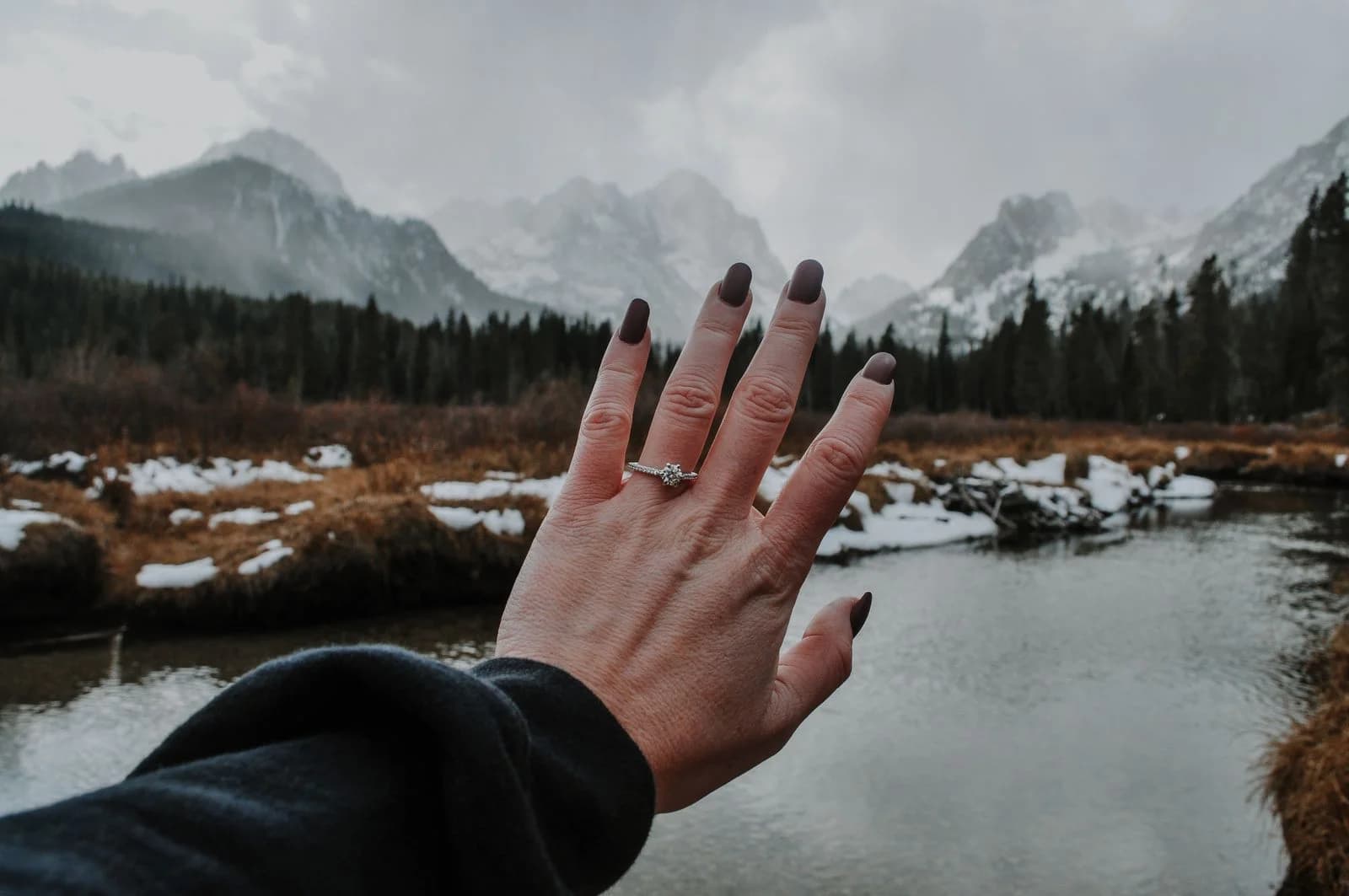
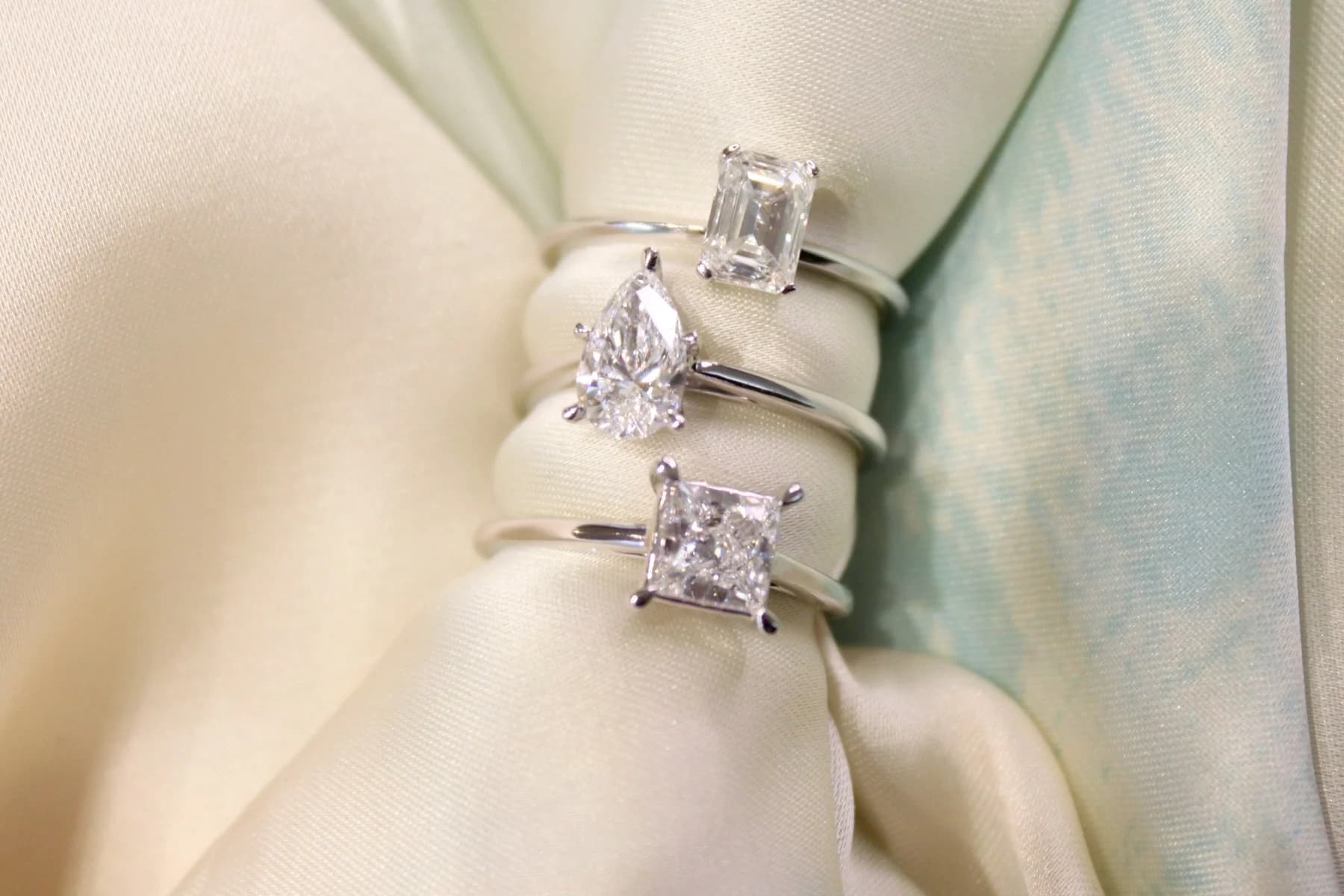
A single centre stone with little or no decoration, so all the attention goes to the stone's shape, size and quality. GIA says solitaires are valued for a clean, timeless look, pair easily with a wide range of wedding bands, and suit traditional and contemporary taste alike.

Suits you if: the wearer is a minimalist who wants a ring that won't date and a free hand with the wedding band, and a round or princess centre suits almost any finger.
Think twice if: they want the ring itself to tell a story, or they hope for a large overall look without paying for a large centre stone.
On the trip: this is the simplest style to travel with, and a lower head snags less than a high one, which makes flights and beach days calmer.
Cathedral is a way of lifting and holding a solitaire rather than a style of its own, so it belongs to the settings guide linked above.
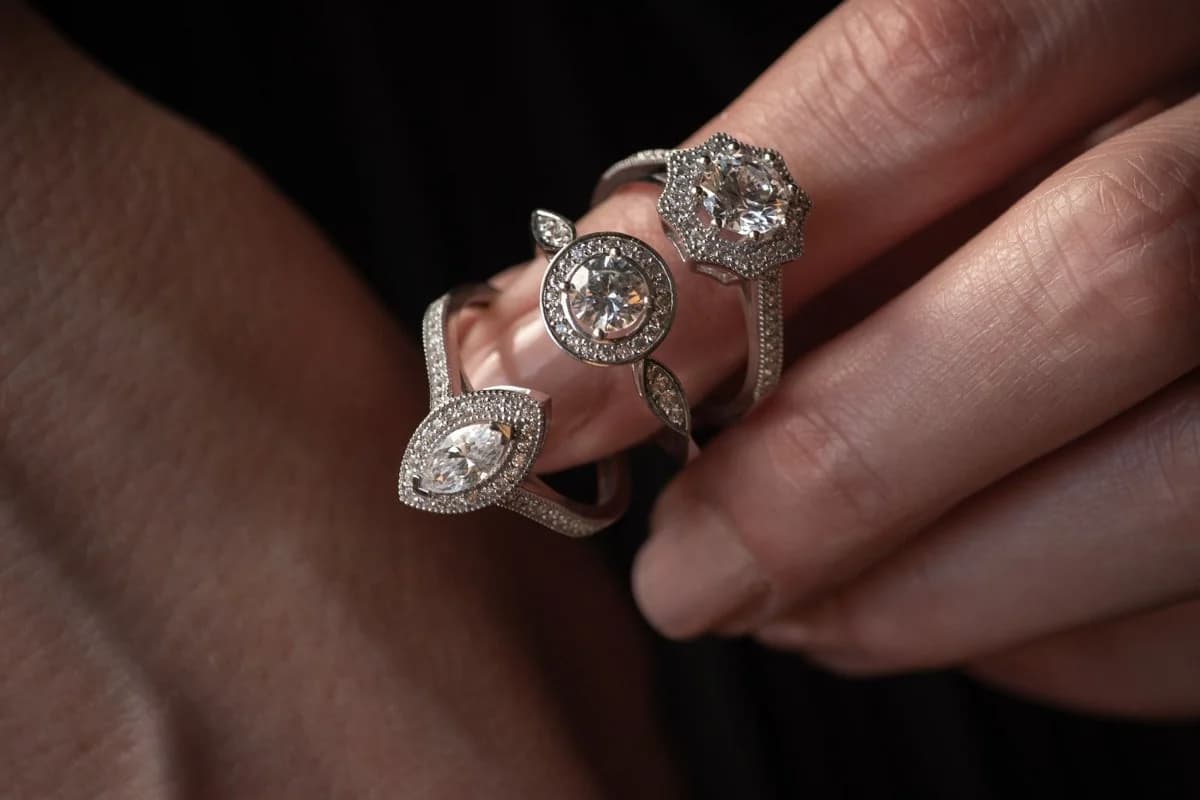
A centre stone ringed by a frame of smaller stones, which adds sparkle and can make the centre appear as large as the halo itself. The frame can be a fine line or a wide border that noticeably enlarges the face of the ring, and coloured stones can be used for contrast with the centre.

Suits you if: the wearer loves sparkle and a bigger face-up look, and enjoys a ring that catches the eye from across a dinner table.
Think twice if: they work with their hands, since many small stones and faster-wearing claws mean regular jeweller checks; on shorter fingers, try a slim halo first.
On the trip: have a jeweller check every small stone and claw before you fly, and take the ring off for snorkelling, pools and beach days.
A row of small stones tucked beneath the centre stone, visible mainly from the side; from above, the ring reads as a solitaire.

Suits you if: the wearer wants a clean solitaire look from above, with a private detail that only they and a good photographer will notice.
Think twice if: they expect the low-maintenance feel of a true solitaire, because the stones tucked under the centre still need regular checks.
On the trip: this style rewards the side-profile ceremony shot, so brief your photographer before the day to make sure the angle is not missed.
A centre stone flanked by two smaller side stones (sometimes sold as a trilogy ring), which may match the centre for extra width or differ in shape or colour. GIA says the design is read as yesterday, today and tomorrow: a couple's past, present and future.

Suits you if: the couple is sentimental or the proposal is a surprise, since GIA calls the design balanced and says it works whatever the size of the hand.
Think twice if: you are guessing the ring size, because side stones built into the band can make resizing harder, and they need occasional care.
On the trip: the wider face of three stones reads well in a close-up of hands together, so plan that shot with your photographer.
French for "you and me": two stones side by side, said to symbolise two lives intertwining, and popular in both antique-inspired and contemporary rings. The precedent is old: in 1796 Napoleon gave Josephine a sapphire and diamond toi et moi for their engagement.

Suits you if: the couple wants a ring that is plainly about two people, and the wearer is happy with a strong personality piece that sits among this year's engagement ring trends.
Think twice if: they want an easy wedding band pairing, because the stone arrangement complicates resizing and band fit, so plan the band early.
On the trip: two stones mean two settings to keep an eye on, so check both before you fly and remove the ring for pool and beach days.
An elongated stone (GIA's example is an oval) turned horizontally across the finger. GIA sees it as a modern, fashion-led choice that stands out most in pared-back or bezel-set rings, and notes the sideways turn can help a modest stone look bigger and less expected.

Suits you if: the wearer likes a classic stone shape with a modern twist, and wants a modest stone to look bigger and less expected.
Think twice if: they love the lengthening line of a long stone, because GIA notes the traditional north-south setting accentuates finger length, so try both directions on.
On the trip: set low, a sideways stone keeps a quieter profile that is less likely to catch on bags and blankets during a long-haul flight.
Several small stones grouped closely so they read as one larger shape, maximising sparkle. GIA adds that clusters use a lot of metal, which helps protect the stones. Shapes and colours can be mixed for a bold overall look.

Suits you if: the wearer loves texture, a floral or vintage feel and a generous look without one large stone, and on larger fingers it makes a bold statement.
Think twice if: they want a ring they never have to think about, because clusters may need regular maintenance to keep every small stone in place.
On the trip: as with a halo, have a jeweller check every small stone before you fly, and keep the ring off for water sports and the gym.
GIA calls jewellery antique once it is more than 100 years old, and vintage when it is no longer contemporary but not yet antique. Antique-inspired rings borrow the motifs, such as scrollwork, engraving and milgrain (tiny beaded metal edges); GIA links milgrain and latticework with the lacy look of the Edwardian era.

Suits you if: the wearer loves history and romance, and likes milgrain or engraved detail on a ring that looks inherited even when it is new.
Think twice if: you are buying a genuine old ring for daily wear, because GIA warns that ageing claws can weaken and leave the stone vulnerable.
On the trip: treat fine detail work as fragile, and follow GIA's advice to pack delicate pieces carefully in your carry-on or leave them at home.
The defining jewellery style of the 1920s and 1930s, built on geometric patterns and contrasting colours. Designers favoured emerald cuts and baguettes, with contrast, balance and symmetry throughout. Diamonds against black onyx or enamel are a telltale touch.

Suits you if: the wearer has architectural, fashion-led taste, and GIA points Art Deco towards people who want a pared-back look that still makes a statement.
Think twice if: their heart is set on an original from the 1920s or 1930s, since GIA notes a new ring with Art Deco motifs may be more practical.
On the trip: strong outlines and black-and-white contrast give a photographer something definite to work with in hard Mediterranean light, so close-ups stay crisp.
Many small stones set closely into the band, creating an unbroken run of sparkle that can make the centre stone look larger.

Suits you if: the wearer wants sparkle that runs all the way round the band rather than sitting only on top, and likes a larger-looking centre stone.
Think twice if: the size may change, because resizing can disturb the small stones; keep pavé off the underside of the band, where friction wears hardest.
On the trip: ask a jeweller to check the small stones before you fly, and take the ring off for sunscreen, sand and salt water.

A thin metal rim wrapped around the stone, which GIA says protects its edge from chips and daily wear, and whose smooth outline rarely snags on clothes or gloves. It gives a clean, modern look, though it lets in slightly less light than claws.
Suits you if: the wearer is active, outdoorsy or works with their hands, and GIA calls the bezel a practical choice for exactly that kind of life.
Think twice if: maximum sparkle is the point, because the metal rim lets in slightly less light than claws and gives the ring a quieter look.
On the trip: this is the most relaxed style here for a week of boats, beaches and luggage, and the settings guide above covers the mechanics.
A band that separates into two strands on either side of the centre stone. Set with small diamonds, a split shoulder can make the whole ring look a lot larger.

Suits you if: the wearer wants a bolder statement and more presence from the band itself, especially when the split shoulders are set with small diamonds.
Think twice if: they prefer a delicate look, because a thick band can overshadow the stone, and check how a wedding band will sit against the split.
On the trip: the open shoulders show best in a side-on shot of the hand, so ask your photographer to capture the ring from that angle.
Stones running part of the way (a half eternity) or all the way round the band, so the band is the statement.

Suits you if: the wearer prefers an even line of sparkle to a single raised stone, and likes a ring that sits close to the finger.
Think twice if: the size is uncertain, because channel- and bar-set bands are hard to resize, so a full eternity is best ordered in a confirmed size.
On the trip: stones on the underside take the most friction from luggage and handrails, so a half eternity is the easier travel companion.
In a bypass ring the band overlaps instead of closing the circle; GIA notes the style was popular in the Victorian era and can be combined with toi et moi. Today it sits within a broader family of asymmetric, wrap and open designs.

Suits you if: the wearer is creative and design-led, and would rather wear something unexpected than a ring that follows the classic closed circle.
Think twice if: they want a wedding band to sit flush, because the overlapping shape leaves gaps, so try the pair together before ordering.
On the trip: check that the open ends and raised edges don't catch on knitwear, bag straps or beach towels during a busy travel week.
Tension is a way of holding the stone rather than a style, so it also belongs to the settings guide.
Sapphire, ruby, emerald and others in place of a diamond. Hardness (the Mohs scale) measures scratch resistance only; durability also depends on toughness and stability. Sapphire and ruby are 9, second only to diamond at 10. Emerald sits at 7.5 to 8, yet it lacks toughness, commonly has fractures that reach the surface and is usually treated. Read GIA on sapphire, GIA on ruby and GIA on emerald before you choose. GIA also lists spinel, morganite, zircon, tsavorite and tourmaline among stones that can be worn daily with care.

Suits you if: the wearer is an individualist, or the couple wants to mark heritage or a meaningful place, and larger fingers can carry a larger stone.
Think twice if: an emerald will face daily knocks, because GIA says bezels, halos and other protective settings help prevent chipping in coloured stones.
On the trip: swap a softer stone such as emerald for a plain band on reef and pool days, and leave the ring locked in the room safe.
There is no correct hand for any ring. These are proportion and preference notes, drawn from GIA's guidance.
A simple design usually suits shorter fingers, where a complex one can overwhelm, and smaller rings with simple designs suit petite fingers. Long, slender fingers can carry the widest range, including larger stones and stacked bands. Round and princess centres, and the three-stone layout, suit almost any hand.
Knuckle size is a sizing conversation for your jeweller. Band width is where style comes in: larger fingers can wear a medium or wide band well, provided it feels comfortable. A slim band can make the stone look bigger, while a broad one reads as stronger and more modern.
The wedding band worn alongside will change the overall look, so try the two together. Solitaires are the easiest partner; toi et moi, bypass and split shank designs need more planning.
GIA notes some popular destinations and activities are hard on jewellery. A little planning keeps the ring safe and camera-ready.
Pack the ring in your carry-on, never checked luggage. If you are proposing on the trip, our proposal ideas at home, outdoors and abroad are a good place to start, and the same carry-on rule applies.
GIA advises removing diamond jewellery before chlorinated pools and hot tubs, as chlorine can erode some alloys and loosen claws. Before the photographer arrives, mild soap, warm water and a soft brush bring a stone back to brightness.
GIA advises taking the ring off for gardening and other risky activities, and leaving fragile pieces or softer gems at home or packed carefully. For snorkelling, sport and boat days, a plain band is the calmer choice.
A clean stone looks brighter, so book a professional clean before you leave. Hidden halos and split shanks show their detail side-on, so tell your photographer.
Tell your insurer your travel dates and check the policy covers loss and damage as well as theft.
Minimal taste, active life: solitaire (kept low) or bezel style.
Sparkle first: halo, pavé band or cluster, with a jeweller check every six months, or at least yearly.
Sentimental, or a surprise proposal: three-stone or toi et moi.
Design-led: east-west, art deco or bypass.
A story in the stone: coloured gemstone centre, protected where the stone is softer.
Unsure of the size: favour plain metal at the back, and avoid full eternity.
When you are ready, speak with a Wedded Advisor. A Wedded Advisor plans venue, travel, vendors and payments as your one point of contact, and the fee is agreed in writing before any work begins.
Still dreaming? Read the free Wedded Wonderland magazine.
Written by

SEO Specialist
Ayrton Christian Braga is an SEO Specialist at Wedded Wonderland, where he writes optimized articles and web pages that center on destination weddings, cultural wedding traditions, and guides for everything in between.
Search real weddings, venues and vendors from around the world.
Search Wedded Wonderland