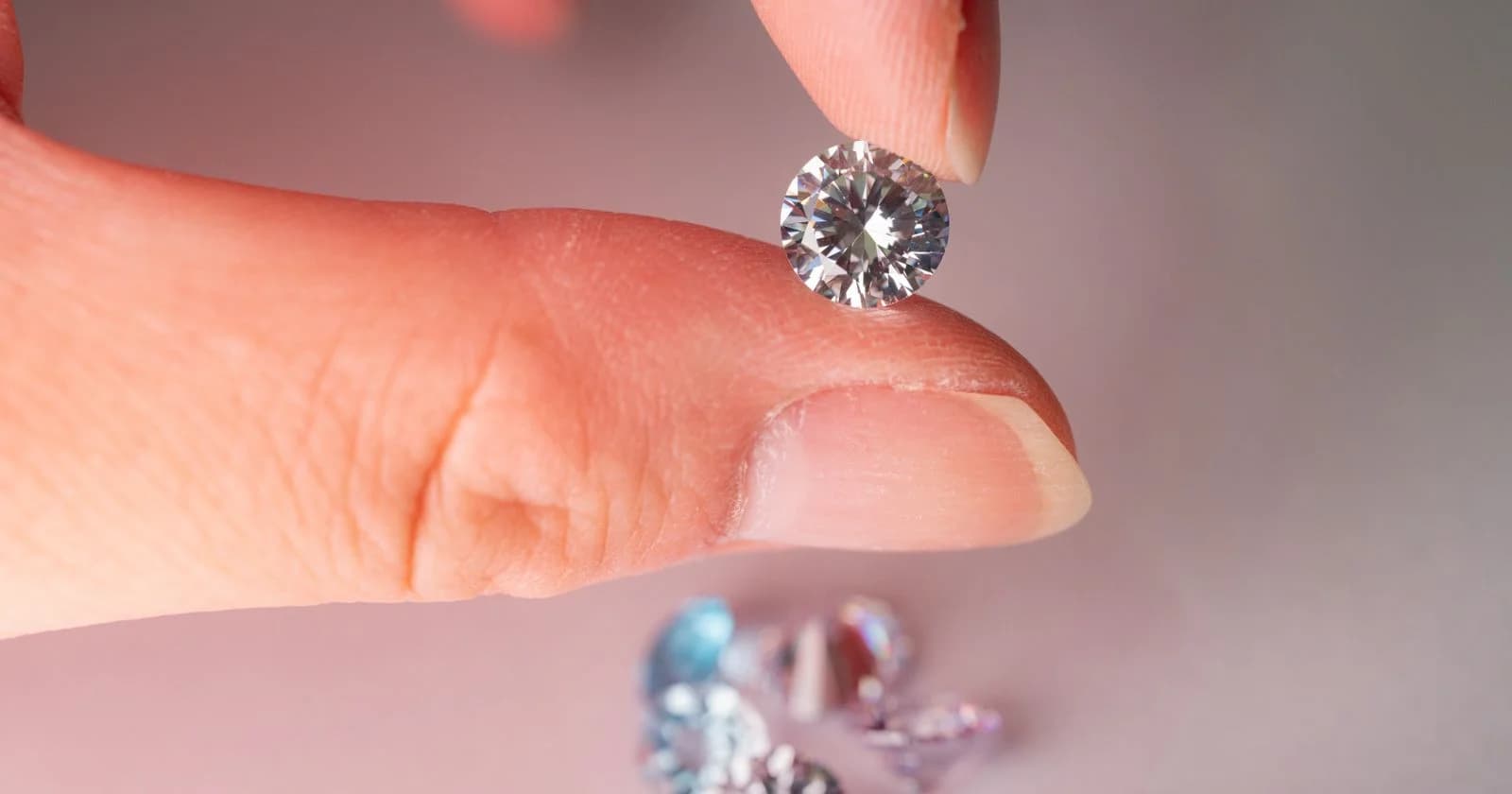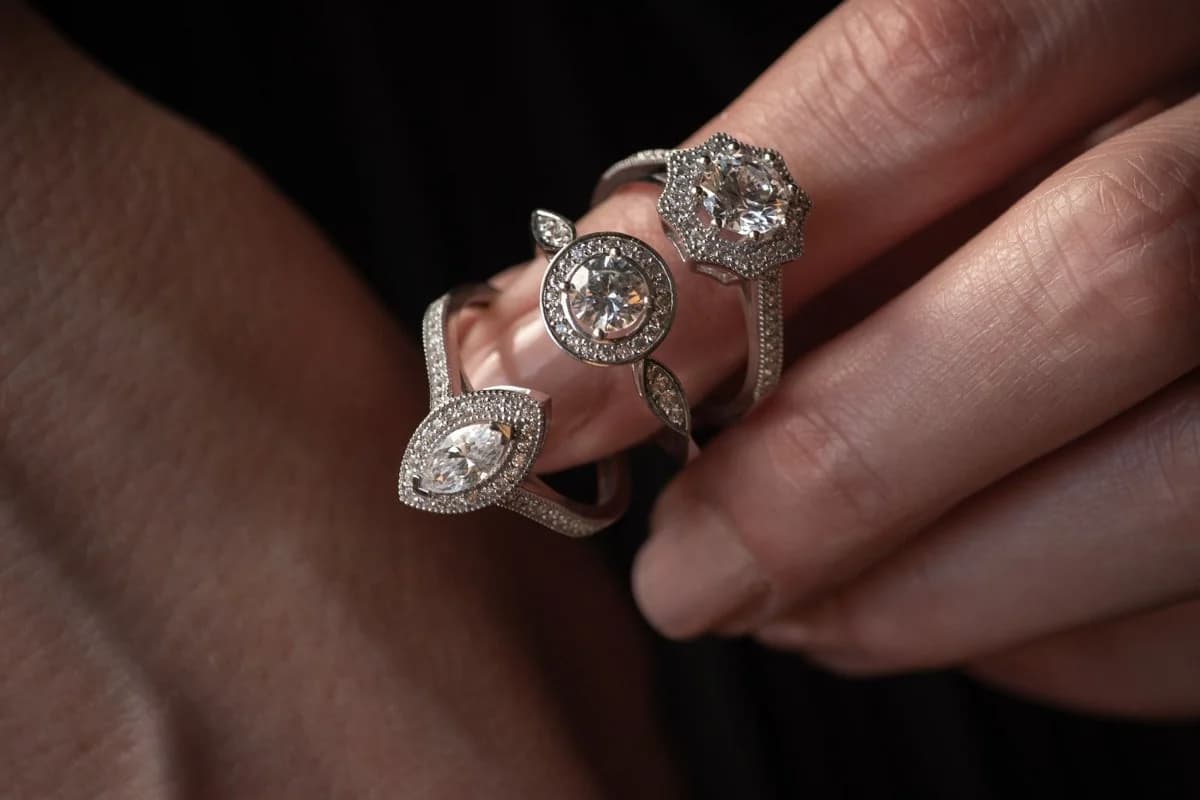
Most couples arrive at the jeweller knowing they want a diamond and little else. The first real decision is shape, and at Wedded Wonderland we find engagement ring cuts are where the choice turns personal: the same outline can lengthen the look of one finger, sit neatly on another and look quite different in afternoon sun. This guide covers eight shapes (round brilliant, oval, emerald, cushion, princess, pear, marquise and radiant), with what each does on the hand, what the Gemological Institute of America (GIA) says and when to simply try it on, all in terms of proportion, preference and light. For the money side, our diamond buying guide covers how the 4Cs shape value.
A quick reference to the eight engagement ring shapes on the hand. For real examples, browse celebrity engagement rings by shape.
Shape | On the hand | What GIA says | Feel |
|---|---|---|---|
Round brilliant | Balanced, neither longer nor wider | Suits almost any finger | Classic, brightest |
Oval | Longer when set north-south | Elongated; works on petite fingers | Soft, vintage |
Emerald | Longer; broad flashes of light | Elongated | Clean lines, Art Deco |
Cushion | Compact or slightly long, rounded corners | No guidance: try it on | Warm, vintage |
Princess | Compact, crisp corners | Suits almost any finger | Bold, modern |
Pear | Longer; one point | Elongated | Dramatic |
Marquise | Long and narrow, two points | Elongated | Historic, revived |
Radiant | Longer if rectangular, compact if square | Elongated (rectangular only) | Geometric with sparkle |
In everyday speech, "cut" usually means shape. GIA separates the two: shape is the outline of the diamond seen from above, while cut style is how the facets are arranged and angled, which changes the sparkle and the overall look. Some names, such as emerald cut and princess cut, describe both at once.
The two cut styles you will hear most are brilliant and step. Brilliant cuts use many small kite-shaped and triangular facets for brilliance and fire, and the busier pattern helps mask inclusions and colour. Step cuts use long, concentric facets that create what GIA calls a "hall of mirrors" effect: a gleam rather than sparkle, with colour and clarity in plainer view.
Round brilliant, pear and princess are brilliant cuts; emerald and Asscher are step cuts. Cut grade is a separate matter again. GIA grades cut only on round brilliants, and every other shape is classed as a fancy shape. The diamond buying guide explains how cut grade and the other 4Cs work; this piece stays with shape, drawing mainly on GIA's guide to diamond engagement ring shapes.
Read GIA's guidance on ring styles that flatter hands and fingers for proportion, not prescription. The right shape is the one the wearer enjoys looking down at.
Marquise, oval, rectangular and pear shapes have what GIA calls a north-south axis, and set that way they can lengthen the look of the finger. Longer fingers have the most options, though GIA notes proportion still matters.
Turn the same stone sideways and the effect changes. An east-west setting runs an elongated stone across the finger for a more contemporary look.
Some wearers would rather the ring sit in harmony with shorter fingers than lengthen their look. GIA's example is a round brilliant or princess with small side stones on a narrow band. For petite fingers, GIA names the round brilliant, princess and oval, and suggests simpler designs, since a very large stone can overwhelm a small hand.
For wider fingers, GIA suggests a medium to wide band that is comfortable rather than tight and a wide stone rather than a narrow one.
GIA's closing advice is the most useful: the engagement ring will be worn with a wedding band, and the pair changes the overall look. Try them together from the first appointment. For halo, three-stone and other overall looks, see engagement ring styles and who each one suits.
Still gathering ideas? Read the free Wedded Wonderland magazine.

The round brilliant is the most popular diamond shape, and by GIA's measure it has the most brightness of all diamond cuts. The standard round brilliant has 57 or 58 facets, and it is the only shape GIA gives a cut grade.
On the hand, a circle is balanced. It neither lengthens nor widens the look of the finger, which makes it the reference point for every other shape. It also leaves the wedding band free to shape the overall look of the pair.
Suits: almost any finger length and shape, according to GIA.
Practical note: try it beside an oval on the same hand to see what elongation does.
In outdoor light: if sparkle in daylight matters most, start here.

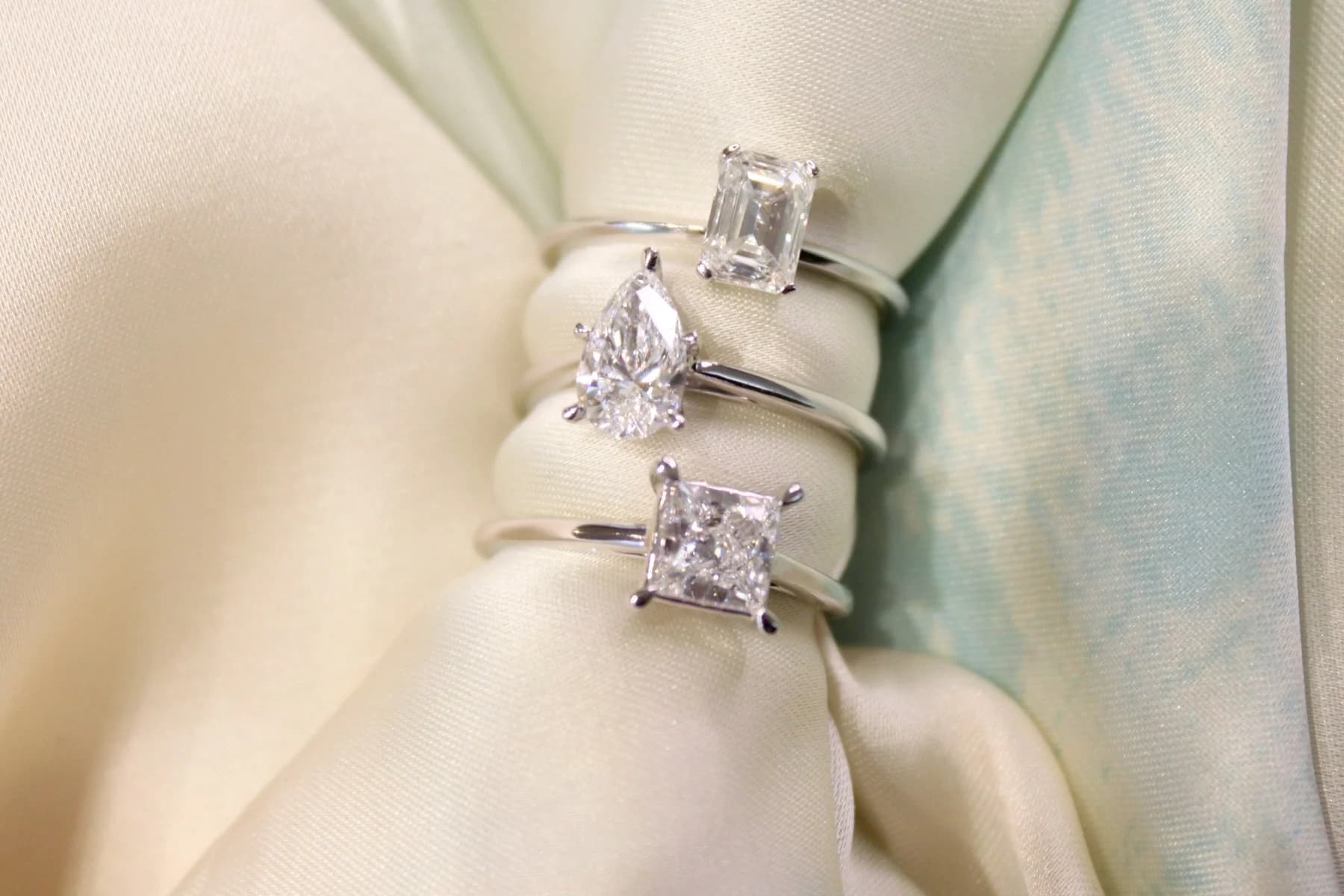
The oval is a brilliant cut: a round's fire and brilliance, drawn out into a longer outline. Most ovals have a length-to-width ratio of 1.3:1 to 1.4:1. GIA places the oval, with the cushion, among shapes that can have a softer appearance and a more vintage feel.
In GIA's words, the shape of an oval engagement ring makes the finger appear longer. Its rounded ends read softer than a marquise's points.
Suits: wearers who want a longer line on the finger. GIA also lists the oval among cuts that work well on petite fingers.
Practical note: some ovals show a bow-tie, a dark, bow-tie-shaped shadow across the centre. A slight one is normal, and in a well-cut stone it is subtle.
In outdoor light: the bow-tie shifts with lighting and viewing angle, so GIA recommends seeing the stone in person or on video in several lights. Step outside the showroom if you can.

The emerald cut is a step cut with a rectangular outline and cropped corners. Its appeal is clarity, symmetry and lustre more than sparkle: long, open facets produce clean lines and a hall of mirrors gleam. The name comes from the cutting style, first developed for emeralds. If you prefer calm to sparkle, this is the shape to start with.
Suits: an emerald cut engagement ring set north-south lengthens the look of the finger, according to GIA, which pairs it with minimalist, Art Deco or vintage-inspired settings.
Practical note: the large table and open facets show inclusions and colour more easily than most shapes.
In outdoor light: look at it in strong daylight as well as showroom light. Step facets read as broad flashes rather than pinpoint sparkle.
The Asscher is a square step cut developed in the early 1900s and popularised in the Art Deco era. It has a high crown, a small table and a compact hall of mirrors effect, and many show an "X" pattern face-up. Like the emerald, it reveals inclusions and colour more readily than a brilliant cut. It is the emerald's calm in a square that sits compact on the finger.

A cushion cut engagement ring has a square or rectangular outline with rounded corners, so the stone reads soft and pillow-like, somewhere between a round and a princess. GIA describes its feel as warm and vintage. It comes in two main styles: one with larger facets and softer sparkle, and a modified version with a "crushed ice" look.
Cushions often have slightly deeper proportions, which can make them look a little smaller face-up than other shapes of the same carat weight.
If you love the softness of an oval but want a squarer outline, the cushion is the natural next try.
Suits: GIA gives no hand or finger guidance for the cushion, so the honest answer is to try it on. A square cushion sits compact; an elongated one leans longer. Ask to see both faceting styles too.
In outdoor light: the larger-faceted style gives a softer sparkle, while the modified style has a "crushed ice" look.

The princess cut, also called the square modified brilliant, is a square brilliant with clean lines and sharp, pointed corners. GIA notes princess cuts are often seen as bold and modern.
It may look slightly smaller than other square diamonds, such as the Asscher, because its deep pavilion carries weight at the bottom of the stone.
Suits: GIA's view is that it suits almost any finger length and shape.
Practical note: those sharp corners need a protective setting to prevent chipping. Our guide to engagement ring settings that protect corners and points covers how. Try one beside a cushion to feel sharp corners against soft.
In outdoor light: as a brilliant cut, it gives sparkle rather than the broad flashes of a step cut.

The pear, or teardrop, takes its brilliance from the round and its drama from the marquise, and its long outline lengthens the look of the finger. Most pears have a length-to-width ratio of 1.3:1 to 1.4:1. It suits a couple who wants some of the marquise's drama with one rounded end.
Suits: wearers who want a longer line. GIA lists the pear among elongated shapes that can lengthen the look of the finger.
Practical note: it can be worn point up, point down or at an angle, and is often worn with the point facing outward along the finger. Try both directions. The tip calls for a secure prong or bezel setting to help prevent chipping.
In outdoor light: pears can show a bow-tie too, and it changes with the light, so look at the stone indoors and out.

The marquise, also called the navette (Old French for "little ship"), is an elongated brilliant with two pointed ends. A classic marquise is about twice as long as it is wide, and stones submitted to GIA most often fall between 1.6:1 and 2.2:1.
Legend has it Louis XV commissioned the cut in the 1740s and named it for the Marquise de Pompadour. It was popular in the Edwardian era and again from the 1970s to the 1990s, and is attracting renewed interest.
Face-up, a marquise often looks larger than a round diamond of the same carat weight.
Suits: the marquise creates a lengthening effect on the finger, according to GIA, and at roughly 2:1 it is longer for its width than a typical oval or pear.
Practical note: the points are the most vulnerable areas. V-prongs, six-prong settings or partial or full bezels protect them, and some cutters add "French tips" faceting to strengthen them. GIA's guide to choosing a marquise diamond has more.
In outdoor light: like the oval and pear, it can show a bow-tie that shifts with lighting, so see it in several lights.

The radiant has a square or rectangular outline with cropped corners, giving the emerald cut's geometry the facets of a brilliant. With about 70 facets, it has a "crushed ice" look, and the faceting helps mask inclusions.
Suits: it depends on proportion. A rectangular radiant lengthens the look of the finger, much like an emerald or oval, while a square radiant sits compact and symmetrical.
Practical note: the cropped corners help prevent chipping, which in GIA's assessment makes the radiant practical for everyday wear. Love the emerald outline but want more sparkle? Compare an elongated radiant beside it.
In outdoor light: expect "crushed ice" sparkle rather than the emerald's broad flashes.
GIA's advice is to try various diamonds and settings on and see how they look. A simple routine helps:
Start with two. A round and an oval on the same hand show what elongation does.
Photograph from above, then at arm's length. One is the wearer's view; the other is everyone else's, and the camera's.
Turn it. Try elongated shapes north-south and east-west; the lengthening effect depends on orientation.
Go outside. GIA recommends seeing elongated stones in several lights because the bow-tie shifts with lighting and angle. That includes the daylight of an outdoor ceremony.
Add the band. Wear the shape beside the wedding band you have in mind, since the pair changes the whole look.
Live with it. If a mock-up is offered, wear it for a day before deciding.
Most couples walk into the jeweller knowing they want a diamond and little else, and walk out knowing which shape feels like theirs. Trust that instinct, and remember that the same stone looks quite different in afternoon sun than it does under showroom lights. So once the shape is settled, picture where you will wear it: the light, the setting and the day itself.
Written by

SEO Specialist
Ayrton Christian Braga is an SEO Specialist at Wedded Wonderland, where he writes optimized articles and web pages that center on destination weddings, cultural wedding traditions, and guides for everything in between.
Search real weddings, venues and vendors from around the world.
Search Wedded Wonderland