Most advice on choosing a diamond is written by someone with a tray of stones to sell you. This Wedded Wonderland diamond buying guide ranks the 4Cs by what actually changes how a diamond looks on the hand, shows you how to check a GIA or IGI report number yourself before any money moves, and explains how natural and lab-grown stones are disclosed. It also covers what the Kimberley Process does and does not promise, and buying or carrying a stone abroad.
The 4Cs are cut, colour, clarity and carat weight. Each is graded separately, but you only ever see one stone, on one hand.
Our view is simple. For a round brilliant, put cut first. Cut is the C that describes how a diamond handles light: its brightness, its fire and the sparkle you see when it moves.
Once the cut is right, balance the other three: some couples prefer a slightly larger, warmer stone, others a whiter one at a smaller size. What matters is knowing that a diamond's quality reflects all four Cs together, not carat weight alone.
For fancy shapes, the order shifts. There is no single cut grade to anchor the decision, so you judge cut with your own eyes (more on that below).
Meanwhile, for the money side, see our guide on how much to spend on an engagement ring.
"Cut" is often used to mean shape, but the two differ. Shape is the outline of the stone. Cut describes the whole design, including how the facets are arranged and proportioned, and those proportions change how the stone looks face up.
According to GIA's explanation of diamond cut, three qualities describe how well a diamond is cut. Brightness is the white light reflected back to you. Fire is light split into spectral colours. Scintillation is the pattern of light and dark areas, and the flashes you see as the stone moves.
GIA's cut grading system grades standard round brilliants in the D-to-Z colour range on a scale from Excellent to Poor. The grade weighs three things: face-up appearance (brightness, fire and scintillation), design (including weight ratio and durability) and craftsmanship (polish and symmetry).
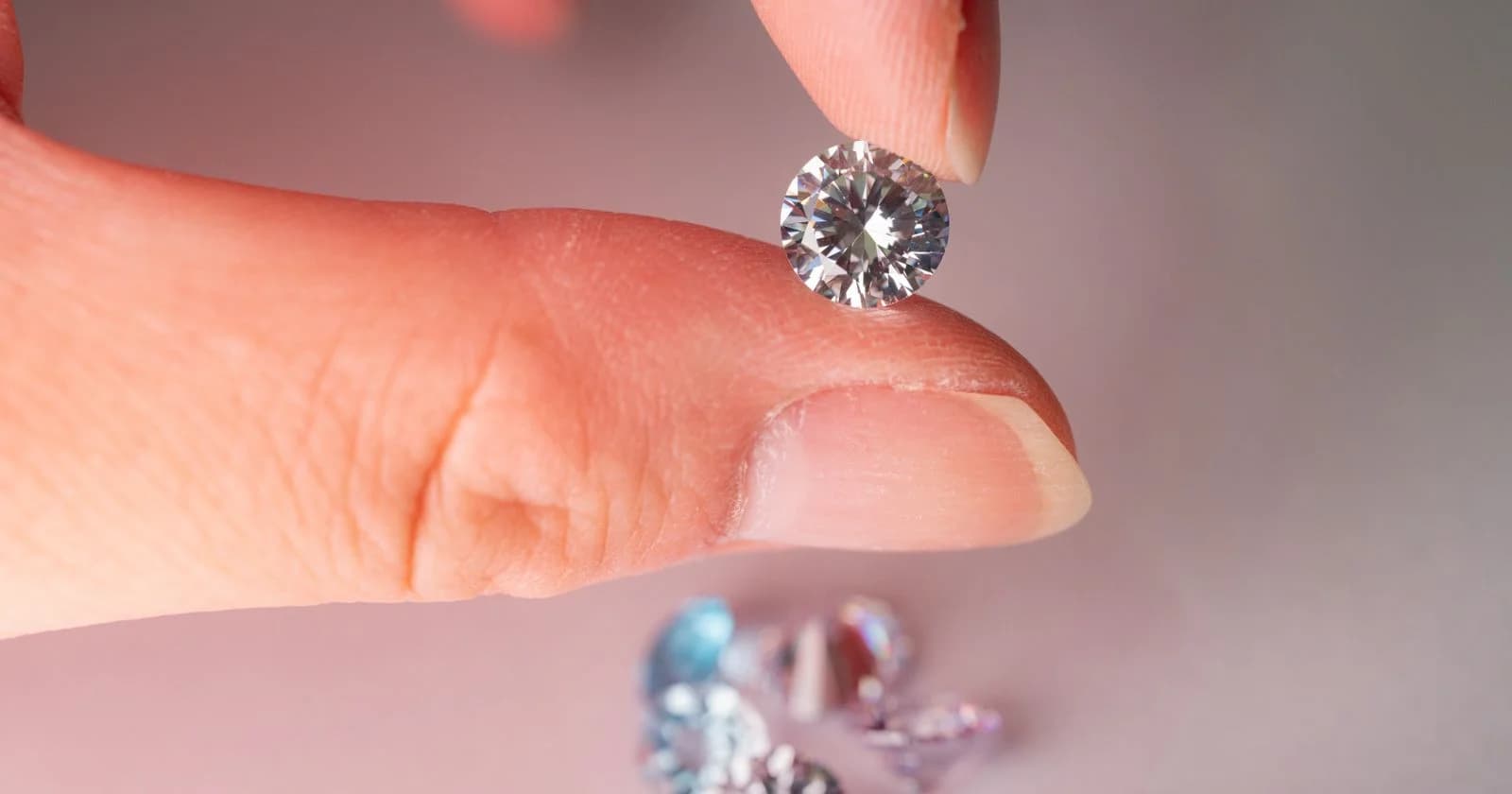
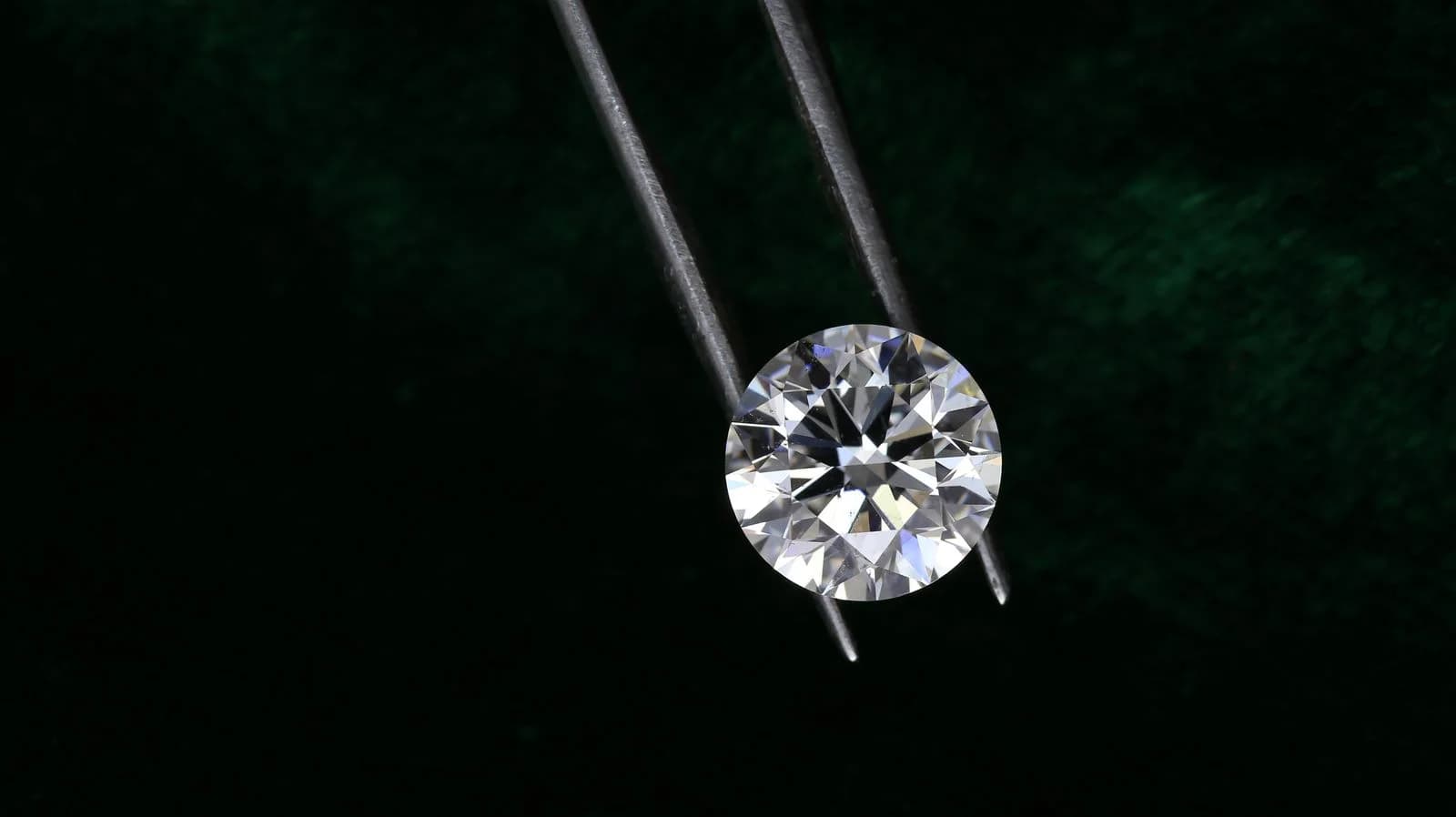
A round brilliant has 57 or 58 facets, the 58th being the culet at the point. Each cut grade also covers a range of proportions, so two stones with the same grade can look a little different, and there is room for your own taste within a grade.
GIA gives cut grades only to round brilliants, because they are the only cut with standardised facets. Every other shape, including oval, pear, marquise, emerald and heart, is a fancy shape.
So a report on an oval or pear will not tell you how well it was cut. Ask the jeweller for the stone's proportions, then judge it face up, in person, next to other stones of the same shape. Look for even brightness, with no large dull or dark areas.
GIA's colour scale starts at D, which is colourless, and runs to Z, which shows a light yellow, light brown or light grey tint. Each stone is graded under controlled lighting by comparing it with a set of masterstones.
The difference between neighbouring grades can be very subtle, yet those small differences still make a real difference to a diamond's quality. Beyond Z sits a separate category, fancy colour, for diamonds with more colour than the Z masterstone or a colour other than yellow, grey or brown.
In plain words, stones near D look icy white, and a soft warmth creeps in further down the alphabet. Where your eye stops noticing it depends on the stone, the light and the setting.
Judge colour with the setting metal in view, not on a white tray alone: ask to see a shortlisted stone against the metal you plan to use, in daylight as well as shop lighting.

Almost every diamond has some small internal or surface features. GIA calls the internal ones, and those reaching the surface from inside, inclusions, and the external ones blemishes. The clarity grade depends on their number, size, relief, nature and position.
GIA's clarity scale has 11 grades, all judged at 10x magnification. From the top, they run Flawless (FL), Internally Flawless (IF), VVS1 and VVS2, VS1 and VS2, SI1 and SI2, then I1, I2 and I3. At the I grades, inclusions are obvious and may affect transparency, brilliance and durability.
Keep clarity in proportion. Many inclusions and blemishes cannot be seen without magnification. And most diamonds you will see in jewellery stores fall somewhere between VS and SI.
You will hear jewellers describe a stone as "eye-clean". It is a trade term, not a GIA grade, and it simply means you cannot see inclusions without magnification. Whether a given stone is eye-clean depends on where its inclusions sit and how large they are, and on the stone's own size and shape.
If a report says SI, view the stone face up, unmagnified, and ask where the inclusions are plotted.
Carat is a measure of weight, not size. One metric carat is 200 milligrams, divided into 100 points, so a quarter-carat stone is sometimes called a "twenty-five pointer".
Because carat is weight, it tells you nothing on its own about how wide a stone looks from above. Proportions do that. A stone that carries much of its weight deep below the girdle can look smaller face up than a shallower stone of the same weight.
GIA is clear that two diamonds of the same carat weight are not necessarily equal, because quality reflects all four Cs.
GIA describes 1.00, 1.50 and 2.00 carats as "magic sizes", because buyers find those round numbers especially desirable. Yet a 0.99 carat diamond is very hard to tell apart by eye from a 1.00 carat stone.
If a round number matters to you, choose it knowingly; if not, ask to see stones just under each magic size too.

The main shapes you will be shown are round, oval, cushion, emerald, pear, princess, radiant, marquise and Asscher. For the overall look of each and who it tends to suit, see our guide to engagement ring styles and who each one suits. Here, the question is narrower: how shape changes the way you read the 4Cs.
The first difference is cut grading. Only round brilliants receive a GIA cut grade; every other shape is a fancy shape judged without one. The second is proportion. Elongated shapes such as marquise, oval and pear have a north-south line that can make the finger look longer.
With any oval, pear or marquise, look across the middle of the stone for a darker band, which the trade calls a bow-tie. Turn the stone slowly face up beside another of the same shape; if a dark band stays put at every angle, weigh it against the stone's other qualities.
Pointed shapes need care for another reason. Stones with exposed points or very thin girdles, such as pears and marquises, are more prone to chipping, and V-shaped prongs are used to protect pointed corners. A diamond rates 10 on the Mohs scale for scratch resistance, but a hard knock can still cleave or fracture it. Our guide to engagement ring settings for an active lifestyle covers protective settings in detail.
Emerald and Asscher are step cuts, with long, open facets rather than a brilliant's many small ones. Before you settle on a clarity grade for one, ask the jeweller where its inclusions are plotted, then view the stone face up without magnification.
Still gathering ideas? Read the free Wedded Wonderland magazine.
A grading report is the independent record of a diamond's characteristics. GIA and IGI are the laboratories you are most likely to see named. We found no independent published comparison of the two that we could cite, so this guide does not rank them. What matters is that you read the report properly and check it belongs to the stone in front of you.
Expect a natural diamond report to set out the stone's shape and measurements, its colour and clarity grades, its carat weight, a cut grade where one applies, and its fluorescence. For lab-grown stones, the report should state the origin clearly. Read every line, including the comments section, rather than skimming the grades.
A stone may carry its report number laser inscribed on the girdle, the thin edge around the widest part. Labs also mark origin this way: GIA inscribes the laboratory-grown diamonds it evaluates to show they are lab-grown, alongside a GIA number, and IGI's lab-grown reports note an "LG" prefix ahead of the inscribed number.
The exact wording varies, so ask to see the inscription under a loupe or microscope and check it against the report in your hand.
GIA's Report Check lets you look up a GIA report using its report number, and the GIA app can do the same. IGI reports can be checked by entering the report number on IGI's own website. For either lab, use the lookup the lab's own site currently offers.
Do it before any money moves. Type the number in yourself, on the lab's own website, rather than following a link or QR code someone hands you. Then check that the online record matches the paper report and the girdle inscription: shape, measurements, carat weight and grades.
A grading report describes the stone's characteristics; you will find no dollar figure on it, so do not treat it as a valuation. If your insurer needs one, ask what document it accepts and who should prepare it.

A laboratory-grown diamond is a real diamond, not an imitation. In the United States, the Federal Trade Commission's jewellery guides allow terms such as "laboratory-grown" or "laboratory-created" only where the product has essentially the same optical, physical and chemical properties as a mined diamond. The same guides expect that term to sit immediately before the word "diamond", with equal prominence.
The choice is personal. Neither is automatically the more ethical option, and this guide makes no claim about value or resale for either.
Both GIA and IGI issue reports for laboratory-grown diamonds, and both inscribe origin on the stone as described above. Do not assume a lab-grown report reads like a natural one; check the lab's own site for how it currently reports lab-grown stones.
The disclosure question is not new. In 2019, FTC staff in the US sent warning letters to companies whose advertising did not make clear that their diamonds were not mined.
In general terms, Australian Consumer Law prohibits misleading or deceptive conduct, which includes how a product is described to you. As at October 2026, we found no Australian guidance written specifically for lab-grown diamonds.
Fluorescence is the soft glow some diamonds give off under ultraviolet light. Reports describe its strength under long-wave UV as None, Faint, Medium, Strong or Very Strong, and note the colour of the glow from Medium upwards. It is an identifying characteristic, not one of the 4Cs.
In practice, it rarely changes how a stone looks. The common worry is haziness, but according to GIA's article on diamond fluorescence, fluorescence does not cause haziness on its own; it can only intensify haziness already present in rare stones. In a GIA study of E, G, I and K colour stones, average observers saw no systematic effect, and strongly blue stones were seen as having better colour when viewed table up.
There is one case where blue fluorescence can help. In a faintly yellowish stone in the I to M range, it can make the diamond look more colourless in daylight, though it does not change the colour grade. GIA's advice is to view a fluorescent stone in person under different lighting, including daylight, and compare it with stones of the same grade.
The Kimberley Process is an international initiative and intergovernmental forum set up to keep conflict diamonds out of the legitimate trade. Its certification scheme came into force in 2003 and covers rough diamonds. Under it, participating countries may trade rough diamonds only with other participants, and every export must carry a valid certificate. The Kimberley Process explains its own scope on its website.
Its definition is narrow. A conflict diamond, for the scheme's purposes, is a rough diamond used by rebel movements or their allies to fund conflict aimed at undermining legitimate governments. Global Witness, which left the scheme in 2011 after serving as an observer, says this rebel-focused definition leaves the scheme unable to address wider human rights risks.
So "Kimberley Process compliant" speaks to one specific problem. It is not a broad statement about labour or environmental standards, and the certificate travels with rough stones, not the polished diamond you buy.
What do you know about where this stone was mined, or where it was grown?
Beyond Kimberley Process compliance, what records do you hold for the polished stone?
Who cut and polished it, and where?
Can you put the origin details you have given me in writing on the receipt?
A good jeweller will answer plainly, including "we don't know" where that is the truth.

Buying the stone abroad, or carrying it to a proposal overseas, is straightforward with the right paperwork and insurance in place. If you are still planning the moment itself, our step-by-step guide on how to propose covers it.
As at October 2026, the Australian Border Force duty-free allowance for travellers aged 18 and over is AUD900 of general goods, and jewellery counts as general goods. Families on the same flight can pool their allowances if they clear Customs together.
If you go over the allowance, duty and tax apply to all goods of that type, not just the amount above the limit. Declare the ring and have proof of purchase ready; failing to declare can lead to penalties, prosecution or visa cancellation. If you claimed a GST refund under the Tourist Refund Scheme on anything, you must declare those goods on your return. Goods you have owned and used overseas for 12 months or more are free of duty and tax.
These rules can change, so check the Australian Border Force page before you travel.
Keep the ring in your hand luggage, never in checked bags. GIA advises carrying jewellery in carry-on, telling your insurer your travel dates, and checking that your policy covers loss and damage as well as theft. Smartraveller notes that travel insurance often caps cover per item, that valuables in checked luggage are often not covered and unattended bags never are, and that you should keep receipts to prove ownership.
Travel with copies of the grading report and receipt, kept separately from the ring itself.
Take this into every appointment, at home or overseas.
Shape chosen, and seen in person on the hand.
Cut grade noted for a round brilliant, or proportions requested for a fancy shape.
Colour range agreed, and the stone viewed against your chosen metal in daylight.
Clarity range agreed, and the stone checked face up without magnification.
Carat range set, including stones just under each magic size.
Report lab and number checked on the lab's own website, typed in by you.
Inscription on the girdle viewed under a loupe and matched to the report.
Natural or lab-grown confirmed in writing on both the receipt and the report.
Origin questions asked, and the answers written down.
Fluorescence noted, and a fluorescent stone compared in daylight if relevant.
Return, exchange and resizing policy received in writing.
Insurance arranged before travel, with travel dates and per-item limits checked.
Where you ask, and later where you marry, are the next decisions, and both are easier once you can picture the place.
Browse wedding destinations by region
Look around at your own pace, no enquiry needed.
If you plan with Wedded Concierge, your Wedded Advisor confirms the current requirements for carrying and declaring a ring with you before you travel, as these rules can change.
Written by

SEO Specialist
Ayrton Christian Braga is an SEO Specialist at Wedded Wonderland, where he writes optimized articles and web pages that center on destination weddings, cultural wedding traditions, and guides for everything in between.
Search real weddings, venues and vendors from around the world.
Search Wedded Wonderland