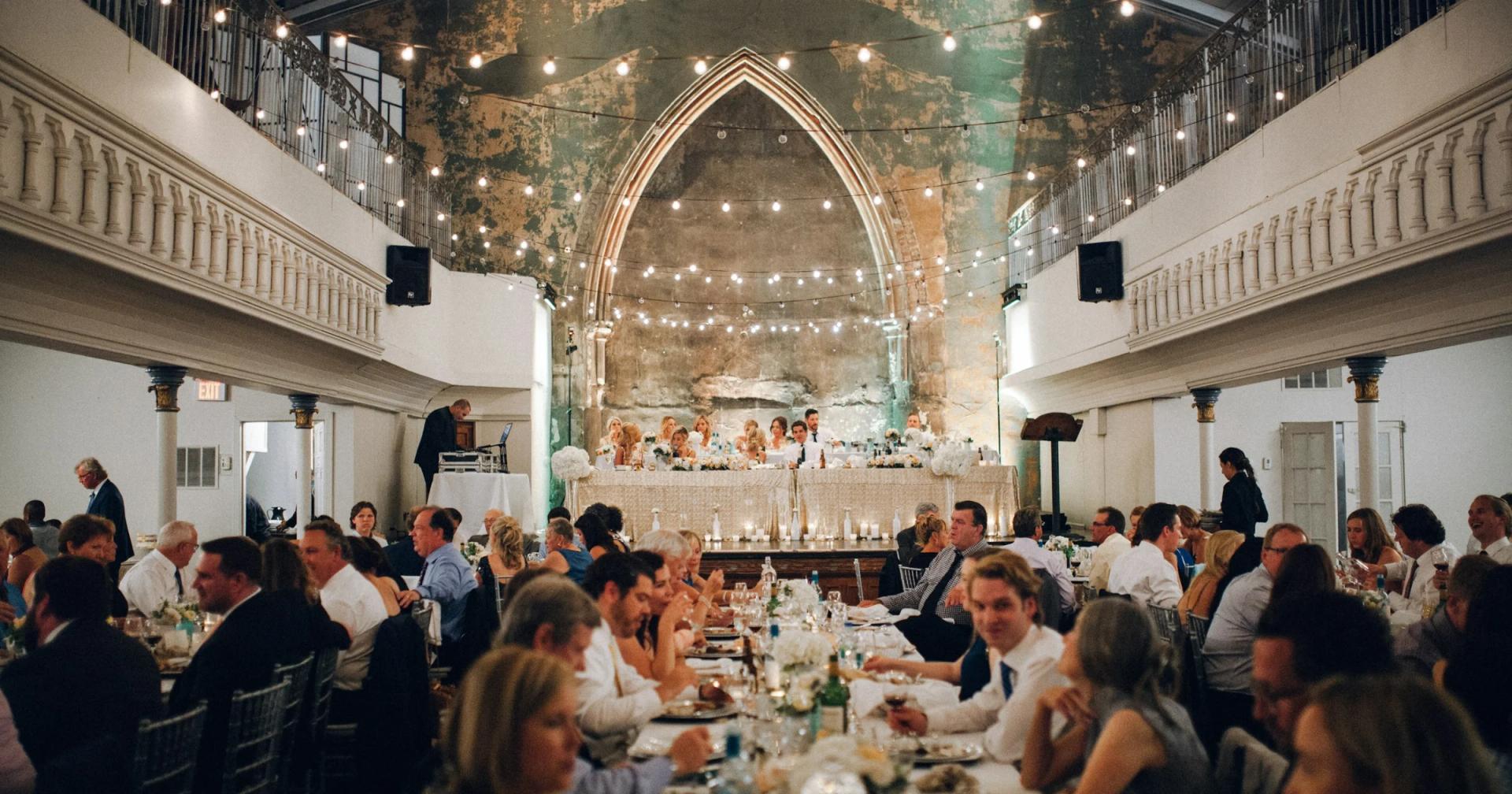
Handling your wedding's seating chart can feel like a job that never ends. But what if you didn't have one, and guests can sit wherever they like? A wedding without a seating chart doesn't have to remain a fantasy, you know. Let this Wedded Wonderland guide show you how to turn it into reality.
No. Nothing in wedding etiquette says you must have one. A seating chart is a tool, and it earns its place only when it solves a problem you actually have.
Ask yourself these questions. Will guests be served a plated meal at a set time? Is the guest list made up of groups who don't know each other? Do some family members need to be seated with care? If every answer is no, let guests sit where they like. If any answer is yes, a light plan or a full one will make the evening easier.
And if you decide you want one after all, our guide on how to make a wedding seating chart takes you through it step by step, from table shapes to who sits where.
Open seating works when the format of the evening keeps people moving, or when the guests already behave like one table. These are the settings where you can safely let guests choose.

When food arrives on trays and guests stand with a glass in hand, a seating chart has nothing to do. Mix high bar tables, low lounges and chairs for anyone who needs to sit, and the room organises itself.
Shared platters, grazing tables and chef stations let guests eat when they are ready, so nobody is waiting on a table number to be served. If you are still deciding how dinner will run, read our guide to choosing a wedding food service style before you settle the seating.
Old friends, a close extended family, a crowd from university: these guests find each other without help, and open seating lets them sit with the people they came to see.
At an intimate wedding, one long candlelit table changes the question: the only decision is where the two of you sit. If you are planning a micro wedding, open seating will feel natural rather than casual.
Nobody expects a place card at welcome drinks by the pool or a recovery lunch the next day.
Open seating fails quietly. Nobody complains on the night, but guests remember standing with a plate, looking for a gap.
If guests chose their main course with their RSVP, the kitchen needs to know where each guest sits. Without a plan, waiters ask every guest what they ordered, and service slows for the whole room.
A guest with a serious allergy needs their meal to reach them, not the person in the next chair, and a food allergy reaction can include anaphylaxis. Open seating makes that harder, so whatever your seating, give your caterer the list of guest allergies early.
In Australia, for food that doesn't carry a label, allergen declarations must be displayed in connection with the food or provided to the purchaser on request. That obligation sits with your caterer, and this is general information rather than legal advice. For a wedding overseas, don't assume Australian rules apply: ask the venue how its kitchen handles allergens and how each meal will reach the right guest.
Grandparents and guests with limited mobility shouldn't have to compete for the chairs closest to the door, the bathrooms and the speeches.
Queensland Government guidance on accessible events advises that at events with table seating, people shouldn't be placed too close to each other, and chairs should be removed so guests who use wheelchairs can reach the tables. The same guidance advises against seating everyone who uses a wheelchair together. Reserved seats with clear access, close to the action and at the same tables as their own family and friends, answer both.
Divorced parents, a recent falling out, two sides of a family who are polite but not close. A seating chart keeps the peace quietly; open seating leaves it to chance.
A colleague or a plus one meeting everyone for the first time can end up on the edge of a table of strangers. Asking a friend to bring that guest into their group does as much as a place card.
The choice isn't all or nothing. There is plenty of room between a full chart and open seating.

Give each guest a table, then let them choose their chair. Escort cards or a table list at the entrance group friends without the puzzle of who sits beside whom, and give your caterer a table for each dietary meal.
Set aside a table or two for parents, grandparents and the wedding party, and leave the rest open. Your closest people are looked after, and everyone else sits where they like.
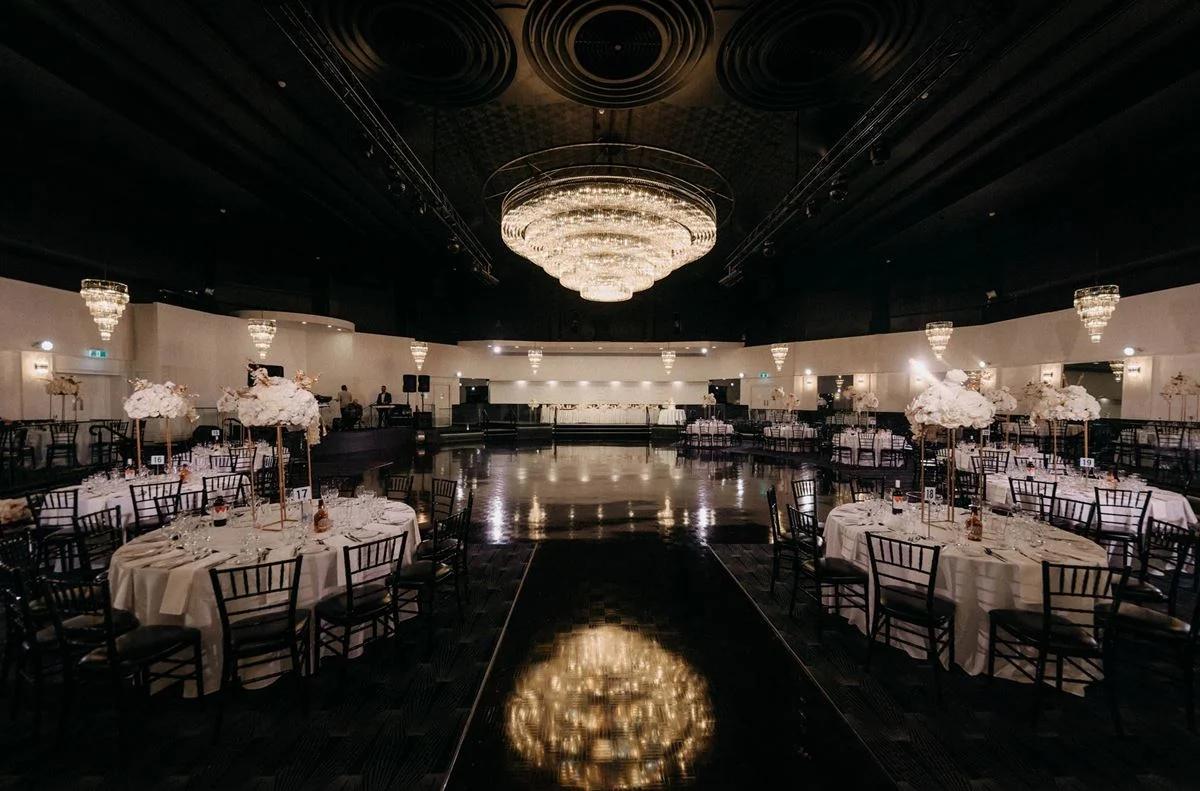
Long tables down a courtyard or terrace feel like one shared dinner rather than separate groups, and guests can join a conversation anywhere along them.
Low sofas, ottomans and side tables invite guests to drift between groups. Pair them with a few dining tables for those who want to sit and eat properly.
Open seating works better when the evening gives guests reasons to get up: a late dessert station, a cocktail bar or a photo moment. For ideas, see our interactive wedding ideas your guests will love.
The relaxed feel of open seating takes planning behind the scenes. A few steps before the day keep your guests, venue team and caterer on the same page.
With open seating, groups won't fill tables neatly, and a single empty chair in the middle of a table is no use to a family who want to sit together. There is no single figure that suits every room, so ask your venue how many extra seats it would set for your layout. A good answer tells you where the spare places will sit, whether spread across tables or kept together as open tables, where extra chairs are kept close by, and who adds them during the evening, so a family arriving together isn't split up.
Say it on your wedding website and on a welcome sign at the reception: please sit wherever you like, with family tables marked as reserved. Ask your MC to repeat it as guests move to dinner.
Use warm, neutral wording on the reserved tables. The same Queensland Government guidance advises using positive or neutral language such as "accessible seating" or "reserved seating" for seating areas set aside for guests with accessibility requirements. Check sightlines too, so reserved tables see the speeches and first dance without turning their chairs.
Guests will turn to your coordinator and MC. Tell them which tables are reserved and for whom, where spare chairs are kept, and when guests should be seated. Build those moments into your wedding day timeline, so dinner service, speeches and dancing land at the right time.
Collect dietary needs and allergies with your RSVPs, then build and track your guest list so nothing is lost between replies and the caterer's final numbers. A wedding guest list template keeps names, meals and allergies in one place.
Then ask your caterer how special meals will be identified and served, and agree whether guests with allergies sit at a known table so their plates reach them.
Not if your guests are looked after. Etiquette is about care, not paperwork. Open seating feels generous when elders have a seat waiting, families can sit together and the signage is clear. It feels careless when guests arrive to a full room and no guidance.
Think about your families, too. In some families and cultures, where you place a parent, grandparent or elder is a sign of respect, and leaving it to chance can cause offence that lasts longer than the wedding. If that is true for your family, reserve their table and tell them ahead of time, even if everyone else sits where they like.
A wedding abroad can stretch well beyond one evening. A welcome dinner, the wedding day and a lunch by the water the morning after give you room to mix formats.

Let the welcome dinner be open. Guests from different cities meet over long shared tables, and by the wedding dinner, fewer of them are strangers. Then keep a light plan for the main dinner: reserved tables for family, assigned tables for everyone else. The recovery lunch can be open again.
At a large or formal wedding, with senior family or guests of standing, a full seating plan is part of hosting at both dinners, and open seating suits the welcome drinks and the after party.
Before you decide, put these questions to the venue or resort:
Does the catering team need table numbers or a seating plan for plated service?
How does the kitchen handle allergens, and how will special meals be identified at the table?
Which table layouts suit the terrace, the garden and any wet weather space?
Is there step-free access to the terrace, the garden and the bathrooms for older or less mobile guests?
Are there house rules on service times or music that shape when guests need to be seated?
For the wider picture, from choosing the place to bringing everyone together, start with our guide to planning a wedding abroad.
Written by

SEO Specialist
Ayrton Christian Braga is an SEO Specialist at Wedded Wonderland, where he writes optimized articles and web pages that center on destination weddings, cultural wedding traditions, and guides for everything in between.
Search real weddings, venues and vendors from around the world.
Search Wedded Wonderland