Copy the free template below into Google Sheets or Excel, then read the two sections under it. The spreadsheet is the easy part. The hard part is that your first draft will be too long, and the tier system below is how you cut it without falling out with anyone.
How to use this template: select the table below, copy it and paste it into a blank Google Sheet or Excel workbook. The columns line up automatically. Delete the two example rows, then add one row per household.
Household | Envelope name | Address | Tier | Events invited | RSVP | Adults | Children | Meal | Dietary needs | Plus-one | Gift received | Thank-you sent | |
Smith family | Mr and Mrs J. Smith | 12 Example St, Sydney NSW | smith@email.com | A | Ceremony, reception | Yes | 2 | 1 | Beef, fish | Child: nut allergy | No | Yes | Yes |
Lee household | Ms A. Lee and guest | 4 Sample Rd, Melbourne VIC | lee@email.com | B | Reception | Pending | 2 | 0 | Yes |
A wedding guest list template is a spreadsheet with one row per household. The essential columns are household, envelope name, address, email, tier (A, B or C), events invited to, RSVP status, adult and child headcount, meal choice, dietary needs, plus-one, gift received and thank-you sent.
Every column earns its place. Here is what each one is for, because half of them are not obvious until the week the invitations go out.
Column | Why it exists |
Household | You invite households, not individuals. Group first or you will miscount |
Envelope name | How the name appears on the envelope, formal and spelled correctly. Different from how you say it |
First name / Last name | For seating charts and place cards later |
Side | Yours, theirs, mutual. Only for balancing the count, never for seating |
Tier | A, B or C. The most useful column in the sheet, see below |
Address | Full postal address. Chase these early, it always takes longer than you think |
Email / Phone | For digital invitations and the inevitable chasing |
Events invited to | Welcome drinks, ceremony, reception, day-after brunch. Not everyone gets everything |
Invitation sent | Date, not a tick. You will want to know when |
RSVP status | Yes, No, Awaiting. Nothing else |
Headcount | Adults and children counted separately. Caterers price them differently |
Meal choice | Collect with the RSVP or chase it twice |
Dietary needs | Separate from meal choice. Allergies are not preferences |
Plus-one | Yes or no, decided by you before the invitation goes out |
Gift received | For thank-you notes. You will not remember |
Thank-you sent | The column everyone forgets and then regrets |
Your first list will be too long. Everyone's is. Do not cut it by arguing person by person. Sort it instead.
Tier A: the wedding does not happen without them. Immediate family, the people who would be hurt in a way that lasts.
Tier B: you genuinely want them there and the budget decides. Extended family, close friends you see regularly.
Tier C: you would enjoy having them. Colleagues, old friends, plus-ones for single guests, your parents' friends.
Invite A and B first. As declines come in, move C up in small batches. Send B-list invitations at least six weeks out so nobody can tell.
⚑ The one rule: never let the two of you negotiate an individual name until you have both tiered the whole list separately. Comparing two finished tier lists is a conversation. Arguing name by name is a fight.
Expect 10% to 20% of invitations to decline for a local wedding, and considerably more for a destination one where guests are paying for flights and accommodation.
⚑ Do not treat that as a licence to over-invite up to your venue cap. The classic failure is inviting 20% more on the assumption people will decline, and then they do not. Invite to a number you can seat.
Count households first, then people. It changes three things:
Invitations are per household, so your print order is a household count
Addresses are per household, which halves the collection work
Seating is per person, which is why you need both
Decide the rule before you write a single name, and apply it without exceptions:
Plus-ones for married, engaged and long-term partners, or for everyone, or for nobody
Children at everything, ceremony only, or not at all
Write the rule at the top of your sheet. The exceptions are what cost you, not the rule.
Google Sheets if two of you are editing it, which is nearly always. Real-time editing, no versions emailed back and forth, and it opens on a phone at the venue.
Excel if you want to work offline or you already live in it.
The template above is the same in both, so start in one and export if you change your mind.
The spreadsheet works until it does not. That point usually arrives when guests start travelling, when there are three events across a weekend, or somewhere past 100 names when chasing RSVPs by hand becomes a second job.

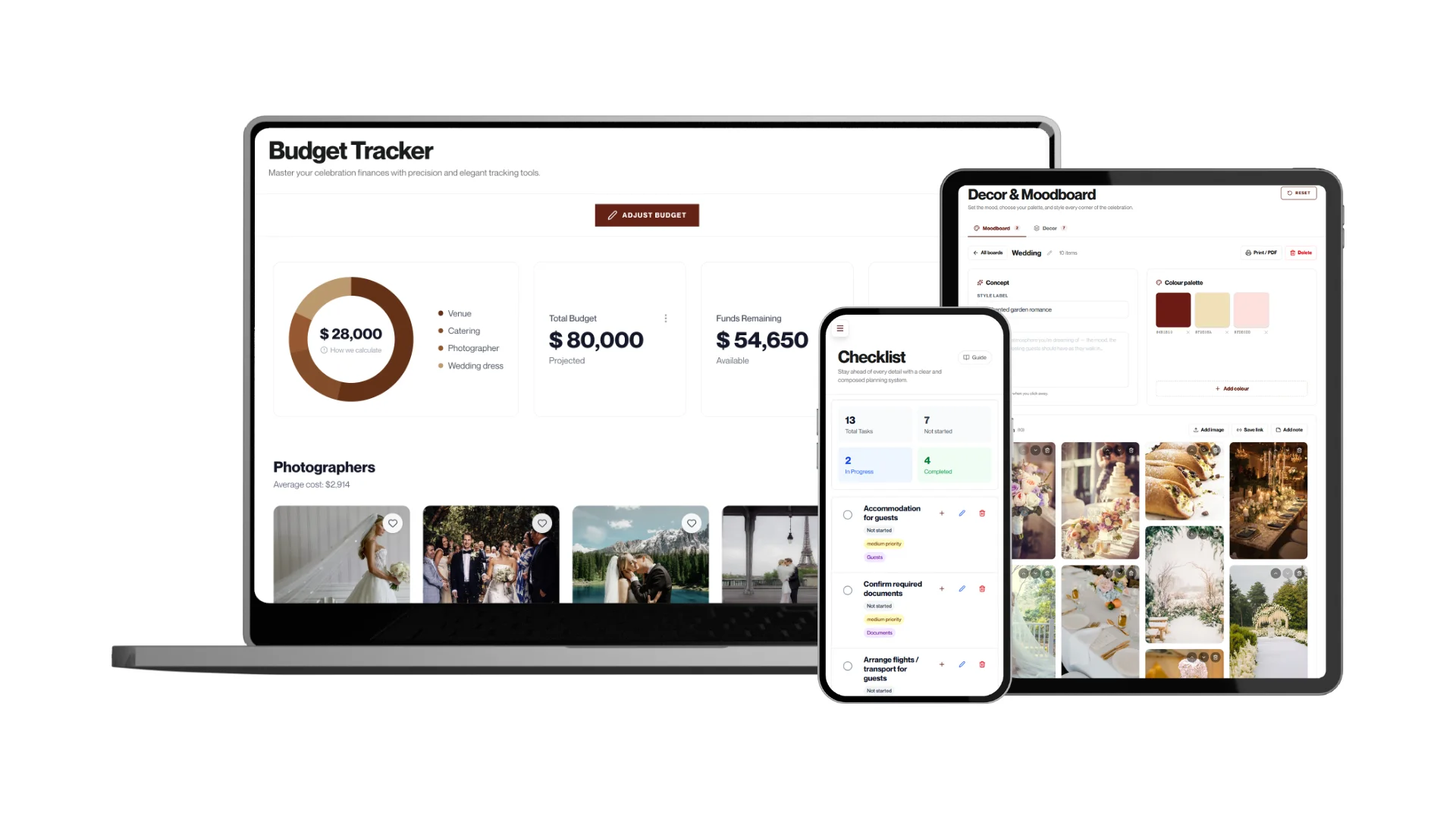
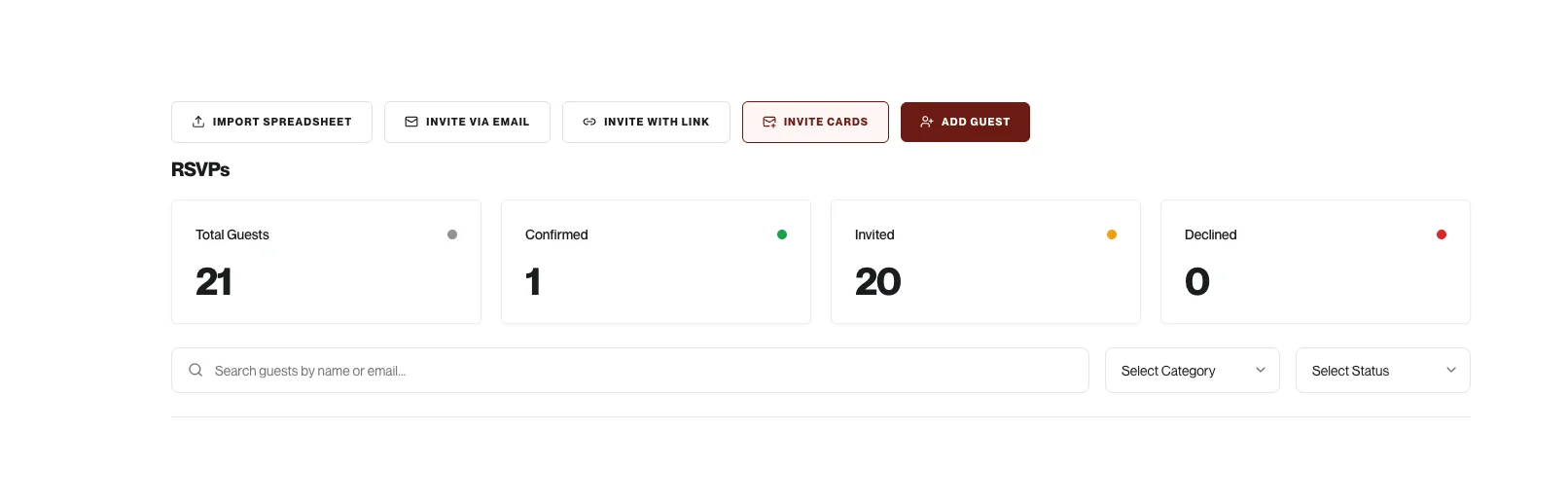
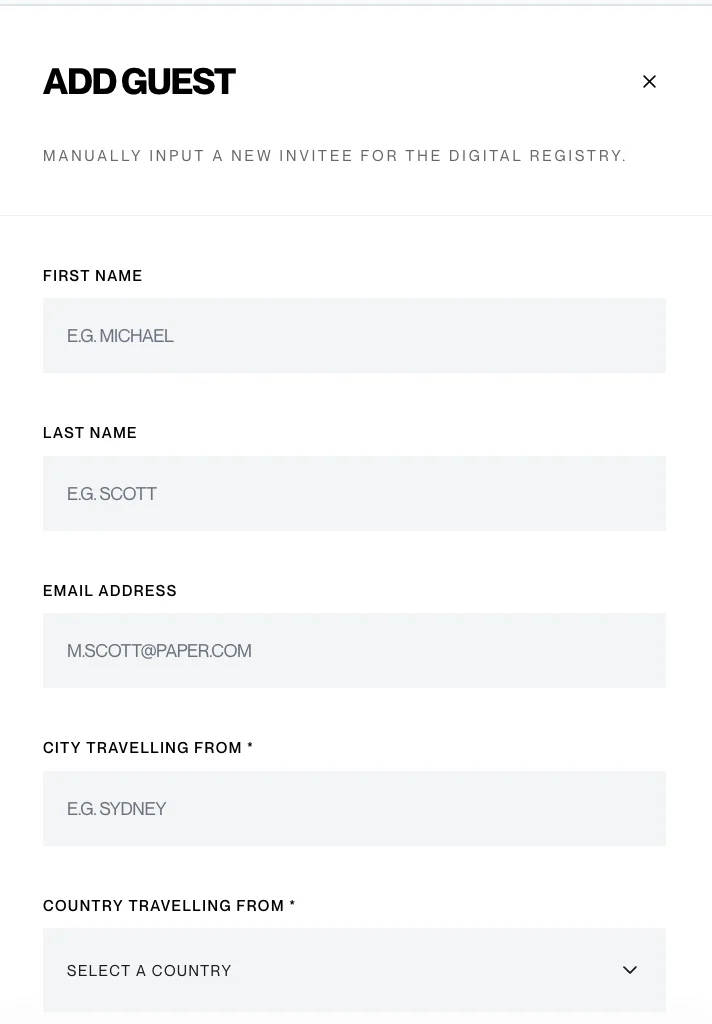
Wonderland Studio's guest list asks for things a spreadsheet column cannot chase for you. Alongside party size, category and dietary requirements, it requires the city and country each guest is travelling from, and takes their arrival and leaving times. That is the data that decides accommodation blocks and airport runs, and it is why the list is built this way rather than as a longer version of the template above.
It also stops being a list. An RSVP updates the headcount, drops that guest onto the seating plan with their meal choice, and pushes their dietary needs into the menu you hand the caterer. You can import the spreadsheet you already started, so nothing you have done so far is wasted.
See the guest list inside Wonderland Studio, or all eleven planning tools.
Written by

Content and Creative Manager
Joseph Joshua is the SEO & Content Manager at Wedded Wonderland, bringing an editorial and search strategy perspective to the publication’s coverage of luxury weddings, destination celebrations and bridal lifestyle. His approach to content centres on helping readers move from inspiration to informed decisions, with attention to the design, craftsmanship and personal details that give a celebration its character.
Search real weddings, venues and vendors from around the world.
Search Wedded Wonderland