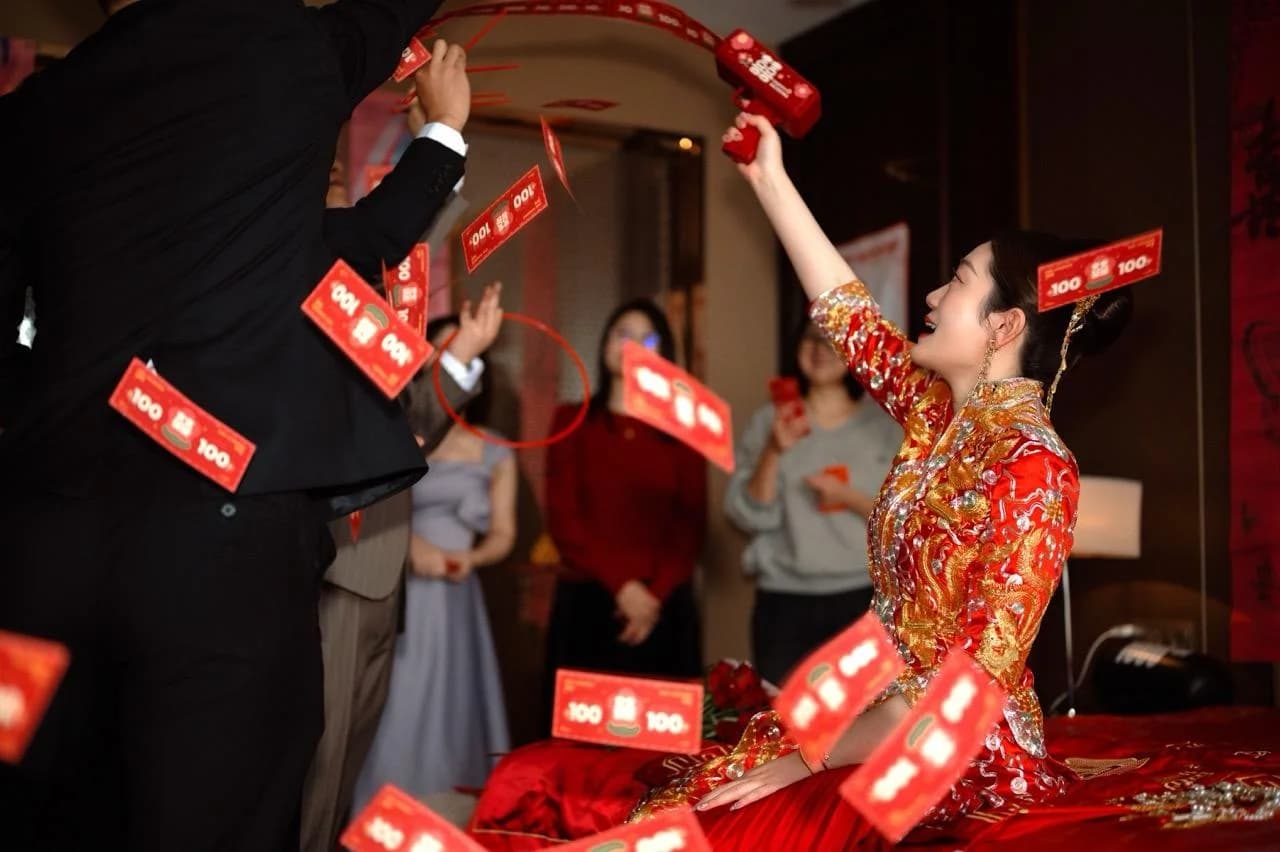
A symbolic ceremony is a wedding ceremony with no legal effect. It can look exactly like a legal wedding, with vows, rings and everyone you love, but it does not make you married. The legal marriage happens separately, under Australian law or the law of the country where you marry. This Wedded Wonderland guide explains how each half works for Australian couples marrying overseas, and how to choose.
A symbolic ceremony is the celebration of a marriage without the legal act of marrying. Nothing is registered, no notice period applies to it, and no particular words have to be said. You may also hear it called a commitment ceremony or a blessing.
It can hold an entrance, readings, music, vows you wrote yourselves, rings and a ritual or two, and to your guests it can feel no different from any other wedding. Our guide to what happens in a wedding ceremony walks through each part.
A vow renewal is a close relative, but it is for couples who are already married. If that is you, our vow renewal ideas are the better starting point.
The difference is not how the day looks, but what the law asks of the ceremony and who may perform it. The table sums it up, and the Australian detail follows.
Legal wedding in Australia | Symbolic ceremony | |
|---|---|---|
Result | You are legally married | No legal effect |
Notice | Notice of Intended Marriage, 1 to 18 months ahead | None |
Who leads | An authorised marriage celebrant, physically present | Anyone you choose |
Words | Set words or words to that effect | Your own |
Paperwork | Certificates signed and lodged with the registry | None |
Where | In Australia | Anywhere the venue allows |
General information as at November 2026, not legal advice.
To get married in Australia, you use specific words during the ceremony, you give a notice of intended marriage form to an authorised marriage celebrant at least 1 month and no more than 18 months before your wedding, and you are married by an authorised marriage celebrant. The governing law is the Marriage Act 1961, administered by the Attorney-General's Department.
Since changes that became law on 12 June 2024, the celebrant must meet each of you separately and in person before the marriage, and must be physically present to solemnise it, together with you both and 2 witnesses.
The words are set out in the Act. Where the celebrant is not a minister of religion, section 45(2) says it is sufficient if each of you says to the other, in the presence of the celebrant and the witnesses:
"I call upon the persons here present to witness that I, A.B. (or C.D.), take thee, C.D. (or A.B.), to be my lawful wedded wife (or husband, or spouse)"; or words to that effect.
Section 46(1) sets out the words the celebrant says to you, in the presence of the witnesses, where the celebrant is not a minister of religion of a recognised denomination:
"I am duly authorised by law to solemnise marriages according to law. Before you are joined in marriage in my presence and in the presence of these witnesses, I am to remind you of the solemn and binding nature of the relationship into which you are now about to enter. Marriage, according to law in Australia, is the union of 2 people to the exclusion of all others, voluntarily entered into for life."; or words to that effect.
On the day, 3 marriage certificates are signed by the two of you, the celebrant and 2 witnesses over 18. The celebrant hands you a ceremonial certificate, then lodges the paperwork with the registry of births, deaths and marriages in the state or territory where you married, within 14 days.
For the different kinds of celebrant and minister who can do this, see our guide to who can legally marry you.
A symbolic ceremony sits outside all of this: no notice, no certificates, no legal role for whoever leads it. Everything the Act fixes for a legal ceremony becomes a creative choice.
You have two broad ways to do it: marry legally in Australia and celebrate abroad, or marry legally in the destination itself. Either way, decide the route before you pay deposits, because it shapes your timeline, your celebrant and what you tell guests.
General information as at November 2026, not legal advice.

Choose the route and the dates. Settle on a legal ceremony in Australia and a symbolic ceremony at the destination before deposits go down.
Give your Notice of Intended Marriage. It goes to your authorised celebrant at least 1 month and no more than 18 months before the legal wedding. You can complete it while overseas if you plan to marry in Australia, and if there is less than 1 month to go, talk to your celebrant, because a prescribed authority may approve a shorter time. A notice given from outside Australia cannot be witnessed online, and the witness abroad cannot be a celebrant.
Hold the small legal ceremony. Your celebrant, the two of you and 2 witnesses, in person, with the required words and the certificates signed. Some couples do this before they fly and others after they come home; talk your dates through with your celebrant against the notice window.
Celebrate abroad. The symbolic ceremony carries the vows, the rituals and the guests.
Tell guests which ceremony is which. A line on the invitation or wedding website saves confusion on the day.
Our guide to what a celebrant does at a wedding abroad covers how the two ceremonies divide between celebrants.
Here the legal marriage happens under the destination's law, not Australia's. An overseas marriage cannot be performed by an Australian-authorised marriage celebrant, and cannot be registered in Australia. It is generally recognised in Australia if it was a valid marriage in the overseas country and would have been a valid marriage here.
So an Australian celebrant who travels with you can lead a moving ceremony, but on its own it is symbolic.
Documents come from the destination's rules. Some countries ask you to prove you aren't already married, with a Certificate of No Impediment to Marriage (CNI) and certificates from a registry of births, deaths and marriages as the common documents, and a country may have more rules, such as a residence period. The destination's embassy or consulate is the place to ask.
DFAT can issue a CNI in Australia, but some local authorities only accept CNIs issued in their own country, so ask the embassy or consulate whether you need one, where to get it, and whether it needs an authentication or apostille.
One more detail matters after the honeymoon. You may be able to use your overseas marriage certificate to prove you married, but some states and territories don't accept overseas marriage certificates if you want to change your name. Check with your state or territory registry before you rely on it.
For a worked example of a legal wedding abroad, see our guide to getting married in New Zealand.
Because a symbolic ceremony has no legal effect, the person leading it holds a symbolic role only.
A professional celebrant. Someone who writes and leads ceremonies for a living brings structure, pacing and a calm voice when nerves arrive.
A friend or family member. A sibling, a godparent or the friend who introduced you can make the ceremony feel unmistakably personal. Give them a script, a rehearsal and a microphone.
Our guide on how to choose a wedding celebrant has the questions to ask at a first meeting.
With no required wording, the ceremony becomes a blank page. Here is a running order that works, the rituals couples add and how to approach your vows.
A shape that works well at a destination:
Music and the entrance
A welcome from whoever leads the ceremony
A reading or two
Your story, told briefly
Vows
A ritual, or a family or cultural custom
The ring exchange
The kiss and the recessional

Sand ceremony. Each of you pours a different colour of sand into one vessel, and the layered glass comes home with you.
Handfasting. Your hands are bound together with a ribbon or cord while words are said over them.
Unity candle. Two candles light a third. Ask the venue about open flame, and keep a wind plan for outdoor terraces.
Readings and music. A poem read by a grandparent, a song played by a friend, or a piece of music in the language of the country you are marrying in.
For more ceremony ideas, the Wedded Wonderland magazine gathers inspiration from destination weddings.
Symbolic vows can say anything at all. Our collection of short wedding vows is a good place to start.
If your legal ceremony comes after the trip, ask your celebrant how to word the symbolic vows so they read as promises, not as the legal words in the Act.
The question is where you want the paperwork to sit. Weigh both routes, then work through the questions below before you book.
Legal at home, symbolic abroad
The legal steps happen under Australian law, with an authorised marriage celebrant.
The ceremony abroad has no notice period, no set words and no marriage certificates to sign.
Legal in the destination
One ceremony carries both the legal marriage and the celebration.
The documents and timing follow the destination's rules, which you confirm with its embassy or consulate.
The overseas certificate becomes your proof of marriage, with the name change caveat above.
For which countries allow foreigners to marry legally, see our guide to where you can legally get married abroad.
Does it matter to us that our wedding date abroad is also our legal anniversary?
Who do we want at the legal ceremony, if it is separate, and how private should it be?
How much paperwork are we willing to manage from Australia, and how far ahead?
Would a celebrant from home, or one at the destination, suit the ceremony we picture?
Does the venue host symbolic ceremonies, and in which spaces?
Can the ceremony space be closed to the public, and what are the photography rules?
Is any local permit or notice needed for a ceremony on site or on a public beach?
Who leads the ceremony, and in which language?
Has the celebrant led symbolic ceremonies abroad before?
What time does the ceremony start, is there a rehearsal, and what is the wet weather plan?
Whose name is on the contract, in which currency are payments made, and when do deposits become non-refundable?
Which rituals and props are allowed: sand, candles, open flame, confetti?
Is there level access to the ceremony space for older guests?
What do we need to tell guests beforehand?
Your Wedded Advisor confirms venue inclusions in writing before you commit.

Say it plainly on the invitation or wedding website: the legal ceremony has taken place, or will take place, at home, and the ceremony abroad is your celebration with them.
Written by

SEO Specialist
Ayrton Christian Braga is an SEO Specialist at Wedded Wonderland, where he writes optimized articles and web pages that center on destination weddings, cultural wedding traditions, and guides for everything in between.
Search real weddings, venues and vendors from around the world.
Search Wedded Wonderland