Who can perform a marriage in Australia? Only an authorised marriage celebrant, and there are four types. This Wedded Wonderland guide explains each one and how to check yours. It also covers what changes if you marry overseas.
As at November 2026, the rules sit in the Marriage Act 1961, which the Attorney-General's Department (AGD) administers. Section 41 of the Act is headed "Marriages to be solemnised by authorised celebrant". In plain terms, a marriage is legal in Australia only when an authorised marriage celebrant performs it.
Being married by an authorised celebrant sits alongside the other requirements. You must also:
not already be married
not be marrying a close relative
be at least 18, unless a court has approved a marriage where one person is 16 to 18
understand what marriage means and freely agree to it
say the words the law requires during the ceremony; your celebrant will take you through them
The right to marry in Australia is no longer determined by sex or gender. AGD keeps a database of all authorised marriage celebrants, so you never have to take anyone's word for it. The full requirements are on AGD's Get married page.
AGD lists four types of authorised marriage celebrant. A person cannot apply to be registered or authorised as more than one type at the same time.
These are the civil celebrants most couples meet. They are regulated by AGD and generally perform civil ceremonies, which are non-religious marriage ceremonies. There are over 10,000 of them in Australia. AGD monitors their performance and compliance, and the Registrar of Marriage Celebrants considers disciplinary action where legal requirements are not met.
They must follow the Marriage Act 1961 and the Marriage Regulations 2017, including the code of practice for marriage celebrants. They also complete compulsory professional development by 31 December every year and pay an annual registration charge to stay registered.
These celebrants are also regulated by AGD, but they do not have to perform ceremonies that do not align with their religious beliefs. To identify as a religious marriage celebrant, a person must be a minister of religion. They must say they are a religious marriage celebrant when they advertise their services.
These ministers are nominated by their recognised denomination and registered with the state or territory registry of births, deaths and marriages. They are managed by that registry and by their religious organisation, and the minister must be part of a recognised religion in Australia.

For a religious ceremony, ask your minister which category they are in and whether they appear on the register. AGD links to the list of recognised denominations from its Find a marriage celebrant page.
These officers come from a registry of births, deaths and marriages or a court. They are regulated by the registry in their state or territory and perform non-religious, civil ceremonies. A registry wedding suits couples who want the legal marriage done simply, for example ahead of a larger celebration elsewhere.
Two differences matter most. Commonwealth-registered civil celebrants generally perform non-religious ceremonies, and state and territory officers perform civil ceremonies. Celebrants cannot discriminate against couples based on race, religion, sex or gender, and only religious marriage celebrants can choose to perform marriages in line with their religious beliefs.
Once you know which type suits your ceremony, our guide on how to choose a wedding celebrant covers style, questions to ask and timing.
Only if they become an authorised celebrant first. To legally marry people in Australia, a person must be an authorised marriage celebrant. For a friend or relative, that means registering as a Commonwealth-registered marriage celebrant.

As at November 2026, until a person is registered they cannot accept a Notice of Intended Marriage, solemnise a marriage or advertise as an authorised marriage celebrant. Registration is not automatic or guaranteed.
The route is a real commitment. The applicant must be 18 or over, hold the relevant qualifications or skills, be a "fit and proper person" and pass a national police history check. The usual qualification is the Certificate IV in Celebrancy through a registered training organisation, or a celebrancy qualification from an approved university. Applications also need identity documents, a CV and 2 referee reports.
You do not need to be an Australian citizen to apply. Ministers of religion follow a different path: they are nominated by their recognised denomination and registered with the state or territory registry. The full requirements are on AGD's Become a marriage celebrant page.
Allow for the timing. AGD has up to 6 months to assess a completed application, applications are assessed in the order received, and none can be fast-tracked. If a sibling or close friend is set on it, allow for that assessment time plus the notice, which must reach the celebrant at least one month before the day.
The simpler route: book an authorised celebrant for the marriage itself, and ask your celebrant how a friend or family member can take part in the ceremony.
Check before you pay a deposit. It takes a few minutes on the official register.
Open the register. As at November 2026, AGD's Register of Marriage Celebrants lists every Commonwealth-registered celebrant, civil and religious.
Search by name. Filter by state, or use the advanced search for first name and surname.
Read the entry. Each entry shows the registration status (for example "Registered" and "Active"), the registration date, and either "Civil Ceremonies" or a religious marriage celebrant label.
Match it to their advertising. Since 9 December 2017, celebrants must state in their advertising, website, social media and business cards whether they are a "marriage celebrant" or a "religious marriage celebrant".
Ministers of religion and state and territory officers have their own lists on the same site, reached from the Find a marriage celebrant page. If something goes wrong, AGD also explains how to complain about a marriage celebrant.
One more thing to know early: celebrants should not give advice on migration matters such as prospective marriage or spouse visas. If one of you is not an Australian citizen, your celebrant can refer you to the Department of Home Affairs website or a registered migration agent.
As at November 2026, the legal steps follow the Marriage Act 1961 and the Marriage Regulations 2017. Your celebrant guides you through each one. The detail is set out in AGD's responsibilities for marriage celebrants.
You give a Notice of Intended Marriage (NOIM) to your authorised celebrant at least 1 month and no more than 18 months before the wedding. Since 12 June 2024, the NOIM can be witnessed in person or by audio-visual link. If you change celebrants, the NOIM can move to another authorised celebrant, including at your request.
If there is less than one month to go, a prescribed authority can authorise the celebrant to proceed. Our separate guide to the Notice of Intended Marriage takes the form step by step.
Your celebrant must meet separately and in person with each of you before the marriage is solemnised. Build those meetings into your diary early, especially if one of you lives overseas.
The ceremony must include specific words. Your celebrant will take you through the words the law requires and build them into your ceremony. Ask to see the full running order before the day.
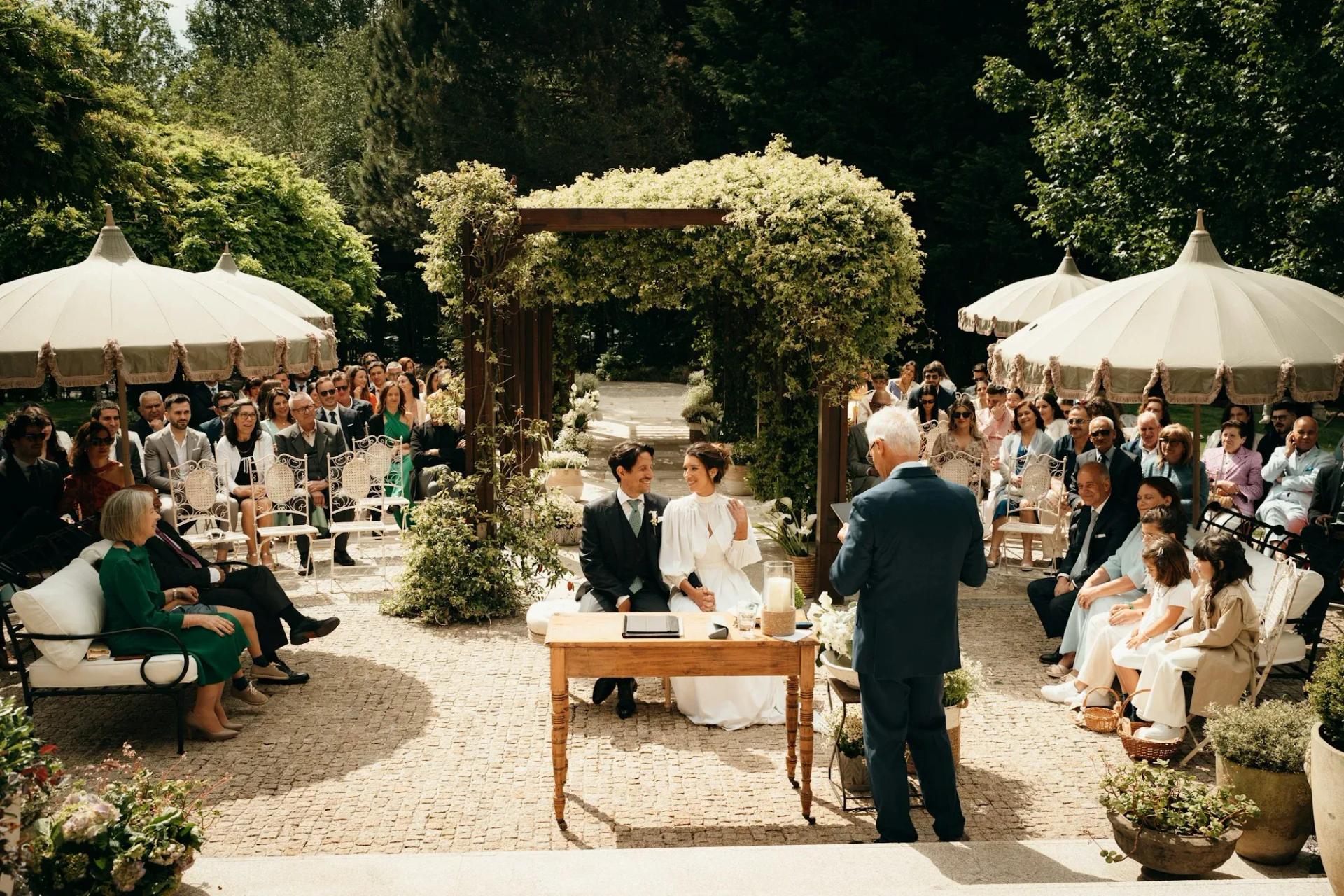
The celebrant must be physically present to solemnise the marriage, with the two of you and 2 witnesses. On the day, 3 marriage certificates are signed by the couple, the celebrant and the 2 witnesses, who must be over 18.

Plan the signing into the run sheet. If an error on a certificate is found after the ceremony, it can be corrected only while the couple and witnesses are still present.
The Form 15 Certificate of Marriage must be handed to you immediately after the ceremony. It cannot be intentionally destroyed or reissued once you have it. The celebrant keeps the celebrant copy of the official certificate for six years from the date of the marriage.
Within 14 days, your celebrant must submit the marriage paperwork to the registry of births, deaths and marriages in the state or territory where you married. Once the marriage is registered, only the authorised officer of that registry can correct an error.
You will need an official marriage certificate from the registry to change your name or prove that you are married. Your celebrant can apply for it on your behalf, generally at a cost.
Not your Australian celebrant, at least not legally. As at November 2026, overseas marriages cannot be performed by an Australian-authorised marriage celebrant, and cannot be registered in Australia. An overseas marriage is generally recognised here if it was valid in the country where it happened and would have been valid under Australian law. That leaves two clear paths.

Marry legally at home, celebrate abroad. Your authorised celebrant marries you in Australia, with the NOIM lodged at least 1 month ahead, and the celebration overseas follows for you and your guests.
Marry legally abroad. The marriage follows the destination's own law and paperwork, which often includes a certificate of no impediment and certificates from a registry of births, deaths and marriages. Some countries also set extra rules, such as a residence period, and the destination's embassy or consulate can tell you what applies.
If you marry abroad, check:
The official starting point: Smartraveller's Getting married overseas page.
Your documents: whether your paperwork needs an apostille.
Back home: registering an overseas marriage at home.
The ceremony itself: what a celebrant does at a wedding abroad.
Either way, the legal side stays with you. Marry at home and it sits with your authorised celebrant; marry abroad and the destination's own rules apply, so check with its embassy or consulate. The celebration is where we come in. Through Wedded Concierge, your Wedded Advisor, the one person who plans with you start to finish, takes on the venue, travel, vendors and payments for the celebration abroad, in your time zone and quoting in AUD.
Written by

SEO Specialist
Ayrton Christian Braga is an SEO Specialist at Wedded Wonderland, where he writes optimized articles and web pages that center on destination weddings, cultural wedding traditions, and guides for everything in between.
Search real weddings, venues and vendors from around the world.
Search Wedded Wonderland