Greek weddings blend a sacred Orthodox service with much-loved family customs. This Wedded Wonderland guide walks through 12 traditions in the order you meet them. It shows which belong to the Church and which are family folklore. It ends with how to marry in Greece or in a parish at home in Australia.
The Orthodox Church describes marriage as a sacrament with no vows or oaths, and not as a legal contract between two people. That one detail changes the shape of the day. There is no moment where the couple turns to face each other and recite promises.
Instead, the couple is led into the church in procession, prayed over and blessed, hears readings from Scripture, and is crowned. Everything else, from the bed made by friends to the plates at the reception, sits outside the service and changes from family to family and island to island.
So read the list below in two layers. The Church sets the service. Families and regions set the customs around it.
For a wedding in Greece itself, our guide to Greece wedding venues covers the islands and the mainland. For the wider picture across cultures, see our collection of wedding traditions worth keeping.
These customs are often told rather than written down, and each family keeps its own version. Here is what usually happens in the weeks and days before the service.
Proxenio is the name often given to the old practice of a matchmade introduction, arranged by family or a trusted go-between. Few couples meet that way now.
The engagement is often marked with a blessing of the rings and a gathering of both families. In many families the rings are worn on the right hand, it is often said. We cover the engagement party, the gifts and the family meeting in more depth in our guide to Greek engagement traditions.
The koumbaros (or koumbara, if a woman) is usually called the couple's sponsor. In plain terms, this is the person who stands beside you at the altar and takes part in the rite itself. In the service as it is usually described, the koumbaros exchanges the rings and the stefana over the couple's heads.
The tie often lasts well beyond the day. Many families say the koumbaros is later asked to baptise the couple's first child, though this is a custom, not a rule.
Check with your priest about who can stand as koumbaros before you ask anyone.
The krevati is one of the warmest customs in the lead-up. As it is often told, family and friends gather a few days before the wedding to make the couple's new bed with fresh linen, then scatter it with flowers, sugared almonds, rice and money.
A baby or small child is often rolled across the bed for luck. Families tell different stories about what this means, and the gathering itself, with songs and teasing, is usually the point.
On the morning of the wedding, the bride's unmarried friends often write their names on the sole of her shoe. The story goes that the names worn away by the end of the night belong to the friends who will marry next.

In many families the bride is dressed at home with her mother, sisters and closest friends in the room, sometimes with songs. The groom's side often has its own version, with friends helping him shave and dress before he leaves for the church.
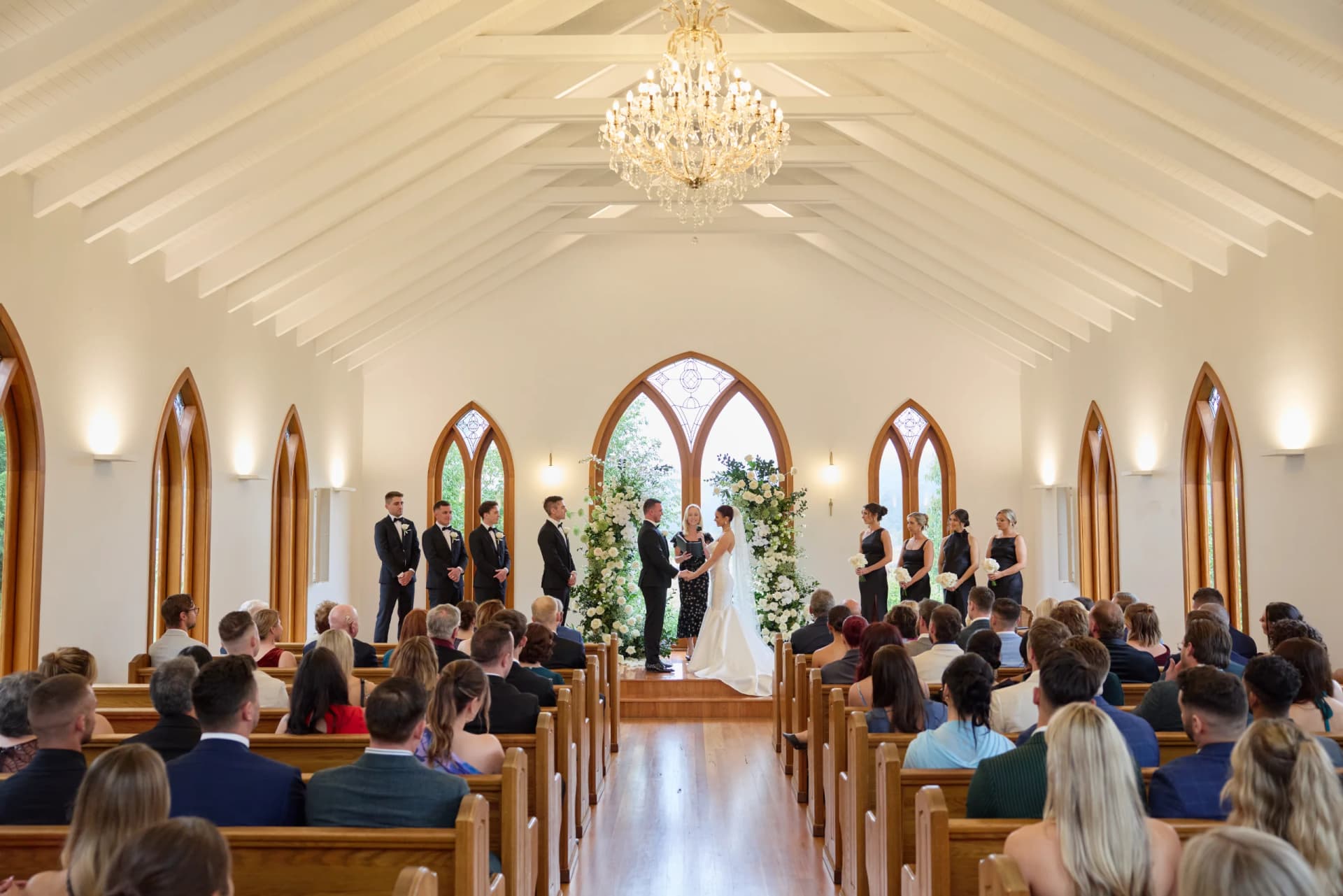
The service usually opens with the betrothal. The priest usually blesses the rings, and they are then exchanged three times, most often by the koumbaros.

There are no spoken vows at this point or any other. If you want personal words, the reception speeches are the natural place for them.
The couple is usually given tall lit candles to hold through the service. The priest then usually joins the couple's right hands, and they stay joined for much of what follows.

The crowning is usually described as the centre of the service. The stefana are two crowns, usually joined by a ribbon, and the koumbaros usually exchanges them over the couple's heads three times.

The Church explains the crowns as crowns of God's glory: the couple is crowned to be His children and witnesses in this world and heirs of His Kingdom. The ribbon is usually described as a sign of the two lives joined.
Tell your photographer and your guests that this, not the rings or a kiss, is the moment to watch.
Scripture readings usually follow, as in the Orthodox rite. The couple then usually shares a common cup of wine, sipping from it three times. It is commonly described as a sign of the life they will now share.
The priest then usually leads the crowned couple three times around the ceremony table, the koumbaros following with the ribbon. This short procession is known as the Dance of Isaiah, usually said to be named after a hymn sung as they walk.
Afterwards the priest usually removes the crowns and gives a closing blessing. Guests often throw rice or petals as the couple leaves, a custom many families keep.
There is one moment that is pure folklore. When the priest reads the line about the wife and husband, the bride is often said to step on the groom's foot, so that she has the last word in the marriage.
Koufeta are white sugared almonds, and they appear everywhere: on the ceremony tray, in tulle bundles at each place setting, in the bomboniere guests take home.

They are usually given in odd numbers. The reason often told is that an odd number cannot be divided, like the couple. Another story says an unmarried guest who sleeps with koufeta under the pillow will dream of a future spouse.
The dancing is the heart of most Greek receptions. The kalamatianos and the syrtos are circle dances, and guests link hands or shoulders while one person leads, often waving a handkerchief.

During one of the dances, guests often pin money to the couple's clothes or hand it to them as they pass. It is a gesture of good wishes from family, and many couples now ask a koumbaros or cousin to gather it discreetly.
Throughout the night you will hear "na zisete", a wish for a long life together, called out to the couple.
And then there is ftou ftou. Older relatives may make a light spitting sound towards the bride or the couple. It is often told as a way of keeping off the evil eye, or mati, after praising someone. No one actually spits, and it is meant kindly.
The Orthodox Church explains its own rite, and the steps below follow the way the Greek service is usually described. Ask your parish priest, as the order and details can vary.
One background point helps. The Orthodox Church in America notes that the marriage service was patterned on baptism and chrismation, and that for centuries there was no separate marriage ritual at all. The sacrament is for baptised members of the Church, and an Orthodox Christian may marry a baptised Christian of another tradition in the Church.
If one of you is not Orthodox, raise it with the priest first. It will shape the choice of church and the timeline.
Dress for a church first and a party second. Smartraveller advises dressing modestly in churches and religious buildings in Greece. For a summer service, that usually means covered shoulders, so a light wrap or jacket is worth packing even when the reception is outdoors.
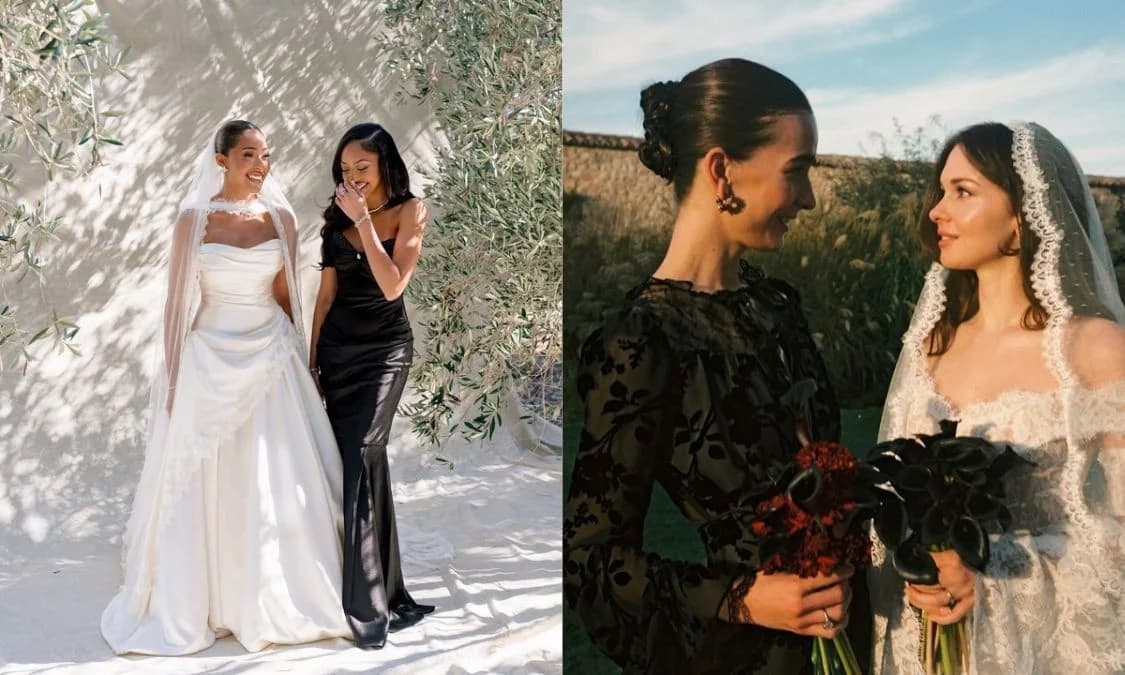
Bridal dress traditions are mostly about family rather than rules. Many brides wear white, and some add a family piece, a relative's veil or jewellery, for the service.
Gifts follow family custom. Many Greek families give money in a card, and others choose from a registry. If unsure, ask someone close to the couple. On who pays for what, families differ widely, and it is a conversation for the two families, not a rule of the culture.
Read the free magazine
Free to read, whenever you are ready.
Ancient Greek marriage customs are a separate subject from the Orthodox service, and they are often blurred together online. The Orthodox Church in America notes that for centuries there was no separate marriage ritual, and that the rite which grew up was patterned on baptism and chrismation. That makes it hard to draw a straight line from ancient ceremony to the modern church service, and this guide keeps to the customs couples meet today.
This section reflects official advice as at November 2026 and is not legal advice. Rules change, so confirm each step yourself.
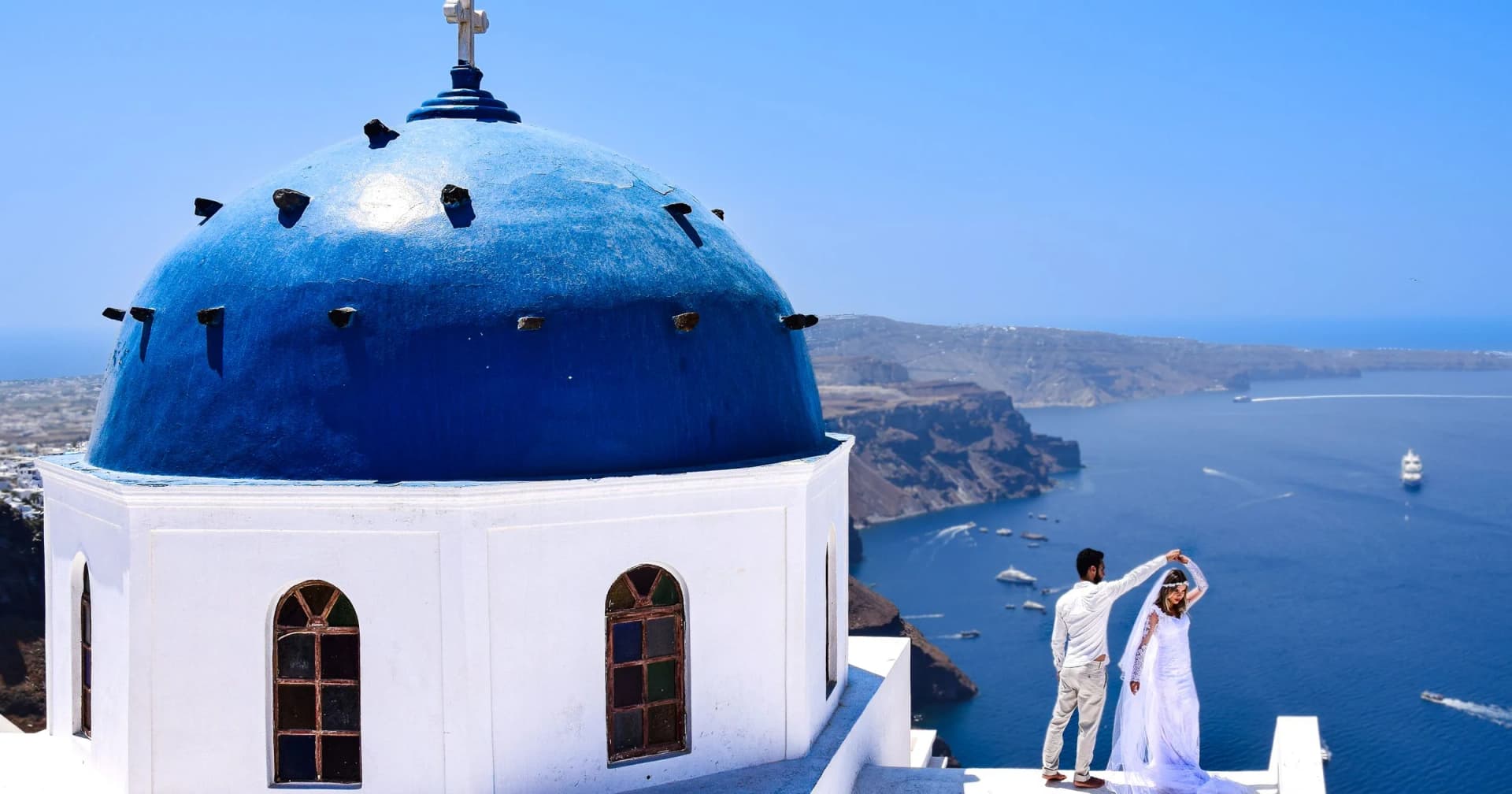
Start with the basics. Smartraveller's advice level for Greece is "Exercise normal safety precautions", with no higher-level areas listed, last updated on 30 September 2026. Smartraveller notes summer wildfires (June to September) and heatwaves, worth weighing if you are set on a midsummer date. With older or less mobile guests, ask about shade, seating and the walk to the church.

Greek-Australian couples have one extra check. Smartraveller notes that someone of Greek descent who was born elsewhere may hold Greek nationality, with obligations such as military service, and advises getting advice from a Greek embassy or consulate before travelling.
Proving you are free to marry: Some countries ask for proof that you are free to marry, most often a Certificate of No Impediment (CNI) and certificates from a registry of births, deaths and marriages. Smartraveller suggests asking the local authorities whether you need a CNI, whether you can get one in Australia, and if it needs authentication or apostille, as some authorities only accept CNIs issued in their own country.
The Australian Embassy in Athens: The embassy witnesses application forms for, and issues, Certificates of No Impediment to Marriage, and witnesses notices of intended marriage. All notarial services are by appointment, though CNI documents can be submitted by post, and CNIs are available for collection within two working days. A fee applies, and honorary consuls cannot provide notarial services.
Civil or church ceremony: Ask the municipality (dimos) and the embassy whether a civil or a religious route suits you. Which documents, translations and notices apply, and whether any rules differ for same-sex couples, is for the Greek authorities. Check with the municipality and the embassy, including any fees, before you set a date. For an Orthodox church wedding, the parish priest and the diocese will have their own requirements, so speak to the priest first.
Back home in Australia: An overseas marriage cannot be registered in Australia, but in most cases it is legally recognised if it was valid where it took place and would have been valid under Australian law. A foreign marriage certificate is usually accepted as proof of marriage but may not be accepted as proof of a name change, so check with your state registry.
For current travel advice, read Smartraveller advice for Greece and its page on getting married overseas.
The paperwork is yours, the priest's and the authorities'. The rest of the wedding is a different matter. With Wedded Concierge, one Wedded Advisor is your single point of contact for the plans around the day, from Greece wedding venues to guest travel. The fee is agreed in writing before any work begins, and inclusions are confirmed in writing before you commit.
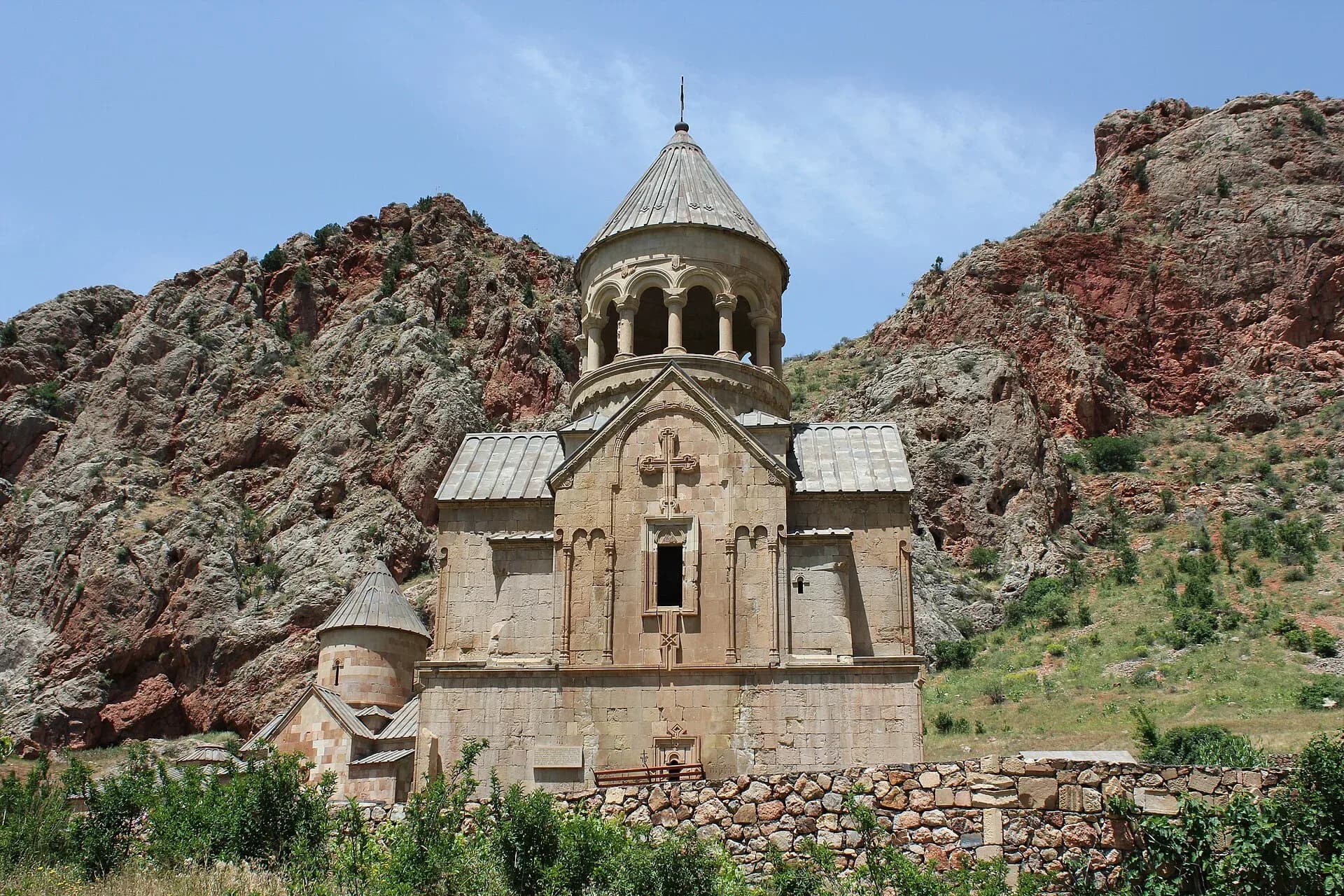
Many Greek-Australian couples hold the full service at home, in a Greek Orthodox parish in their own city, then travel later or not at all. The service follows the same rite, and the customs travel with the family.
The first call is to the parish priest. Ask your parish priest about available dates, the documents the parish needs, whether a non-Orthodox partner or koumbaros raises any questions, and any periods in the church year when weddings are not held. Do this before you book a reception venue.
The Greek Orthodox Archdiocese of Australia on marriage is a sensible place to begin reading before that first conversation.
For a sense of how other couples have brought it together, see a large Greek wedding in Sydney and an Old Hollywood Greek wedding in Melbourne. If your families blend more than one heritage, our guide to how Turkish families mark a wedding sits well beside this one.
Whether the service is in your family's parish or on an island your grandparents left, the customs come with you. If you would like to talk through the plans around the day, venues, guest travel and timing, a Wedded Advisor is glad to start that conversation.
Written by

SEO Specialist
Ayrton Christian Braga is an SEO Specialist at Wedded Wonderland, where he writes optimized articles and web pages that center on destination weddings, cultural wedding traditions, and guides for everything in between.
Search real weddings, venues and vendors from around the world.
Search Wedded Wonderland