Weddings are always better when the people you love are beside you. For that reason, having bridesmaids has always been a time honored tradition. But how did that tradition develop? Read on, and let this Wedded Wonderland guide show you.
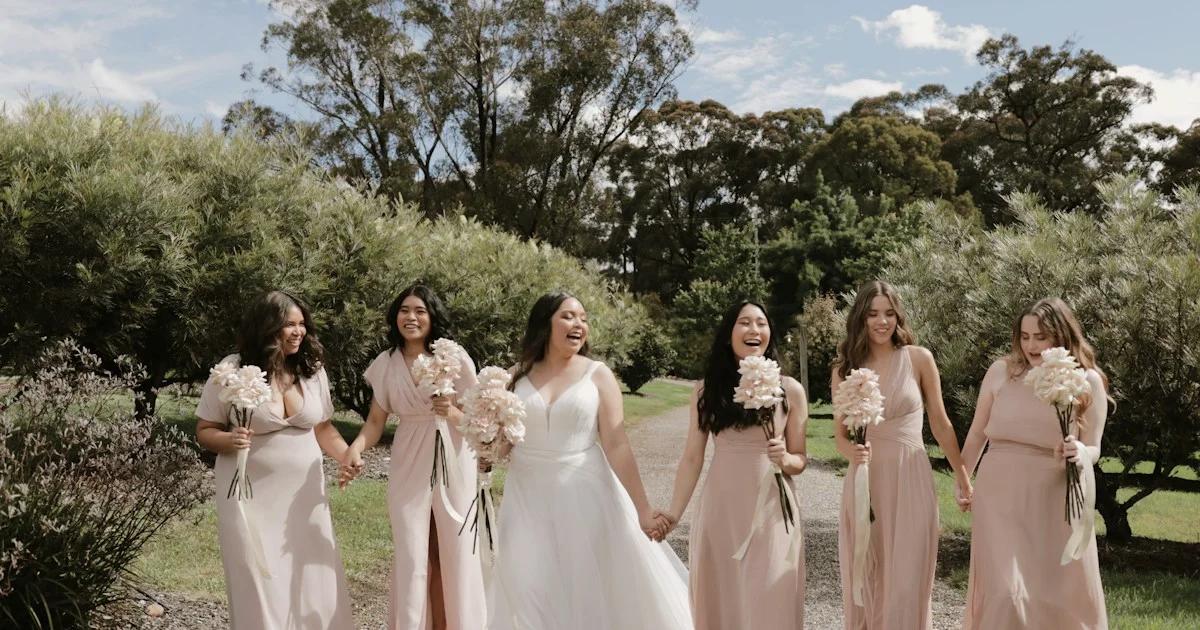
Couples ask friends to stand beside them for support, company and a witness to the moment. A bridesmaid, to be more specific, is there to help the bride before and during the marriage ceremony. They're the steady hands in the morning, the calming voice when plans wobble, and the familiar face to show at the front.
Many couples nowadays choose attendants by closeness, not convention. It can be a sister, a school friend, a brother, or a partner's cousin; the role goes to those who have been there all along.
The role also carries a little teasing too. An early form of "Always a bridesmaid, never a bride" appeared in 1882, and the "often a bridesmaid" version was popularised by mouthwash advertisements from the 1920s.
Attendants at weddings are very old. In classical Athens, bridesmaids danced at wedding feasts. At a Roman wedding, the matron of honour, the pronuba, linked the right hands of the bride and groom. The Roman bride's look has its own story, which we follow in our guide to why brides wear veils.
The English word for the role arrived much later. "Bridesmaid" dates from the late eighteenth century, an alteration of the earlier "bridemaid".
By the nineteenth century, when our notions of wedding customs began to settle, groups of eight or twelve girls or women often accompanied and supported the bride. They were often young sisters and cousins of the bride and groom, as well as female friends.
Queen Victoria married Prince Albert on February 10, 1840, in the chapel at St James's Palace. She had twelve bridesmaids, all the eldest daughters of peers.
The Queen sketched their dress herself: a simple white design trimmed with sprays of roses. She gave the sketch to her Mistress of the Robes, the Duchess of Sutherland, who supervised the making.
The bridesmaids were responsible for carrying the Queen's 18-foot train, and they struggled to shepherd it down the aisle. While that may sound as if it's nothing more than trivia, it's one that still matters today. A long train or cathedral veil goes best with one or two named attendants that have rehearsed the actual aisle, steps and turns of your ceremony venue.
Meanwhile, Prince Albert designed a gift for the twelve: an eagle-shaped turquoise brooch, taken from the heraldic German eagle. The blue of the stones suggests forget-me-nots, and the pearls represent true love.
The maid of honour is the most important bridesmaid at a wedding. The term is largely used in the United States, where the maid of honour serves as the main bridesmaid. A matron of honour, on the other hand, is a married woman who helps the bride.
Many couples now skip the labels altogether. A "person of honour" can be a brother or a best friend, and the lead attendant can stand for a partner of any gender. Some couples even name two: a sister and a closest friend, sharing the speech and the jobs.

Royal bridesmaids dressed alike in 1840, all in white to the single design the Queen drew. Later in the century, parties eventually become as coordinated. At the 1884 wedding of Val Prinsep and Florence Leyland, the bridesmaids wore canary yellow, with brooches engraved "Val and Flo" from the groom. The design sheet for the Gibson wedding specifies six matching bridesmaids' brooches in silver.
Younger attendants had their own fashion. Around 1903, it was fashionable for younger bridesmaids and pageboys to wear outfits based on historic or national costume, and one ivory satin dress of the time copies English styles of the 1630s and 1640s.
For those interested in the colours, cuts and how to choose, see our guide to what bridesmaids wear.
The simple fact is that there's no right number. Nineteenth-century parties of eight or twelve were common, but a single attendant is just as complete. Many couples today decide with a few questions:
Who would you be sorry to leave out? Start there, then stop.
How does it look across the aisle? Balanced sides are a choice, not a rule. A bride with five and a groom with two is fine.
What does the space allow? A small chapel or a clifftop ceremony may suit three, not ten.
Who else will be travelling? At a destination wedding, every attendant is a guest making a real commitment.
For a lighter look at big wedding parties, see the weddings with the most bridesmaids.
The job is help, before and during the ceremony. Every party shares it differently, and the best ones agree it out loud. For the personalities that make a party work, read the types of bridesmaids every bride needs.

Listen. The lead attendant is often the first call when plans change.
Plan the celebrations. A pre-wedding celebration that suits the bride, not the group chat.
Coordinate. When attendants live in different cities, one trusted person keeping fittings and dates on track saves everyone time.
Keep the list. Names, arrival times, dietary needs and phone numbers in one place.
The morning. Calm, coffee, and keeping time while hair and make-up run.
The dress and train. Buttons, bustle, and the train on the aisle, rehearsed beforehand.
The bouquet. Holding it during the vows and the signing.
The details. Tissues, pins, a phone charger, and a quiet word with the photographer.
The evening. Getting the bride a plate of food and a glass of water, and a speech if asked.
A bridesman is someone who stands on the bride's side. A groomswoman stands on the groom's. Both are now familiar, and few guests look twice.
The groomsman, or usher in the UK, is a friend of the groom with special duties at the wedding, including showing people to their seats. A bridesman takes on the bridesmaid's jobs in the same way: help, company and a steady presence.

A few practical points for a mixed party:
Getting ready. Decide where everyone dresses, and who joins the bride for the morning.
The procession. Walk in pairs, in order of height, or by closeness. There is no fixed pattern.
The name. "Wedding party" or "attendants" includes everyone on the invitation and in the speeches.
Asking someone to be a bridesmaid abroad is asking for their leave, their travel and several days of their year. Ask early and in person, and give them room to say no.
Who covers flights and accommodation, and is that the same for every attendant?
Who covers hair and make-up, and does anyone need a different arrangement?
How many days are attendants expected, and which events are optional?
Can partners and children come, and where do they stay?
If family are helping to pay for the wedding, should they be part of this conversation?
Have the conversation before anyone books, so every attendant knows what is covered and what is theirs to arrange.
As at November 2026, Smartraveller advises getting travel insurance whoever you are and wherever you are going, and says the right policy is as essential as a passport. A policy should cover every country on the route, including stopovers. Each attendant should tell their insurer about any pre-existing health conditions.
Each attendant must also checks their own passport and visa for every country they transit through. Sharing the itinerary with family at home and carrying hard copies of flight, accommodation and event bookings are sensible habits for the whole party.

Time off. Build in a free afternoon. Attendants who flew a long way want to see the place.
One contact. Name one person from your side, such as the maid of honour, as the venue team's contact for the party's timings, so the venue hears one voice, not every attendant.
Culture. Learn a few local words, ask how guests dress for a church or temple, and follow the local rhythm of the day.
Wellbeing. Long flights, heat and late nights add up. Water, shade and sleep before the wedding day.
Thanking bridesmaids is a long-standing part of the role.
Traditionally, bridesmaids received a piece of jewellery, such as a brooch or locket, as a gift or souvenir of the wedding. In the UK, the groom customarily gave the gifts, while nineteenth-century American brides gave gifts to their own bridesmaids. Back in 1884, Val Prinsep gave his bridesmaids brooches engraved "Val and Flo". Prince Albert went further and designed his own.
A personal keepsake still works best, and it travels easily to a wedding abroad. Pair it with a handwritten note that names one thing each person did. Something with a family story can carry something old, something new into the gift.

From the wedding feasts of classical Athens to Queen Victoria's twelve in white, bridesmaids have always had one job: to stand beside the bride. The labels, the numbers and the dresses may have changed, but their purpose has not. To this day, weddings are still better, and happier, with those you love beside you.
Written by

SEO Specialist
Ayrton Christian Braga is an SEO Specialist at Wedded Wonderland, where he writes optimized articles and web pages that center on destination weddings, cultural wedding traditions, and guides for everything in between.
Search real weddings, venues and vendors from around the world.
Search Wedded Wonderland