A simple wedding ceremony script runs in five parts: a welcome, your story, the legal words, your vows and rings, and the walk back. The one below takes about 12 minutes to read aloud, with directions in square brackets. Only the legal lines are fixed, and they follow the script for Australia, England and Wales, New York and a symbolic ceremony. For every line of a full 20-minute ceremony, use our wedding ceremony script.

Words in square brackets are directions, never read aloud. CELEBRANT means whoever leads: a celebrant, registrar, officiant or friend. The lines use your names and "spouse", so they read the same for a bride and groom, two grooms or two brides.

[The ring holder gives the rings to the celebrant in a closed box. The celebrant stands a step off centre, so guests see your faces.]
[Music in. It ends once you are both at the front.]
CELEBRANT: Please be seated.
CELEBRANT: Welcome, family and friends. We have come together today to witness the promises in marriage of [NAME A] and [NAME B].
[Optional: "[NAME A] and [NAME B] ask that phones stay away until the walk back. Their photographer is covering every moment."]
[Optional: "Some of you are family by birth and some by choice, and [NAME A] and [NAME B] asked every one of you here."]
CELEBRANT: [NAME A] and [NAME B] met at [place] in [year]. [One sentence on something only the two of them do.] [One sentence on why today, and why here.]
[Humour goes here only: one story guests already know, never at either partner's expense.]
[Optional reading, about 1 minute.] CELEBRANT: [READER'S NAME] will now read [title of the reading].
[Your country's legal lines, from the next section, go here.]
CELEBRANT: [NAME A] and [NAME B] have each written a few words for the other.
[You face each other and read from a card, about a minute each. The celebrant steps back half a pace.]
[The celebrant opens the ring box.] CELEBRANT: [NAME A], please place the ring on [NAME B]'s finger and repeat after me.
[NAME A]: [NAME B], I give you this ring as a sign of the promise I have just made. [Or one plain sentence of your own.]
CELEBRANT: [NAME B], please place the ring on [NAME A]'s finger and repeat after me.
[NAME B]: [NAME A], I give you this ring as a sign of the promise I have just made.
The last three minutes cover the pronouncement, the signing and the walk back.

CELEBRANT: [NAME A] and [NAME B], you have made your promises before these witnesses and everyone who loves you. It gives me great pleasure to pronounce you married. [Or "spouses", "husbands", "wives" or "husband and wife".]
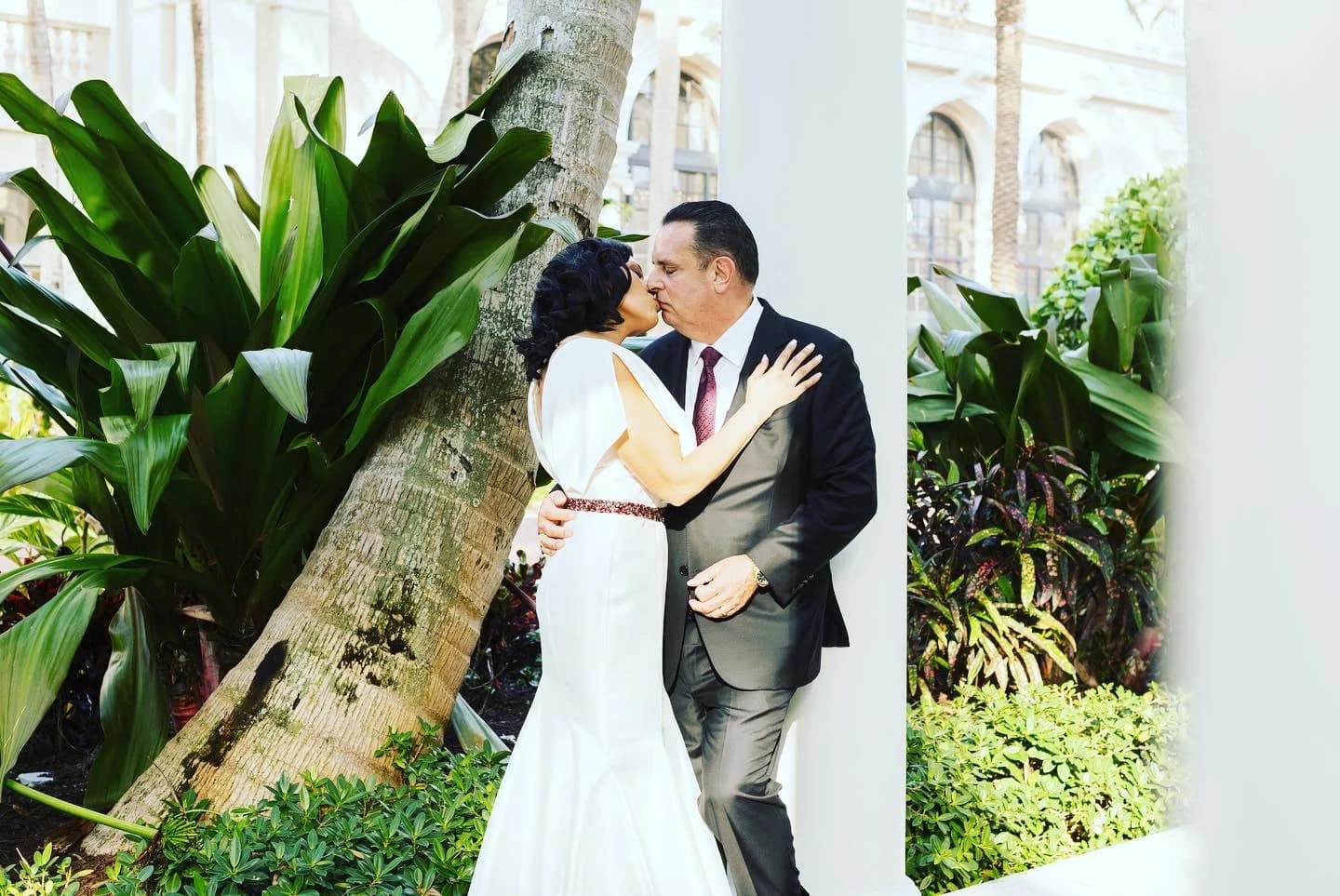
[If you have agreed on a kiss.] CELEBRANT: You may kiss. [The celebrant steps aside, so the photograph is of the two of you.]
CELEBRANT: [NAME A] and [NAME B] will now sign, with [WITNESSES] as witnesses. [Music during the signing. Nobody narrates.]
CELEBRANT: Family and friends, please stand, and welcome [NAME A] and [NAME B]. [This tells guests when to applaud. Music out, and you walk back together.]
For the words you write yourselves, start with how to write your own wedding vows, and for what each part is for, see what happens in a wedding ceremony.
Italics mark the legal words, and whoever conducts the legal part has the final word on them. If nobody is booked yet, start with what a celebrant does, and whether you need one abroad.
These lines follow BDM Victoria's standard marriage service, and your celebrant may use their own version of the authority and declaration. An Acknowledgement of Country can open the welcome: "We acknowledge the [NATION] people, the Traditional Custodians of the land where we stand, and pay our respects to their Elders."

CELEBRANT: My name is [CELEBRANT'S FULL NAME] and I am duly authorised by law to solemnise marriages according to law and to officiate at your marriage today.
CELEBRANT: [NAME A] and [NAME B], do you declare before me and before your witnesses here present, that you come here voluntarily and without reservation and that you are free by law to be married to each other today?
[NAME A] AND [NAME B]: Yes, I do.
CELEBRANT: Before you are joined in marriage in my presence and in the presence of these witnesses, I am to remind you of the solemn and binding nature of the relationship into which you are now about to enter. *Marriage, according to the law in Australia, is the union of two people to the exclusion of all others, voluntarily entered into for life.*
CELEBRANT: [NAME A], please repeat after me.
[NAME A]: *I call upon the people here present to witness that I [NAME A], take you [NAME B] to be my lawful wedded spouse.* I promise to love you, to care for you and to respect you for all of my life. [Or "husband" or "wife". Then [NAME B], names swapped.]
"Yes, I do" answers the declaration, and the vow is separate, so your celebrant may offer another form of it. You sign first, then two witnesses aged at least 18, then the celebrant, though yours may set another order. The Marriage Act 1961 is federal, so the same lines hold in every state and territory.
A registrar must carry out or attend the ceremony, with two witnesses, and agrees all other wording (GOV.UK). Readers are yours to choose, a child included, and each reading must contain nothing religious. Say I Do Islington's simple script runs in this order.
REGISTRAR: [The welcome, in the register office's words, including the call for any lawful impediment.]
REGISTRAR: *Are you [NAME A] free lawfully to marry [NAME B]?*
[NAME A]: *I am.* [Then [NAME B].]
[NAME A]: *I, [NAME A], take you [NAME B], to be my wedded [wife/husband].* [Then [NAME B]. Ask the registrar which words they offer.]
[Your own vows and the rings, from the script. The registrar pronounces you married, and you, two witnesses and the registrars sign the marriage schedule.]
Book the register office before any blessing celebrant, and confirm the words and each reading with it. A religious blessing can follow once the civil ceremony ends. If either of you was married before, the decree absolute or final order you bring to notice is the only place the earlier marriage needs to appear.
Domestic Relations Law section 12 sets no particular form, only that you each solemnly declare, before the officiant and at least one witness, that you take each other as spouses. It asks for no statement of authority, so a friend can simply say who they are.
OFFICIANT: I am [NAME], and [NAME A] and [NAME B] have asked me to marry them today.
OFFICIANT: [NAME A], do you take [NAME B] as your spouse?
[NAME A]: I do. [Then the same for [NAME B]. Your own vows and the rings follow, from the script.]
OFFICIANT: You have each declared, before me and before [WITNESS], that you take each other as spouses. I pronounce you married.
The officiant signs the certificate and returns it with the licence to the clerk who issued it (section 14). In New York City that is within five business days, and elsewhere ask your clerk for the deadline.
Section 11 is silent on online ordination, so a friend is safer with a one-day licence, explained in how to officiate a wedding.
After a registry or court wedding, you are celebrating a marriage that already exists. In England and Wales, humanist weddings do not currently have legal status, so the register office comes first, on an earlier day or the same morning. Anywhere, a ceremony after the legal signing registers nothing. If yours comes first, ask the local authority in writing what it counts as.
LEADER means your celebrant or a friend, who pronounces nothing. Keep the welcome, story, rings and walk back, and use these lines in place of the legal slot, your own vows and the pronouncement.
LEADER: [NAME A] and [NAME B] were married on [date] at [place]. [Or: earlier today, at [place].] Today the people they love most are here to hear them say it again, in their own words.
[For a mixed-faith room.] LEADER: Whatever each of you believes, [NAME A] and [NAME B] asked you here because your good wishes matter to them.
[NAME A]: [A plain vow.] [NAME B], I chose you on [date], and I choose you again today, in front of everyone we love.
[NAME B]: [A warmer vow.] [NAME A], I promise to tell you the truth, to make you laugh on the hard days and to keep turning up.
[After the rings.] LEADER: You are married, and you have said so in front of everyone who matters to you.
This version runs about 10 minutes. Leave out a ceremonial signing, which makes the real certificate look like a prop.
Keep a short ceremony short: one language per part, one role for a child and one blessing at most. Each adds a minute or two, so take that time from the welcome, never from the legal lines. Our full wedding ceremony script has the words for two languages, children, a second marriage and a family blessing.
Read it aloud at your real pace, with someone in the back row, then add the entrance, signing and walk back. Most people read faster when they are nervous, so time a second read slowly and plan for that one. If a reading or a song runs long, cut words from the welcome before you cut anything from the vows. The Wedded Wonderland guide to how long a wedding ceremony is suggests telling the venue and photographer to allow 30 minutes even when the script is shorter.
When your read-through runs long, cut in this order:
Your country's legal lines stay at any length. For 15 to 20 minutes, add back from the bottom of that list: a fuller welcome, one ritual, a longer story, then a reading or a family blessing.
Hand it over in this order:
Fix each of these before the day:
Wind: Clip the pages and keep the rings in a closed box. Near water, ask the venue about lapel microphones.
An interruption: A crying baby, a boat horn or a call to prayer gets one pause line, "We'll wait a moment", so it looks planned.
A speaker who freezes: The legal minimum card covers the lines that matter. Top their copy with "Breathe, find your place, read the next line."

A 12-minute ceremony has no slack for a late music cue, a dead microphone or a photographer out of place for the walk back. Your Wedded Advisor, through Wedded Concierge, plans the running order around those cues and works with the suppliers who deliver them, so the ceremony runs as written. That leaves you with one job on the day, which is to say the words you wrote.
Keep the legal lines as your celebrant, registrar or officiant gives them, and make everything else sound like you. Fill every bracket with a real name or detail, so nobody reads a placeholder aloud on the day. Read it aloud with a timer this week, then send it.
Written by
Content and Creative Manager | Wonder Group
Joseph Joshua is the SEO & Content Manager at Wedded Wonderland, bringing an editorial and search strategy perspective to the publication’s coverage of luxury weddings, destination celebrations and bridal lifestyle. His approach to content centres on helping readers move from inspiration to informed decisions, with attention to the design, craftsmanship and personal details that give a celebration its character.
Search real weddings, venues and vendors from around the world.
Search Wedded Wonderland