An Armenian wedding is rarely a single day. It is a run of family moments, from a formal visit to the bride’s parents to a crowning in church and a plate broken at the groom’s door. This Wedded Wonderland guide follows each Armenian wedding tradition in the order families live them. It also covers the travel advice and legal steps for Australian couples marrying in Armenia.
Armenian couples marry in Yerevan, in Sydney and in every city in between, and no two families run the day the same way. When the Smithsonian Folklife Festival staged a traditional Armenian wedding, or harsanig, in 2018, its curator Levon Abrahamian noted that each region of Armenia has its own wedding style, even though much of the symbolism is shared. The same is true of families in the diaspora, so treat what follows as a map to talk through with your parents and grandparents, not a rulebook.
The broad sequence runs like this:
Matchmaking and the formal asking (khosk-kap)
The engagement
Choosing the godparents (kavor and kavorkin)
The wedding morning: dressing the bride and collecting her
The church crowning
Lavash, honey and the plate at the groom’s door
Music and dance (the duduk and Kochari)
If you are new to the wider world of wedding traditions from around the world, this is one of the more theatrical, and one of the most family-centred.
How long it all takes depends on the family. Some keep every step across weeks or months; others fold the asking and engagement into a single evening and hold the crowning and reception on one day.
The early steps are the least documented. We found no official or academic source for them in our research, so what follows is how families often tell it. Your own family’s version is the one that counts.
In older village life, a match might be proposed through a go-between: a respected relative or family friend who sounded out the bride’s family before anyone made a formal approach. Today most couples choose each other, and the go-between, where the role survives, is more a gracious formality than a negotiator.
Khosk-kap is the moment the families give their word. The groom’s family, usually led by his parents and an older relative, visits the bride’s family at home to ask for her hand. There is food on the table and a good deal of ceremony before the question is put.
The detail many couples remember is the pause: the bride’s family holds off on a clear yes, which some families say makes the answer feel like a shared decision. Once it is given, a toast seals the agreement.
The engagement follows, often with a priest blessing the ring and the groom’s family bringing gifts for the bride.
If you want a priest to bless the ring, ask your parish early.
No official source records these roles; this is how families usually tell them. Choosing the godparents is one of the weightiest decisions in the whole sequence. The kavor (godfather) and kavorkin (godmother, often the kavor’s wife) are the couple’s sponsors for life: present at the crowning, honoured at the reception and, in many families, later asked to stand as godparents to the couple’s children.
In many families, the kavor stands behind the couple at the crowning and holds a cross over them. Parish practice differs on the detail, so ask your priest what your kavor will do on the day.
Parish rules can shape who you choose. St. Sarkis Armenian Apostolic Church in the United States asks that the best man be a member of the Armenian Church. If the friend you had in mind belongs to another church, raise it with the priest before you ask them.
At the reception, the role turns from solemn to festive. The Smithsonian’s account of a traditional wedding puts toasts at the centre of the evening, with both the godfather and the mother-in-law speaking in praise of the couple, followed by poetry and song.
No official source records these steps; this is how families usually tell them. The morning belongs to two households. At the bride’s home, women from the groom’s side join her family to help dress her, and someone from the groom’s family may help with her veil or her shoes, a gesture families often read as welcoming her into a new household.
Meanwhile the groom, his kavor and his party set out to collect her, often with musicians playing them through the streets. At the door, a brother or cousin blocks the way until the groom’s side pays a playful token to let them in. It is theatre, and good relatives play it for laughs.
The bride’s side brings gifts of its own. In the Smithsonian’s account, her family presents handmade pieces to the groom’s family, such as a bedcover, a tablecloth, a baby blanket and a silk rug, as signs of the bride’s patience and skill.
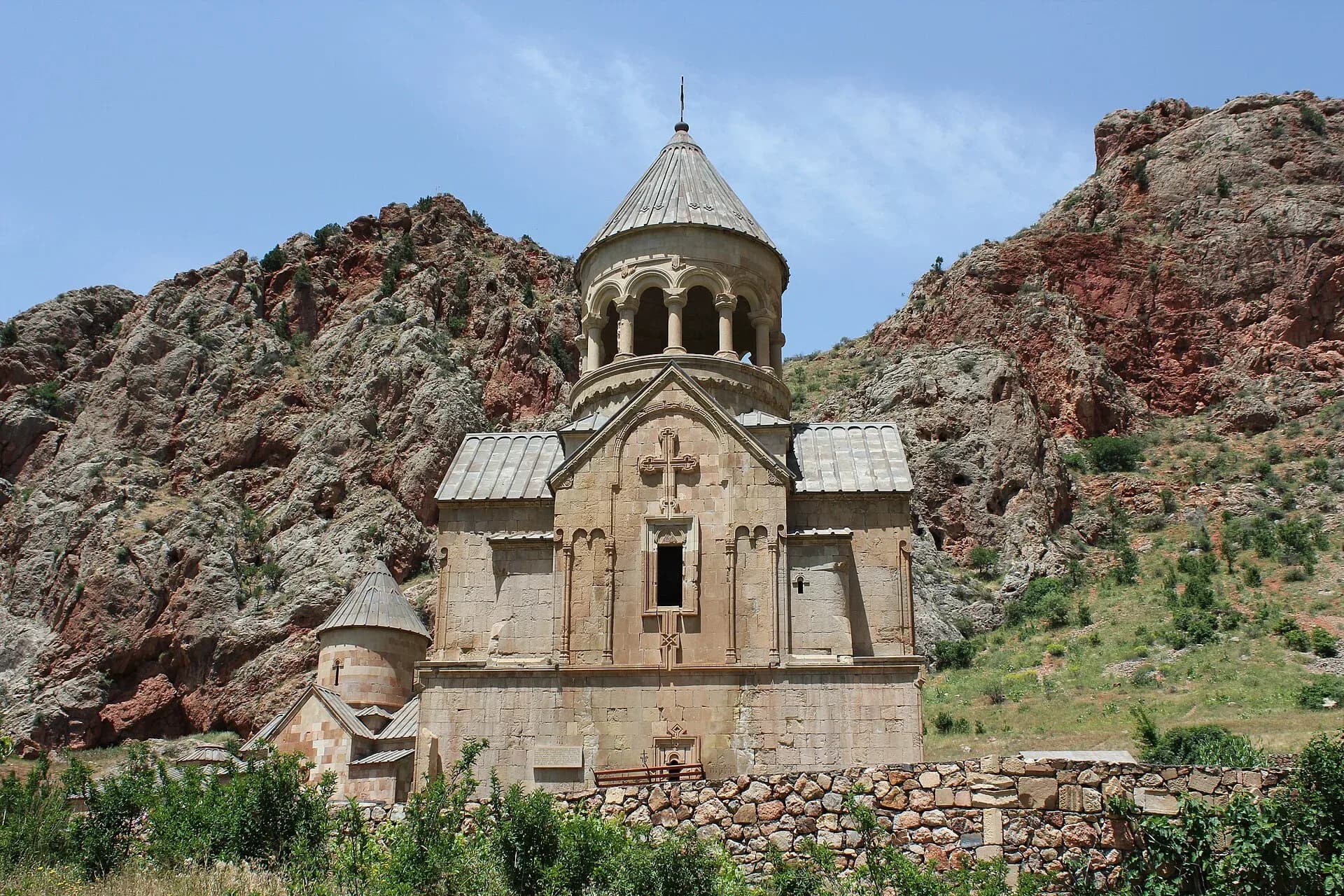
The church service is the one part of the day with written sources behind it. We drew on how two Armenian Apostolic parishes in the United States, St. Sarkis and St. James in Watertown, describe the service. These are US parish rules, not general ones, so ask your priest, as practice can vary.
Parish guidance describes Holy Matrimony in the Armenian Church as the sacrament by which two baptised Christians enter a lifelong union by making vows before God and the Church. During the vows, the bride’s and groom’s right hands are joined as a sign of their oneness. The priest blesses the rings, which the couple then exchange.
The crowning is the high point of the service. The crowns stand for the glory and honour with which God crowns the couple, who are crowned as king and queen of their own home. Then a cup of wine is blessed in memory of the wedding at Cana, and the couple drink from it as a sign that they will share everything in life, joys and sorrows alike. The service closes with a benediction in which the priest asks Christ to protect the couple under the shadow of His cross.
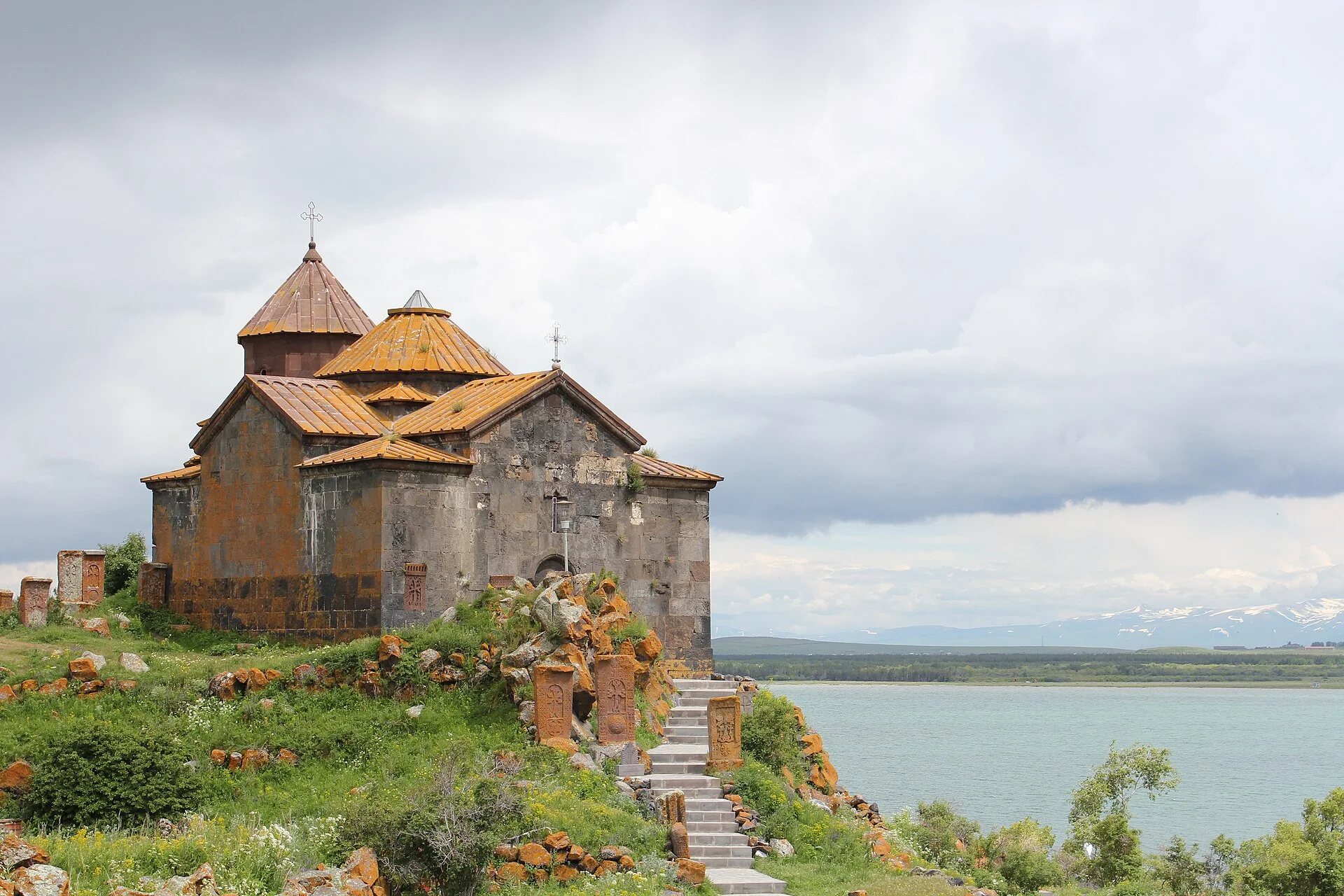
Brief your photographer on both the crowning and the cup, and ask the parish where they may stand. These are the two frames families ask for first.
Parish rules matter as much as the ritual. St. Sarkis says the sacrament must follow the canons of the Armenian Apostolic Church and may not be held outside the church, that a partner from a Protestant denomination must be confirmed in the Armenian Church, and that couples complete the pastor’s pre-marital preparation.
St. James in Watertown does not hold weddings on Sunday mornings, during Great Lent or Holy Week, or on five major feasts: Armenian Christmas, Easter, the Transfiguration, the Assumption of the Holy Mother of God and the Exaltation of the Holy Cross. It asks couples to make contact at least eight months ahead and to confirm the priest and church before booking anything else.
After the church, the party moves to the groom’s family home, or for many couples now, to the reception. This is where the most photographed customs happen.
Lavash, the thin flatbread, carries real weight here. UNESCO inscribed “Lavash, the preparation, meaning and appearance of traditional bread as an expression of culture in Armenia” on its Representative List of the Intangible Cultural Heritage of Humanity in 2014. Its UNESCO listing for lavash says the bread plays a ritual role in weddings, where it is placed on the shoulders of newlyweds to bring fertility and prosperity; in the Smithsonian’s account, it is the mother-in-law who lays it there.
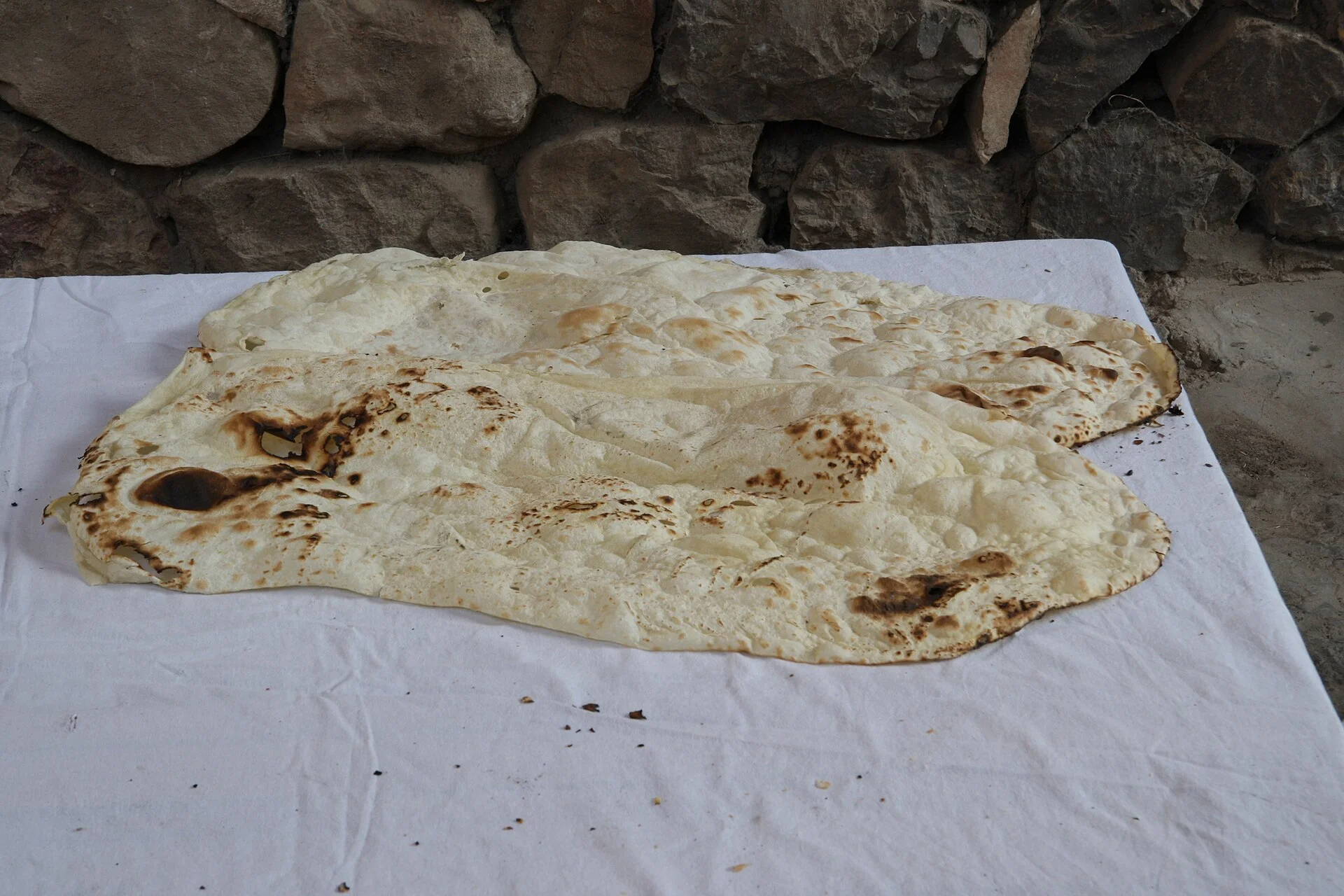
The baking itself is a family act. UNESCO describes small groups of women rolling a dough of wheat flour and water thin, stretching it over an oval cushion and slapping it against the wall of a conical clay oven, work that strengthens family and community ties.
Then comes the sweetness. As the couple enter the groom’s house, the mother-in-law offers them a spoonful of honey and walnuts and wishes them a sweet life. Before stepping inside, the couple break plates to cast off evil, and by tradition whoever breaks a plate first takes charge of the household.
Older relatives may add a final blessing that the couple grow old together on one pillow, a wish that is often told rather than written down.
For a wedding away from the family home, decide in advance where the “door” will be (a villa entrance, a ballroom foyer) and who will stand in the mother-in-law’s place if she cannot travel. Ask the venue where broken crockery can be swept up quickly.
Armenian receptions are loud, long and full of movement. In the Smithsonian’s recreation, the zurna (a woodwind) and the kopal (a large double-headed drum) played while guests danced folk dances around the couple. These included the shabash, when guests throw money for the couple that is swept up and given to the musicians, and the yarkhushta, a men’s clap dance performed in facing pairs.
The duduk is the instrument most people associate with Armenia. UNESCO inscribed “Duduk and its music” in 2008, after first proclaiming it in 2005. Its text says duduk music accompanies popular Armenian songs and dances of the various regions and is played at events such as weddings and funerals; it is usually played by two musicians, one holding a continuous drone through circular breathing while the other carries the melody. The body is ideally carved from apricot wood, and the longest, at 40 cm, is considered best suited to love songs.
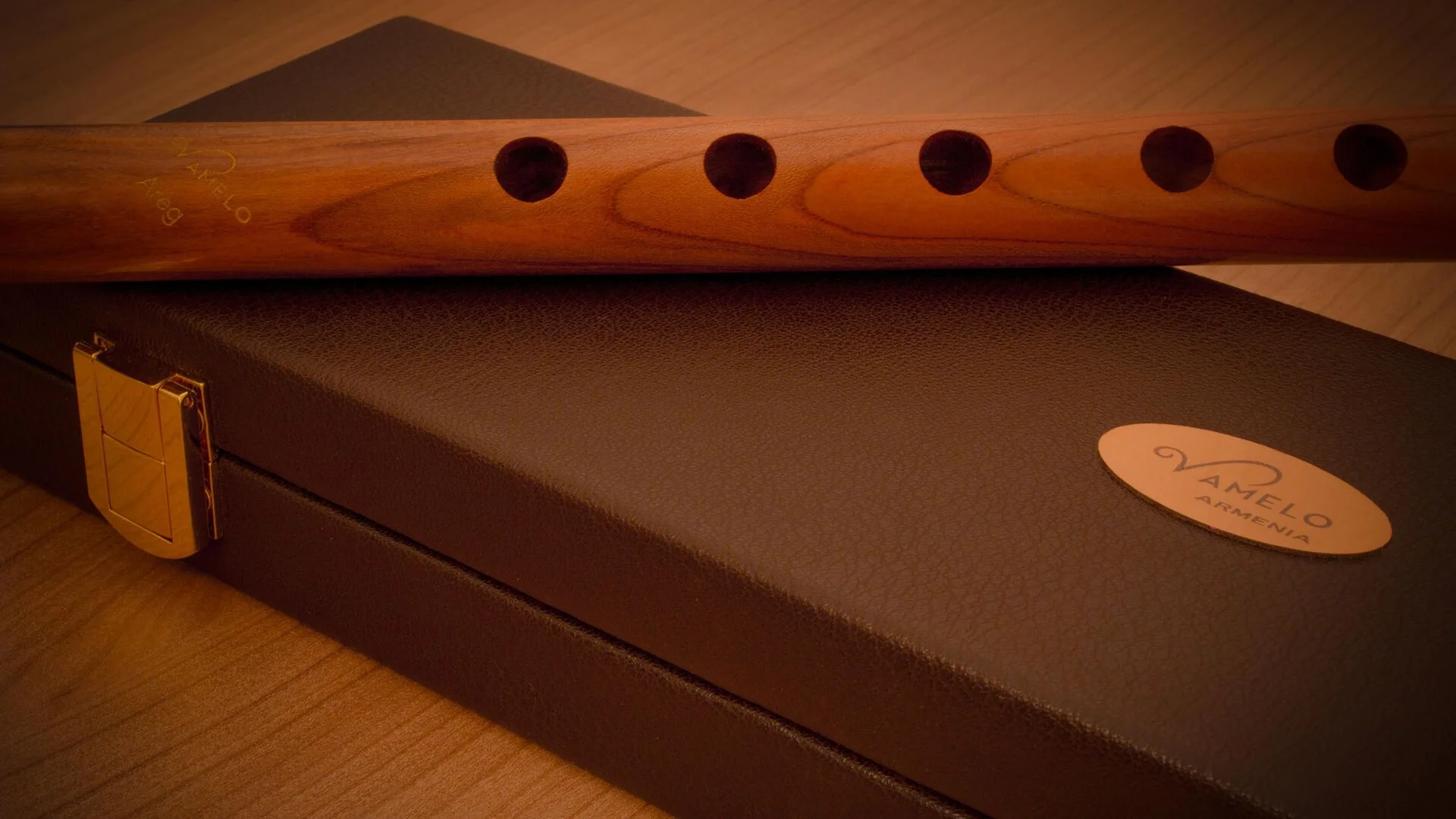
If you want the traditional sound for an entrance or a first dance, book a pair of players rather than a soloist.
Kochari is the dance that fills the floor. UNESCO inscribed “Kochari, traditional group dance” in 2017. It describes Kochari as widely performed throughout Armenia during holidays, festive celebrations, family ceremonies and other social events, and open to everyone, whatever their age, gender or social status. That openness is why it works at a wedding: grandparents and school friends end up in the same line. Leave the floor clear for a large group and warn the band it may run long.
Read more on the dances and the rest of the day in the Smithsonian Folklife Festival on Armenian wedding rituals.
Many of these traditions travel well. The asking, the engagement and the choice of kavor and kavorkin happen at home whatever the wedding destination, and lavash, honey and a plate at the door need only a doorway and a willing family.
The crowning is different, because it belongs to the church. If you are marrying in Australia, start with your local Armenian Apostolic parish priest: ask about notice, the dates the church will not marry, what is asked of a partner from another church and of your kavor, and whether any pre-marital preparation is expected. We could not read wedding guidance from the Armenian Church’s Australian diocese for this article, so your parish priest is the authority here.
Mixed-heritage couples often choose a handful of customs that mean the most to both families and explain them to guests in a line on the order of service. If you are planning a wider set of cultural destination weddings, the same principle holds: decide early which moments are non-negotiable for each side, and build the running sheet around them.
A wedding in Armenia itself, with family flying in from Sydney, Melbourne and abroad, is a serious undertaking. What follows is general information as at November 2026, not legal advice. For context on destination weddings in Europe more broadly, our hub covers the wider picture.
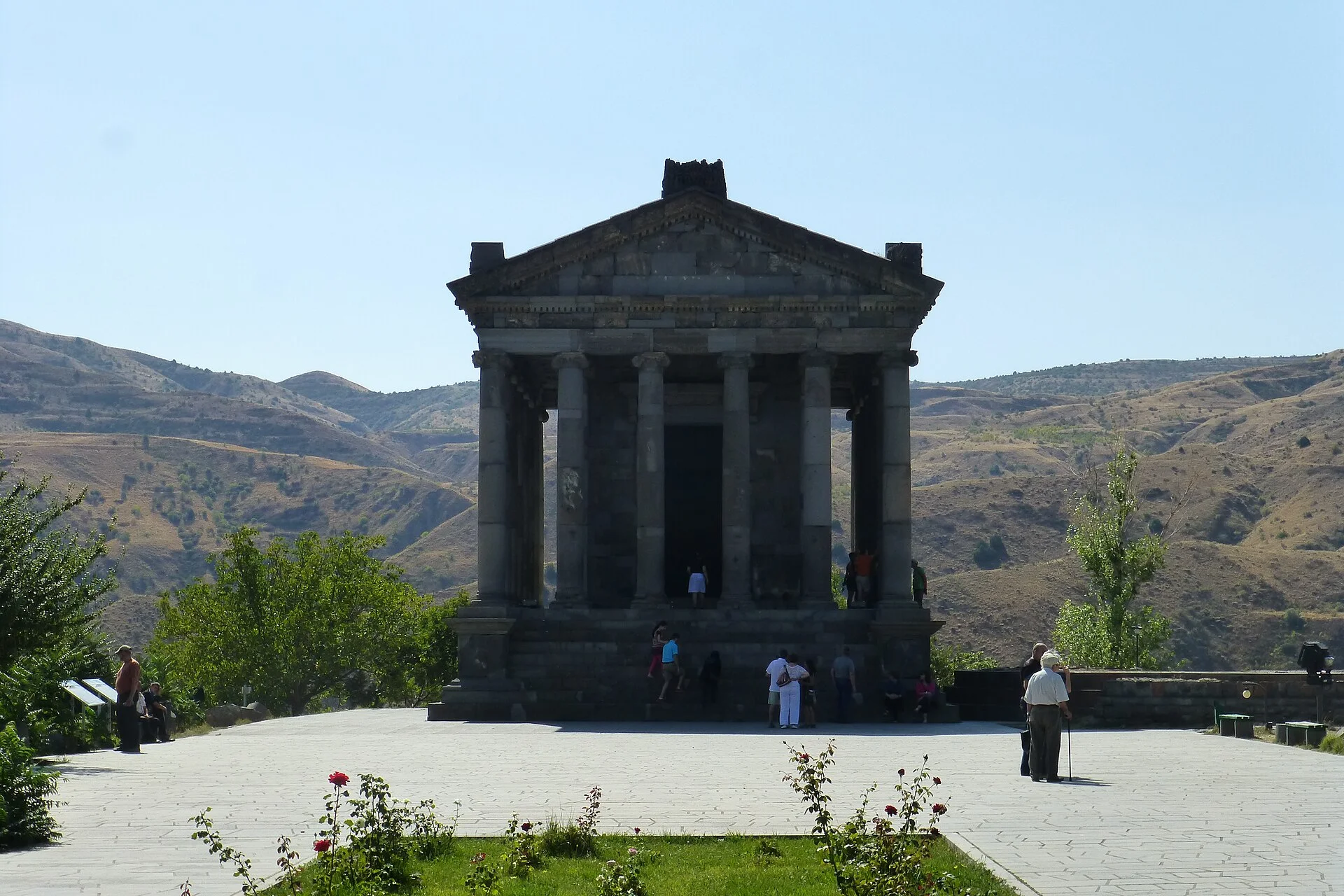
Smartraveller advice for Armenia, updated 17 June 2026, sets the overall level at Level 2, “Exercise a high degree of caution”, and Level 4, “Do not travel”, within 5 km of Armenia’s border with Azerbaijan, because of mines and unexploded ordnance. Plan the wedding, transfers and day trips well away from that band; a programme based in and around Yerevan keeps things simple.
Australia has no embassy or consulate in Armenia, and consular help comes from the Australian Embassy in Moscow. If grandparents or less mobile relatives are travelling, ask early: how far is each church and venue from where they will stay, does any transfer or day trip run near the 5 km border band, and who will they call first, given consular help comes from Moscow? Dual Australian-Armenian nationals must enter and leave Armenia on their Armenian passport, and male dual nationals aged 18 to 28 may be liable for military service. Raise this with any dual-national groom or relative at the first planning conversation, not at the airport.
Whether an Armenian Apostolic church wedding on its own is legally valid in Armenia, or whether you also need a civil registration, is a question for the authorities. We could not read an official Armenian source on this. Check with Armenia’s civil registry and the Armenian embassy, including any fees, before you set a date.
Local authorities may ask you to prove you are not already married. A Certificate of No Impediment to Marriage (CNI) is a document the Department of Foreign Affairs and Trade (DFAT) issues to support an intended marriage overseas, and at least one partner must be an Australian citizen or permanent resident. DFAT says it cannot advise on another country’s legal processes, so ask the local authority or the destination’s embassy whether a CNI is needed, whether a state registry certificate would be accepted instead, and whether it needs an apostille. The authority may also ask for a birth or divorce certificate, and DFAT charges fees for CNIs. The Smartraveller CNI page sets out how to apply.
Ask the same registry and embassy about translation of your documents into Armenian, and about how your marriage will be recognised once you are home. Our guide on whether you need to register an overseas marriage at home is a useful next read.
Confirm the legal and church steps with the registry and your priest.
An Armenian wedding is rarely a single day, and that is its charm: a run of family moments, from the first formal visit to the last plate broken at the door. Every family keeps its own version of these customs, so start with the ones that matter most to yours. Honour them at home or abroad, and your wedding will carry a tradition that families have celebrated for generations.
Written by

SEO Specialist
Ayrton Christian Braga is an SEO Specialist at Wedded Wonderland, where he writes optimized articles and web pages that center on destination weddings, cultural wedding traditions, and guides for everything in between.
Search real weddings, venues and vendors from around the world.
Search Wedded Wonderland