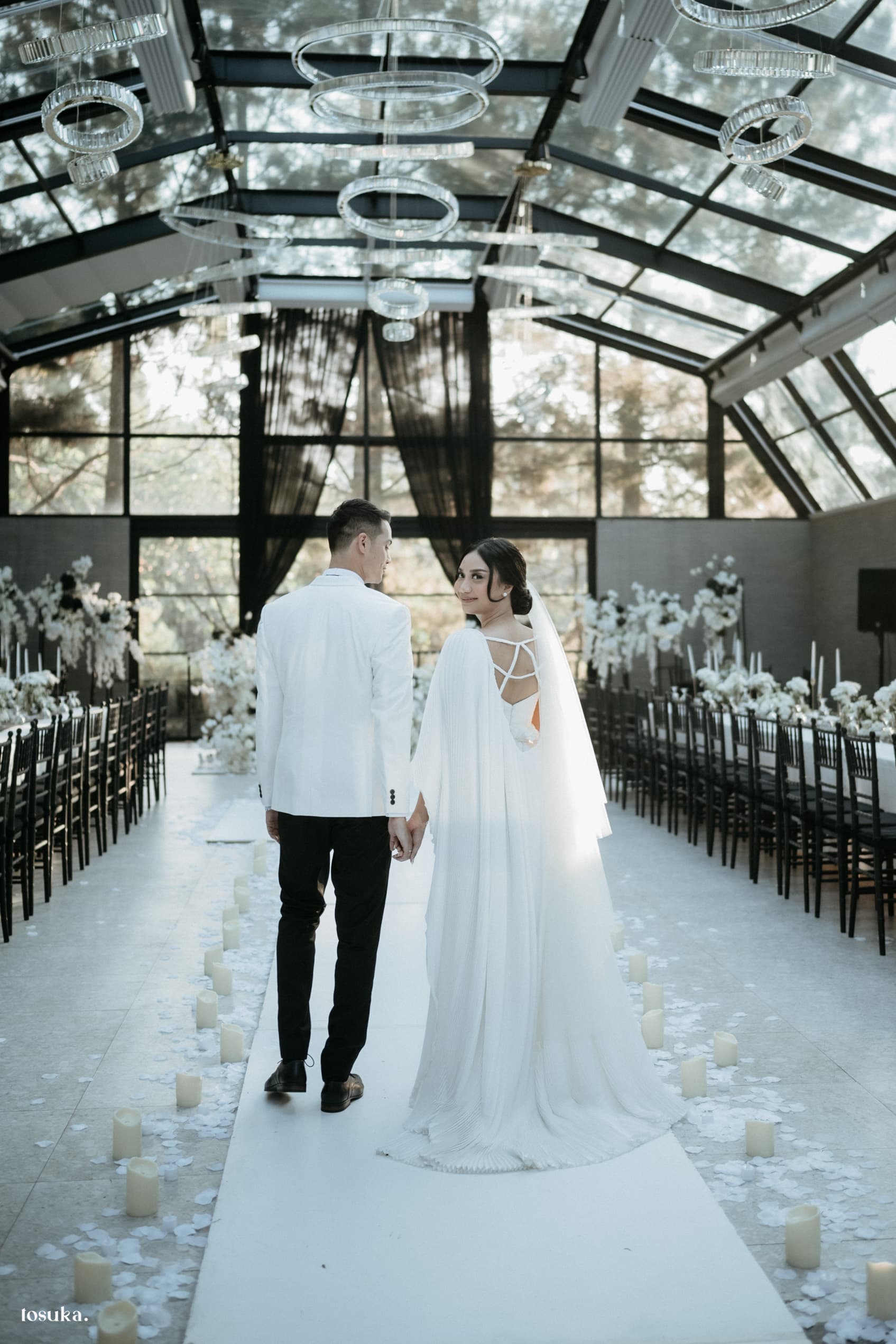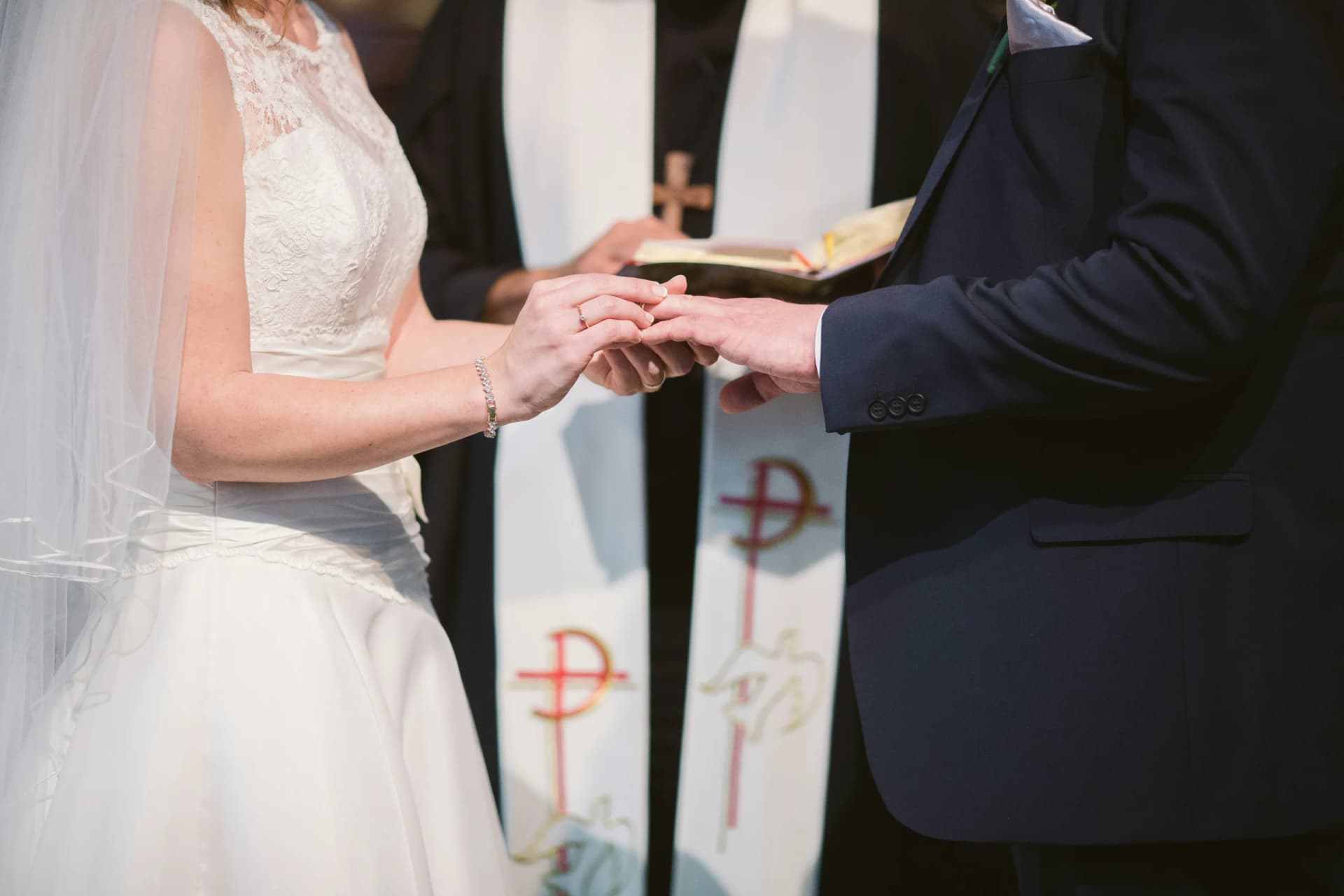
Bali offers an extraordinary setting for a destination wedding, but making your marriage legally binding requires more than exchanging vows. Indonesia's marriage laws connect religious ceremonies with official registration, making it important for international couples to understand their options before planning their celebration.
International couples have two main options when getting married in Bali:
Legal Wedding | Symbolic Ceremony | |
|---|---|---|
Legal status | Legally binding in Indonesia | No legal effect |
Religious requirements | Must meet Indonesian religious requirements | Flexible ceremony format |
Documentation | Official marriage eligibility and registration documents | No legal marriage paperwork |
Officiant | Appropriate religious officiant | Celebrant or chosen officiant |
International recognition | Subject to the receiving country's laws | Legal marriage completed separately |
A symbolic ceremony is an alternative for couples who prefer greater flexibility over their vows, religious traditions and ceremony format.
Under Indonesian Marriage Law, a marriage must be performed according to religious requirements and officially registered.
The registration authority depends on the couple's religion:
Non-Muslim marriages: Registered with the Civil Registry Office (Catatan Sipil or Disdukcapil), which issues an official marriage certificate.
Muslim marriages: Administered by the Office of Religious Affairs (Kantor Urusan Agama or KUA), which issues official marriage books (Buku Nikah).
A wedding ceremony at a private villa, resort or beachfront venue does not automatically establish legal marital status.
Foreign nationals, including partners of different nationalities, can legally marry in Bali provided they meet Indonesian marriage requirements.
Key eligibility considerations include:
Both partners generally need to share a recognised religion, including Islam, Protestant Christianity, Catholicism, Hinduism, Buddhism or Confucianism.
The standard minimum marriage age is 19 for both partners, subject to limited court-approved exceptions.
Both partners must be legally free to marry.
Same-sex marriages are not legally recognised in Indonesia.
Interfaith couples who do not wish to convert, couples without a religious affiliation and those who do not meet local eligibility requirements may consider a symbolic celebration.
Much of the preparation for a legal Bali wedding begins before arriving in Indonesia. Documentation requirements vary according to nationality, religion and the local registration authority.
International couples should generally prepare:
Valid passports and birth certificates.
A Certificate of No Impediment (CNI), certificate of legal capacity to marry or equivalent documentation.
Divorce or death certificates relating to previous marriages, if applicable.
Religious documentation, where required.
Photographs in the specified format.
Marriage witness identification.
Foreign-issued documents may also require certified Indonesian translations or authentication.
Good to know: Not every embassy issues marriage eligibility documents directly. Some nationalities must obtain these from their home country's authorities. Couples holding different passports should check their respective requirements independently.
Confirm your eligibility, contact the relevant national authorities, secure your marriage documents and arrange an appropriate religious officiant.
Complete any required translations, consular appointments and advance marriage notices. Non-Muslim couples should generally allow for at least 10 days' advance notice, subject to confirmation with the local registry.
Complete the religious ceremony with the appropriate officiant and witnesses, following the arrangements established with the registration authority.
Complete any outstanding registration formalities, collect your official marriage documents and arrange any authentication or translations needed overseas.
Begin preparing your legal paperwork at least three months before your wedding where possible. This provides additional time for document processing, consular appointments and religious arrangements.
Beyond your wedding package, consider potential expenses for:
Marriage eligibility documents and consular services.
Certified translations.
Religious officiants.
Applicable registration charges.
Apostilles or other document authentication.
Fees and processing times vary by nationality and registration authority.
Good to know: Consider Indonesian public holidays and Nyepi, Bali's Day of Silence, when normal activities across the island are significantly restricted. Confirm when your official marriage documents will be available before arranging your departure.
A symbolic ceremony allows couples to experience a destination wedding without navigating Indonesia's legal marriage requirements.
Couples can complete their legal marriage in their home country, country of residence or another eligible jurisdiction before or after celebrating in Bali.
This approach offers greater flexibility over religious traditions, personalised vows, celebrants and ceremony formats.
Whether you envision an intimate celebration overlooking the Uluwatu cliffs, a garden ceremony in Ubud or a beachfront wedding in Nusa Dua, explore our Bali destination guide for venues and inspiration.
A legally registered Indonesian marriage may be recognised internationally, subject to the laws of the country where recognition is sought.
Depending on your circumstances, you may need to arrange:
Certified translations of your marriage documents.
An apostille or alternative document authentication.
Marriage notification or registration with your national authorities.
Indonesia participates in the Apostille Convention, which simplifies document authentication between participating countries where the Convention applies. However, an apostille does not automatically establish legal recognition of a marriage.
Retain your original marriage documents and secure copies for future immigration applications, name changes and administrative procedures.
Catatan Sipil: Civil registration authority for non-Muslim marriages.
Kantor Urusan Agama (KUA): Office of Religious Affairs responsible for Muslim marriage registration.
Certificate of No Impediment (CNI): Proof that there is no known legal obstacle to a person's marriage.
Akta Perkawinan: Official marriage certificate for registered non-Muslim marriages.
Buku Nikah: Official marriage book for registered Muslim marriages.
Sworn translator: A translator authorised to certify translations for official use.
Apostille: Certification authenticating a public document for international use under the Apostille Convention.
Marriage requirements may change. Couples should confirm current requirements with their respective embassies and the relevant Indonesian marriage registration authority before making wedding arrangements.
Written by

Editor & Content Writer
Jillian Arambulo is the Editorial and Content Writer at Wedded Wonderland, specialising in branded content strategy. Her writing spans luxury lifestyle, travel, culture, beauty and emerging trends, bringing together comprehensive guides and features that connect readers with the places, ideas and experiences worth discovering.