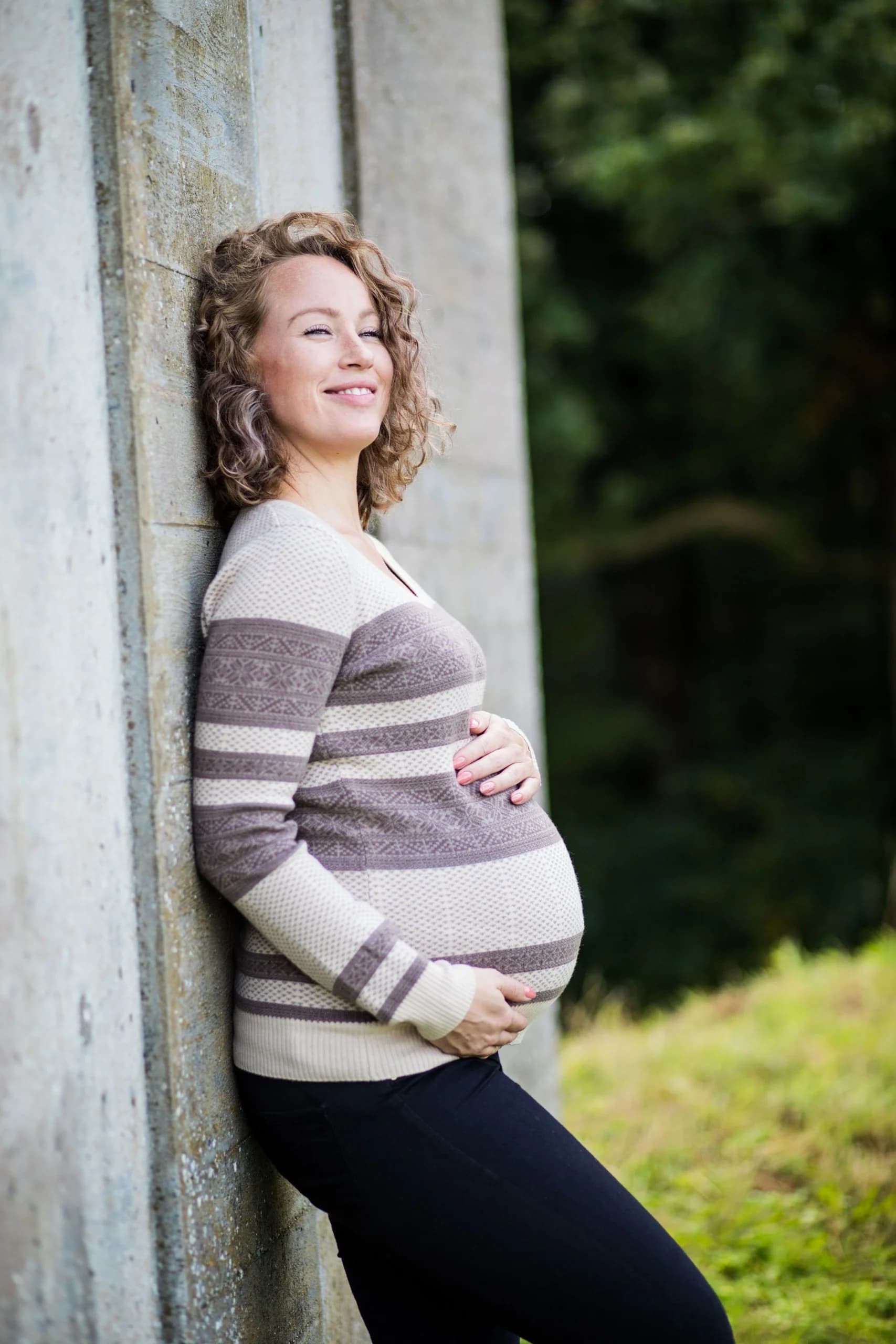
Flying while pregnant is usually safe for most of your pregnancy, right up to late in the third trimester. In the US, most airlines will fly you until about 36 weeks, according to the American College of Obstetricians and Gynecologists (ACOG), and the cutoff can come earlier on international flights. From around 28 weeks, many airlines will also want a letter from your doctor or midwife, so check your airline's rules before you book.
For most people, yes. If your pregnancy is healthy, an occasional flight is almost always fine, and the UK's Royal College of Obstetricians and Gynaecologists (RCOG) has found no evidence that flying causes miscarriage, early labour or your waters to break.
The cabin itself is safe too, says ACOG. The air pressure is lower, which can slightly reduce the oxygen in your blood, but your body adjusts, and the extra radiation at altitude isn't a worry for occasional travel. If you fly often, or you work as cabin crew, ACOG suggests asking your doctor how much flying is safe for you.
You can fly, but it's often not the comfiest time, since morning sickness usually only eases by mid-pregnancy. The first and third trimesters are also when the most common pregnancy emergencies happen, so ACOG suggests looking up the nearest hospital or clinic wherever you're staying.
ACOG calls weeks 14 to 28 the best time to travel: your energy is usually back, morning sickness has eased or gone, and you can still move around easily. If you get to choose your dates, put a long-haul trip here.
From 28 weeks, long hours in a seat get harder and the chance of going into labour goes up, which is why ACOG says travel may be riskier. It's also when many airlines start asking for a letter, and when the cutoffs in the table below start to matter. If labour does start mid-flight, the RCOG points out there's no guarantee anyone on board is trained to help, and the pilot may have to divert.
Every airline sets its own rules, and some change them depending on how long the flight is. These are the rules five major airlines publish on their own pages, read in November 2026:
Airline | Letter or certificate | One baby | Twins or more |
Delta | Not required | No limit set | No limit set |
American Airlines | Within 4 weeks of your due date | No travel within 7 days before or after delivery on domestic flights under 5 hours, unless cleared | Not stated separately |
Qantas, flights of 4 hours or more | After 28 weeks | To the end of week 36 | To the end of week 32 |
Qantas, flights under 4 hours | After 28 weeks | To the end of week 40 | To the end of week 36 |
Virgin Australia, flights over 4 hours | From 28 weeks | Not after week 36 | Not after week 32 |
Virgin Australia, flights under 4 hours | From 28 weeks | Not after week 40 | Not after week 36 |
Emirates | From week 29 | To the end of week 36 | To the end of week 32 |
Delta doesn't set a limit or ask for a certificate, though it suggests checking with your doctor if you're flying after your eighth month. American Airlines needs approval from your physician and a special assistance coordinator, plus a passenger medical form, before you fly within 7 days of delivery on those short domestic flights. A coordinator also has to clear any international or overwater flight within 4 weeks of your due date.
Qantas is careful to call its weeks only minimum requirements, not a promise that travel is safe at any particular point in your pregnancy, and it tells you to get advice from your own doctor before you fly.
ACOG's 36 weeks is only a general guide, and your own airline's rule is the one that counts. If yours isn't listed here, read its pregnancy page before you book, and count the weeks to your flight home as well as your flight out.
Once you're past 28 weeks, your airline may want a letter from your midwife or doctor, and the RCOG notes that some airlines have their own forms you'll need at any stage. Virgin Australia wants the letter dated no more than 10 days before you fly. For international or overwater flights close to your due date, American Airlines wants a note saying you were examined in the past 48 hours.
Emirates spells out what its certificate has to confirm, and it's a handy checklist to take to your doctor whichever airline you're flying:
Ask for the letter early. The NHS warns you may have to pay for it and wait several weeks. While you're sorting paperwork, pack a copy of your health record and your insurance details for any trip far from home, as ACOG suggests.
ACOG doesn't recommend travel if you have complications such as preeclampsia, prelabour rupture of membranes or preterm labour, or any condition that flying could make worse or that might need emergency care. The RCOG adds a few more:
With a complication, Qantas, Virgin Australia and Emirates ask for medical clearance rather than a standard letter. ACOG recommends a prenatal check-up 4 to 6 weeks before you leave, and that's the time to bring any of these up.
Deep vein thrombosis (DVT) is a blood clot that forms in a vein, usually in the leg. According to ACOG, any trip of 4 hours or more, whether by plane, car or train, doubles the risk, and being pregnant adds to it. The RCOG says the risk grows the longer the flight.
To bring it down, drink plenty of caffeine-free fluids, wear loose clothes, and get up to walk and stretch every so often. Compression stockings can help on long flights, but check with your doctor first, because ACOG warns that stockings that are too tight or worn incorrectly can raise the risk instead.

Photo: Richard Harris on Pexels
If you're packing for a babymoon, the babymoon packing list goes through what to bring in each trimester, from the documents for your carry-on to comfort essentials for the flight.
Check your cover before you book anything. ACOG suggests calling your health insurer 4 to 6 weeks before an international trip to ask whether it covers pregnancy and newborn complications abroad, and if it doesn't, you may be able to buy travel health insurance. Tell your insurer you're pregnant, too, because the RCOG notes that cover can be harder to find after 37 weeks.
Then look into where you're going. The CDC's Travelers' Health site lists outbreaks such as malaria and Zika, and the KidsHealth guide, medically reviewed by Elana Pearl Ben-Joseph, MD, advises against flying to high-altitude areas. Qantas and Emirates both point out that some countries restrict entry for pregnant visitors who aren't nationals.
If the trip is a babymoon, work backwards: start from your airline's last week and your insurer's limit, then fit your dates inside them. The babymoon guide goes into the best weeks to go and why a short flight buys you weeks, and these pregnancy friendly resorts are 12 places picked for a relaxed babymoon.
Cover photo: Rene Terp on Pexels
Written by

Senior SEO Specialist, Wedded Wonderland
Mark Tuason is the Senior SEO Specialist at Wedded Wonderland, where he writes and refreshes the brand's guides to destination weddings and cultural wedding traditions. He starts with the questions couples search for, checks the answers against trusted sources, and shapes each guide to help them plan, compare and book with confidence. Based in the Philippines, he specialises in content strategy and on-page SEO.
Search real weddings, venues and vendors from around the world.
Search Wedded Wonderland