Nobody plans a wedding hoping their guests feel lost. Yet at a ceremony with unfamiliar readings, a few songs and a tradition or two, that is exactly how some people feel. Who is that reading? What is happening now? How much longer is this going to take?
A wedding order of service answers those questions before anyone has to ask them. It can be a single card or a full booklet, and it helps guests follow your ceremony and understand who is taking part.
A wedding order of service is a printed guide that tells guests what to expect during your ceremony. It usually lists the couple's names, the date, the venue and the order of events, and it can include your wedding party, readings, music and a message to guests.
Depending on your ceremony, it might also cover religious or cultural elements. The length varies too. Some couples print one simple card, while others create a detailed booklet.
You may also hear it called a wedding program. In Australia and the UK, "order of service" is the more common term, while "wedding program" is more common in the US. Either way, the two mean the same thing.
There is no single format that every couple must follow. What you include depends on your ceremony, your traditions and how much you want guests to know.
Begin with the basics. These usually appear on the cover or opening section, and they confirm to guests that they are in the right place. You can include:
Your names
The wedding date
The ceremony venue, and the location if it helps
A heading such as "Order of Service" or "The Wedding of"
As a bonus, this is also the detail people are glad to see years later, when the card has become a keepsake.
This is the most important part of the card, because it answers the question guests keep asking: what happens next? A typical ceremony might include:
Processional
Welcome and opening words
Readings
Address or ceremony reflection
Exchange of vows
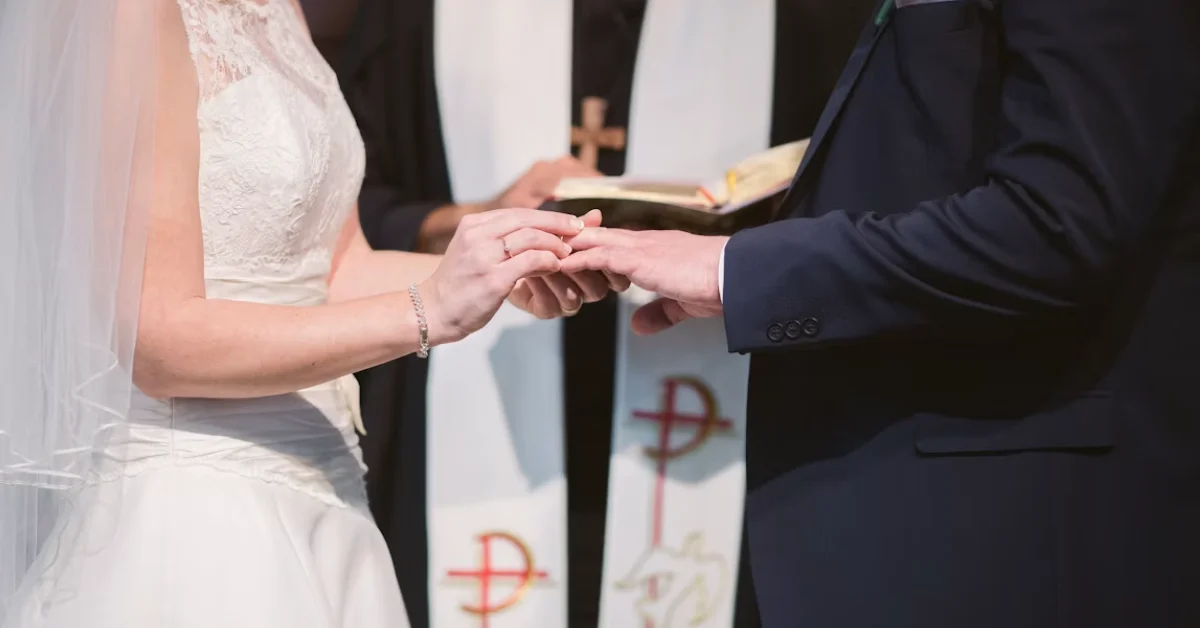
Exchange of rings
Unity ceremony, if included
Pronouncement of marriage
First kiss
Signing, if applicable
Recessional
Your ceremony doesn't have to follow this exact structure. Civil, religious, cultural and personalized ceremonies all have different elements.
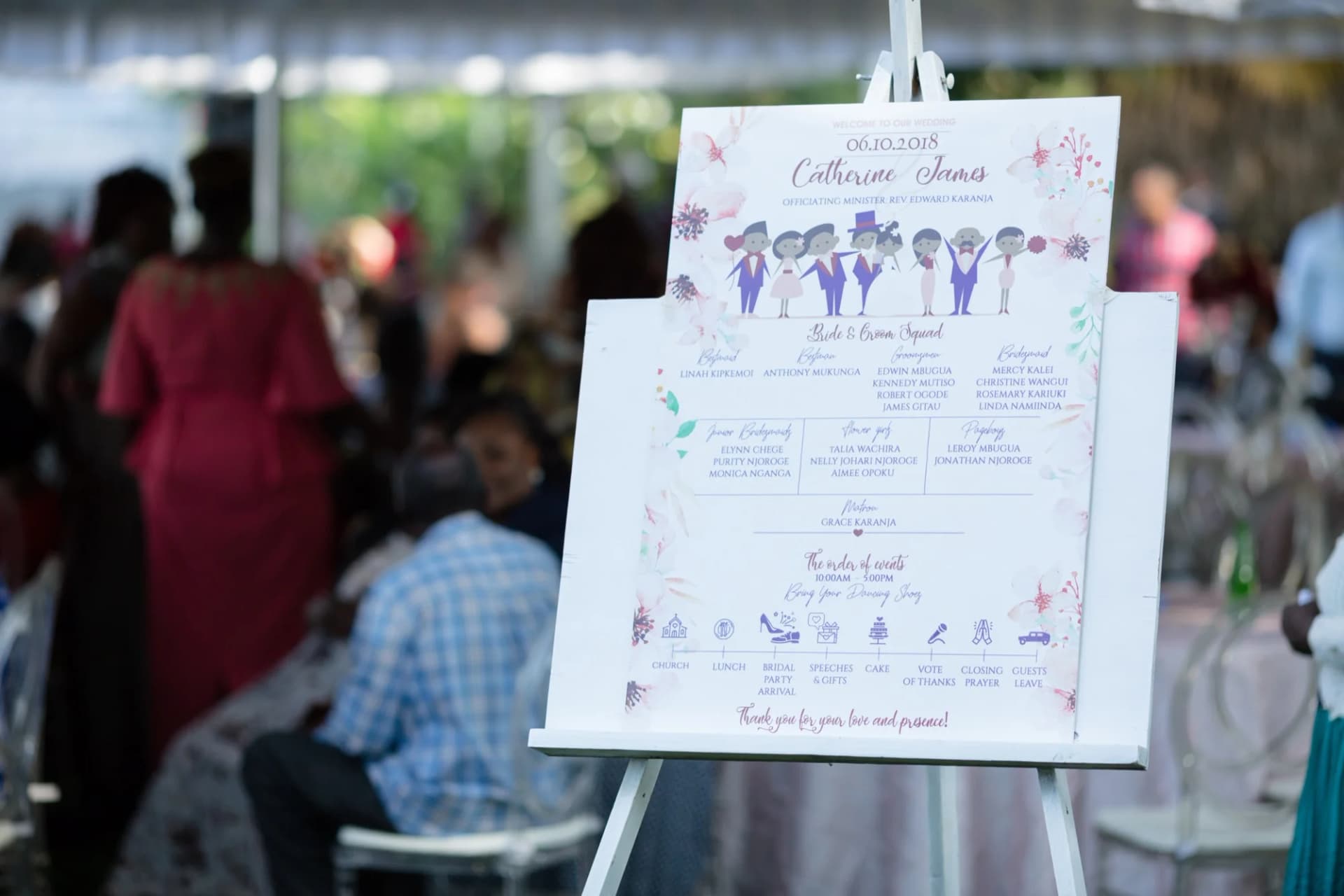
Once the order is set, think about who plays an important part in the ceremony. An order of service is a lovely place to introduce them. It helps guests work out who is who, which is useful when two families are meeting for the first time.
You could include your celebrant or officiant, maid of honor, best man, bridesmaids, groomsmen, flower girl and ring bearer. Readers and musicians deserve a mention too.
You can also acknowledge parents, grandparents or other loved ones if you wish.
A simple layout looks like this:
Our Wedding Party
Celebrant — Sarah Williams
Maid of Honour — Emma Jones
Best Man — James Smith
Bridesmaid — Olivia Brown
Groomsman — Jack Wilson
If your ceremony includes readings, list the reading title, the author and the reader's name. Guests who don't know the piece will appreciate the context, and your readers will appreciate the credit for taking on a nerve-racking job.
You don't need to print the whole reading. For most ceremonies, naming the piece and the person reading it is enough.
Religious ceremonies are different. There you may want to add scripture references, prayers or other texts that guests are expected to follow.
Music sets the mood of a ceremony, so guests often want to know what they're hearing. You can list the songs played at key moments, and add the musician, singer or performer if you'd like to thank them.
Processional
"Can't Help Falling in Love" — Elvis Presley
Signing
"Here Comes the Sun" — The Beatles
Recessional
"You Make My Dreams" — Hall & Oates
Keep it simple, and check the titles carefully before printing.
Some ceremonies need more detail. A religious or cultural ceremony may include hymns, prayers, scripture readings, blessings, rituals, traditions and responses for guests to repeat.
Here, the card has a different job. It is no longer just a schedule. It helps guests take part, and it helps people who are new to your traditions understand what they are seeing. A short line explaining a ritual can turn a puzzling moment into a meaningful one.
Because religious ceremonies often have far more sections than a simple civil ceremony, a booklet is usually more practical than a single card.
A short message can make the whole card feel more personal. It is especially useful if you have space on the final page or back cover. For example:
Thank you for being here to celebrate with us. Having our favorite people here to witness this moment means more than we can say.
If you want to remember someone who can't be there, a short memorial message is a quiet way to do it. It can be kept simple and understated.
If your reception is at a different location, tell guests where to go next. You might include the venue name, the address, and any transport information they need straight after the ceremony.
Now that you know what you can include, here is the other side of the question. You don't need to include everything. If space is limited, consider leaving out:
Long biographies of the wedding party
Full explanations of every reading
Detailed timelines
Information already on your invitations
Long thank-you messages
The most useful sections are generally the ceremony order and the key participant details. Everything else is a bonus.
That depends on your ceremony. A useful rule is that the format should match the amount of information you actually need, rather than adding content to fill the space.
Simple civil ceremony: A single card is often enough. It might list the processional, welcome, vows, rings, pronouncement and recessional.
Personalized ceremony: A folded card or booklet gives you room for readings, music, wedding party details and personal messages.
Religious ceremony: A multi-page booklet helps when guests need to follow prayers, hymns, readings or other parts of the service.
Not really. Both terms describe the same piece of wedding stationery. The wording varies by region, with "order of service" more common in Australia and the UK and "wedding program" more common in the US.
No, it is not essential for every wedding. But it becomes far more useful when your ceremony includes:
Multiple readings
Religious traditions
Hymns or songs
Several people taking part
Cultural rituals
A longer ceremony
For a short ceremony with only a few elements, you may prefer a simple ceremony card, or you may skip a printed program altogether.
Once you have decided what to include, the next step is putting it together. Before sending anything to print, confirm the ceremony details with your celebrant or officiant. Then work through these steps.
Finalize your ceremony order. Make sure everyone knows what happens and when.
Confirm names and roles. Double-check the spelling for your wedding party, readers, celebrant and musicians.
Decide what guests need to know. Include the readings, songs, prayers or other information they'll follow along with.
Choose your format. Pick a flat card, folded card, booklet or another format, based on how much content you have.
Proofread everything. Check names, dates, song titles and reading details before printing. Mistakes are hard to fix once the cards are printed.
Keep the design easy to follow. Your order of service should be beautiful, but guests should also understand it at a glance.
Before you print, use this list to check that you've covered everything. You don't need every item, so choose what makes sense for your ceremony.
☐ Couple's names
☐ Wedding date
☐ Ceremony venue
☐ Order of ceremony
☐ Celebrant or officiant
☐ Wedding party
☐ Readings and readers
☐ Music and musicians
☐ Religious or cultural elements
☐ Thank-you message
☐ Memorial message
☐ Reception details
Written by

SEO Specialist
Gino Reichert is an SEO specialist and content strategist who helps brands improve their online visibility. He enjoys creating useful, engaging content and staying up to date with the latest trends in search and digital marketing.
Search real weddings, venues and vendors from around the world.
Search Wedded Wonderland