What does it take to make a wedding feel as though it belongs in another decade? For this Virginia-based editorial, the answer involved more than a vintage-inspired gown and a classic black-and-white colour palette. It called for an entire world to be built, complete with carefully considered styling, period references, cinematic lighting and people who could bring the story to life.
Led by photographer Jennifer Moher, the creative team looked to the 1950s wedding of Jackie and John F. Kennedy for inspiration, drawing on the photographs and atmosphere surrounding the couple's 1953 nuptials. The result was a scene that felt wonderfully removed from the present day, with a little old-Hollywood romance and the kind of formality that makes vintage wedding photographs so compelling.
Pulling off a wedding aesthetic this considered takes a team that understands how every detail works together. For couples hoping to create a similarly personal celebration, Wonderland Concierge offers a personalised planning service that helps connect you with trusted wedding professionals who can bring a creative vision into focus.
The inspiration began with a fascination for 1950s cinema and a personal interest in the wedding photographs of generations past. Rather than simply borrowing the visual cues of the Kennedy wedding, Moher approached the project as an opportunity to explore what made celebrations of that era feel so distinctive.
A major reference was photographer Lisa Larsen's coverage of Jackie and John F. Kennedy's wedding for LIFE magazine. The photographs offered a particular balance of formal portraits and candid interactions, giving the team a visual language to work with. Research into other weddings from the late 1940s and 1950s helped shape the wardrobe, posing and overall atmosphere.
The result was a celebration that leaned into the elegance of the period without feeling like a costume party. The couple's portraits favoured composed poses and understated gestures, while the surrounding scenes gave the day a sense of movement and spontaneity.
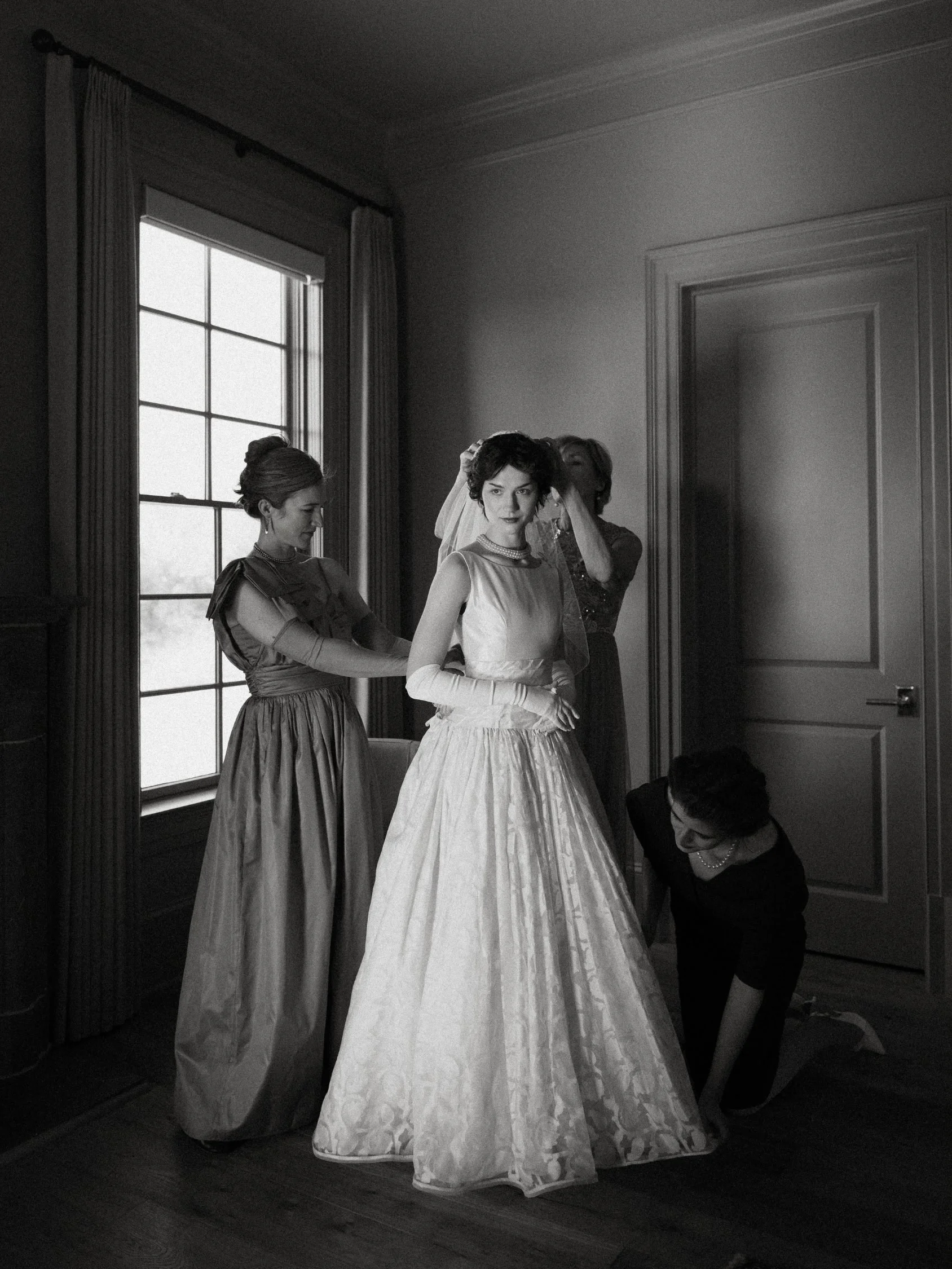
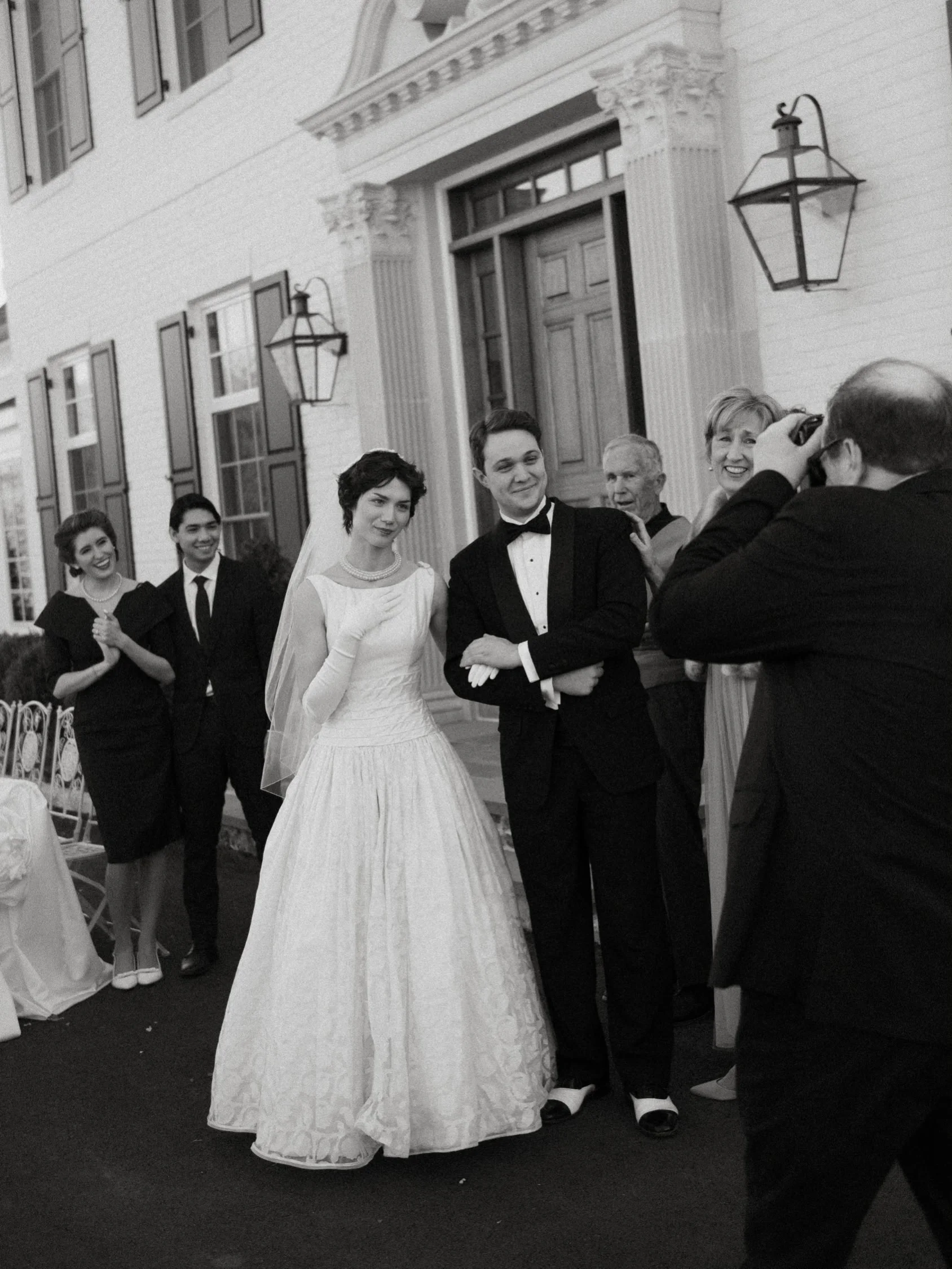
Naturally, the bride's look had to feel entirely at home in the era. She wore a vintage Janell Berté Couture gown, sourced at the eleventh hour, with a fitted bodice, a beautifully full skirt and a classic silhouette that could have stepped straight out of a mid-century wedding album.
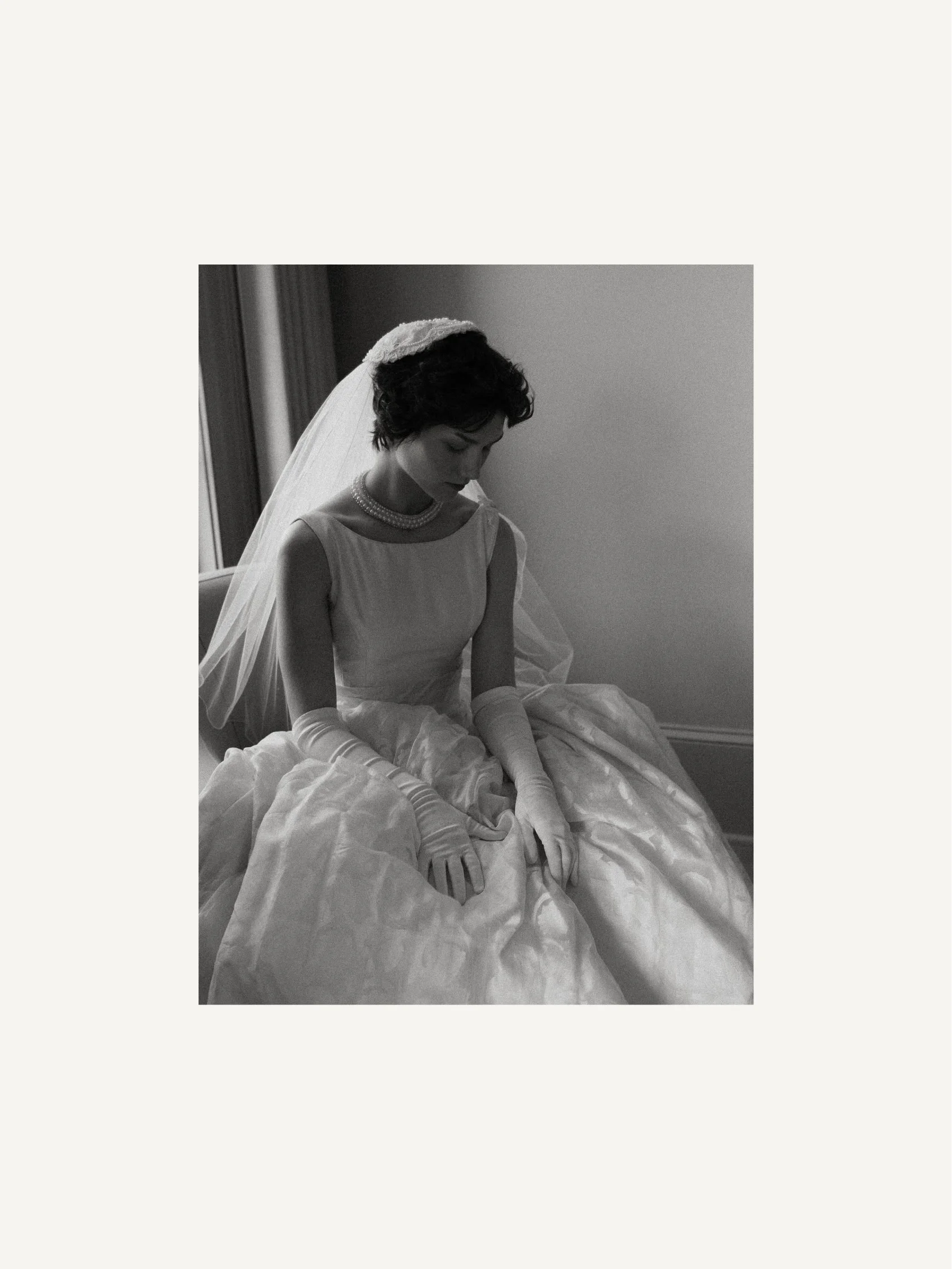
Long white gloves added another layer of period elegance, while a pearl necklace and a delicate veil completed the look. Her softly styled dark hair kept the overall effect close to the original inspiration, with the styling feeling considered rather than overly theatrical.
The groom wore a traditional black tuxedo with a bow tie, a fitting counterpart to the bride's formal ensemble. Together, their looks established the visual direction for the rest of the editorial.
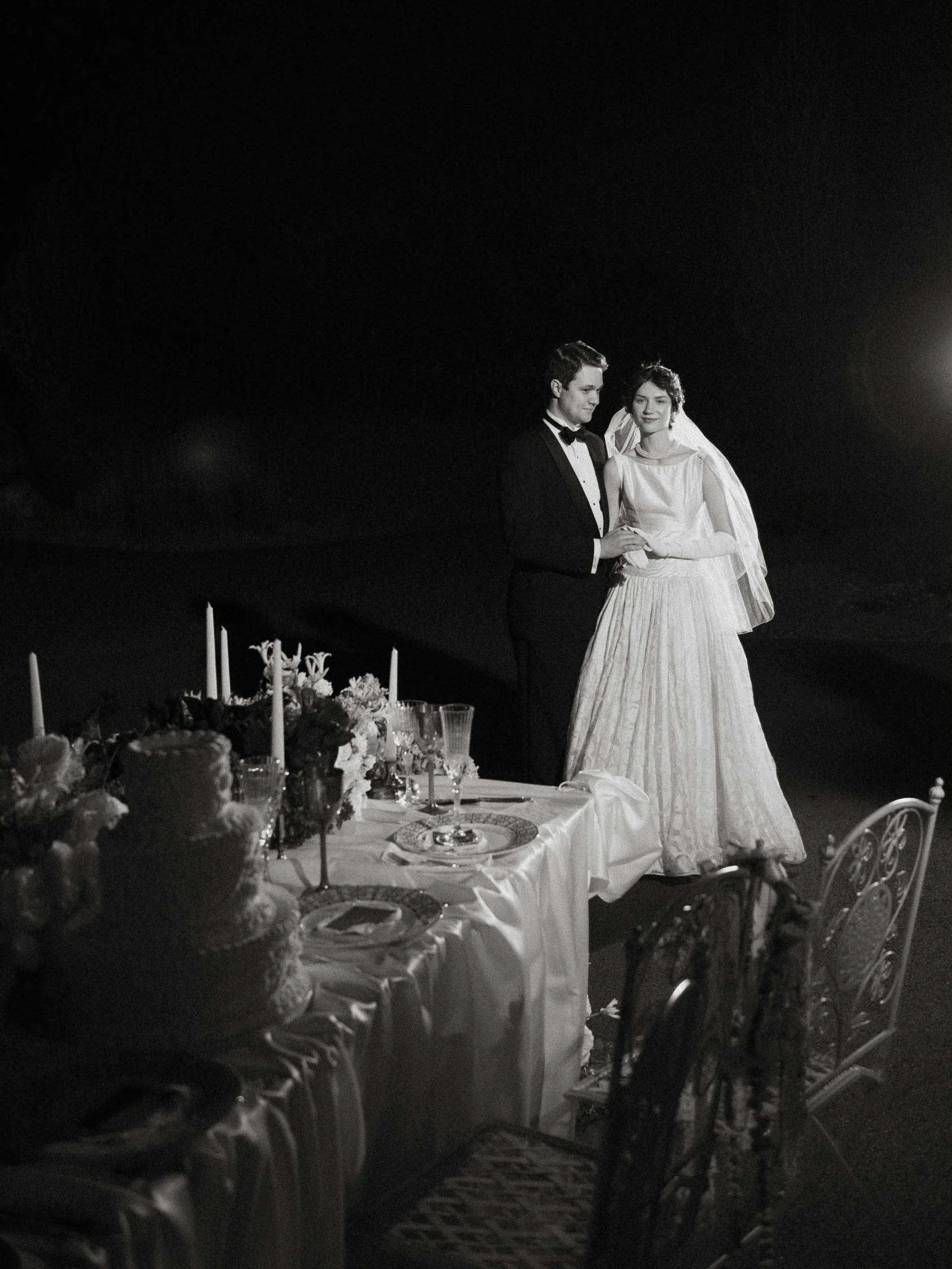
One of the most interesting decisions was to cast actors rather than rely solely on models posing for the camera. With the help of Jupiter Theater Co., the scenes could unfold with a sense of character and interaction.
The cast prepared well ahead of the shoot, with haircuts and styling adjustments helping them settle into their roles. Direction focused on simple situations: arriving at the celebration, having a conversation, noticing someone across the room or sharing a moment with another guest. Instead of prescribing every movement, the team gave the actors enough context to respond naturally.
That approach made a difference. The photographs captured the sort of small interactions that give old wedding albums their charm, from guests gathered around the table to the couple greeting friends outside the manor.
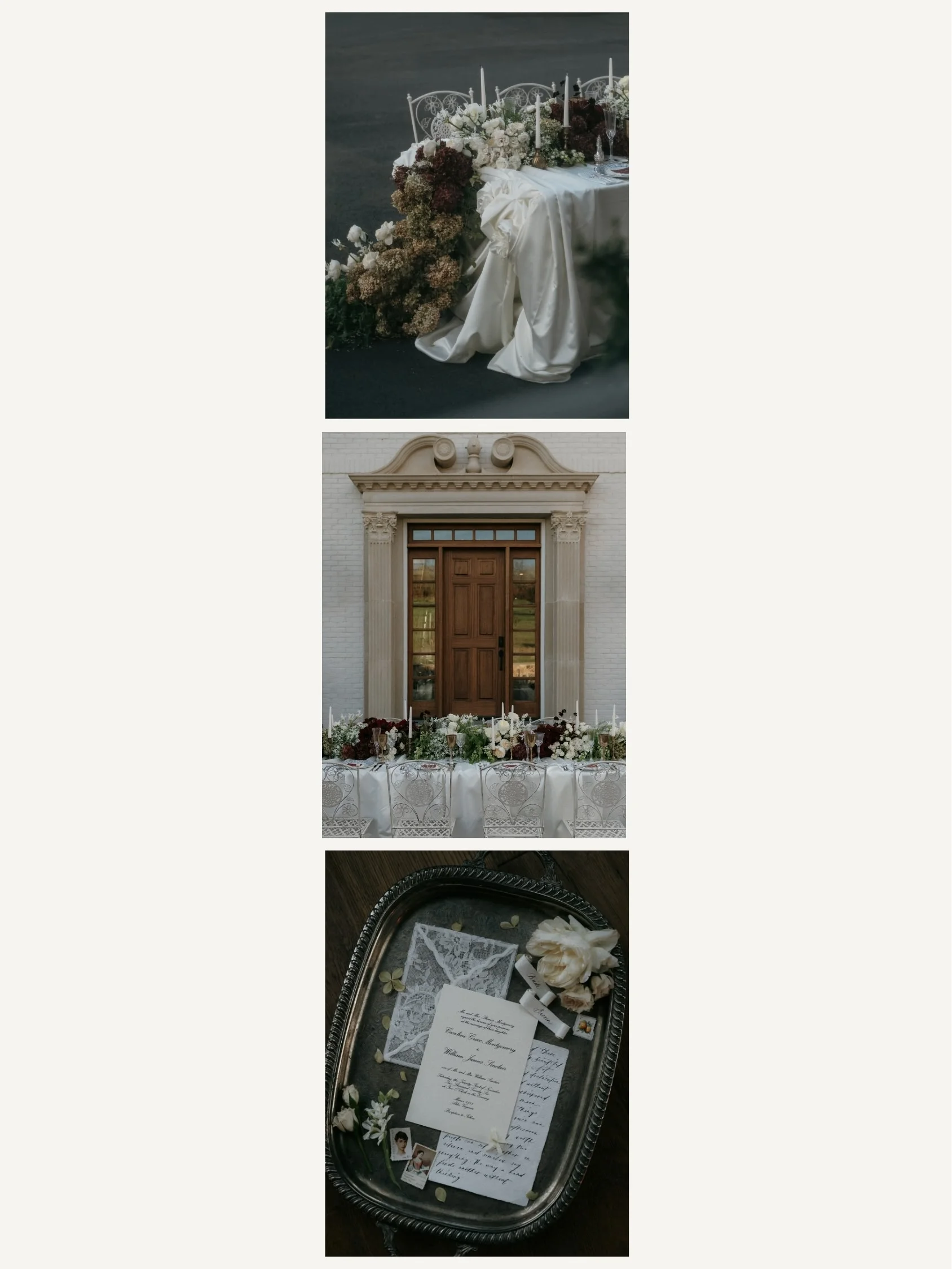
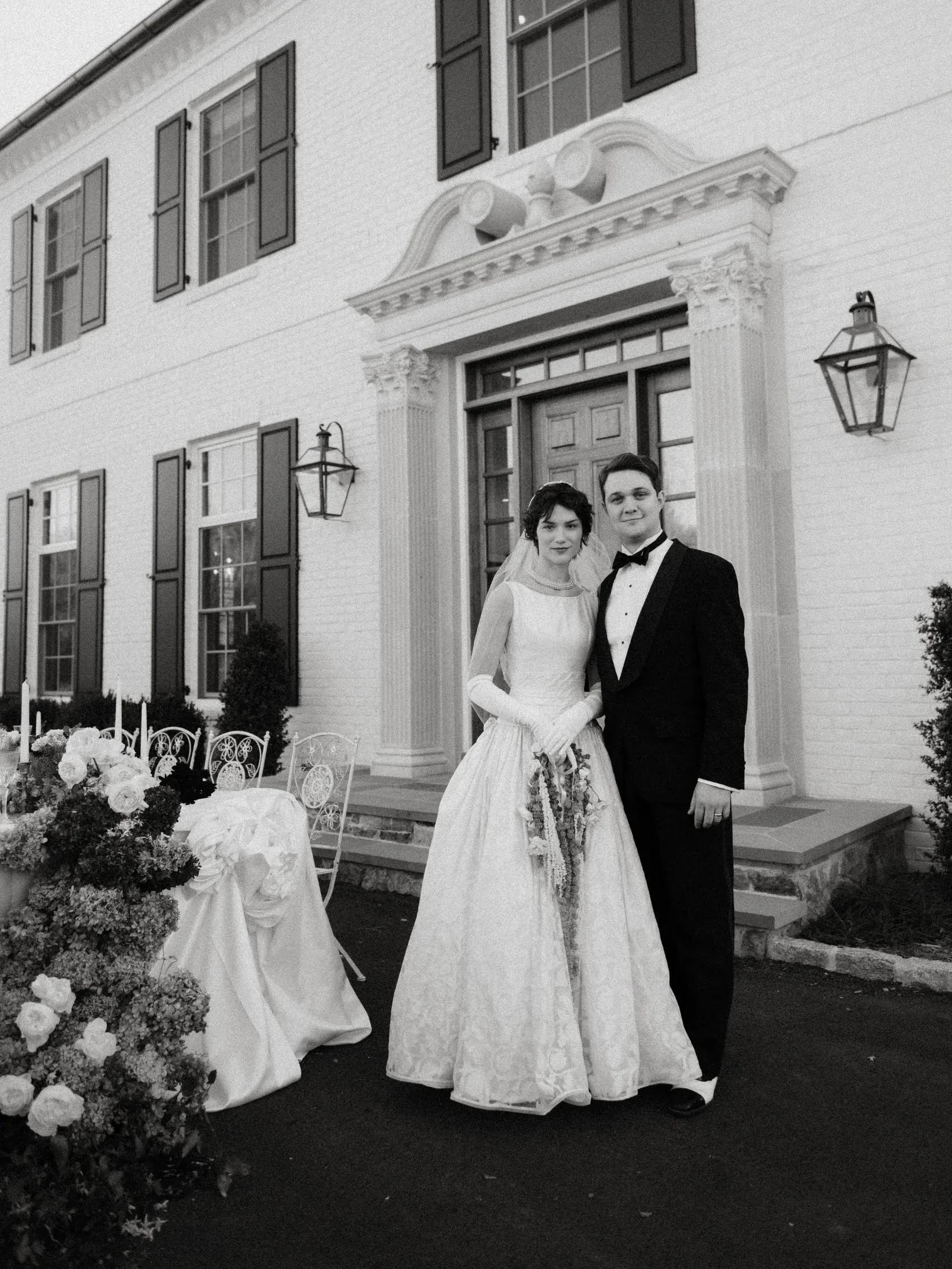
The setting at The Manor 1858 in Virginia provided a fitting backdrop for the occasion. Its stately façade, ornate doorway and traditional architectural details lent the editorial the kind of period atmosphere that would have been difficult to manufacture elsewhere.
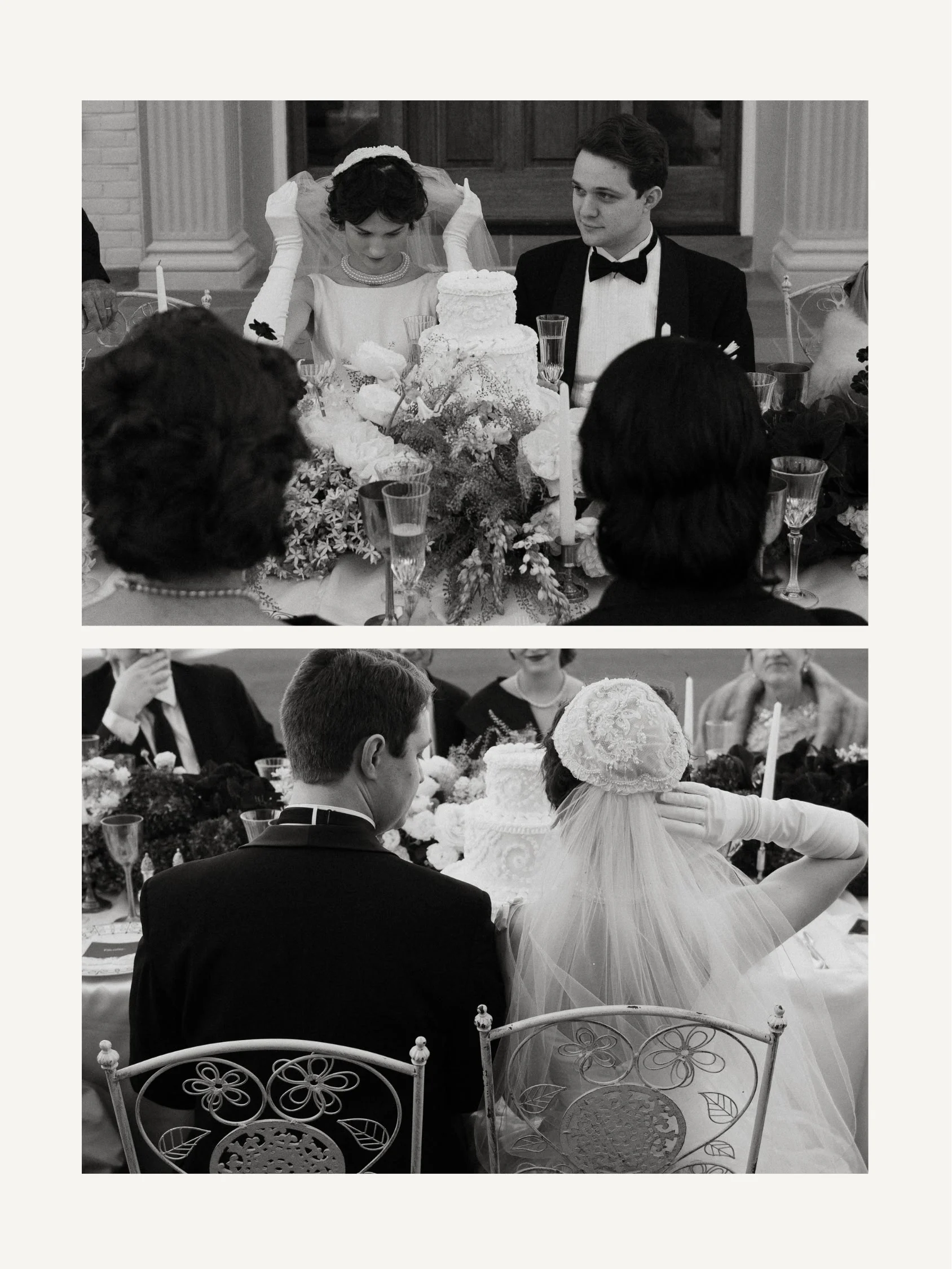
Vida Events led the design, with Steel Cut Flower Co. creating lush floral arrangements that brought softness and texture to the setting. White blooms were layered with deeper-toned flowers and greenery, creating a palette that felt romantic without becoming overly sweet. The arrangements framed the reception table, where tall taper candles, glassware and elegant place settings completed the scene.
Draping by Voile and Veil added another layer of texture, while stationery by Steph G. Calligraphy brought a handwritten quality to the finer details. The cake by Liberty and Jisoo was styled with intricate white piping, echoing the decorative details found in vintage wedding confections.
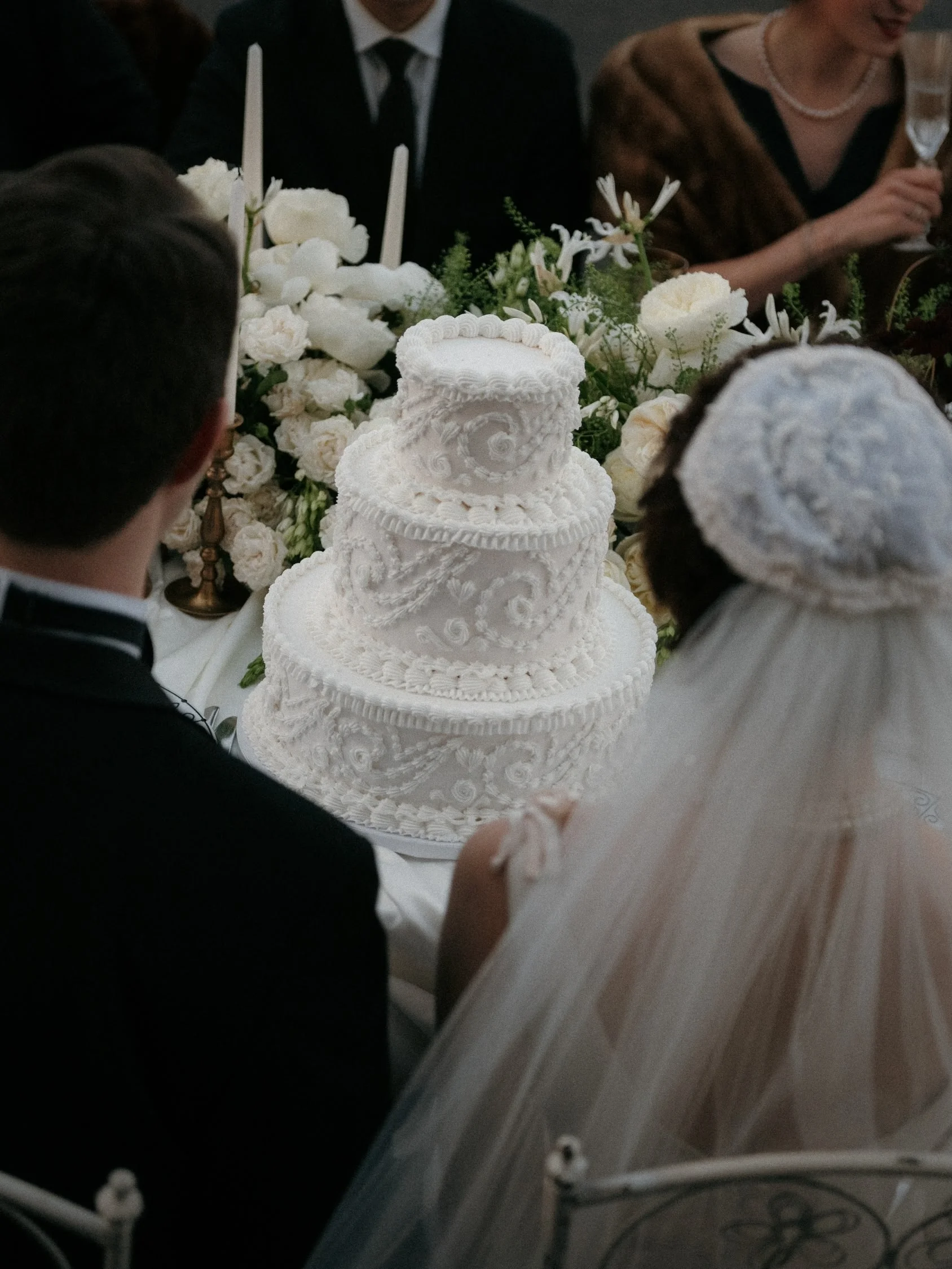
The reception table was particularly considered, with the cake positioned in front of the couple at the head table, a detail drawn directly from historical wedding references. It is a small choice, but one that helped make the setting feel rooted in its inspiration rather than simply decorated around it.
The shoot was structured in three parts, allowing the team to build a fuller picture of the celebration rather than focus on a collection of disconnected portraits.
The morning began with the bride getting ready, surrounded by women helping with her gown and veil. From there, the story moved into family portraits and a first dance, before arriving at the reception table and the interactions between the couple and their guests.
Each scene had its own purpose, giving the actors and creative team room to establish different moods. The front entrance became a place for arrivals and greetings, the interiors offered quieter preparation moments, and the reception brought everyone together.
The photography by Moher, alongside video captured by Amanda Sanchez Films and Fleur House Social, helped preserve the atmosphere across still and moving images. Black-and-white frames brought the editorial closer to the archival photographs that inspired it, while warm-toned images offered a more intimate look at the gown, interiors and reception details.
What makes this editorial memorable is the thought behind its execution. The team did not stop at recreating the appearance of a 1950s wedding. They considered how people moved through the space, how the couple might have posed, how guests interacted and how the smallest details could contribute to a believable story.
It is a reminder that a wedding aesthetic becomes far more compelling when it has a point of view. A reference photograph can provide the starting point, but the setting, styling, suppliers and personal touches are what make the final result feel like its own world.
And while most couples may not be planning a full-scale period production, there is plenty to borrow from this approach: choose an era or reference you genuinely love, pay attention to the details that define it, and bring together a team that knows how to translate the idea into something personal.
Shoot Lead - @jennifermoher
Design - @vida_events
Venue - @themanor1858
Florals - @steelcutflowerco
Dress - Vintage Janell Berté Couture
Stationery - @stephgcallig
Draping - @voileandveil
Cake - @libertyandjisoo
Rentals - @curatedeventsdmv & @dceventrentals
Model - @sonya_rae_
Content Creator - @fleurhousesocial
Actors - @jupitertheaterco
Lighting assistants @ashtonmelton_photography @ruinism @bhphoto @genaraylights
Event @thehybridco
Gloves @nostalgicjourneyon7
Cap - @knookandcrannyvintage
Video in clip @amandasanchezfilms + @fleurhousesocial
Search real weddings, venues and vendors from around the world.
Search Wedded Wonderland