You do not need a veil to get married, but if you want one, the choice comes down to length, style and how it works with your dress. Veils run from a short birdcage that covers part of the face to a cathedral veil that trails past the train. Below are the lengths from shortest to longest, the styles worth knowing, the 2026 trends and how to choose.
No. A veil is a tradition you can take or leave, and plenty of brides marry without one. Choose one if it finishes the look you want, or skip it for flowers, a headpiece or a hairstyle that stands on its own.
If you are unsure, try a few lengths at your dress fitting. Seeing a veil with your gown usually settles the question quickly.
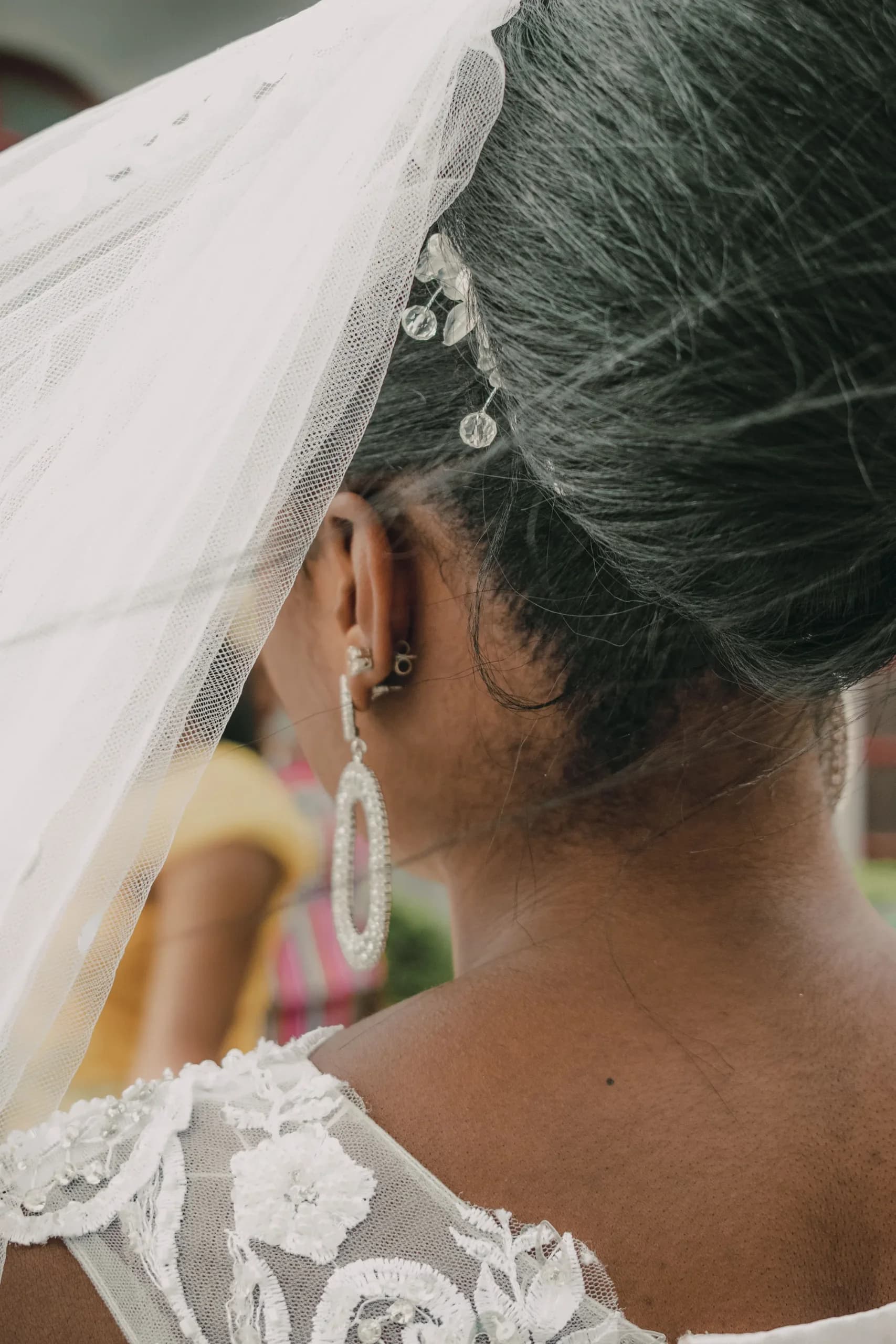
The shortest veil, usually made from netting, sits over the eyes or reaches the nose or jaw. It suits a vintage or retro look.

A short layer of tulle worn over the face as you walk down the aisle, then lifted back during the ceremony. It is often added to a longer veil.
Light and playful, a shoulder-length veil keeps attention on the dress and works well with a half-up hairstyle.
These fall around the elbows or waist, adding softness without hiding the back of your gown.
Falling just past the hips to where your fingertips rest, the fingertip veil is one of the most popular lengths and suits most dress shapes.
A chapel or floor-length veil skims the floor behind you, giving a gown without a train the look of one.
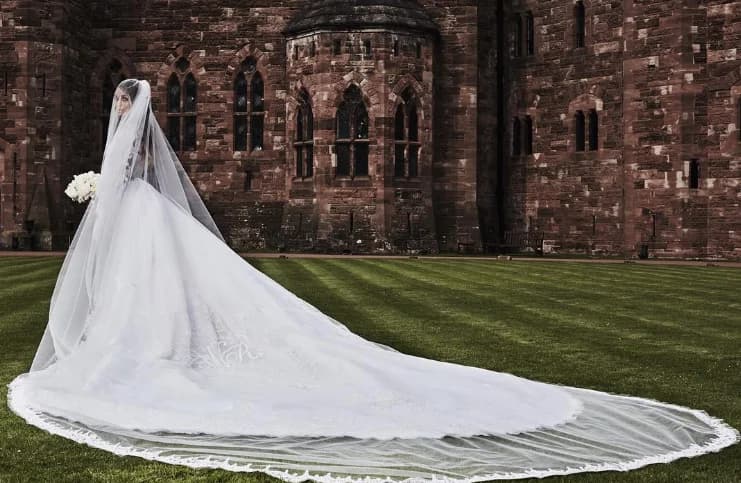
The longest common veil extends beyond the train of your dress. It suits grand ceremonies and updos, and it photographs beautifully when it catches the breeze.

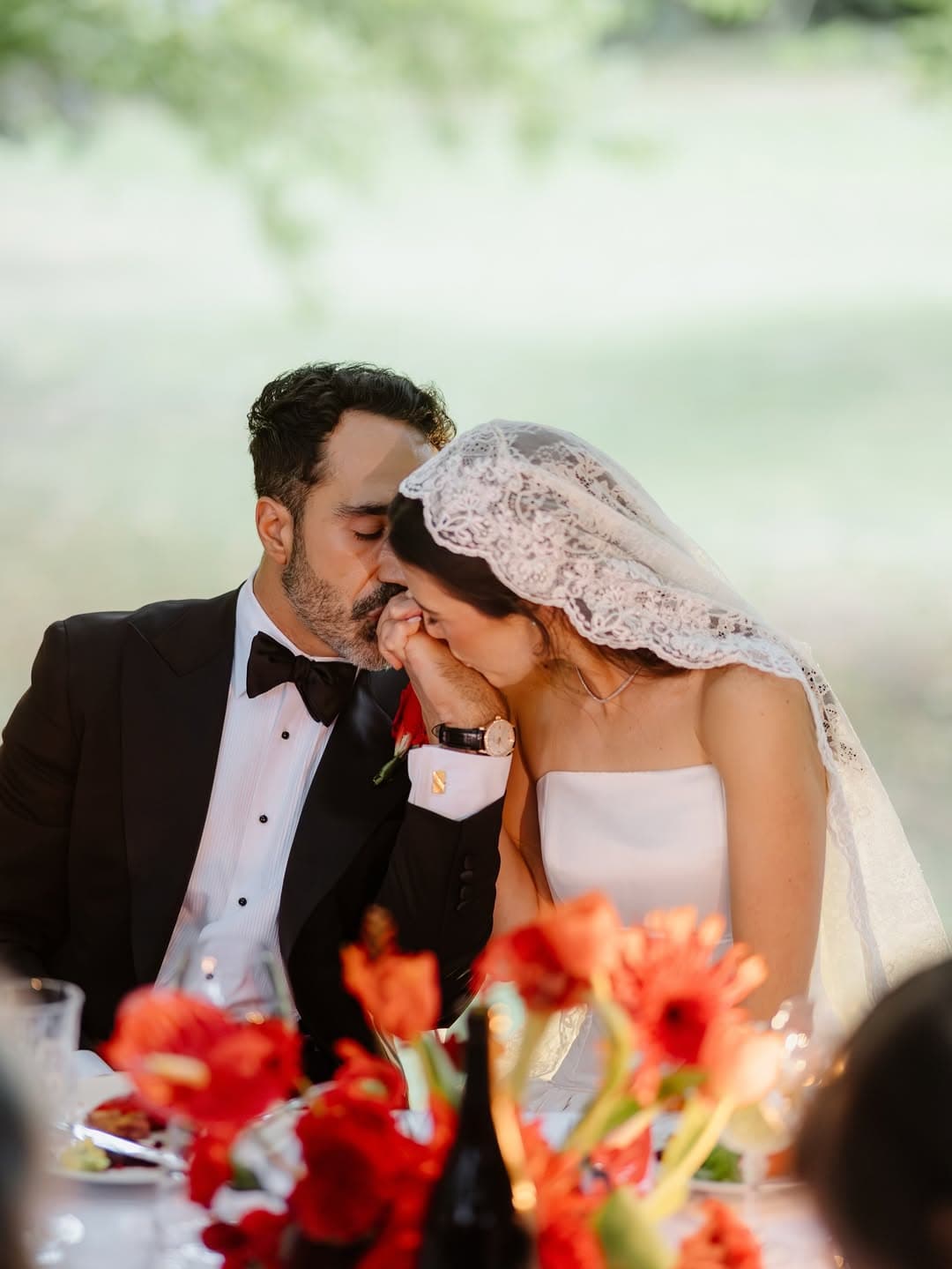
A Spanish-style veil edged in lace that frames the face. It is a classic choice for church ceremonies.

Gathered tulle that sits over the top of the head and falls behind the ears, giving a soft, romantic shape.
Cathedral, chapel and extra-long veils are back for brides who want drama on the aisle, especially at grand venues.

Pleats, crinkles, layers and sculptural folds give a minimal gown movement and a couture finish.

Bold patterns, botanical motifs, Chantilly borders and mantilla drapes make lace feel current rather than old-fashioned.

Three-dimensional flowers, embroidered vines and petal details suit garden and outdoor weddings.

A long scarf veil can be tied, draped or wrapped, then removed after the ceremony for a second look.

Blush, champagne, nude, pale lavender and dip-dyed veils add colour while still reading as bridal.

Draped over the shoulders or framing the face, these give minimalist gowns a striking outline.

Scattered micro-pearls and fine pearl edging add shine without weighing the veil down.

Initials, your wedding date or a line from your vows stitched into the tulle turn the veil into an heirloom.

Lighter fabrics and modern lace bring back the moment your partner lifts the veil at the altar.
Start with your dress, then think about your hair and the setting.
Try veils on while you are being fitted, so you can judge the length and colour against the fabric. If you would like help finding a designer, a bridal stylist or every other supplier for your day, Wedded Concierge can plan it with you.

Written by

Senior SEO Specialist, Wedded Wonderland
Mark Tuason is the Senior SEO Specialist at Wedded Wonderland, where he writes and refreshes the brand's guides to destination weddings and cultural wedding traditions. He starts with the questions couples search for, checks the answers against trusted sources, and shapes each guide to help them plan, compare and book with confidence. Based in the Philippines, he specialises in content strategy and on-page SEO.
Search real weddings, venues and vendors from around the world.
Search Wedded Wonderland