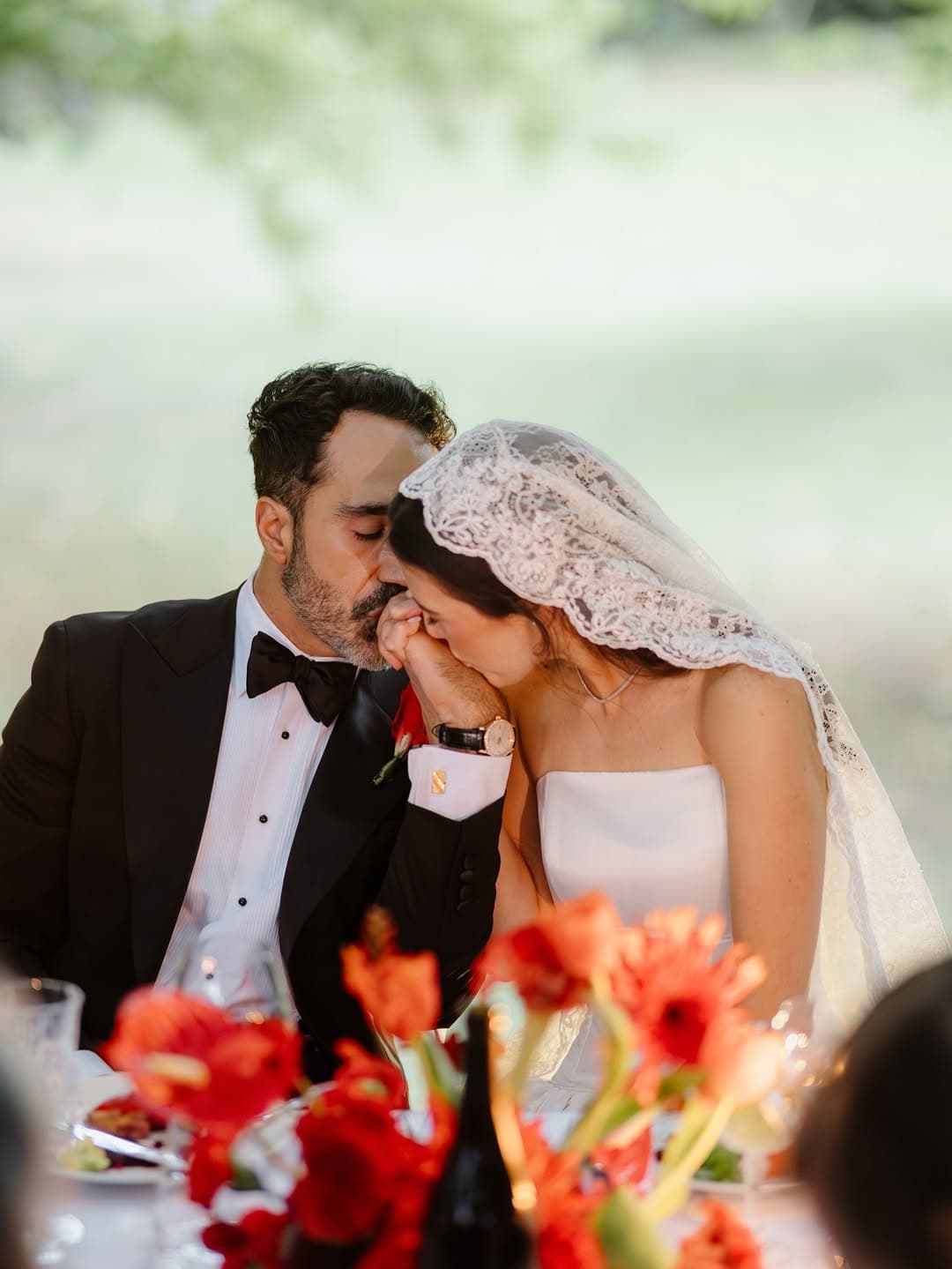
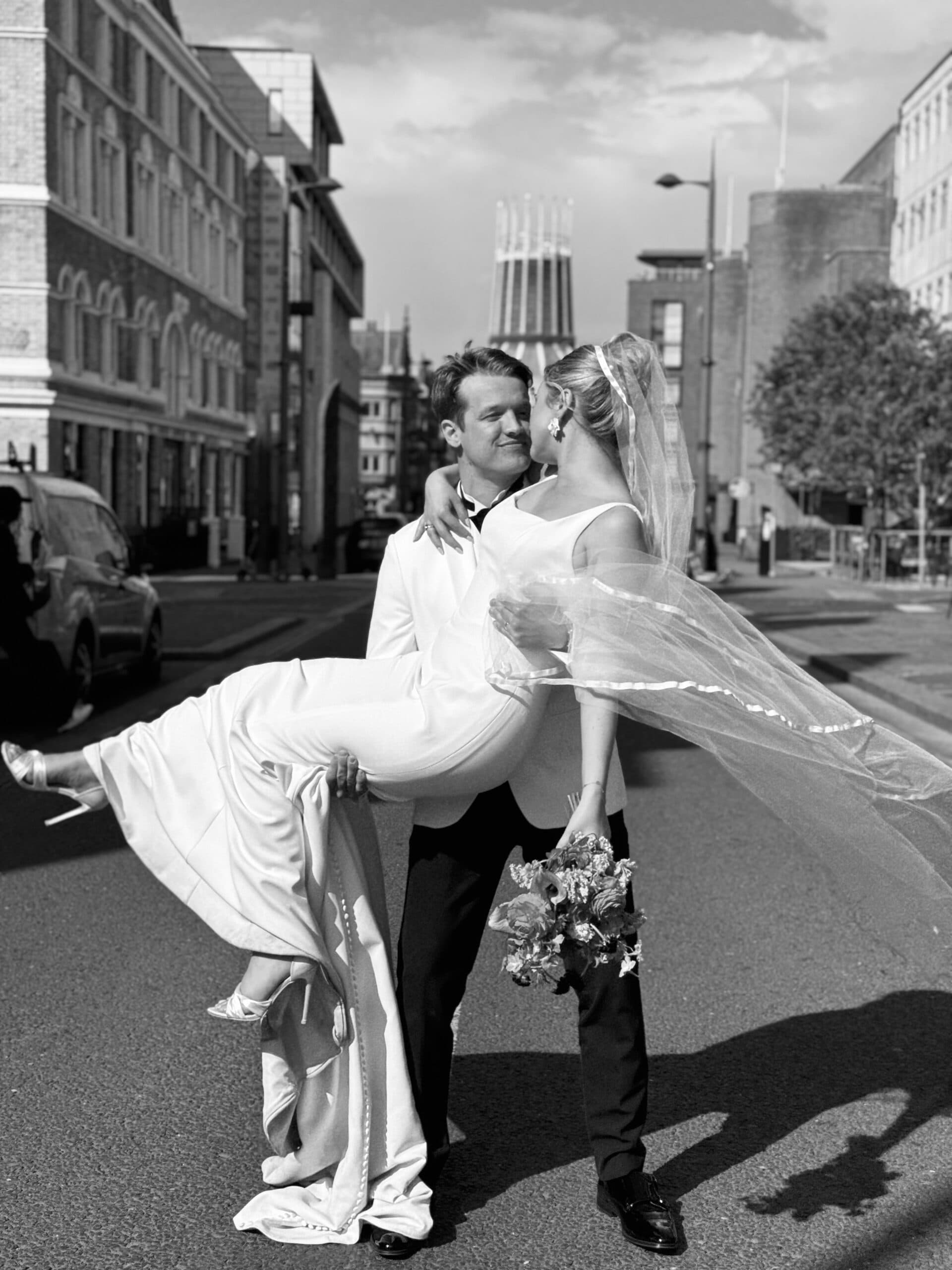
Every wedding season comes with a trend that quietly reshapes the bridal landscape, and for 2025, that shift arrived in the form of a veil. Not a minimal fingertip veil or the soft tulle cloud that brides wore throughout the early 2010s, but something far more intentional.
Catholic brides around the world have begun revisiting a tradition many assumed had faded from modern practice, choosing chapel-length veils, lace mantillas, and embroidered imagery that draw directly from centuries of Catholic symbolism.
It is a return that feels intimate rather than nostalgic. Brides are not wearing veils because the Church told them to or because it photographs well in a basilica. They are choosing them because the veil has become a symbol that allows them to articulate heritage, faith, and identity in a way that feels deeply personal. The result is a spiritual renaissance tucked gently into bridal fashion, where devotion and aesthetics find a surprisingly contemporary intersection.


The shift began quietly, with brides searching for ways to express their relationship to their faith through the details of their ceremony. Veils became a natural focal point. Chapel veils and mantillas, once reserved for older generations, have returned as a form of intentional reverence. Many brides say veiling is not about following rules at all. The current Canon Law does not require women to cover their hair in church, which means wearing a veil has turned into an act of choice rather than obligation.
That choice has unlocked a wave of highly personal interpretations. Designers have noticed a rise in requests for Marian imagery, including embroidered depictions of Our Lady of Guadalupe, Aparecida, and Our Lady of Fatima floating across yards of lace. Some brides incorporate symbols only they understand, such as star clusters, floral motifs tied to biblical verses, or prayers stitched discreetly along the hem. The veil has become a declaration of devotion that feels intimate, wearable, and artistically expressive.


What began as a spiritual gesture evolved into a full-scale business movement. Veil makers, many of whom operated within small artisanal circles, have seen demand surge this year. Custom mantillas and cathedral-length veils are filling production schedules months in advance. Studios report that brides come with clear visions of what they want: intricate lace sourced from specific regions, gold-thread embroidery inspired by illuminated manuscripts, or sculptural veils that frame the face with almost architectural precision.
This revival has also attracted mainstream bridal designers, who now treat the veil as a lead character rather than a supporting accessory. Collections for 2025 have featured dramatic mantillas paired with minimalist gowns, oversized lace halos, and veils designed as heirlooms that can be passed across generations. The message is clear. The veil is no longer an optional add-on. It is a centerpiece.
The Veil As A Sign Of A Bigger Spiritual Shift


This renewed love for the veil is part of a larger cultural movement. Gen Z Catholics are returning to liturgical beauty, embracing rituals their parents did not always prioritize. They are attending Latin Masses, rediscovering devotions, and finding comfort in practices that feel grounded and meaningful during a time when everything else moves quickly.
Online communities have played a major role. Brides share veil inspiration, compare lace patterns, and discuss the significance of veiling, often describing it as a gesture that makes their ceremony feel sacred rather than performative. The movement feels grassroots, shaped by personal conviction rather than institutional encouragement.
What 2026 May Look Like
If this year sparked a revival, next year may cement it. Designers are preparing for an influx of requests for ultra-long cathedral veils, custom lace mantillas, and sculptural tulle pieces that read more like devotional art than accessories. Artisans anticipate a rise in faith-inspired designs, including prayers woven into lace, monograms created with symbolic motifs, and hand-dyed fabrics that reference iconographic colors.
The trend reflects a shift in how brides view their weddings. The veil is no longer a costume detail. It is a narrative detail. It is a way to express heritage, honor their beliefs, and create a moment that feels emotionally anchored.
The resurgence of the Catholic bridal veil signals something larger than the return of a classic accessory. Brides in 2025 have shown that a veil can carry history, faith, family, and personal symbolism all at once. It can be dramatic or subtle, embroidered or untouched, but it always reveals something meaningful about the person wearing it.
The modern bride is not choosing a veil for tradition’s sake. She is choosing it because it reflects her story. And as more women embrace that idea, the veil’s renaissance is shaping up to be one of the most striking shifts in bridal fashion today.
If you want more trend breakdowns, modern bridal tradition deep dives, and style forecasts for 2026 weddings, follow Wedded Wonderland. Join our complimentary Wedded Concierge service or explore our Wedded Partners Global Listing, and let’s get Wedded!
Search real weddings, venues and vendors from around the world.
Search Wedded Wonderland