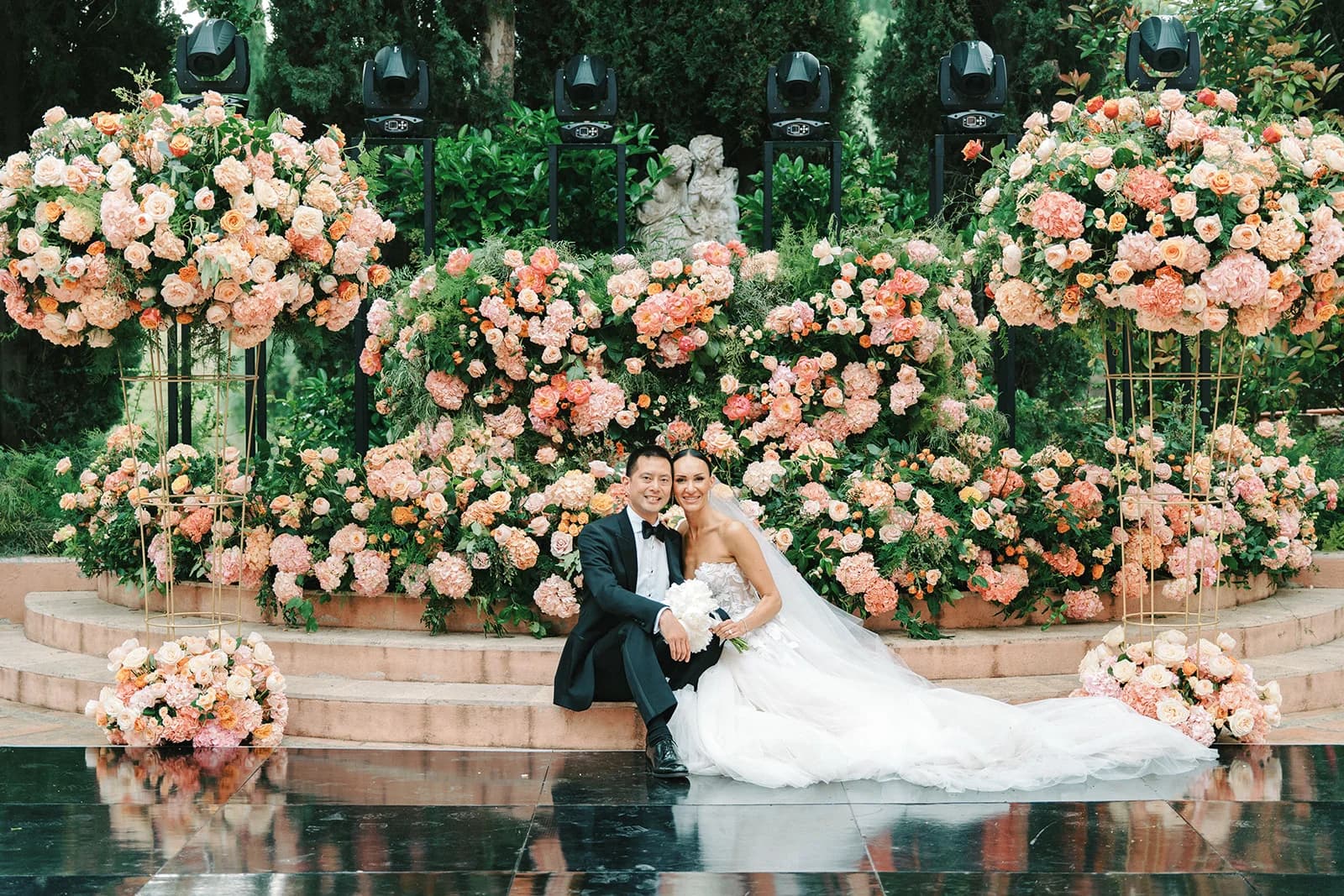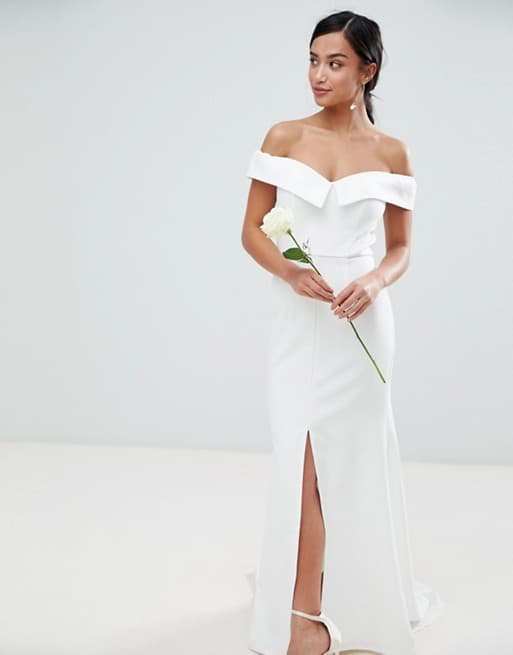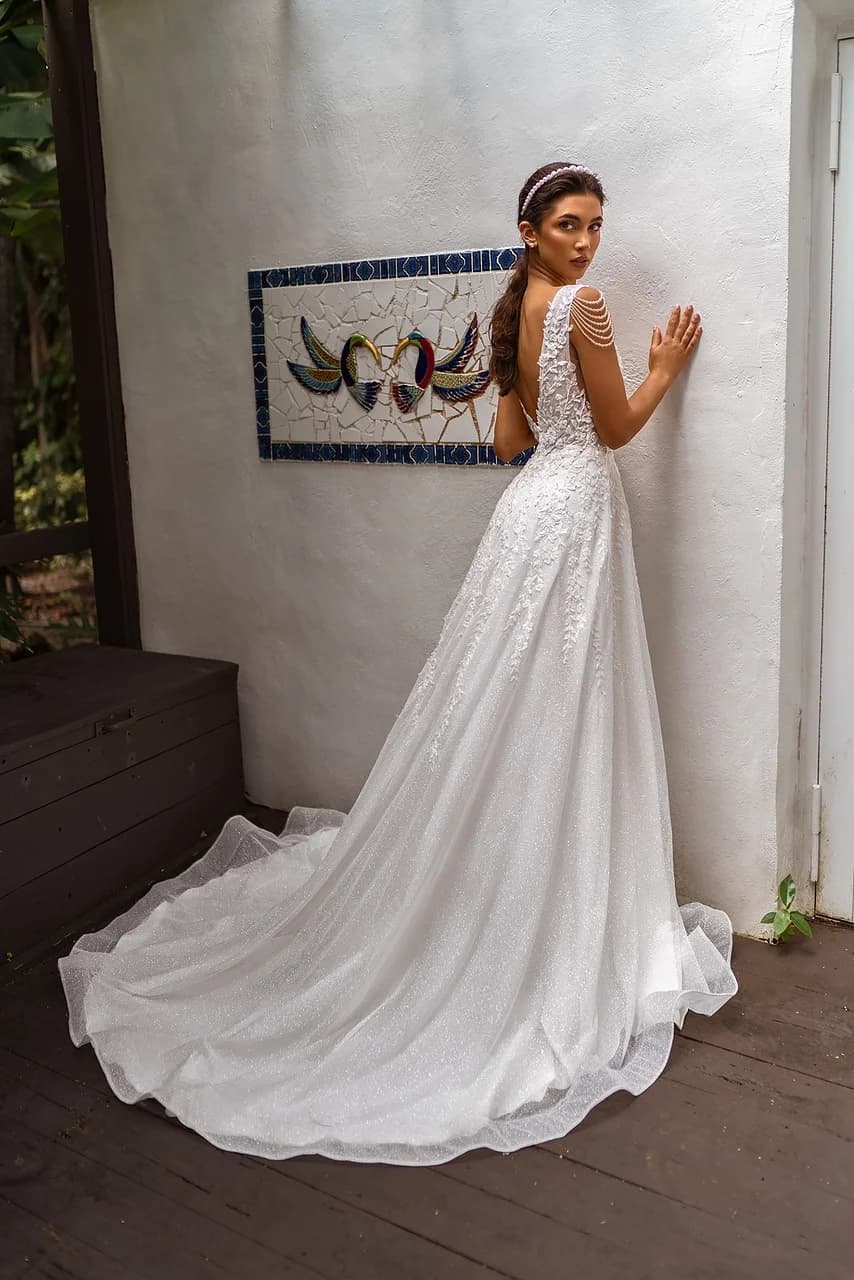
The right wedding dress starts with its silhouette, the overall shape from bodice to hem. The main styles are the ball gown, A-line, fit and flare, trumpet, mermaid, sheath and slip, with short and separates styles for less traditional looks. Below is what each one looks and feels like, the necklines and fabrics that change them, and how to match a dress to your venue before your first fitting.
A fitted bodice above a full, voluminous skirt, often layered with tulle or supported by a petticoat. It is the most traditional silhouette and needs space, so it suits ballrooms, cathedrals and large receptions.

Fitted through the bodice, then flaring gradually from the waist into an A shape. It moves easily, works in almost any setting and pairs with nearly every neckline, which makes it a common first dress to try.

Close through the bust, waist and hips, then flaring softly below the hips. It shows shape while keeping more freedom than a mermaid.
Fitted to mid-thigh, then flaring out. It gives a sculpted line with room for longer steps, so it suits brides who want drama and still plan to dance.
Fitted from bust to knee before a dramatic flare. It photographs beautifully, but you will take shorter steps, so try walking and sitting in it at your fitting.

A straight line from neckline to hem that follows the body without a full skirt. Its minimal shape suits city ceremonies, intimate venues and destination weddings.

A bias-cut sheath in silk or satin that drapes close to the body. It is light, modern and easy to wear in warm weather.
Short and tea-length dresses suit registry ceremonies, garden parties and second looks for the reception. Two-pieces and jumpsuits give a fashion-forward option for brides who want to move freely all day.
The neckline sets the mood of the dress as much as the skirt.


The same silhouette looks different in a different fabric, so ask to try key shapes in more than one.
Think about your venue, the season and how long you will wear the dress. A full satin ball gown suits a grand ballroom or cathedral, while an A-line or sheath in chiffon is easier at a garden or beach ceremony. Long trains are harder to manage on grass or sand, so ask about a bustle if you love one. For coastal ceremonies, our guide to beach wedding dresses goes into fabrics and hemlines, and our wedding veil guide covers lengths to match your gown.
Start shopping about nine to twelve months before the wedding if your dress needs ordering and alterations. Go in with a shortlist of silhouettes, but try at least one shape you would not choose from photos, since how a dress feels when you move matters more than how it looks on a hanger.
Planning the whole wedding at once? Wedded Concierge can help with the venue, the suppliers and the fittings timeline.
Written by

Senior SEO Specialist, Wedded Wonderland
Mark Tuason is the Senior SEO Specialist at Wedded Wonderland, where he writes and refreshes the brand's guides to destination weddings and cultural wedding traditions. He starts with the questions couples search for, checks the answers against trusted sources, and shapes each guide to help them plan, compare and book with confidence. Based in the Philippines, he specialises in content strategy and on-page SEO.
Search real weddings, venues and vendors from around the world.
Search Wedded Wonderland