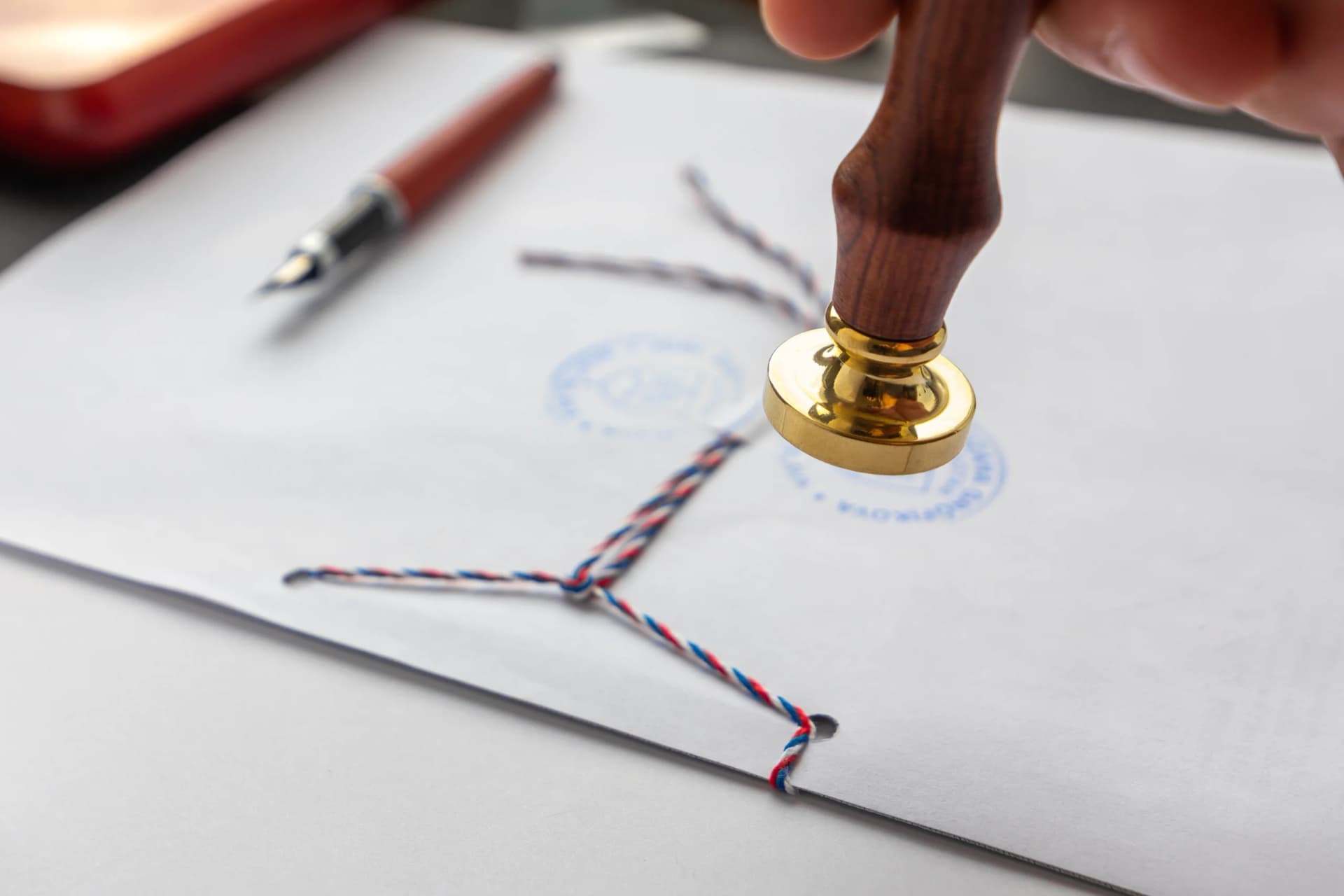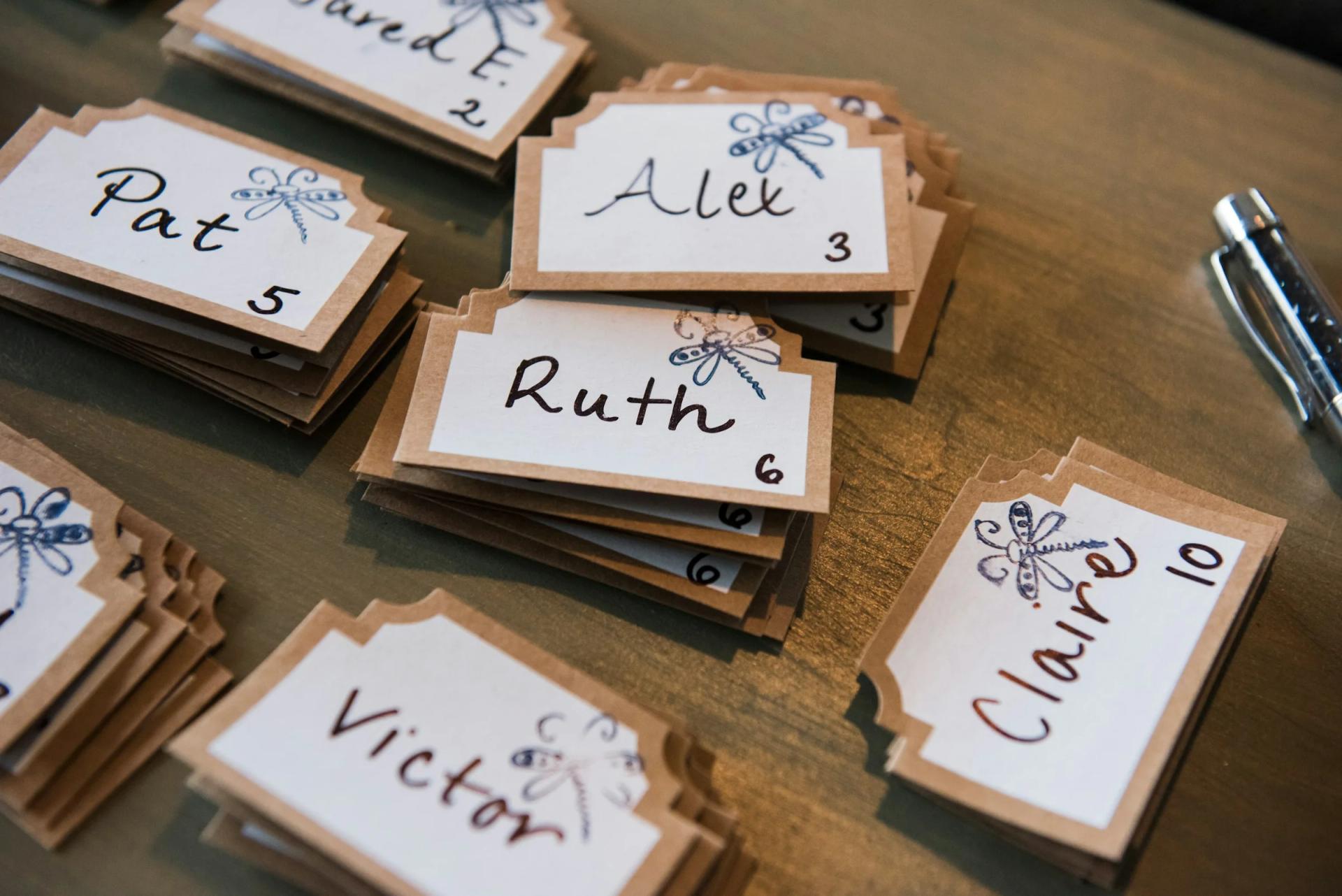
An interactive wedding seating chart turns finding a table into a small moment of its own. At Wedded Wonderland, we love displays that ask guests to take, find or do something. This guide shares our favourite ideas and the practical checks that make them work on the night. There is a style here for every guest list, big or small.
A standard seating chart is read. An interactive wedding seating chart is used. The guest picks up a card, lifts a drink, scans a code or searches a wall of photographs, and in doing so learns their table.
That small action gives guests a reason to pause and talk at the entrance, and turns a piece of stationery into part of the styling. Interactive does not have to mean elaborate: a row of tagged keys can be as engaging as a lit screen.
Every display here depends on a finished, checked table plan. Settle who sits where first, then decide how guests will discover it.
Our guide to how to make a wedding seating chart walks through building the plan itself, from table sizes to the order of names. Build it in Wonderland Studio, our planning app for seating charts and RSVPs, so the list you send to the stationer or the screen is the same list your RSVPs produced. New to it? Here is what Wonderland Studio does, plus our other wedding planning tools.
Still deciding whether to assign seats? Our piece on how to skip the seating chart altogether covers open seating.
These are the displays guests walk away from holding something. They feel generous, and they give guests a small keepsake of your day.
Tie each guest’s name and table number to something small and edible: a wrapped macaron, sugared almonds, a chocolate in a printed sleeve. Line them up alphabetically on a long table, out of direct sun, and set them out as close to arrival as your caterer allows.
A folded card tucked into a sprig of rosemary, or a tag wired to a small bud vase, can be carried from the entrance to the guest’s place, where it becomes part of the setting. Our round-up of wedding table settings has plenty of ideas for name cards that suit different themes.

A glass with each guest’s name on it doubles as their welcome drink. Set filled flutes on a tray or a tiered stand, each with a small tag or a printed charm around the stem showing the name and table.
This one needs staff to pour in time and keep the tray topped up, so arrange it with the venue’s bar team. Offer something without alcohol alongside the champagne, or in its place.
A favour in a strong colour makes the display easy to spot across a room: a small potted succulent, a jar of local honey with a bright lid, a silk ribbon looped around a card. Choose something that fits in a carry-on if guests are flying home.
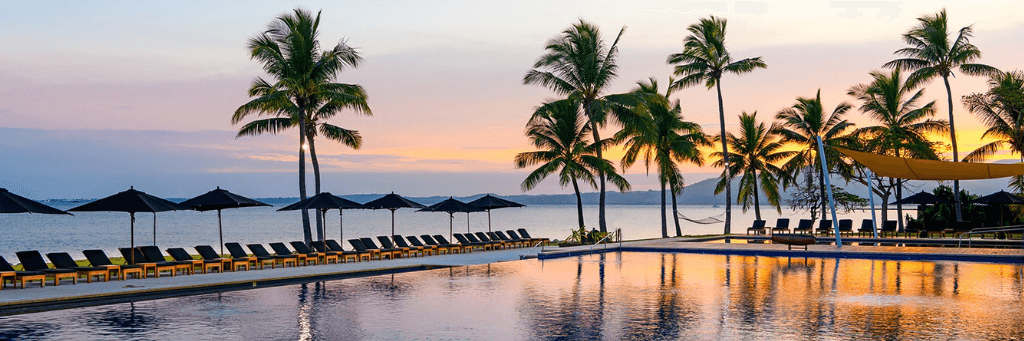
For an island or beach reception, chilled coconuts with a paper tag at the neck, or tall cold drinks with the name on a bamboo pick, give arriving guests exactly what they want after a warm ceremony. Keep them in the shade until the last moment.
Old brass keys, each tagged, hung on a painted board or a row of hooks. It suits a heritage house or a winery, and stays put in a breeze better than paper cards.
Here the guest searches rather than takes. These styles hold a lot of names and make the walk to the table part of the celebration.
A frame, a timber panel or a wall of greenery with cards pinned in rows, grouped by table. It holds a lot of names and reads well from a distance. Give each table group a clear heading, and leave room in front for several people at once.

Name each table after a place that matters to you: the city where you met, the town your grandparents came from, the island where you got engaged. A large illustrated map with each table marked on it shows guests where in the world they are sitting.
It suits destination weddings especially well, where guests have travelled from several countries and the map tells part of your story. Pair it with a plain alphabetical list to one side so nobody has to hunt across continents for their name.
Names written by hand on an antique mirror or a sheet of glass catch the light in an evening setting. Test it under the actual lighting first, as glare can make the writing hard to read.

For a smaller wedding, a photograph of each guest with a short handwritten note and their table number brings real warmth. Start writing early, and keep each message short enough to read standing up.
These displays ask guests to act: scan, search or pose. They suit couples who want a modern, playful entrance.
A digital screen at the entrance, or a code on a printed sign that guests scan with their phone, lets each person look up their own name. It handles a large guest list well and is the easiest style to change at the last minute.
Never rely on a phone alone. Some guests will not have one to hand, some will have a flat battery, and signal at a remote venue can be patchy. Keep a printed list nearby and a person who knows the plan, and decide who can see the full guest list.
For sizes, materials and how to add a code to a printed sign, see how to print and display your seating chart. If you are choosing software to build the plan, our guide to comparing seating chart apps, including our own, sets out the differences.
Here technology becomes part of the styling: a seating chart that doubles as a photo spot, such as a lit screen set into a styled backdrop or a large frame guests can step behind. Position it so a queue for photos does not block guests who simply need their table.
A beautiful display only works if guests can find their seat quickly. These checks cover what to test before the day and what to plan for on it.
Whatever the style, a guest has to be able to read their name quickly. Use a generous type size, keep names and table numbers in the same position on every card, and choose text that stands out clearly from its background. Check it at the hour guests will see it, as a chart that reads well at 3pm can vanish at dusk without a lamp beside it.
Alphabetical by surname is quicker for guests to search, especially with a long list. Grouping by table looks tidier and suits walls and maps, but makes guests scan every group. For a large wedding, choose alphabetical order; for a small one, by table is fine.
Put the display where guests arrive, but not in a doorway or right beside the bar, where people gather anyway. A long display with access from more than one side lets several guests search at once.
Wherever you marry, the Queensland Government accessible events guide is a useful reference. It treats clear, consistent signage as central to helping people move through a venue, with only a few pieces of information on each sign and space around it. Displays should be viewable at every height, including by people using wheelchairs, children and taller guests, and tested with a crowd in front before the event. Simple pictures or icons can help.
The guide also asks for open, flat, clear pathways to entrances and exits. At table seating, it advises removing chairs so wheelchair users can reach the table, not seating all wheelchair users together, and using neutral wording such as reserved seating. Guests with additional needs can be seated early, with staff walking them to their places.
In practice, that means an interactive display should never be the only way to find a seat. Keep a printed list at a seated reading height, and ask a host or a member of the bridal party to stand nearby while guests arrive.
Wind lifts paper cards, sun glares off mirrors and glass, rain ruins ink and heat wilts flowers and softens chocolate. For any outdoor display, weight or clip every card, keep edible and floral elements in the shade, and have a covered spot agreed as a backup.
Guests cancel, plus-ones appear and tables shift. Digital displays change in seconds; handwritten mirrors and printed walls do not. Whatever you choose, print a few blank cards in the same style, keep a pen that matches the lettering, and give one person, not either of you, the master list on the day so every change goes through them.

Overseas, the venue’s rules decide which styles are possible. Before you settle on a design, ask the venue:
Where can the seating display stand, and how early can it be set up?
What are the rules for outdoor displays in wind or rain, and where is the covered backup?
Is power available at the entrance for a screen or lighting?
Can anything be fixed to walls, beams or trees?
Who sets up the display and who packs it down?
Can printed or fragile pieces be delivered ahead, and where will they be stored?
Should the display carry a second language for international guests?
Setup windows, outdoor display rules and power access are details the venue has to confirm directly. Your Wedded Advisor confirms inclusions in writing before you commit.
For more destination inspiration, browse the latest issue of our Wedded Wonderland magazine.
Written by

SEO Specialist
Ayrton Christian Braga is an SEO Specialist at Wedded Wonderland, where he writes optimized articles and web pages that center on destination weddings, cultural wedding traditions, and guides for everything in between.
Search real weddings, venues and vendors from around the world.
Search Wedded Wonderland