A Japanese wedding unites two families as much as two people. This Wedded Wonderland guide walks through Japanese wedding traditions in wedding order, from yuinō to the hirōen. It closes with what Australian couples need to know about marrying in Japan. For more wedding traditions worth keeping, see our wider guide.
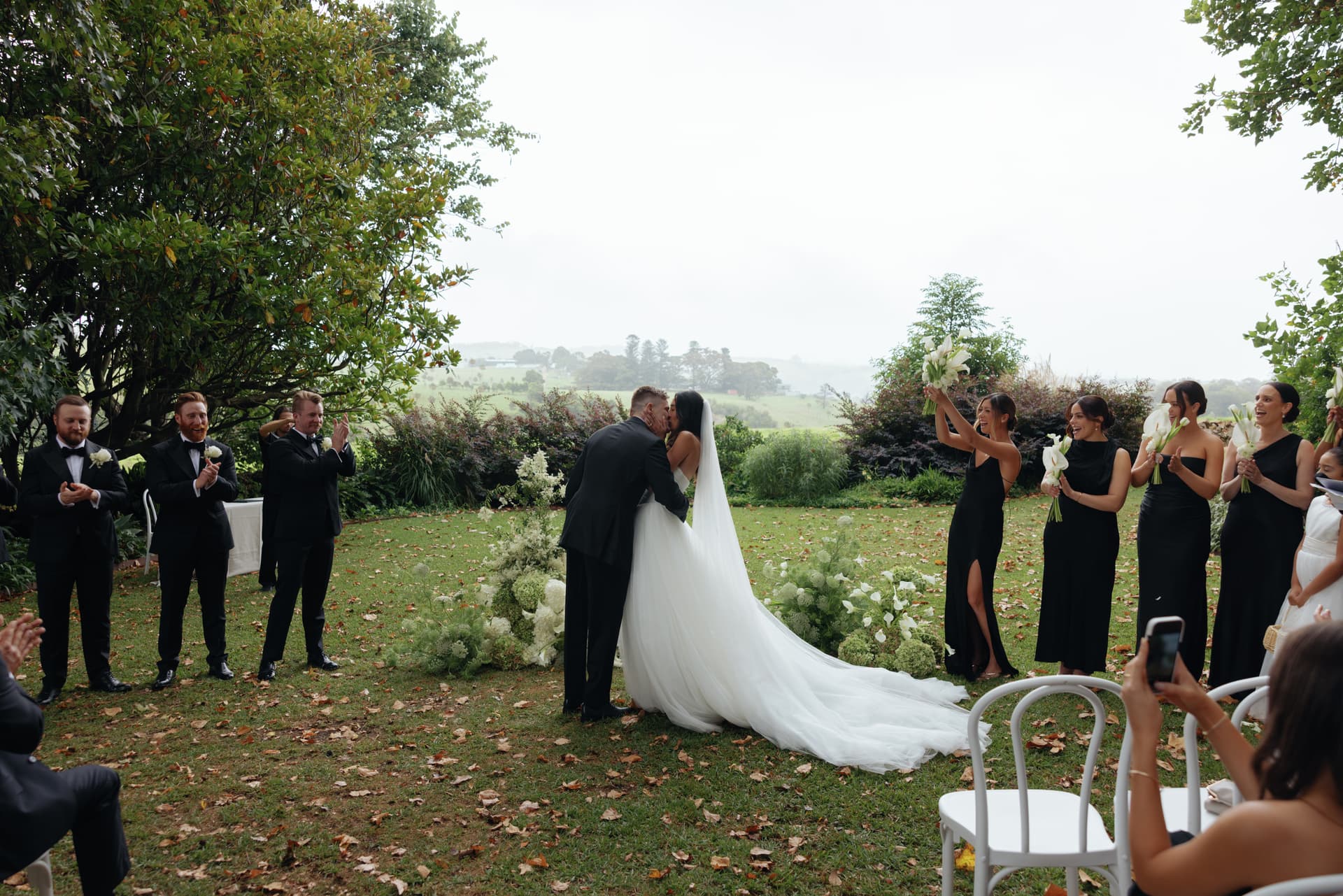
The modern Japanese wedding is a blend of East and West: a traditional Shinto ceremony, with the bride and groom in elaborate kimonos, is typically followed by a Christian-style observance in formal Western attire.
Families still shape the day. Arranged marriage, miai-kekkon, has largely given way to the love match, yet it is still common for a family friend, relative or mentor to act as go-between, the nakodo, even when the couple met on their own.
Customs vary from family to family and region to region, and between Shinto, chapel and civil-only weddings. Ask both families early which moments matter most to them, and build the day around those.
In Japan, the proposal between two people is followed by a formal step between two families. Yuinō is the betrothal ceremony at which the two families exchange gifts to mark the engagement.
In many families, the groom's side presents a set of symbolic gifts, each wrapped and tied with mizuhiki, decorative cords of twisted paper, and arranged on a low stand. The bride's family receives them and offers gifts in return. Some families invite the nakodo to carry the gifts between the households.
Today many couples keep a simpler form. The two families meet over a formal meal, sometimes at a restaurant or hotel, to be introduced and to mark the engagement together.
For a Japanese-Australian couple, this is often the moment the families first sit at one table. Decide early who will host, and whether relatives who cannot travel will join by video.
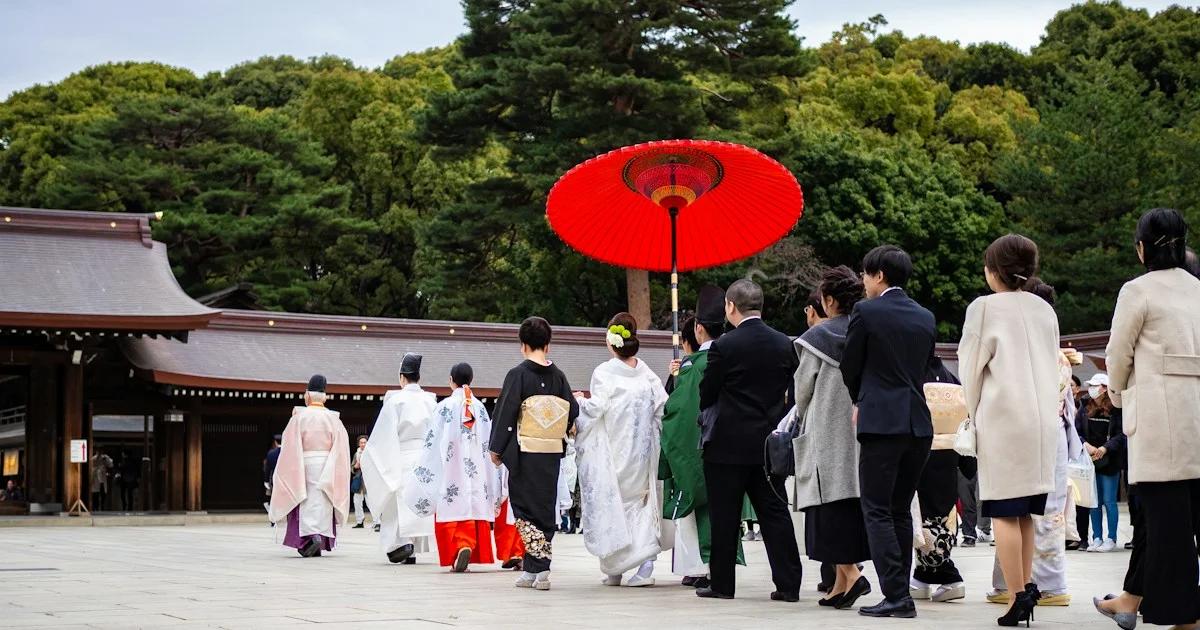
The Shinto wedding is the heart of the traditional day. Japanese people usually hold their wedding ceremonies in Shinto style and pronounce their wedding vows to the kami, the deities of Shinto. The traditional ceremony takes place at a Shinto shrine.
The ceremony is small and quiet. Close family usually attend, seated on either side of the hall, with the couple at the front before the altar.

Shinto rites follow a familiar shape. A grand Shinto rite moves through purification (harae), prayers (norito) recited by the chief priest, sacred music and dance, and offerings of small branches of the evergreen sacred tree tied with strips of white paper.
At many shrine weddings, the couple and family representatives make that offering themselves, placing a sakaki branch on the altar in turn. A shrine maiden, the miko, often serves the sake and may perform a dance.
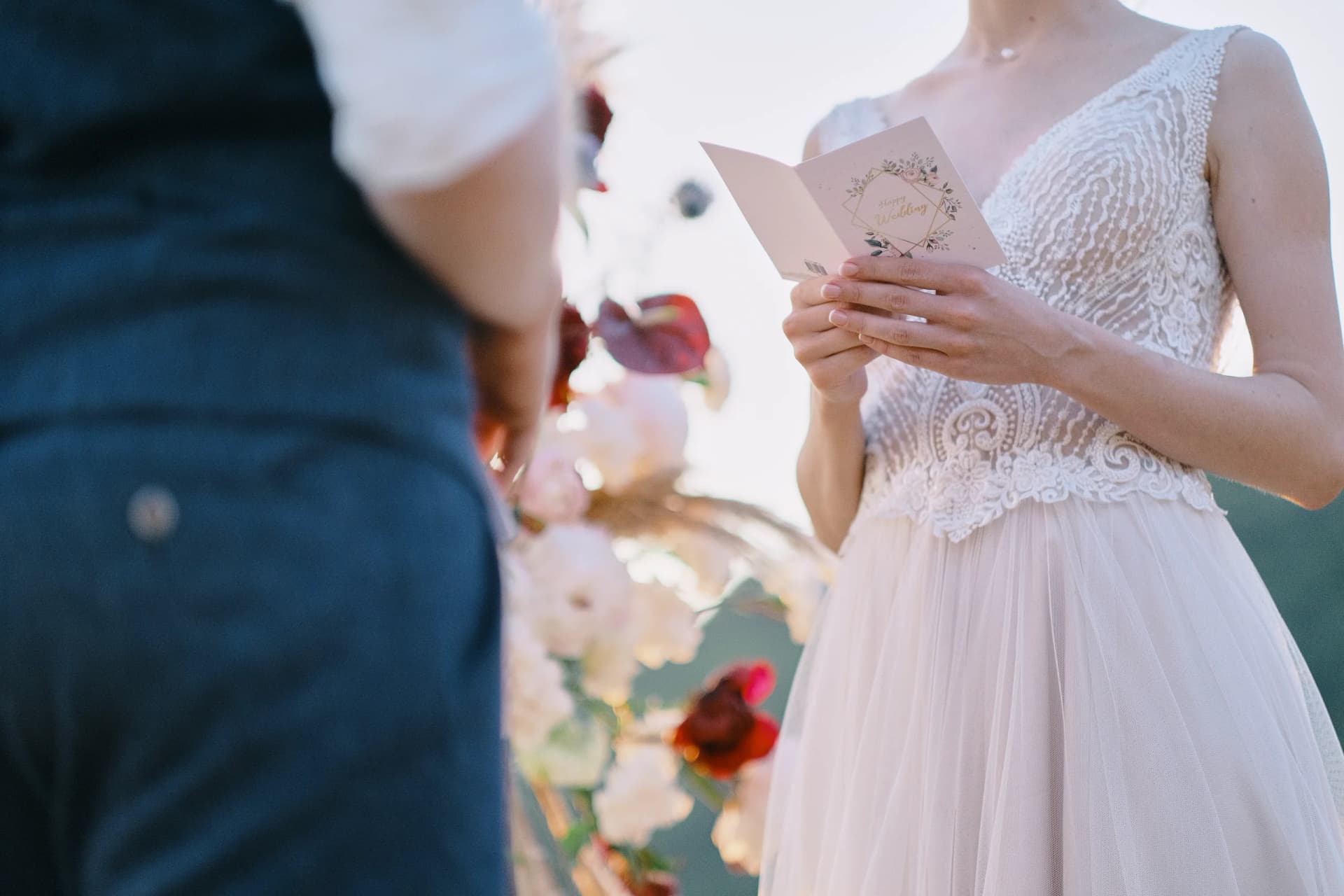
Japanese wedding vows are spoken to the kami rather than only to each other. At many ceremonies the groom reads the vows aloud from a folded paper, with the bride beside him, and the couple then exchange rings.
Treat the shrine as a place of worship first. Ask the priest what guests may photograph and wear, and brief friends from overseas on quiet, respectful conduct during the rite.
San-san-kudo is the moment most guests remember. The bride and groom drink sake in turn from a set of three flat cups, small, medium and large, served by a miko. At many weddings the parents also drink, and the cups pass between the two families.
Sake is part of Shinto worship. It is common to have communion with the kami by drinking the offered sake after a festival.
Couples marrying in Australia often keep san-san-kudo even without a shrine. Ask your celebrant how to place it in the ceremony, and buy a proper set of cups well ahead.
The bride's ceremony dress is white from head to toe. She wears a white under-kimono and a heavy white outer kimono known as a shiromuku.
The groom wears formal black montsuki, a kimono with family crests, with a haori jacket and striped hakama trousers. Family members often wear their own formal kimono, the mothers in black.
Brides choose between two forms of headwear. The wataboshi is a broad white hood that frames the face. The tsunokakushi is a band of white silk worn over a traditional hairstyle. Both are worn with the shiromuku, and many brides choose one for the ceremony and remove it for the reception.

Before joining family and friends for the reception, the bride exchanges the white outer kimono for an elaborate, brightly coloured one. Outer kimono (uchikake) are now worn only by brides, and the custom of changing outfits continues, with red kimono worn after the ceremony.
Motifs on these robes are chosen with care. On a red uchikake, flying cranes are symbols of longevity. You can see wedding kimono in the V&A collection online.
When you hire an uchikake, ask the stylist to explain its motifs, so you can share them with guests in the order of service.
Many Japanese couples who are not Christian still marry in a chapel. A Christian-style observance in formal Western attire typically follows the Shinto ceremony.
For many brides, the chapel is where the white Western gown appears. Today the "colour alteration" custom can also include a Western-style wedding dress, a popular choice with contemporary brides for their final reception outfit.
Couples who want both moments plan two ceremony times and two looks on the same day. Allow generous dressing time between them: a shiromuku takes far longer to put on than a gown.
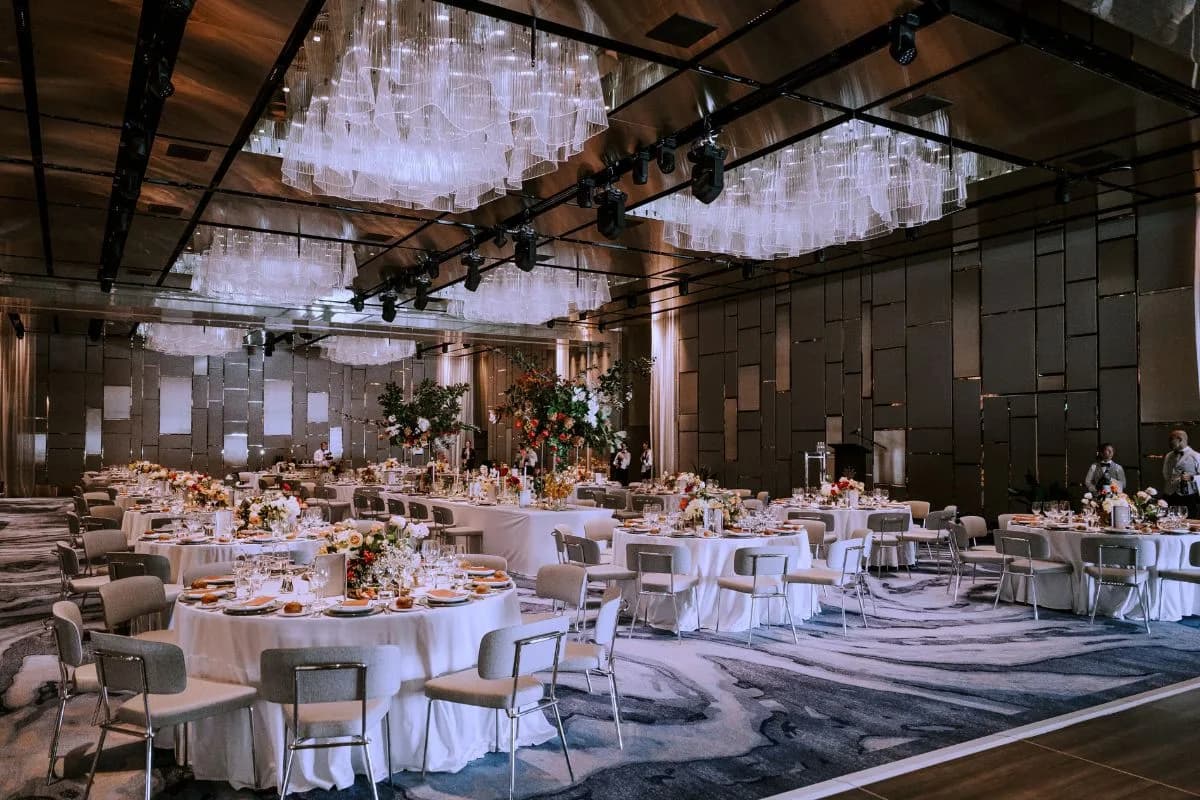
The hirōen is the wedding reception, and it is where Japan's marriage traditions open up to a wider circle. Colleagues, school friends and extended family join the couple, often at round tables, with the couple seated at a head table facing the room.
At many receptions the evening is closely run. A master of ceremonies guides the programme, from the first toast through the speeches, the cake and the entertainment to the closing words from the families.
At some point the couple leave the room and return in new outfits. This is oiro-naoshi, the change of colour, and it has a long record: Utagawa Kuniyoshi's woodblock print The Wedding Colour Alteration Ceremony dates from between 1843 and 1847. At the culminating banquet of earlier times, a bride would wear a sequence of kimono, often in white, red and black, with matching designs.
Today the bride might move from shiromuku to a red iro-uchikake, then to a Western gown, and the groom may change with her.
Build every outfit change into the run sheet, with a private dressing room close to the reception and a dresser on hand.
Money and gifts move in both directions at a Japanese wedding. Guests arrive with goshūgi and leave with hikidemono, the gifts the couple give in return.
At Japanese weddings, guests give money rather than a gift from a registry. The gift is called goshūgi, and it is presented in a formal envelope, the shūgi-bukuro, decorated and tied with mizuhiki cords. Guests hand it in at the reception desk on arrival, where a family member or friend records each name.
Many guests take care that the notes are new and crisp, and the envelope is chosen for a wedding, never a plain one. Ask a Japanese relative or friend what is expected in your circle: the custom is personal, and families have their own sense of what is fitting. The red envelope at a Chinese wedding works in a similar way, which our guide to Chinese wedding traditions covers.
Hikidemono are the gifts the couple give their guests to take home. In many families they come as a set: a main gift, often something for the home, with a sweet or a small treat beside it, packed in a bag at each place. Some couples now offer a catalogue so each guest can choose their own.
Kagami biraki is the opening of a sake barrel at a celebration. At many receptions, the couple stand before a straw-wrapped barrel and break open its wooden lid together with wooden mallets, while guests count them in.

The sake is then ladled into small cups and shared for a toast. It travels well to an Australian reception, with a short word from the MC to explain it.
Speeches carry much of the feeling at a Japanese reception. At many weddings a guest of honour, often a senior colleague or mentor, speaks first, followed by friends and family who share stories of the couple.
Near the end of the evening comes the moment that brings the room to tears. The bride stands and reads a letter to her parents, thanking them for raising her. Then the couple present their parents with flowers or a small gift, a quiet act of gratitude in front of everyone they love.
The groom's father, or a representative of both families, then closes the reception with words of thanks to the guests. If your parents are not used to speaking in public, give them notice, and offer a translator if half the room will not follow the language.
A wedding in Japanese is kekkonshiki. Guests congratulate the couple with "go-kekkon omedetō gozaimasu", the formal way to wish them well on their marriage. In speeches, many guests avoid words linked to parting or repetition, a courtesy that Japanese relatives can explain.
Senbazuru is a string of a thousand folded paper cranes. Folding cranes has a long history in Japanese paper art: one of the earliest known origami instruction books, Akisato Rito's Sembazuru orikata of 1797, showed how to fold linked cranes from a single square sheet.

Some couples fold a thousand cranes in the months before the wedding, often with help from friends and family, and hang them as a display at the reception or keep them framed at home afterwards.
As at November 2026, Smartraveller advice for Japan is "Exercise normal safety precautions" in Japan overall. Its one higher level, "Reconsider your need to travel", covers the restricted areas near the Fukushima Dai-ichi nuclear power plant. Check it again before you send invitations.
Severe heat waves can affect Japan between July and September, and the typhoon season runs from May to November, with most activity between July and September. Spring and autumn dates suit outdoor portraits and guests who are travelling far.
Australians don't need a visa to visit Japan for up to 90 days, but entry and exit conditions can change at short notice, and you cannot change your entry status, for example to a spouse visa, without leaving and re-entering. Couples planning to stay on after marrying should sort their visas before they fly.
For a wedding in Japan, Kyoto, Tokyo and Hakone offer gardens, city life and mountain views. Our pages on destination weddings in Asia and the dos and don'ts of an Asian destination wedding go further, and many couples stay on for one of the best honeymoon destinations in Asia.

Before you choose a city, work through the guest questions with your Wedded Advisor:
Where will everyone stay?
How will guests get from the airport to the hotel and the ceremony?
How will older or less mobile relatives manage the flights, the transfers, and the steps and seating at a shrine?
What travel insurance and medical cover does each guest need?
If your date falls in typhoon season, what is the back-up plan for the ceremony, the portraits and guests' flights?
Your advisor holds the guest room blocks, with Wedded Privileges on every room.
You can't register an overseas marriage in Australia, but in most cases a marriage overseas is legally recognised if it was valid where it took place and would have been valid under Australian law; talk to a lawyer to confirm. Some countries ask for proof you are free to marry, commonly a Certificate of No Impediment to Marriage (CNI), and some local authorities only accept a CNI issued in their own country.
If a CNI must be issued in the country, the Australian embassy or consulate there can issue it, and fees apply. In Japan, the Australian Embassy in Tokyo and the Australian Consulate-General in Osaka provide notarial services by appointment only; mail service is available from within Japan only, and a CNI application sent by mail is accepted only if it is witnessed by an Australian mission or a local notary public.
Before you book, put these questions to the municipal office (the kuyakusho or shiyakusho) where you plan to marry, and to the Australian Embassy:
Which documents does the municipal office need from each of you, and does it accept a CNI issued in Australia or only one issued in Japan?
Do your documents need an apostille or a certified Japanese translation?
Does a shrine or chapel ceremony make the marriage legal, or is a separate registration needed?
What fees apply, at the municipal office and at the Embassy?
A Japanese-Australian couple marrying in Australia can keep san-san-kudo in the ceremony, a change into kimono for the reception, kagami biraki for the toast and the bride's letter before the last speech. Ask your celebrant how to fold these moments into an Australian legal ceremony, and give guests a short note on what each one is.
Every tradition in this guide, from yuinō to the hirōen, brings two families together. Your Wedded Advisor takes care of the venue, travel and vendors, so your families can lead the moments that matter. When you are ready, speak with an advisor.
Written by

SEO Specialist
Ayrton Christian Braga is an SEO Specialist at Wedded Wonderland, where he writes optimized articles and web pages that center on destination weddings, cultural wedding traditions, and guides for everything in between.
Search real weddings, venues and vendors from around the world.
Search Wedded Wonderland