Albanian wedding traditions start with two families meeting and end with a dance that pulls in everyone. This Wedded Wonderland guide follows the customs in the order many families keep them and explains what each one is often said to mean. It also covers what an Australian couple should check before marrying in Albania, as part of our guide to wedding traditions worth keeping.
Albanian wedding customs are kept by Albanian communities in Albania, Kosovo and North Macedonia, and across the diaspora, including Australia. They vary by region, by family and by faith, so treat what follows as a map rather than a rulebook.
The clearest regional line runs between north and south. UNESCO describes two main styles of Albanian folk singing: that of the Ghegs in northern Albania and that of the Tosks and Labs in the south. Families often say a north and south difference shows up in dress and songs too, and your own family will know which side of it they sit on.
If one of you comes from another background, most of these customs adapt easily. If you want to see how one couple brought them to an Australian ballroom, read this Albanian wedding in Melbourne from our Real Weddings collection.
The weeks before the ceremony carry much of the meaning. This is when the two families formally join, when gifts move between them, and when the bride's family prepares what she will take to her new home.
The fejesa is the formal engagement, and in many families it is as much an agreement between two households as between two people. It is often told that the groom's family visits the bride's family, the couple exchange rings or a token, and both families share food and sweets.
In some families the engagement still opens with the groom's relatives asking for the bride's hand, even when the couple chose each other years earlier. Treat it as a courtesy to the older generation, and let them lead.
Not published: a fixed length of time between the fejesa and the wedding. Families set this themselves.
Gifts travel in both directions before an Albanian wedding. In Shkodra, the gifts the groom's family prepares for the bride during the engagement are described as the dhunti: mainly clothes, jewellery and gold ornaments, sent to her a few days before the wedding. They are described as prepared with great care, as a sign of respect for the bride.
Sugared almonds, kufeta, appear at the engagement and again at the wedding in many families. It is often told that the bitter almond and its sweet shell stand for married life, with the sweetness outlasting the rest. A small dish at each place setting is the easiest way to bring the custom into a reception.
The paja is the trousseau, not a dowry. It is described as the goods the bride's parents give their daughter: clothing, items to furnish the home, and gifts for her husband and close relatives. The items were typically woven on looms, and ritual songs name what the paja contains. Preparing it is described as fulfilling the parents' obligations to their daughter.
In many homes the folded textiles, embroidered linens and rugs are laid out for relatives to see before the wedding, then carried to the couple's new home. If your family keeps the display, give it a table or a quiet room and someone to look after it.

In many families a henna night is held for the bride, often among the women of her family, in the days before the wedding. It is often told that henna is applied to her hands and songs are sung, and that the evening marks her last night as a daughter of the house before she joins her husband's family.
Not every family holds one, and the details change from region to region. It is a natural fit for a smaller gathering at home or in a private room the night before.
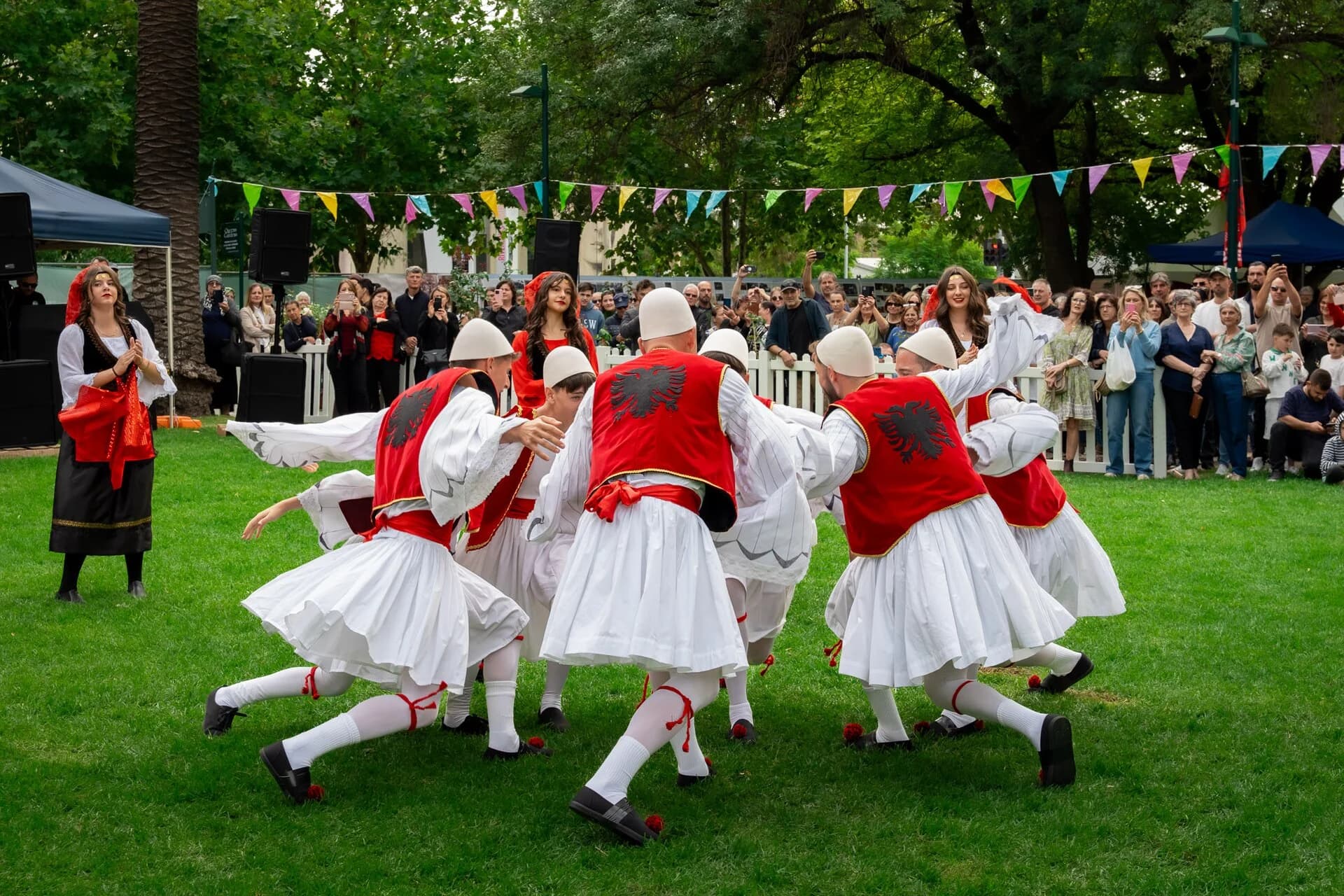
Today, Albanian traditional clothes are described as being worn mostly for special events: ethnic festivals, religious holidays, weddings and by dance groups. Bridal dress was once regional and specific. In Shkodra it is described as differing by community: two types of Muslim bridal dress were worked on wool with corded motifs, one black-based and one red with full-colour motifs, worn with a gold-worked belt. The Catholic Shkodra bride is described as wearing transparent, shiny white fabric with gold thread.
The xhubleta belongs to the northern highlands. UNESCO describes it as a handcrafted garment worn by highland women and girls in northern Albania, with an undulating bell form, mostly black with colourful embroidered motifs. In 2022 UNESCO inscribed the xhubleta's skills, craftsmanship and forms of usage on the List of Intangible Cultural Heritage in Need of Urgent Safeguarding.

So what colour do Albanian brides wear? Today it depends on the family: some brides choose a white gown, and some change into a regional outfit for part of the celebration. If a family xhubleta or costume is coming out, plan a portrait moment and a private dressing room, and ask its owner how it should be handled.
The wedding day itself moves between two homes. The groom's side sets out, the bride's side says goodbye, and the day ends with both families on the same dance floor.
It is often told that a flag is raised at the groom's home before the wedding and travels with the groom's party when they set out to collect the bride. The flag-bearer, the flamurtar, is often a close relative chosen for the honour.
Today it may travel in one of the wedding cars. Families who keep it treat it as part of the celebration, and couples who want it should simply agree with both families who carries it and where it goes.
The krushqit are not quite the same as groomsmen. The word is often explained as the groom's wedding party of relatives and in-laws, who travel together to the bride's family home to collect her and bring her back to the groom's side.

At the bride's home they are often welcomed with food and drink before the bride leaves. In many families this is the moment of the bride's farewell: her family sees her off, and in many families songs are sung as she leaves. It is often told that tears at this point are expected and honoured, a sign of how much she is loved at home.
For a destination wedding, the krushqit can travel from the groom's hotel to the bride's, and the farewell can happen at her villa rather than a family house. Allow time for it in the run sheet; it is rarely quick.
When the bride reaches the groom's home, his mother is often the one waiting at the door. In many families she offers the bride honey, and sometimes bread, as she crosses the threshold, and it is often told that this wishes the couple a sweet life together.
It is a brief moment, so let your photographer know it is coming. If you are not marrying from a family home, the same welcome can happen at the entrance to the reception.
The valle is often described as the circle or line dance at the heart of an Albanian reception. In many families guests link hands or shoulders and follow a leader, and the line grows as the night goes on.

The music behind it has deep roots. UNESCO inscribed Albanian folk iso-polyphony on the Representative List of the Intangible Cultural Heritage of Humanity in 2008. Its "iso" is a drone that accompanies the polyphonic singing, and UNESCO notes the music is rendered mainly by male singers. UNESCO says this music traditionally accompanies a wide range of social events, such as weddings, funerals, harvest feasts, religious celebrations and festivals. Today it is passed on mainly through professional folk artists rather than within the family.
That last point matters for planning. If you want live folk singers or musicians rather than a band alone, book them early and ask which regional style they perform.
It is often told that guests give money to the couple during the dancing, placing notes in their hands as they dance, as a way of wishing them a prosperous start.
Customs on how and when vary by family. A quick word with both sets of parents avoids surprises, especially with guests who have not been to an Albanian wedding before.
It is often told that Albanian weddings run over several days, with gatherings at each family's home before the main celebration. The shape depends on the family and region, and many couples in Australia now fold everything into a single weekend.
For a destination wedding, this works in your favour. Guests who have flown a long way tend to welcome a henna night, a welcome dinner and the wedding itself spread across a few days.
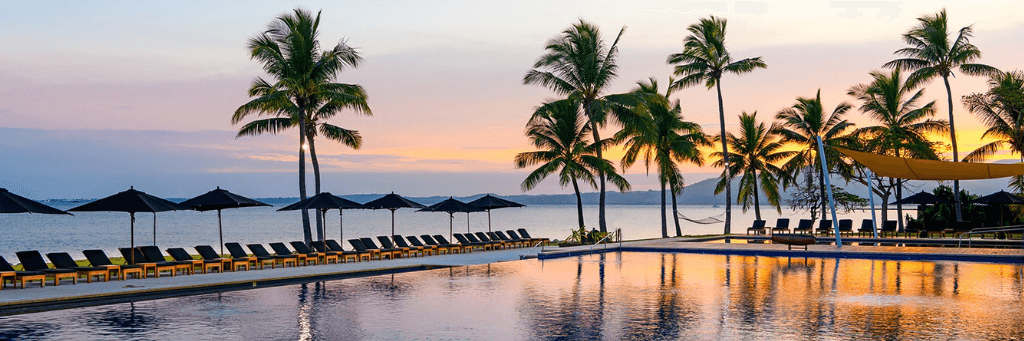
Couples looking at Tirana or the Albanian Riviera usually start with the setting, and it is easy to see why. Browse our destination weddings in Europe for the wider picture. The paperwork deserves equal attention, so here is what official Australian sources say, as at November 2026. This is general information, not legal advice.

Smartraveller says some countries ask you to prove you are not already married, and that each country decides what proof it accepts. The most common proof is a Certificate of No Impediment to Marriage (CNI) or a registry certificate showing no record of marriage. Local authorities may also ask for divorce papers, a deceased spouse's death certificate, your original birth certificate and your passport.

DFAT issues CNIs through Australian Passport Offices, Australian embassies and consulates overseas, and by mail, and at least one of you must be an Australian citizen or permanent resident. Some authorities only accept a CNI issued in their own country, so ask the Albanian authorities which they accept and whether the CNI needs an apostille, and arrange a professional English translation of any document not in English. A fee applies for both the CNI and an apostille.
Not published in official sources we could read: the documents, notice period and translation rules Albania's civil status office applies to foreign nationals, or whether a religious ceremony has civil effect on its own. Check both with the civil status office in Albania and the Australian Embassy in Rome, including any fees.
You cannot register an overseas marriage in Australia, but in most cases it is legally recognised if it was valid where it took place and would have been valid under Australian law. A foreign marriage certificate is usually accepted as proof, though it may not work as proof of a name change. Read our guide to registering an overseas marriage at home, and if the steps feel too uncertain, weigh up marrying legally abroad or holding a symbolic ceremony.
Australia has no embassy or consulate in Albania, so consular help comes from the Australian Embassy in Rome. The embassy covers Italy, San Marino, Albania and Libya, and its consular page links notarial services, marriage overseas and apostilles.
Smartraveller's overall level for Albania is "Exercise a high degree of caution", because of limited healthcare options, with no higher-level areas. The page was updated on 16 October 2026 and was still current on 3 November 2026. Medical facilities are limited, especially outside Tirana, and travel insurance must cover medical evacuation.
For an outdoor wedding, note that Smartraveller warns of extreme temperatures and forest fires from April to October. If older or less mobile relatives are travelling, ask your venue or planner about shade, the timing of outdoor moments and an indoor backup, and check their travel insurance covers medical evacuation. It also reports regular political protests and advises avoiding large gatherings.
Albanian-Australian couples should read the dual nationality advice: a person born in Albania or with an Albanian parent is an Albanian national, and male dual nationals may face military service. Smartraveller also notes that same-sex relationships are legal but not widely accepted. Read the full Smartraveller advice for Albania before you book, and share it with your guests.
The customs your family cares about most are the ones worth building the plan around, whether that is a henna night in Tirana or a valle that runs past midnight in Melbourne. For more cultures and customs, return to our guide to wedding traditions worth keeping, explore a neighbouring culture's customs in Greek wedding traditions, or read the free Wedded Wonderland digital magazine. When you are ready to talk dates and places, a Wedded Advisor is a conversation away.
Written by

SEO Specialist
Ayrton Christian Braga is an SEO Specialist at Wedded Wonderland, where he writes optimized articles and web pages that center on destination weddings, cultural wedding traditions, and guides for everything in between.
Search real weddings, venues and vendors from around the world.
Search Wedded Wonderland