A destination wedding is a wedding you and your guests travel to, far enough that everyone stays the night. An elopement is a wedding with almost nobody there: the two of you, an officiant and a witness or two. A micro wedding sits in between, a full ceremony and reception for fewer than 50 people. The easiest way to keep them apart is that a destination wedding is about where you marry, while an elopement and a micro wedding are about how many people come.
A destination wedding is held away from where you and your families live, so the celebration becomes a trip. A common rule of thumb is 100 miles (about 160 km) or more from home, but the better test is whether most of your guests need to travel and book somewhere to sleep. It can be overseas, or a few hours' drive away.
Because everyone has made the journey, a destination wedding often runs over a weekend, with a welcome dinner before and a relaxed brunch after. For the full picture, step by step, see what a destination wedding means.
Here's how the three compare on guests, cost, the law and planning time.

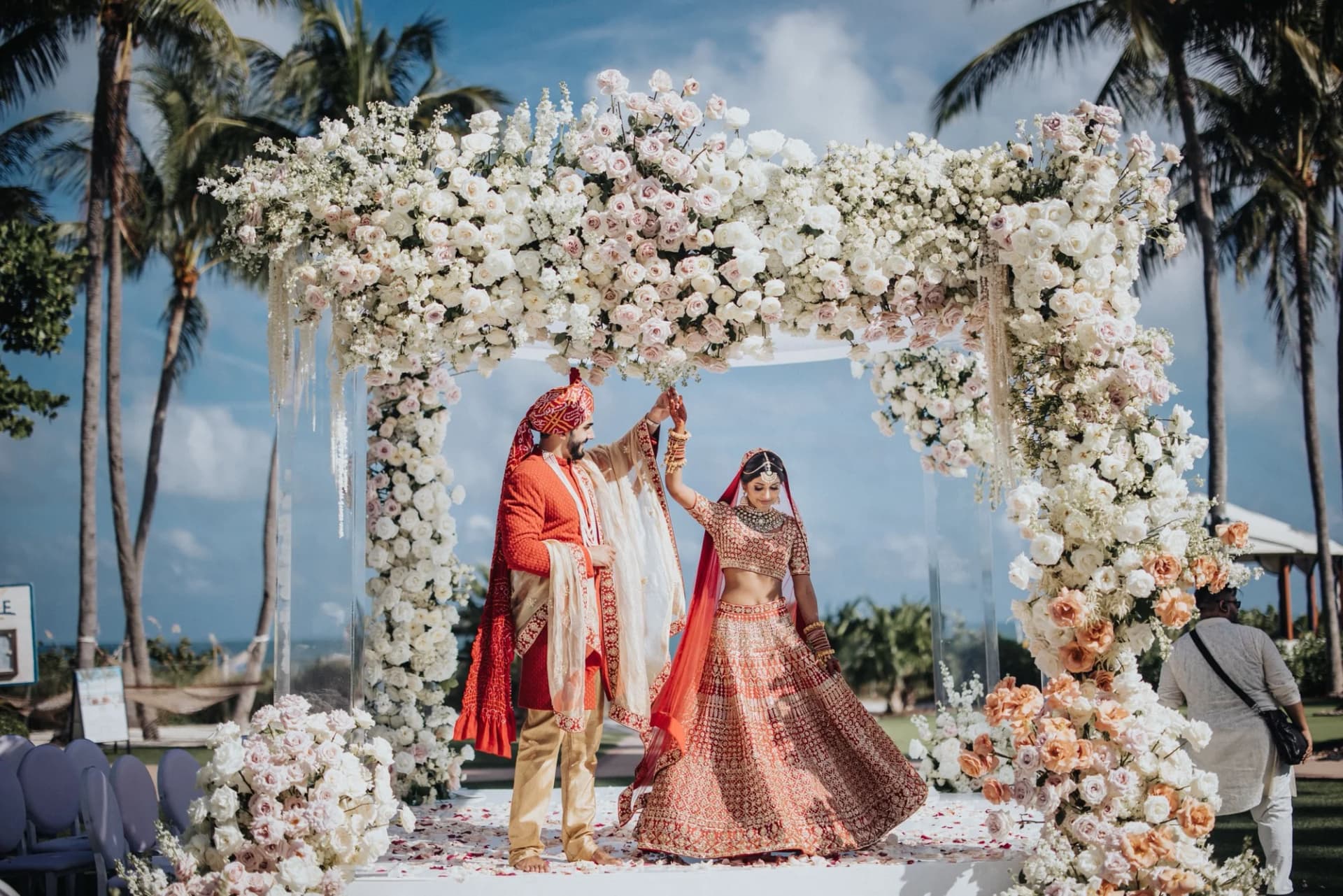
Photo: Pervez Taufiq
An elopement keeps it to you, the person marrying you and whatever witnesses the local law asks for. A micro wedding keeps the full shape of a wedding, ceremony and reception, for fewer than 50 guests, most often 20 to 30. A destination wedding has no set number. It can be 15 people or 150, though travel tends to keep the list smaller than it would be at home.
An elopement can be the cheapest of the three, but it doesn't have to be. In Bali, planners publish ceremony packages from about US$1,500, while a full week with planning, photography and a villa runs around US$28,000 to US$34,000, as our guide to the cost to elope in Bali shows. A micro wedding of 20 to 50 guests in the US typically costs about US$5,000 to US$12,000, set out in our micro wedding cost guide.
A destination wedding has no single price, because it depends on the place and on how many guests you host, and your guests' flights and rooms come on top of your own bill.
Size changes nothing about the law. An elopement is a marriage like any other, as our guide on whether eloping is legal explains, and a micro wedding is too. A destination wedding adds one question the other two can skip: whether you can legally marry in that country at all, which we cover further down.
An elopement can come together in weeks, once the paperwork is sorted. A destination wedding asks the most of everyone's calendar, since guests need time to book leave and flights, so invitations go out earlier. You'll find the exact timings in when to send wedding invitations.
Yes, and plenty of couples do. A destination elopement might be a clifftop in Santorini or a quiet beach in Bali, often with a photographer and a planner who handles the local paperwork. We've rounded up the best elopement destinations by season and setting.
A destination micro wedding is 20 or 30 of your closest people at a villa or a small resort, which is often where destination weddings end up anyway once travel trims the list. Small numbers open up places that could never host 150, such as a private villa on Lake Como or a single restaurant terrace on the coast.

Photo: Pervez Taufiq
A destination wedding turns your wedding into a shared trip and gives you a few unhurried days with your closest family and friends. The trade-off is that some guests won't manage the cost or the time off, and you'll plan from a distance with a lot of trust in your planner.
An elopement is the simplest and most private choice, and it leaves more of the budget for the place and the photographs. The cost is that family and friends miss it, which some couples soften with a party at home afterwards.
A micro wedding keeps the speeches, the dinner and the dancing with a smaller crowd, and it lowers the total bill. Expect the spend per guest to rise, though, because you can afford a better venue and better food for 30 people than for 150.
For an elopement and a micro wedding, the couple or their families normally pay for everything, as with any wedding. A destination wedding splits it differently. You or your families cover the wedding itself, meaning the venue, food, drinks and suppliers, and your guests usually pay for their own travel and where they stay.
Many couples make that easier by holding a block of rooms at a group rate; here's how wedding room blocks work. Some also host the welcome dinner or the farewell brunch as a thank you for travelling.
Start with who has to be there, then choose the place. If the honest answer is just the two of you, you're eloping, wherever it happens. If it's a short list of family and close friends, a micro wedding fits, at home or away. If you want a real party and a trip at the same time, and your people are happy to travel, a destination wedding is the one.
Then check two practical things. Can the guests who matter most actually make the journey? And can you marry legally where you want to, or would a ceremony at home plus a celebration abroad be simpler?
Every country sets its own rules for marrying there, and the law of the place where you marry is the one that applies. Some countries make it hard for visitors. In France, for example, one of you or a parent must have lived in that town for at least a month before the banns are published, and the banns are then posted for 10 days before the wedding can happen, according to the French government's marriage guide.
Many countries also ask for a document proving you're free to marry, often called a certificate of no impediment, which you request from your own country. If the process looks too complicated, the usual answer is to marry legally at home, then hold a symbolic ceremony at the destination. We list the options country by country in where you can legally get married abroad, and Australian couples can check Smartraveller's guide to getting married overseas.
Guests may need visas too, depending on their passports, so put the entry rules on your wedding website early.
Flowers that are cheap at home may be costly or unavailable at your destination, so a local florist working with what's in season gets you more for your budget. As Wedded Wonderland founder Wendy El-Khoury points out, in some cases "flowers may not even be allowed into the country" because of customs rules.
Food and drink follow local custom too. Some venues in the Middle East limit or ban alcohol, and halal or kosher catering changes the menu, so ask early. A local planner knows these rules and the suppliers who work within them.
Time zones are the other daily hurdle. Set fixed call times with your planner and suppliers, keep one shared planning document everyone can see, and use your wedding website as the single place guests find the schedule, travel details and visa notes. Read every contract with an overseas supplier slowly, since unclear terms are much harder to fix from another country.
The difference between these three comes down to two choices you make in order: who you want beside you, then where you want to be. When you're ready to go further, our guide on how to plan a destination wedding walks through it from the first decision, and our destination guides cover venues, seasons and paperwork by country.
Written by

Senior SEO Specialist, Wedded Wonderland
Mark Tuason is the Senior SEO Specialist at Wedded Wonderland, where he writes and refreshes the brand's guides to destination weddings and cultural wedding traditions. He starts with the questions couples search for, checks the answers against trusted sources, and shapes each guide to help them plan, compare and book with confidence. Based in the Philippines, he specialises in content strategy and on-page SEO.
Search real weddings, venues and vendors from around the world.
Search Wedded Wonderland