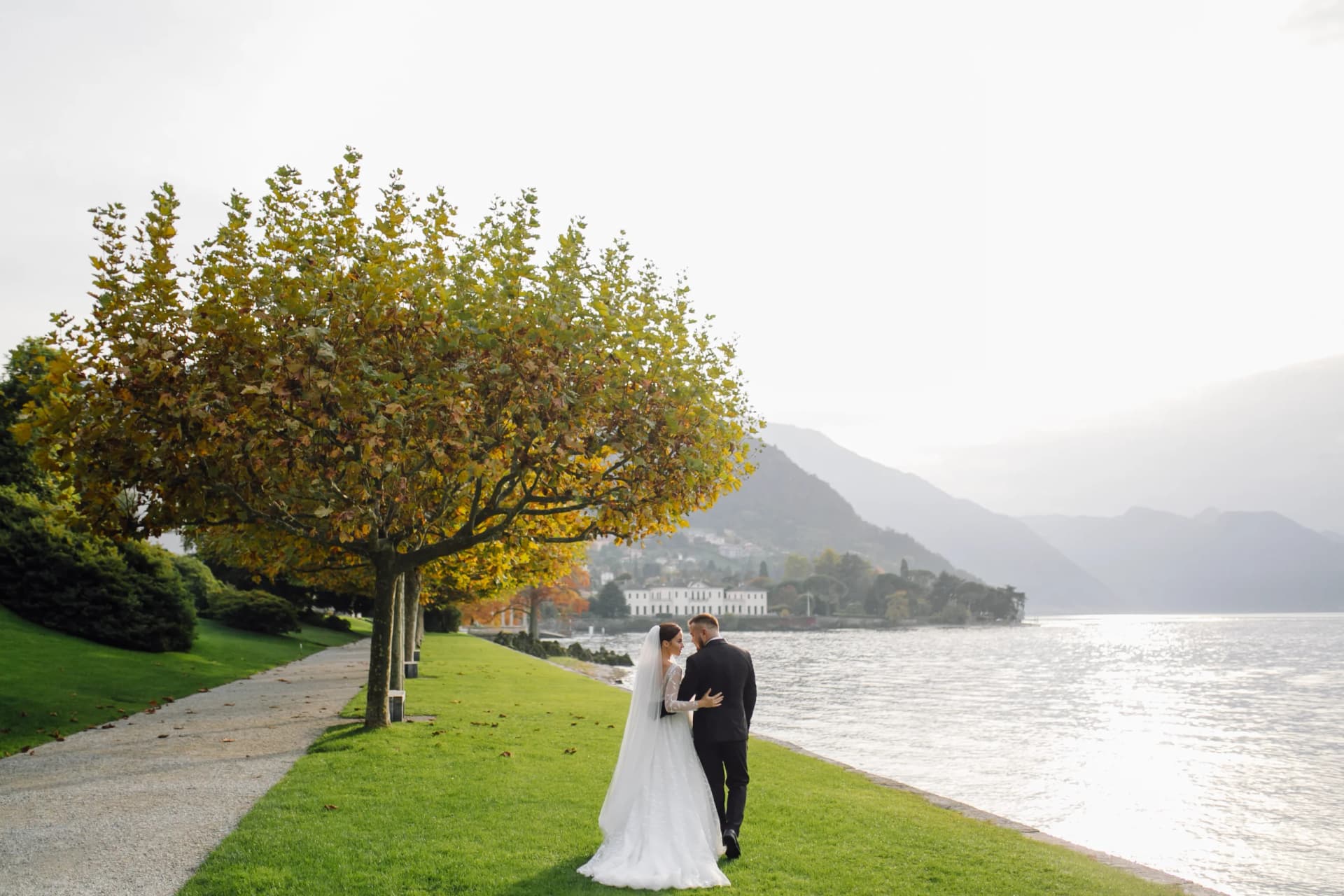
Wedding insurance pays back money committed to the wedding itself, such as the venue, suppliers, attire and rings, if the day is cancelled or postponed for a covered reason. It isn't travel insurance, which pays for the people travelling. For a wedding abroad you'll usually need both, and whether the wedding policy pays turns on four things: where you live, where you marry, who your contracts are with, and the day you bought the policy.

Wedded Wonderland plans weddings abroad through Wedded Concierge, but it doesn't sell insurance, so this is general information, not financial advice. Insurers, limits and prices differ by country, so those for Australia, the UAE, the UK and the US sit in their own sections near the end. Each is given in its own currency, and they change, so confirm them with the insurer.
A wedding policy pays for the event: what you've paid or owe the venue and suppliers if the wedding is cancelled or moved for a covered reason, plus named items such as attire and rings. Each part carries its own limit, and the one that matters most abroad is supplier failure.

On the policies that publish both figures, the supplier failure cap sits below the top cancellation limit. If a villa holds twice that cap and stops trading, half your money is uninsured, whatever the headline figure says. Liability is separate again: a policy can cover the two of you and still leave your guests out once the wedding is overseas.
Travel insurance pays for people: medical treatment abroad, getting home and your own trip costs. Standard travel policies generally exclude the venue and suppliers, and your wedding policy doesn't cover your guests' trips, so each household needs its own travel policy, bought when it books flights.

Guests who need a Schengen visa must hold medical cover of at least €30,000, as Sweden's embassy sets it out, including emergency hospital treatment and repatriation. The visa follows the passport, not where a guest lives, so a family on mixed passports should check each one with the consulate.
Two questions come before any limit: will the insurer sell to someone who lives where you live, and will it name your wedding country? Few insurer pages name Italy, France, Spain or Greece, and a silent page is neither a yes nor a no.

Email the insurer one question, naming the venue: does this policy cover cancellation and supplier deposits for our wedding at this villa, in this country? Keep the reply, and ask for the country on the policy schedule.
List every payment with its due date, refund terms, currency and the legal name of the business you're paying; the month-by-month destination wedding checklist helps you build it.

Most policies only cover losses where the supplier has a direct contract with the policyholder, so look for that rule in your own wording.
For a villa or chateau, check that the company on the invoice matches the one on the contract, because an owner, a management company and a booking agency can be separate businesses. If a florist or boat skipper is a sole trader paid by bank transfer, or a planner pays suppliers for you, ask the insurer whether those count as supplier contracts.
A policy covers the policyholder's losses. If a parent signs and pays for the welcome dinner, your policy may not pay for it, so they may need their own cover. Agree who signs each contract before anyone pays, and keep that list with your own payment schedule.
Insurers rarely explain how a euro deposit converts against a limit in pounds, dollars or dirhams. If the euro rises 10% against your currency, a €50,000 balance costs 10% more and a limit set at home covers less of it. Ask whether the sum insured can be set in euros, and if not, which date's rate a claim uses.
Cover for earlier payments, early supplier failure and weather all depends on the date your policy starts. Wordings differ on money paid before that date: some policies leave out payments made months earlier, some protect earlier deposits, and some hold back supplier failure cover for the first weeks. Our destination wedding planning guide lays out a 12 to 18 month timeline, and the policy belongs at its start.

Where a policy publishes weather terms, they turn on dates: you must have bought before a storm was forecast, and an ordinary summer storm may not count. Ask how the wording defines extreme weather, how far ahead of a forecast you must have bought, and whether the first days after purchase are excluded.

Policies generally exclude cancellation when key people can't attend because of a pre-existing condition. French Wedding Style, a planning site, says a claim for a family member with a known condition "may be denied unless the condition was declared and accepted at the time of purchase".
Definitions of close relative vary between providers, so declare a parent's or grandparent's condition when you buy. Ask the insurer to confirm in writing that it accepts the condition and that grandparents are on its list. A guest outside that list, such as an aunt or a friend, may not be covered at all.
Check whether the policy still covers cancellation if your government raises its travel advice after you've booked. Many policies exclude war and airspace shutdowns, and claims may be denied if a conflict was public before you booked. Treat anything in the news before you bought the policy as excluded until the insurer says otherwise.
Some policies only cover weddings where the legal ceremony takes place on the same day as the celebration. If you marry legally at home, ask the insurer whether the celebration abroad counts as your wedding. Get the answer in writing with both dates named, and keep it with your policy schedule.
Cancellation cover should reflect your full wedding budget, not just deposits. Add the payments still to come, with your currency headroom, and set that total against the cancellation limit. Then set your largest single payment against the supplier failure cap.

Above the highest published limits, given by country below, ask a specialist broker to try the wider market.
Wedding policies set limits for attire and rings, and travel policies often limit each item's value. A ring worth more needs its own listed cover before it flies, on a home contents policy with worldwide cover or a specialist valuables policy.

Ask the atelier and tailor who carries the risk until the gown and suits are in your hands, and ask the courier for its liability limit and whether it sells cover for the declared value.
Ask the venue what liability cover it needs from you, and from whom it must be bought. A venue may require a liability policy bought locally, which a home policy will not satisfy, so ask for the certificate wording before you sign.

Get the minimum amount, the currency and the name the certificate must show in writing, and check whether the cover has to reach your guests and your own suppliers as well as the two of you. If your wedding policy's liability section doesn't reach your wedding country, budget for the local policy alongside the venue fee.
A supplier without a written contract in force is a common exclusion, so keep these together, in your own name where you can:
Contracts: Signed, even for small bookings.
Invoices and proof of payment: Bank transfer receipts as well as card statements.
Correspondence: Every email that changes a term, and the insurer's written answers.
Proof of failure: Ask the insurer now what evidence it accepts if a supplier stops trading.
The notice deadline: Find how many days you have to report an event likely to lead to a claim, and diarise it.

Standard travel cover won't pay for the wedding. Cover-More says its benefits "cannot cover the event itself or costs associated with the wedding event", Fast Cover says its policy "does not cover destination weddings", and 1Cover excludes venue cancellation fees. Go Insurance sells optional Destination Wedding cover, which must be shown on your Certificate of Insurance.

Wedsure lists cancellation to $75,000 and supplier failure to $30,000, but its pages don't mention weddings abroad, so ask it to name your venue and country. Finder lists a supplier without "a written contract in force" as an exclusion. Read the PDS, as Smartraveller advises, and take an unresolved refusal to AFCA, a free complaints service.
UAE wedding policies don't clearly say they cover a wedding abroad. Bride Club Me, a UAE wedding site, describes ADNIC's Mabrouk policy from AED 75,000 of cancellation cover to AED 1 million, while ADNIC's own eWedding page says nothing on where the wedding must take place. Tameen prices cover from AED 1,500 for Dubai venues.

Gulf News reported in March 2026 that most travel policies exclude war and airspace shutdowns. Ask ADNIC on 800 8040 whether eligibility follows your residency or your passport. If you or your guests fly through Dubai or Doha, read planning a wedding in the Middle East in 2026.
Dreamsaver covers weddings "held anywhere in the world" if at least one of you is a UK resident, with £10,000 to £100,000 of cancellation cover and supplier failure to £30,000. It excludes destinations where the FCDO advises against all or all but essential travel. WedCover sells "UK or Europe" cover to £100,000.

MoneySuperMarket lists payments made more than 90 days earlier as usually not covered. The NHS says the GHIC doesn't cover "treatment in a private medical facility". Above £100,000, BIBA's Find Insurance Service on 0370 950 1790 finds specialist brokers.
US wedding policy pages rarely name a continental European country. Markel covers cancellation in the US and its territories, Canada, the UK, Mexico, the Bahamas, Bermuda and the Caribbean (excluding Cuba). Travelers doesn't say where the wedding must take place, so send it the venue question above. Travelers excludes extreme weather in the first 15 days of a policy.

An independent agent (Trusted Choice lists them) can ask for cover naming your country. Squaremouth says cancel-for-any-reason cover pays up to 75% of prepaid, non-refundable trip costs. For rings, the Insurance Information Institute points to a floater, as the standard homeowners theft limit for jewellery is "generally about $1,500".
List every payment, mark the ones already made, and buy the wedding policy before the next one leaves, then travel cover for yourselves. Wedded Wonderland doesn't sell or arrange insurance. Through Wedded Concierge, your Wedded Advisor or our team plans and books the wedding, and you can compare venues in our listings and suppliers on the Wedded Marketplace before you sign. If the country is still open, start with destination wedding locations by region.
Written by

Content and Creative Manager
Joseph Joshua is the SEO & Content Manager at Wedded Wonderland, bringing an editorial and search strategy perspective to the publication’s coverage of luxury weddings, destination celebrations and bridal lifestyle. His approach to content centres on helping readers move from inspiration to informed decisions, with attention to the design, craftsmanship and personal details that give a celebration its character.
Search real weddings, venues and vendors from around the world.
Search Wedded Wonderland