To get married in Portugal as a foreign couple, you open a marriage process at a civil registry office, a Conservatória do Registo Civil, at least one month before the wedding. Portugal's government guide to marriage says a foreigner can marry another foreigner there, and the U.S. Embassy in Lisbon notes that you don't need to be a resident. The registry charges €120, or €200 if you marry outside the registry, after hours or at the weekend.
The registrar agrees the date, time and place with you, so a legal ceremony can happen at your venue rather than the registry office. If you'd rather keep the legal side at home, a symbolic ceremony in Portugal is the other route. Wedded Concierge can plan the celebration either way.
Portugal's government guide says a marriage is only valid once it's registered in the civil registry. It also says a Catholic wedding, or a civil marriage in another religious form, has the same legal effects and requirements as a civil one and differs only in form. A priest or minister of a church established in Portugal can start the marriage process for you with a written request.
A symbolic ceremony isn't registered, so it has no legal effect in Portugal. U.S. Embassy staff can't marry you either, as the embassy says US diplomats and consular officers are not permitted to perform marriages. If you're weighing the two routes, our guide to marrying legally abroad or holding a symbolic ceremony sets out the trade-offs.
Portugal's government and its civil registry authority, the IRN, list these documents for foreign partners. The registry can also ask for others if it needs them to assess your file.
English documents may not need translating. The IRN waives the translation for documents in English, French or Spanish only if the registry officer handling your file speaks that language, and it asks you to contact the registry first to confirm. Otherwise, a certified Portuguese translation can come from a Portuguese notary, a lawyer or solicitor practising in Portugal, or a Portuguese consulate in the country that issued the document.

Photo: Kampus Production
Portugal's government lists €120 for the marriage process and registration when you marry at the registry on a working day, during opening hours. That covers the paperwork before the wedding and the registration on the day. The fee rises to €200 if you marry on a Saturday, Sunday or public holiday, outside the registry on a working day, or at the registry outside its opening hours. For a ceremony at your venue, you also provide the registrar's transport or pay their travel costs.
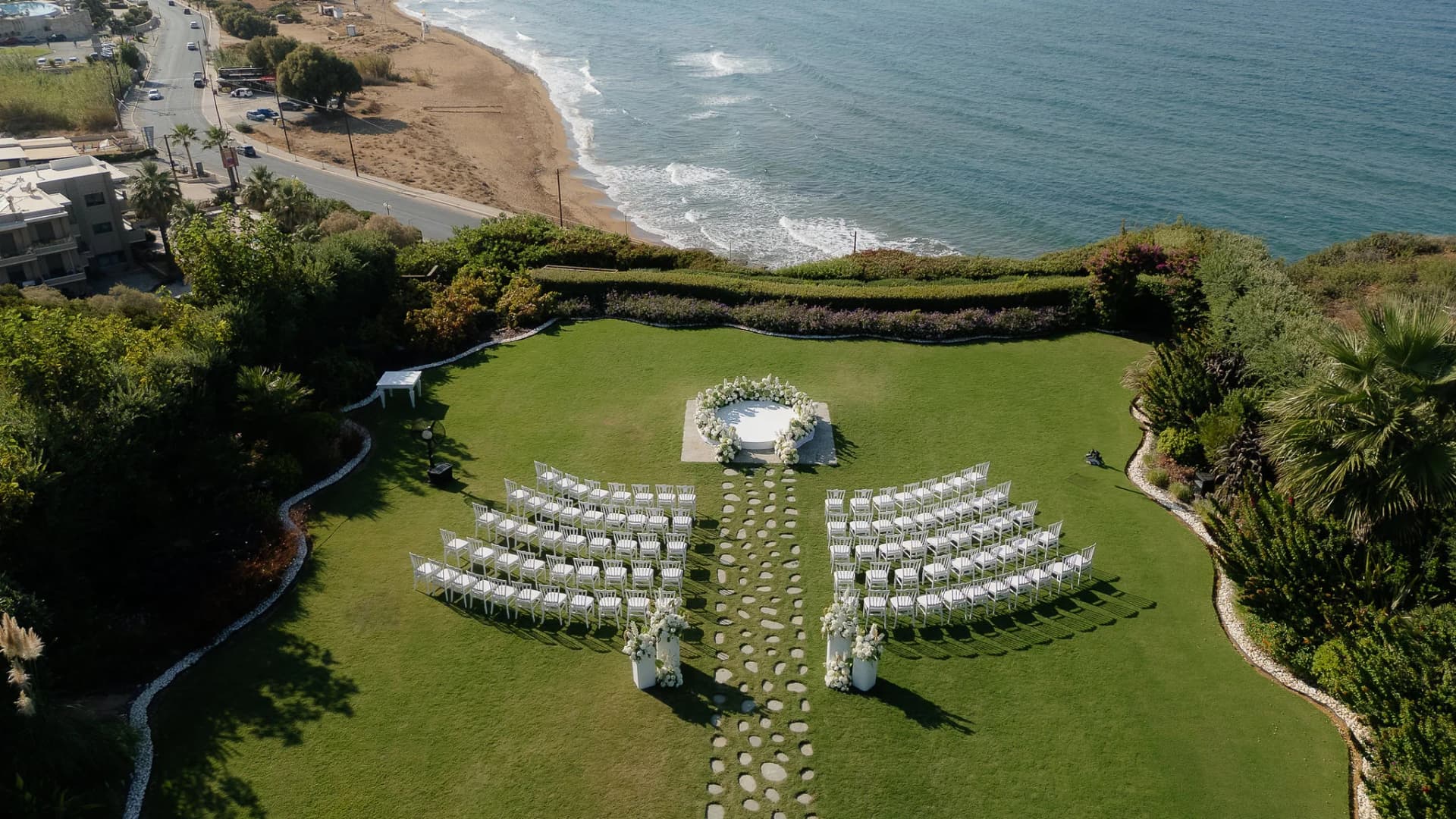
In Lisbon and the Algarve, the IRN lists public municipal spaces for weddings at Lisbon City Council and Albufeira City Council. A prenuptial agreement made at the registry costs €100 for a Civil Code property regime or €160 for a custom one, though the IRN only lists the regime choices for couples where one partner is Portuguese, so ask your registry what applies to you. You can pay in cash if you apply in person, or by Multibanco card, postal order or a euro cheque drawn on a Portuguese bank account.
Portugal has allowed civil marriage between people of the same sex since Law No. 9/2010 of 31 May, according to the Commission for Citizenship and Gender Equality, a government body. The law extended civil marriage to same-sex couples, so they follow the civil registry route above. Our guide to where same-sex couples can legally marry abroad covers other countries.
The U.S. Embassy in Lisbon won't issue a certificate of capacity to marry, because no US authority issues one. Instead, you can sign a statement of eligibility to marry in front of a consular officer at the embassy and give it to the civil registry, and the embassy charges $50, or the euro equivalent, for each notarisation. Back home, the embassy says legal and valid marriages contracted abroad are generally also valid in the United States, and the Attorney General's Office in your state can answer questions about validity.
The Australian Embassy in Lisbon can issue a Certificate of No Impediment (CNI) for A$181, and you can apply in person or by post. By post, a local notary public witnesses your signed form and notarises photocopies of your documents, so you don't send originals. The embassy can also apostille original Australian documents, such as divorce papers, for A$105. Both fees are its rates as at 1 January 2026, and it takes cards only, not cash.
The embassy says an application takes a minimum of four weeks to process, and its page gives three months to marry after approval, shorter than the six months on Portugal's own pages. Confirm your window with the registry before you set a date. Back home, an overseas marriage is generally recognised in Australia if it was valid where it took place and would have been valid here, according to the Attorney-General's Department. Our guide to making an overseas wedding legal in Australia covers the paperwork at home.
If the registry timeline doesn't suit you, marrying legally at home and holding a symbolic ceremony in Portugal skips the Portuguese registry paperwork. Our Portugal wedding venues guide covers the Algarve, Lisbon and Sintra, the Douro Valley and Comporta. Wedded Concierge can plan your celebration, legal or symbolic, and our travel team can arrange stays for you and your guests. If you're comparing destinations, our guides to getting married in Mexico as a foreigner and getting married in Thailand legally cover how the legal process works in each.
Cover photo: Kampus Production
Written by

Senior SEO Specialist, Wedded Wonderland
Mark Tuason is the Senior SEO Specialist at Wedded Wonderland, where he writes and refreshes the brand's guides to destination weddings and cultural wedding traditions. He starts with the questions couples search for, checks the answers against trusted sources, and shapes each guide to help them plan, compare and book with confidence. Based in the Philippines, he specialises in content strategy and on-page SEO.
Search real weddings, venues and vendors from around the world.
Search Wedded Wonderland