A Bali traditional wedding is a sacred Hindu ceremony shaped by family, ancestors and community. At Wedded Wonderland, we arrange Balinese blessings for visiting couples with local specialists. This guide explains the customs and the rites commonly described. It also shows how a visiting couple can include them with respect.
A traditional Balinese wedding is a Balinese Hindu ceremony led by a priest, with offerings and purification at its centre. It draws in the extended family and the local community, known as the banjar, and its meaning rests on Tri Hita Karana, the harmony of people, nature and the divine, according to Balipedia and The Knot.
The ceremony is a religious act first, which is why it is arranged with local specialists and not styled as a performance.
Sources commonly describe several stages, and the exact order and names vary by family, caste tradition and region. A local celebrant or cultural adviser confirms the details for any ceremony we coordinate.
Memadik: The groom's family formally visits the bride's family to propose and arrange the terms of the marriage.
Ngekeb: A pre-wedding seclusion and purification rite in which the bride prepares spiritually and physically.
Mepamit or Majauman: The bride takes formal leave of her ancestors and family shrine before joining the groom's family.
Mekala-kalaan and Mewidhi Widana: Purification rites with symbolic acts and prayers, led by a priest, to bless the couple and seek ancestral recognition.
Mejaya-jaya: The formal religious blessing that ratifies the marriage.
Offerings sit at the heart of the day. Woven palm-leaf offerings known as banten are placed throughout, tall curved bamboo poles called penjor line the approach, and live gamelan music or traditional dance accompanies the rites.
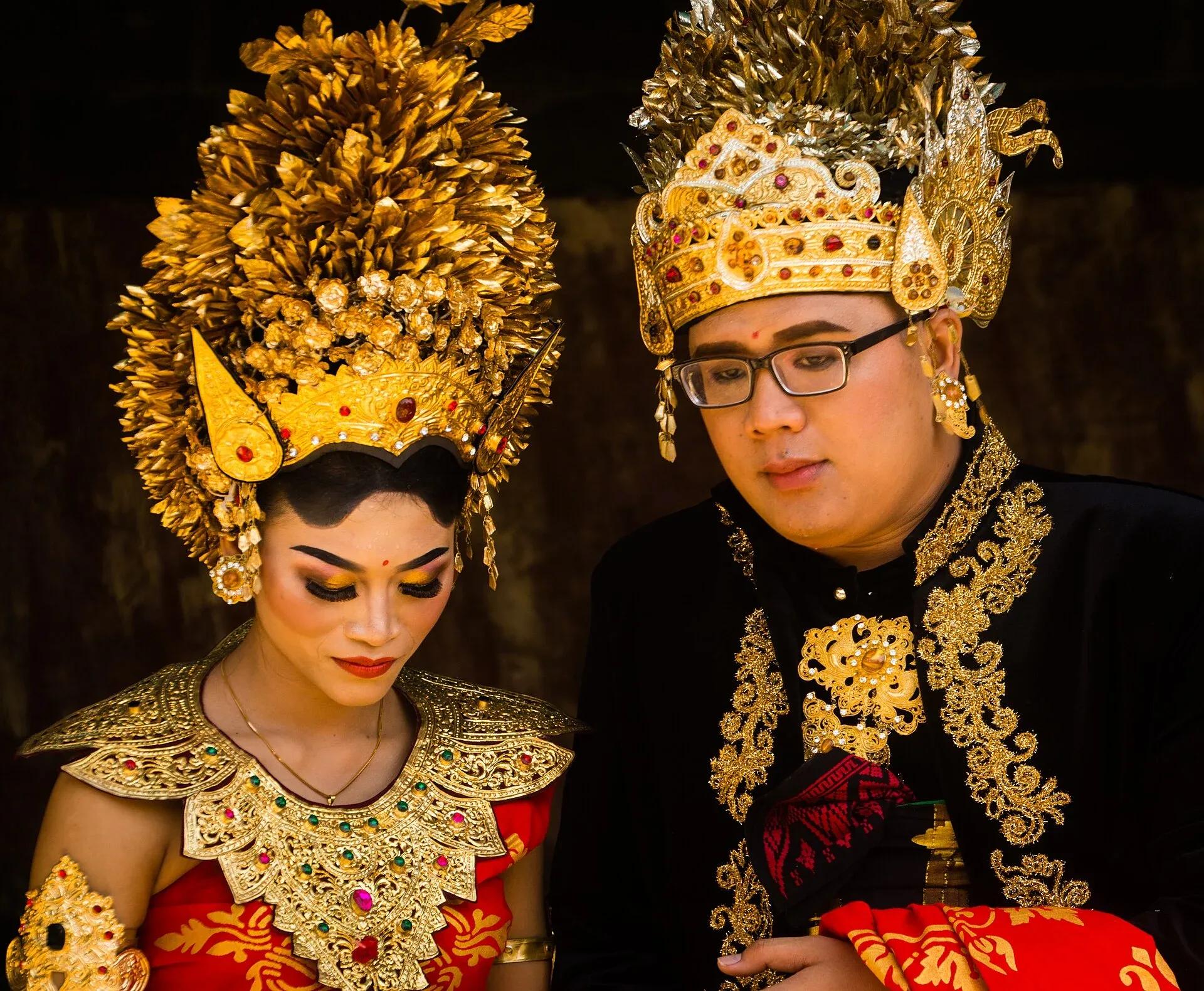
Couples traditionally wear the royal styling known as Payas Agung, with ornate gold headdresses, brocade or songket textiles, a kebaya or sarung, and an udeng headcloth and saput for the groom. A celebratory feast follows, with dishes such as babi guling, lawar and sate lilit, according to The Knot.
Visiting couples can include a Balinese blessing, and many choose a blessing woven through a celebrant ceremony. A full Balinese Hindu wedding follows religious requirements and family involvement, so it is a different undertaking.
Indonesian law ties a valid marriage to the religion and beliefs of the couple, and every marriage must be registered, and non-Indonesian citizens also need a Certificate of No Impediment from their embassy, according to the US Embassy in Indonesia, as set out in the Bali marriage and religion requirement. Many international couples marry legally at home and hold a ceremony in Bali. Requirements may change, and we confirm them with the relevant authority.
Guests dress modestly, with shoulders and knees covered, and a sash is commonly worn at temple ceremonies. Follow the priest's direction on where to stand and when to stay silent, and ask the specialist before photographing prayers or offerings.
Women who are menstruating are traditionally asked to stay out of temple areas, so we hold a respectful conversation with the specialist at planning stage to avoid awkward moments on the day. Our guide to getting married in Bali covers more of the practical detail.
Most visiting couples keep the legal and personal vows in a celebrant ceremony and add a Balinese blessing, a purification moment or music and dance. Julia and Noah's Bali wedding is one example, and a week-long American and Persian wedding in Bali shows how several traditions share one celebration.
Balinese customs are a living religious tradition, and we approach them with the care that comes from coordinating celebrations in Bali and across the wider events and travel industry. We work with local specialists who explain each rite and agree what guests can join, so the day honours the tradition and reads clearly to everyone present.
Explore our Bali destination page for the wider region, and our Bali wedding packages for how the coordination works. We would be honoured to help you shape a ceremony that is respectful and personal.
Written by

Editor & Content Writer
Jillian Arambulo is the Editorial and Content Writer at Wedded Wonderland, specialising in branded content strategy. Her writing spans luxury lifestyle, travel, culture, beauty and emerging trends, bringing together comprehensive guides and features that connect readers with the places, ideas and experiences worth discovering.