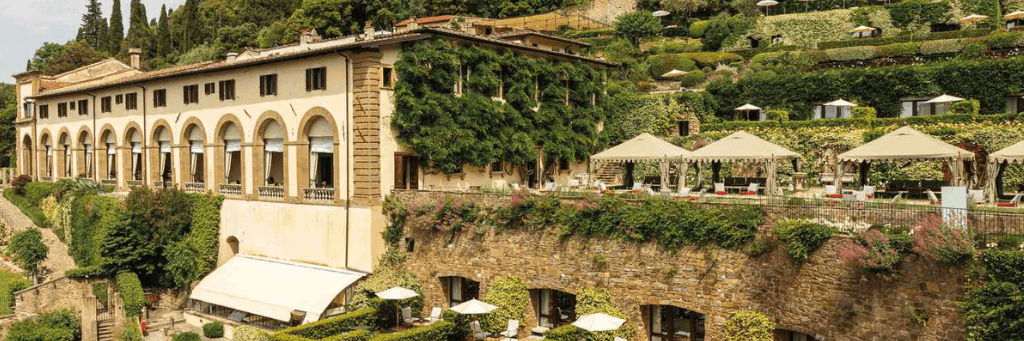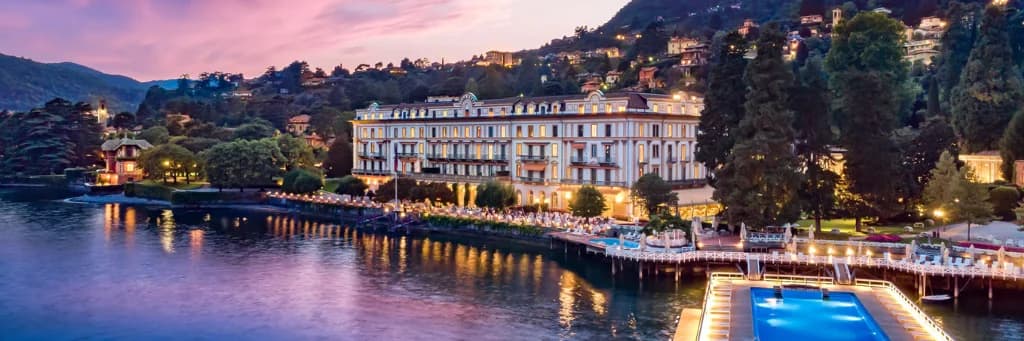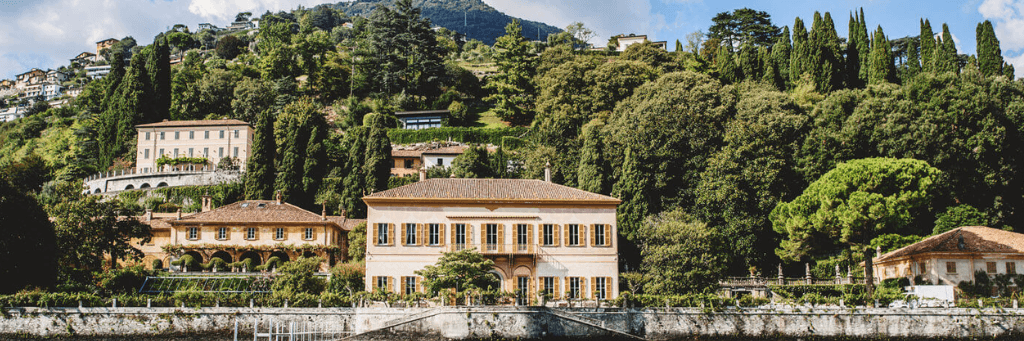
A Tuscany villa wedding is entirely possible, and thousands of couples from abroad do it every year. The nuance is in the word "married." Italy separates the legal act from the celebration, and a villa can host one, both, or just the party, depending on its status with the local authorities. Once you understand that, every other decision about your Tuscany wedding gets easier.
Civil Ceremony: Italian civil weddings are legally binding, and recognised at home once registered with your own authorities, but they must take place in a location the comune has approved for marriages. A number of Tuscan villas and historic estates hold this authorisation, meaning the mayor or a delegated official can marry you in the villa garden or loggia. If a villa does not hold it, the civil ceremony moves to the nearest town hall, often a frescoed room in a medieval palazzo, and the villa hosts everything afterwards.
Symbolic Ceremony: This is the most common choice for destination couples. You complete the legal paperwork at home, then hold a ceremony in Tuscany with a celebrant of your choosing, in any spot on the estate, with vows written entirely by you. No Italian bureaucracy, no restrictions on timing or location, and it looks identical in photographs.
Religious Ceremony: Catholic weddings must take place in a consecrated church or chapel, and a few larger estates have private chapels where the diocese may permit this. Several other denominations with a formal agreement with the Italian state, including Jewish, Waldensian and some Orthodox and Evangelical churches, can also conduct legally binding ceremonies. Anglican, most other Protestant, interfaith and non-denominational ceremonies are symbolic, so the religious ceremony happens at the villa and the legal marriage elsewhere.
Paperwork for a civil ceremony typically includes a Nulla Osta or Atto Notorio depending on your nationality, plus a sworn declaration lodged with the comune shortly before the wedding.

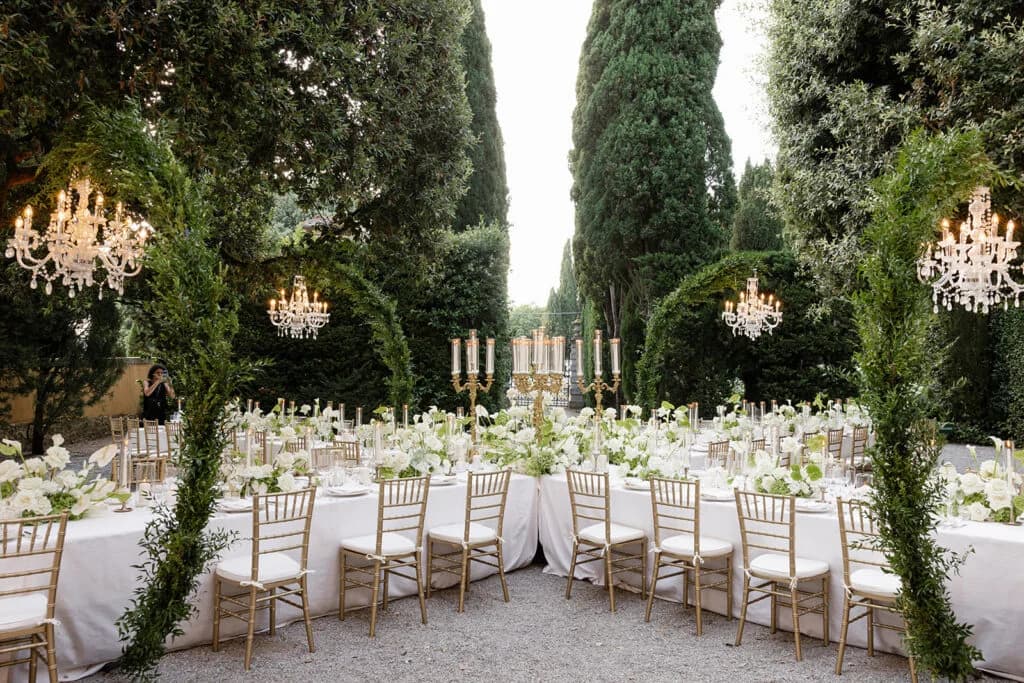
The appeal of a villa over a hotel is exclusivity. You take the whole property for three or four nights, your closest family stays on site, and the wedding becomes a long weekend rather than a single day. Welcome dinner under the pergola, ceremony on the lawn, reception along a cypress avenue, recovery lunch by the pool.
That format comes with a few realities worth knowing early:
Venue hire is only one line item: Many villas charge a hire fee plus a minimum-stay accommodation buyout, usually three nights, and catering is often brought in by an approved external caterer rather than included. Ask for the full cost structure before you compare properties.
Capacity on paper versus capacity in practice: A villa that sleeps 24 might host 120 for dinner, but only 60 seated under cover if it rains. Always ask about the wet-weather plan.
Noise curfews are real: Many Tuscan comuni restrict amplified music outdoors after midnight, and some earlier. Villas with a cellar, orangery or indoor hall solve this; others end the night early.
Access matters: Some of the most photogenic estates sit at the end of unpaved strade bianche. Coaches may not manage it, so guest transfers need planning.

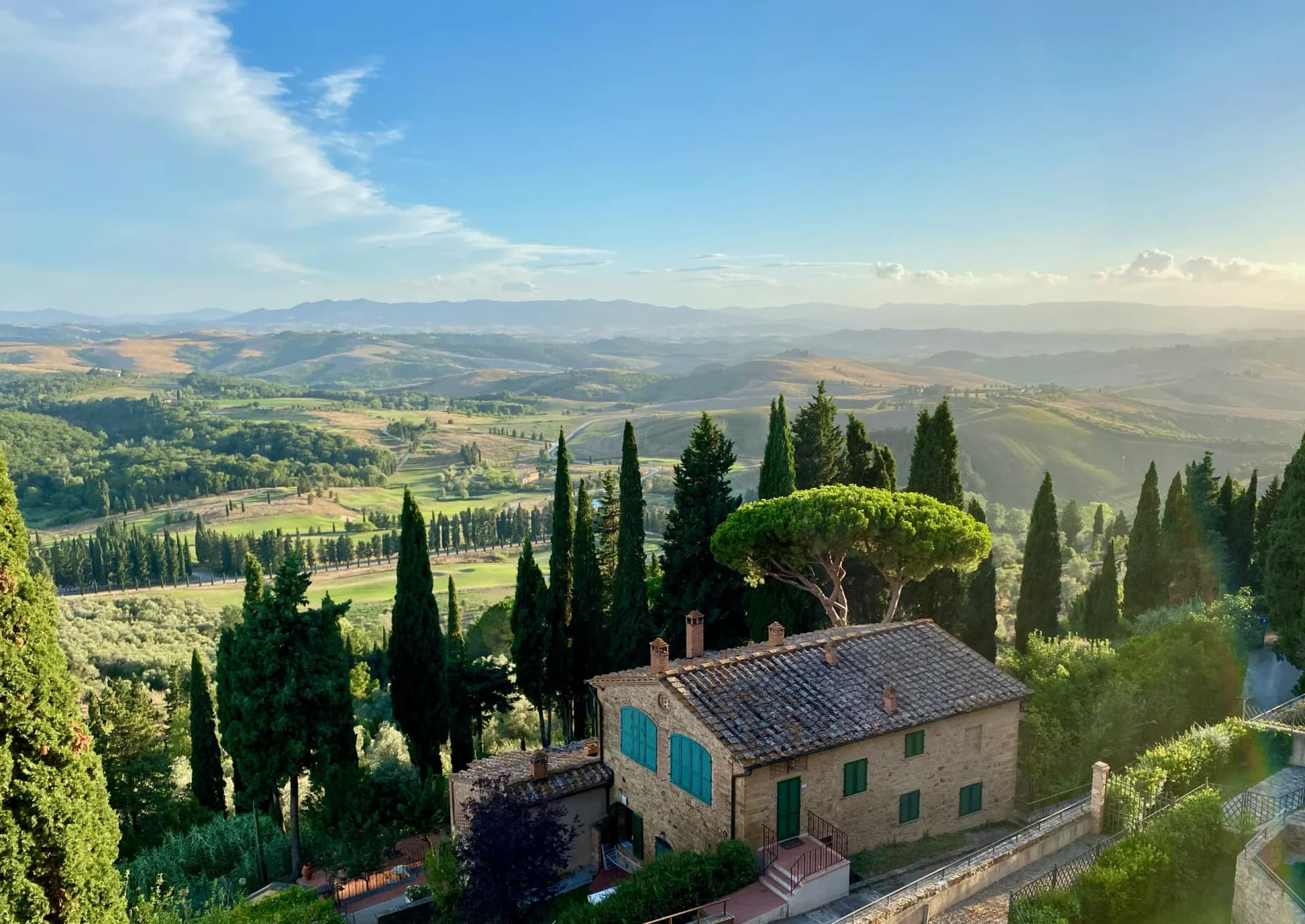
Tuscany is large and each area has a different character. Chianti, between Florence and Siena, is the classic choice: rolling vineyards, stone farmhouses, easy access from Florence airport. The Val d'Orcia further south offers the postcard landscape of cypress-lined roads and bare golden hills, with fewer villas and more privacy. Lucca and the Lucchesi hills are known for grand 16th- and 17th-century villas with formal gardens, closer to Pisa airport. The Maremma coast gives you sea views and a wilder feel.
If you are also weighing Lake Como or the Amalfi Coast, our guides to Lake Como weddings and Amalfi Coast weddings set out how those destinations differ in logistics and cost.
Late May through June and September through early October are the sweet spots: warm evenings, no extreme heat, and the landscape at its most photogenic. July and August are hot, and many suppliers take holiday around Ferragosto on 15 August, which thins out your options. April and late October are quieter and better value, with a higher chance of rain and cooler evenings.
For peak dates, the best villas are booked 12 to 18 months ahead. For shoulder season, 8 to 12 months is usually workable.

An exclusive-use villa does not come with a team. You will need a local planner who knows the property, a caterer the villa approves, a florist, lighting and sound, transport and a celebrant. Browse Italy venues and suppliers in the marketplace, and look through real weddings for a sense of how Tuscan estates have been styled by couples before you.
Guest logistics are the other half. Group accommodation nearby, transfers from Florence or Pisa, and a wedding website with everything in one place. The free tools in Wonderland Studio handle RSVPs, seating and the guest site; your advisor handles the rest.
Written by

SEO Specialist
Ayrton Christian Braga is an SEO Specialist at Wedded Wonderland, where he writes optimized articles and web pages that center on destination weddings, cultural wedding traditions, and guides for everything in between.