You’ve chosen the villa, the date is in the diary, and then a venue coordinator asks for an “apostilled birth certificate.” If that sent you straight to Google, you’re in good company. An apostille is one of the least glamorous parts of a destination wedding, and one of the easiest to get wrong.
The good news is that the process is straightforward once you understand the rules. This guide explains what an apostille is, which countries accept one, which wedding documents usually need it, and how to get it done without last-minute stress. Requirements change by country and by couple, so treat this as general information rather than legal advice, and always confirm details with your celebrant, venue or the relevant consulate.

An apostille is a standardised certificate that confirms a public document is genuine so it can be used in another country. It’s issued by a designated authority in the country where the document originated, and it verifies three things: the signature on the document, the capacity in which the official signed, and any seal or stamp it carries.
What it does not do is vouch for the content. A birth certificate with an apostille says exactly what it said before. The apostille simply tells the receiving country that the document is authentic and was issued by a real, authorised official.
The system comes from the 1961 Hague Apostille Convention, a treaty that replaced a slow chain of stamps from ministries and embassies with a single certificate. Around 130 countries are now parties, according to the Hague Conference on Private International Law (HCCH). Once a document carries an apostille, the destination country should not ask for any further certification of it.
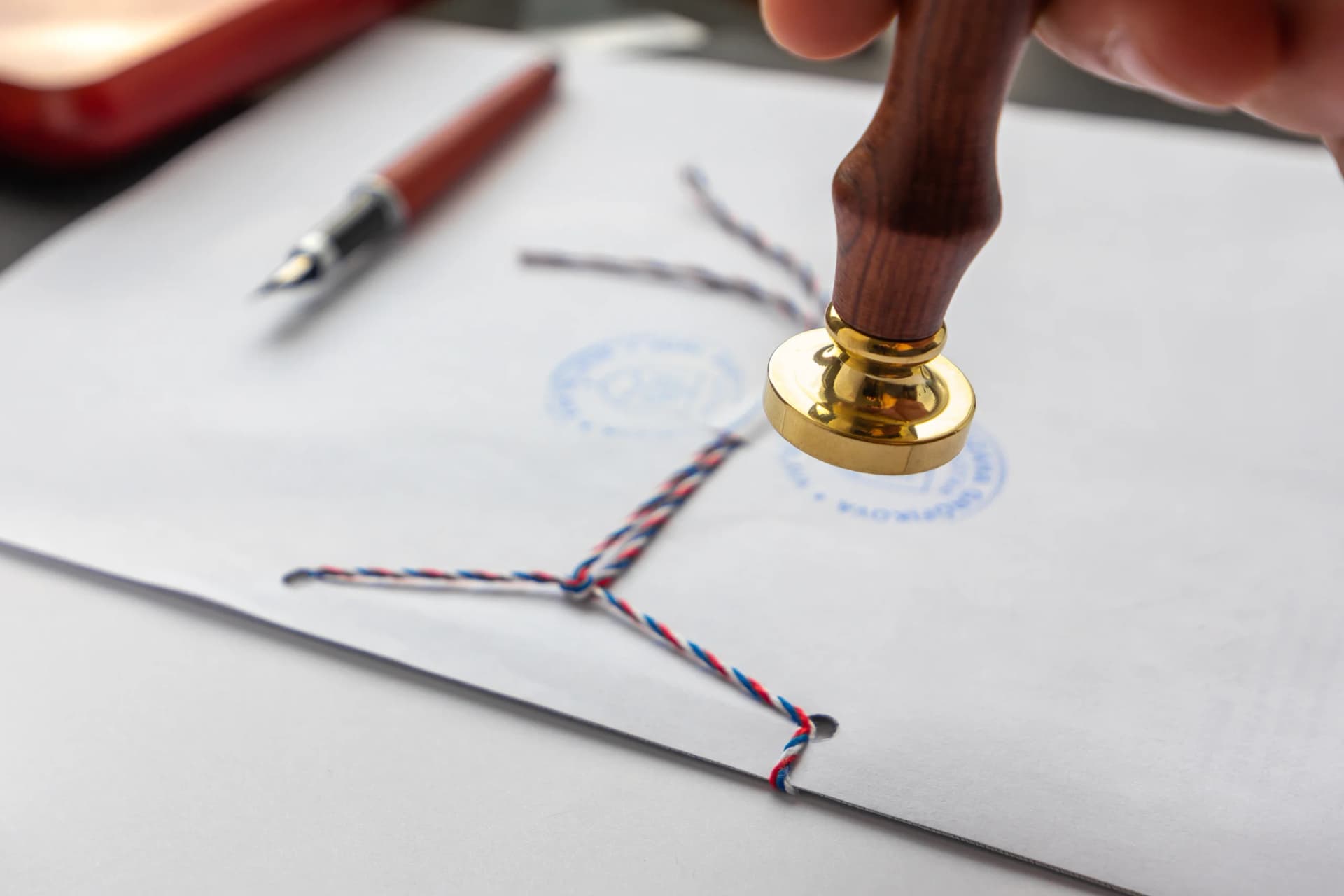
In practice, an apostille is a stamp or printed certificate attached to your document, with numbered fields and a heading in French. Some countries now issue electronic versions, called e-Apostilles, though whether your destination accepts them is something to confirm in advance.
Whether an apostille works depends on both ends of the journey. The country that issued your document and the country receiving it must both be parties to the Convention.
If they are, an apostille is all the authentication you need. If either is not, you’ll need legalisation, a longer process where your document is authenticated by your home government and then again by the destination country’s embassy or consulate. It’s slower, usually costs more, and varies by country, so build in extra time.
Membership isn’t static. Canada’s membership took effect in January 2024, and Vietnam’s in September 2026. Before you start collecting paperwork, check your destination and your home country on the HCCH status table.
Many popular wedding destinations are Hague members, including Italy, Greece, France, Portugal, Mexico and Bali (Indonesia). Even so, membership only settles how a document is authenticated. Each country still sets its own rules about which documents it wants and how recent they must be.
The honest answer is that it depends on where you’re making the marriage legal.
If you’re legally marrying abroad, expect to need apostilled documents. Typical requests include:
Birth certificate: usually the full or long-form version, not a short extract.
Proof of single status: often called a certificate of no impediment, affidavit of single status or, in Italy, a nulla osta or an equivalent sworn declaration. The name and the issuing authority differ by country.
Divorce decree or death certificate: if either of you has been married before.
Identity documents: passports are usually shown in person, though some authorities want certified copies.
The local celebrant or registrar sets the final list, and it sometimes includes extras such as residency declarations or witness details.
If you’re legally marrying at home and celebrating abroad, you may not need an apostille for the ceremony at all. Many couples choose this route because it largely removes the foreign legal requirements, leaving the destination event free to be as personal as you like. Keep in mind that you may need an apostilled copy of your marriage certificate later, for example for visa applications or name changes in another country.
Documents that aren’t usually apostilled include private papers like bank statements or employer letters, and plain photocopies. A private document can sometimes be apostilled once a notary has certified it, but the rules differ by country, so ask before you pay for a notary.
If you’re unsure which route suits your wedding, your venue and celebrant should be able to tell you what they need. A planner experienced in the destination can also save you from weeks of back-and-forth.

The exact process differs by country, but the sequence is broadly the same.
Confirm the requirements in writing. Ask your venue, celebrant or the destination’s consulate exactly which documents they need, whether originals are required, and how recently they must have been issued.
Order fresh certified copies. Request them from the official source, such as the registry that holds your birth or marriage record. Many authorities only accept documents issued within the last three to six months, so don’t order too early.
Find the right issuing authority. The competent authority for apostilles varies by country, and sometimes by document type. The HCCH website lists the authorities for each member country.
Submit and pay. Most authorities accept postal or online applications, and some offer in-person or expedited service for an extra fee.
Sort out translations. If your destination requires a translation, ask whether the translation must happen before or after the apostille, and whether the translation itself needs certification. Getting the order wrong is a common and expensive mistake.
Track, scan and protect. Use tracked delivery, keep scans of everything, and never remove the apostille from the document it’s attached to, as that can invalidate it.
It varies, which is why “wrong authority” is a common reason for rejected applications. A few examples:
United States: State-issued documents such as birth and marriage certificates are typically apostilled by the Secretary of State in the issuing state, while federal documents, like FBI background checks, go through the US Department of State.
United Kingdom: The Foreign, Commonwealth and Development Office handles requests through its legalisation service.
Australia: The Department of Foreign Affairs and Trade handles authentication and apostilles for Australian public documents.
Other countries may use their foreign ministry, courts or a notary body, so check the competent authority listed on the HCCH site for your document’s country of origin.
Processing times range from same-day counter service in some places to several weeks by post in others, and costs vary just as widely. If you have documents coming from more than one country, or paperwork that involves a divorce, name change or foreign birth, give yourself extra time.
A sensible approach is to confirm requirements as soon as your destination and date are fixed, then order certified copies once you know how recent they must be, leaving enough time for apostille processing and any translation. Peak-season destinations book up early, often 12 to 18 months ahead in Europe, so your planning timeline will likely start long before your paperwork does.
On validity, an apostille itself doesn’t expire under the Convention. The receiving authority, though, may only accept documents issued within a set window, so an apostille on an older certificate can still be rejected.
Most apostille problems are avoidable, and they tend to repeat:
Wrong version of the document. A short-form birth certificate when the long form was requested is a common reason for rejection.
Wrong authority. Submitting a document to the wrong office, such as a state document to a federal one, can cost weeks.
Name mismatches. If names differ between your passport, birth certificate and other documents (maiden names, middle names, spelling variations), resolve them with amendments or supporting evidence before applying.
Ordering too early. Documents that go stale before your wedding date have to be re-issued and re-apostilled.
Assuming one apostille covers everything. It only works between Hague member countries. For non-members, you’ll need legalisation instead.
Separating the apostille from the document. Keep the pages attached exactly as they were issued.
An apostille is just one item on a long list that also includes venue contracts, guest travel, suppliers and budgets. Wonderland Studio, free for every couple, keeps your guest list, budget and wedding website in one place. For broader planning advice, our destination wedding guides cover the rest of the journey.
If you’re still deciding where to marry, it’s worth weighing the paperwork alongside the setting. Some destinations, like Lake Como, are well used to marrying international couples, and an experienced local planner can walk you through the process.
An apostille is a simple idea that can feel complicated in practice. Check whether your destination accepts one, confirm exactly what your celebrant needs, order fresh documents and have them apostilled by the right authority, and leave plenty of time. Do that, and the paperwork becomes a small checklist item rather than a wedding-week emergency.
Written by

SEO Specialist
Ayrton Christian Braga is an SEO Specialist at Wedded Wonderland, where he writes optimized articles and web pages that center on destination weddings, cultural wedding traditions, and guides for everything in between.
Search real weddings, venues and vendors from around the world.
Search Wedded Wonderland