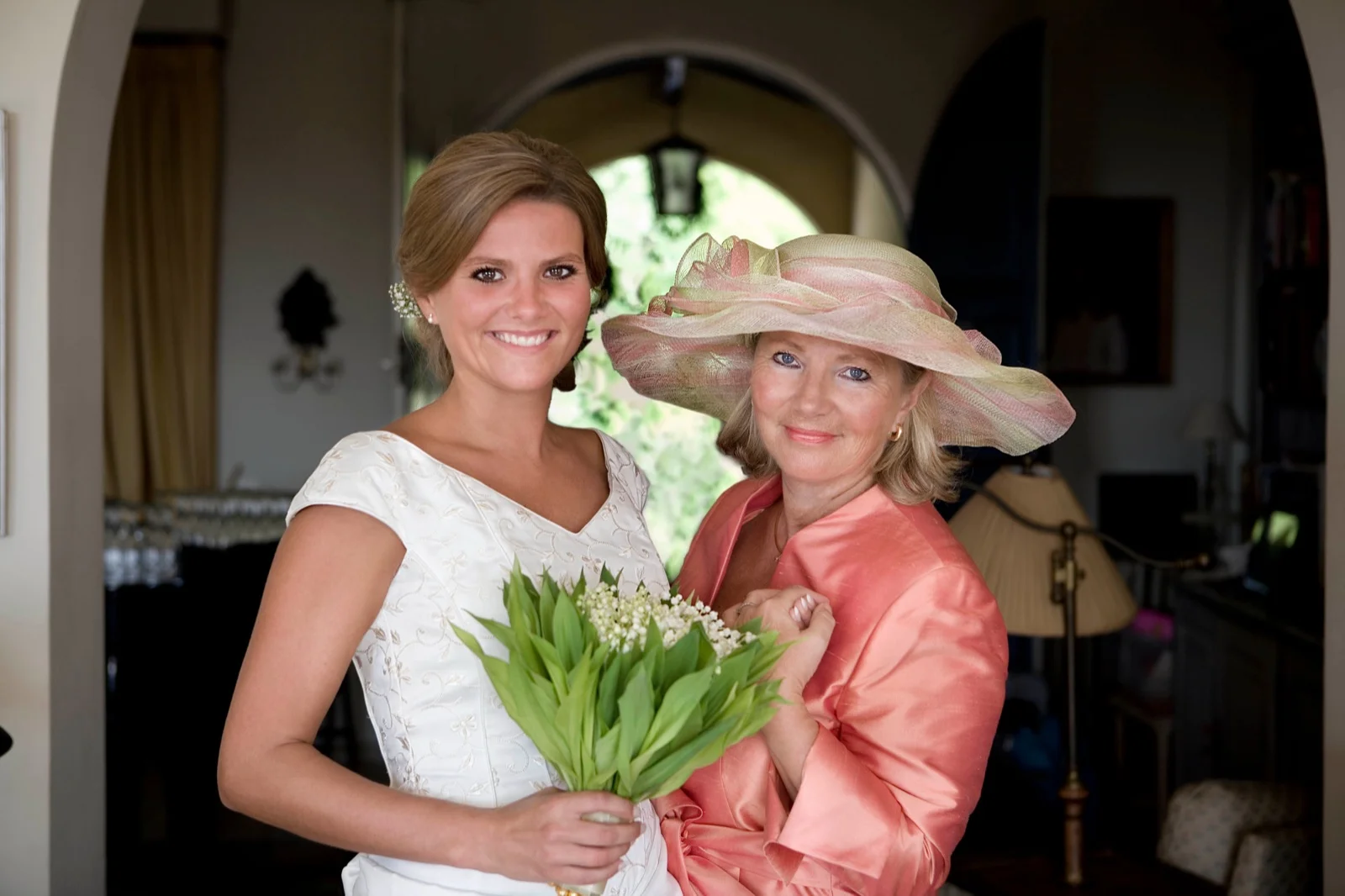
The mother of the bride wears an outfit that matches the wedding's dress code, sits comfortably beside the bridal party's colours and never competes with the bride. In practice that means a full-length gown for a formal or evening wedding, a midi or tea-length dress for a daytime or garden wedding, and any colour except white or ivory. Buy it about six months out so there is time for alterations, shoes and accessories.
The invitation's dress code decides most of the outfit. Ask the couple what they mean by it if the wording is vague, because "formal" at a city hotel and "formal" at a vineyard are different things.

For a black-tie or formal evening wedding, wear a full-length gown. Tali Gallo of The Bridal Finery recommends full length for most formal weddings and suggests a shorter dress only for a beach or brunch wedding, adding that "it's hard to be overdressed at a wedding, but it's easy to be underdressed."
For a daytime, garden or semi-formal wedding, a midi or tea-length dress works, and so does a tailored suit. Hobbs, the British fashion label, leaves length to personal preference and says a dress can look sophisticated at any length. Pick the length you will be comfortable standing, sitting and dancing in for the whole day.
The one firm rule is no white. Montique, an Australian fashion label, says the mother of the bride "is not really limited in her colour choice, apart from not being able to wear white or variations of this hue". Ivory, cream and pale champagne that reads as white in photos all fall under the same rule.
Black and red need a conversation first. Hobbs advises steering clear of black, and The Bridal Finery notes that red is traditionally avoided. The couple may be happy with either, especially at an evening wedding, so ask rather than guess.
For everything else, complement the wedding party rather than match it. Tali Gallo names navy and royal blue as the most popular choices, followed by blush and nude shades, and Hobbs calls blush the colour of the season. A colour from the same family as the bridesmaids, a shade or two deeper or lighter, sits well in the group photos.
Montique suggests discussing your colour with the bride before you buy, and The Bridal Finery suggests sending her photos of the dresses you are considering. For more colour ideas, see our guide to trending colours for the mother of the bride.
A dress or gown is the traditional choice. A tailored pantsuit or an elegant jumpsuit suits a modern, city or semi-formal wedding, and it is easier to wear for a long day with photos, speeches and dancing.

Whatever the cut, choose a silhouette you already know suits you. Hobbs recommends a figure-flattering shape that makes you feel your best, and says this is the time to go all out.
Two-piece outfits, such as a top with a matching skirt, give you more room to adjust the fit and can be worn again separately. Montique's guide also lists boleros as an option for covering the shoulders in a church or for a cooler evening.
Choose the fabric for the weather on the day. Hobbs recommends lightweight chiffon or satin for summer ceremonies abroad or in a marquee, and jewel tones for winter weddings or formal venues. Lace is another good warm-weather choice.
In Australia, a summer wedding between December and February can be hot well into the evening, so a breathable fabric and a lined dress without extra layers keep you comfortable. For a winter wedding from June to August, heavier fabrics such as crepe or velvet, or a long sleeve, work better than a summer dress with a wrap.
Plan for the change in temperature from ceremony to reception. Hobbs suggests factoring in layers from the start, such as a tailored jacket or a coordinating pashmina, rather than adding a cardigan on the day.
Choose shoes for the ground you will be standing on. Hobbs recommends block heels or wedge sandals on grass or sand, court shoes or slingbacks in a city setting, and a heel height under three inches, about 7.5 centimetres. Montique suggests heeled sandals in beige, blush or gold.

Hats and fascinators are traditional at some weddings, especially daytime and church ceremonies. Hobbs notes that practicality comes first and that a small brim is easiest to wear through the ceremony and the photos.
Keep jewellery and the bag simple enough that the outfit stays the focus, and bring a pair of flat shoes for the reception. Wear the shoes around the house before the day so they are broken in.
Tali Gallo recommends buying your outfit six months before the wedding if you can. That leaves time to choose shoes and jewellery, plan hair and makeup around the neckline, and wait for an order if your size is not in stock.
Leave room for alterations. The Bridal Finery says seamstresses need the dress two to three weeks before the wedding, so book your fitting well before then. Our guide on when to start wedding dress shopping covers the bride's timeline, which sets the pace for the rest of the family.
Shop where you can try on, or where returns are easy, because fit matters more than the label on the day.
For more labels, see our guide to the best places to find mother of the bride dresses.
The mother of the bride traditionally chooses her outfit first and then tells the mother of the groom what she will be wearing. Aim for two outfits that sit well together in the family photos, in different colours or styles.

Share a photo of your outfit once you have bought it, along with the colour and length. If the groom's mother has already chosen, adjust your choice to complement hers rather than asking her to change.
The same principles apply to the mother of the groom: follow the dress code, avoid white, and complement the wedding party rather than match it.
A destination wedding changes the practical side of the outfit. Check the weather for the date, the venue's setting and how you will get there, because a beach ceremony in Bali and a palazzo in Italy call for very different outfits.
Choose fabrics that travel well. Chiffon, jersey and crepe pack better than structured satin, and a dress that can be steamed in a hotel bathroom saves a trip to a dry cleaner.
Carry the outfit and shoes in your cabin bag rather than checking them in, and allow time to have the dress pressed when you arrive. Our guide on how to plan a destination wedding covers the rest of the travel planning.
Beyond the outfit, the role comes with a few rules of its own: arrive on time, check with the couple before inviting anyone, and leave the spotlight on the bride. Our guide to what a mother of the bride should never do covers them.
Written by

Senior SEO Specialist, Wedded Wonderland
Mark Tuason is the Senior SEO Specialist at Wedded Wonderland, where he writes and refreshes the brand's guides to destination weddings and cultural wedding traditions. He starts with the questions couples search for, checks the answers against trusted sources, and shapes each guide to help them plan, compare and book with confidence. Based in the Philippines, he specialises in content strategy and on-page SEO.
Search real weddings, venues and vendors from around the world.
Search Wedded Wonderland