Wedding etiquette has always been about one thing, making every guest feel considered. At Wedded Wonderland, we plan destination celebrations across proposals, engagements and weddings, and the couples who host most gracefully are rarely the most traditional. This wedding etiquette guide gathers the conventions that still matter for couples today, from who pays for what to when the thank-you cards go out. Where a topic deserves its own deep dive, we point you to it.
Modern wedding etiquette is the practice of hosting your guests with clarity and consideration, while choosing the traditions that suit you. The old rulebook has softened, while the courtesy behind it remains. Guests still want to know when to arrive, what to wear and what is expected of them.
Couples now marry in vineyards, on clifftops and in private villas abroad, often with smaller guest lists and longer celebrations. Wedding etiquette adapts to each setting, and it is the reason a weekend in Tuscany feels effortless for everyone involved.
In modern wedding etiquette, every tradition is optional, from who walks you down the aisle to the order of speeches and whether a bouquet is tossed. Keep the rituals that carry meaning for your families and quietly retire the rest. Guests follow your lead when the day reflects who you are.
Today, most couples host their own wedding, with parents contributing where they wish and are able. The traditional division of costs still guides some families, so an open conversation early in planning prevents misunderstandings later.
Traditionally, the bride's family hosted the ceremony and reception, including the venue, catering and flowers. The groom's family covered the rehearsal dinner, the celebrant's fee and often the honeymoon. Few families follow this split closely today, but it remains a useful starting point when relatives ask how things were once done.
Many couples now fund the celebration together, with both families contributing to specific elements such as the welcome dinner or the honeymoon. For a destination wedding, families sometimes host the events around the main day, from a rehearsal dinner by the water to a farewell brunch.
A contribution often comes with a hope of having a voice, particularly on the guest list. Good wedding etiquette means agreeing on what each contribution covers and how decisions will be made before plans take shape. Our guide to wedding guest list etiquette covers how to allocate places when parents are contributing.
Wedding etiquette begins with the engagement. Close family and your dearest friends should hear the news from you, in person or by phone, before it appears anywhere public. Once they know, the announcement is yours to share however you like.
Tell parents first, then siblings and grandparents, then close friends. A social media announcement can follow within a day or two, once the people closest to you have heard it personally. If you are planning a proposal abroad, our guide on how to propose includes timing the announcement around the moment itself.
An engagement party can be hosted by either family, by friends or by the two of you. Anyone invited should also expect an invitation to the wedding, so keep the guest list in proportion to the celebration you are planning.
Asking someone to stand beside you is an honour, and good wedding etiquette means being clear about what you are asking of them. Attire, travel and pre-wedding events are best discussed at the time of asking, particularly for a destination wedding.
Ask in person where you can, or with a handwritten note for those who live far away. Give your attendants time to consider the commitment, and accept a gentle no with grace.
Couples traditionally cover bouquets, buttonholes, hair and makeup on the day, and a thank-you gift for each attendant. Attendants usually cover their own attire and travel, although many couples hosting abroad contribute to accommodation. Costs vary by destination and supplier and may change, so confirm the details with each vendor before you share them.
Send save-the-dates six to eight months before a local wedding and eight to twelve months before a destination wedding. Formal invitations follow six to eight weeks ahead for a local celebration, or around three months ahead when guests are travelling.
Stationery | Local wedding | Destination wedding |
|---|---|---|
Save-the-dates | 6 to 8 months before | 8 to 12 months before |
Invitations | 6 to 8 weeks before | About 3 months before |
RSVP deadline | 3 to 4 weeks before | 6 to 8 weeks before |
Thank-you cards | Within 3 months after | Within 3 months after |
Wedding etiquette suggests setting the RSVP date a little earlier than your venue's final numbers deadline, so there is time to follow up gently with anyone who has not replied. For a destination wedding, allow extra time for accommodation and transfers to be confirmed.
The names on the envelope define the invitation, so address each one to exactly the people invited. Our guides to plus-one etiquette and child-free wedding wording cover the specific wording for each situation.
Print the time the ceremony begins, and allow guests a short buffer to arrive and settle. A clear dress code helps guests choose well, and our guide to what you should never wear to a wedding answers the questions your guests are likely to ask.
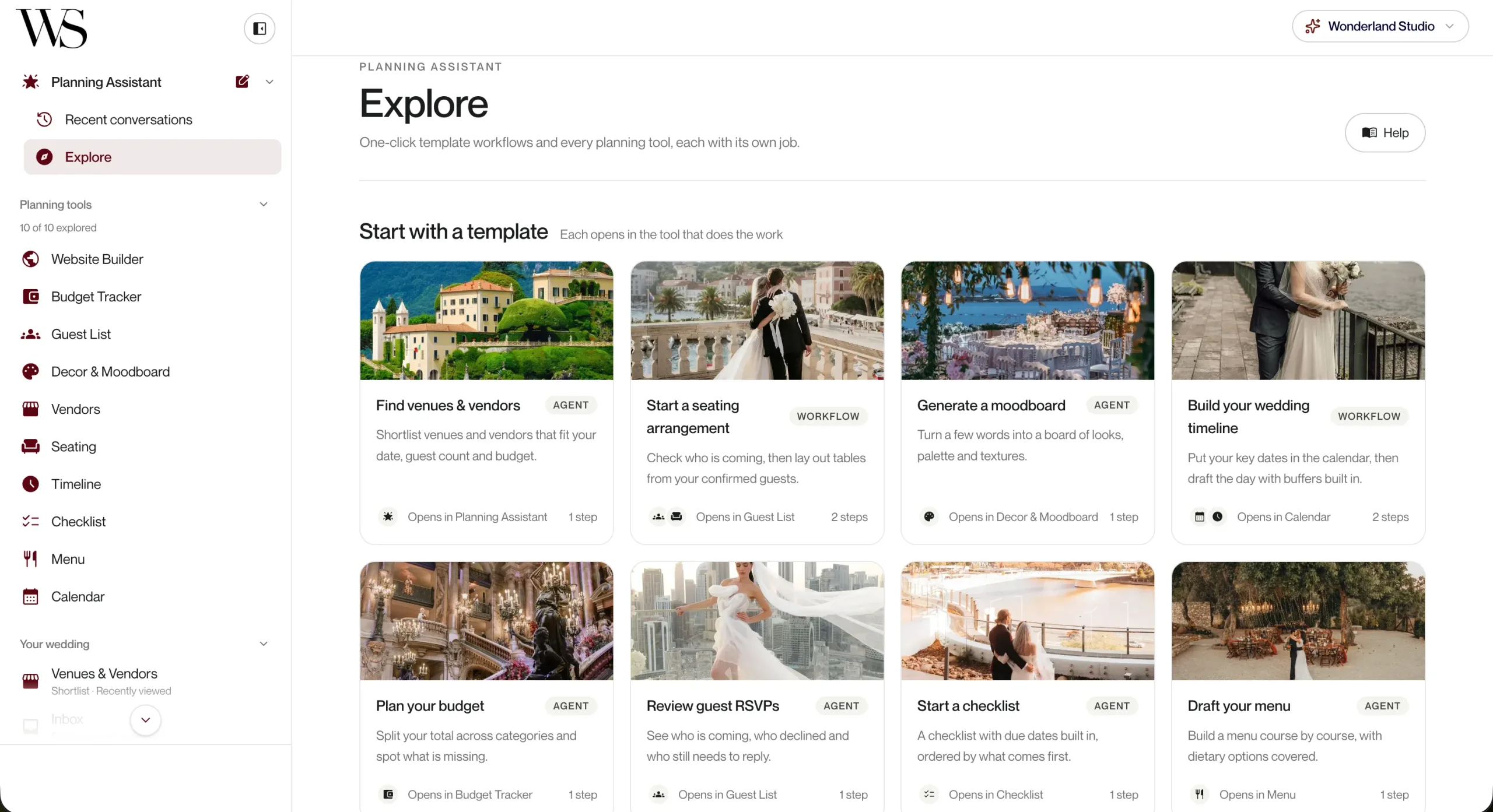
A wedding website holds everything the invitation cannot, from travel details to accommodation, registry information and a gentle note on any policies. Good thing is you can build one with an RSVP form in Wonderland Studio wherever you are. Think of a website builder that can host your own budget tracker, mood board, guest list, seating plan, timeline, and other wedding lists.
Explore our comprehensive guide on What Is Wonderland Studio, and How Does It Help You Plan a Wedding? and discover amazing tools to help you on your dream wedding.
Wedding etiquette on the day comes down to greeting every guest, keeping the schedule clear and sharing your wishes on phones and photographs in advance. Destination weddings add welcome and farewell events, which set the tone for guests who have travelled to be with you.
An unplugged ceremony asks guests to put their phones away while you exchange vows, leaving the photographs to your photographer. Mention it on your website and ask your celebrant to make a warm announcement before the ceremony begins.
When guests travel for your wedding, a welcome dinner the evening before is a gracious way to thank them and introduce families. A relaxed farewell brunch the morning after gives everyone a moment to say goodbye before flights home. Our destination wedding guide covers how these events fit around the main celebration.
Make time to speak with every guest, either in a receiving line after the ceremony or by visiting each table during dinner. Where your reception layout matters, our guide to wedding seating etiquette explains how to place family and friends.
In wedding etiquette, registry details belong on your wedding website and are shared by family when guests ask, never printed on the formal invitation. Every gift is acknowledged individually, and the value of a gift is never discussed.
Many couples now prefer a honeymoon fund or cash registry, and our guide to asking for money instead of wedding gifts covers the wording. Guests wondering what to give can turn to our guide on how much to give as a wedding gift.
Wedding thank-you cards are sent within three months of the wedding, with a personal line for every gift and every guest who helped. Gifts that arrive before the day are best acknowledged within a couple of weeks.
Order your cards with the rest of your stationery, so they are ready when you return from your honeymoon. Writing a few each day keeps the task gentle and every note personal.
Thank-you notes are the final gesture of wedding etiquette. Name the gift, say how you will use or enjoy it, and thank the guest for being part of the day. A few examples:
Thank you so much for the beautiful crystal decanter. It has already taken pride of place at our table, and it will always remind us of our celebration with you.
Having you with us in Lake Como meant the world. Thank you for making the journey, and for your generous gift towards our honeymoon.
Thank you for standing beside us, for every early morning and late night, and for making our wedding day feel so effortless.
Guests have their own wedding etiquette to follow, and a little guidance on your website helps them prepare. Our guide to the unspoken rules of being a wedding guest covers RSVPs, phones and behaviour on the day.
For outfits, our guide to wedding guest attire covers what to leave in the wardrobe. For gifts, our guide to wedding gift etiquette sets out typical amounts and customs.
When guests travel across the world to be with you, wedding etiquette becomes hospitality. Clear communication, early notice and thoughtful touches, from a welcome dinner to a handwritten thank-you, turn a wedding into a shared experience your guests remember for years.
At Wedded Wonderland, we bring these details together for couples marrying abroad, from venue and accommodation to the events that frame the main day. Explore our destination wedding packages, plan the details in our wedding planning tools, or begin with Wedded Concierge, our private planning service.
Written by

Editor & Content Writer
Jillian Arambulo is the Editorial and Content Writer at Wedded Wonderland, specialising in branded content strategy. Her writing spans luxury lifestyle, travel, culture, beauty and emerging trends, bringing together comprehensive guides and features that connect readers with the places, ideas and experiences worth discovering.
Search real weddings, venues and vendors from around the world.
Search Wedded Wonderland