The legal side of a Lake Como wedding is mostly a question of paperwork, and the paperwork is more manageable than its reputation suggests. Foreign couples marry here every year, in villas above the water and in town halls a few steps from the ferry landing. The process rewards couples who start early and ask the right questions, and it punishes those who assume a beautiful venue can simply issue a marriage licence.
This guide explains who can marry at Lake Como, which documents you need, how the process works, and where your ceremony can legally take place. It is general information rather than legal advice. Requirements differ by nationality and by municipality, so always confirm the details with your consulate and the local registry office.

Yes. Italy has no residency requirement for weddings, so you can marry here whatever your nationality and wherever you live. Italy recognises civil and religious marriages, and a legal marriage at Lake Como is generally recognised in your home country too, though you may need to complete extra steps to record it.
Two points shape everything that follows:
The comune decides. A civil marriage is performed by the municipality (the comune) where the ceremony takes place. If you marry in Bellagio, you work with Bellagio’s civil registry office, not Milan’s or Como’s.
Your home country must confirm you are free to marry. Italy requires non-Italians to prove there is no legal impediment to the marriage, which is where most of the paperwork comes from.
Before you gather documents, decide which kind of ceremony you want. Each works differently, and only two are legally binding.
A civil ceremony (legally binding)
This is the standard route for couples who want the legal marriage to take place in Italy. A mayor or authorised civil registrar conducts a short, formal ceremony, usually in Italian with an interpreter if you need one. You can add personal vows around the legal text, and many couples hold a longer, more personal ceremony the same day.
A Catholic ceremony (legally binding)
Under Italy’s agreement with the Holy See, a Catholic wedding performed in Italy also takes effect in civil law, with no separate civil ceremony. You still complete the civil paperwork beforehand, and the marriage is then registered with the comune. The church has its own requirements as well. You will typically need documents from your home parish or diocese, and many priests ask for marriage preparation courses. Not every parish accepts foreign couples, so speak to one early. Lake Como has beautiful lakeside churches, but availability is limited and requirements vary.
A symbolic ceremony (not legally binding)
You can marry legally at home, in a registry office or at a small private signing, then hold your ceremony at the lake. This route skips Italian paperwork entirely, and you can choose any venue, language, officiant or style of ceremony. Many couples with complex documents or a short timeline choose it. Others want the legal moment to happen at the lake and accept the extra work.
The exact list depends on your nationality, so treat the following as a framework rather than a checklist. Italian authorities ask for the same core things in different forms.
A declaration that you are free to marry. Depending on your nationality, this may be called a nulla osta (certificate of no impediment), a dichiarazione giurata (sworn declaration), or a statutory declaration, and some countries require more than one. Your home country’s embassy or consulate in Italy usually provides it, though some nationalities obtain an equivalent document at home. For example:
US citizens typically swear a declaration at a US embassy or consulate in Italy. The US Embassy in Italy explains the appointment process, and Italian consulates in the US publish guidance on the atto notorio, a related sworn statement that may be valid for only 90 days, so check the timing before you book.
UK citizens usually need two documents: a Certificate of No Impediment (the Italian nulla osta) from a UK register office, and a bilingual statutory declaration signed before a notary. Both are normally apostilled. The government’s marriage abroad guidance explains the current process, including options for British couples living overseas.
Canadian citizens receive a declaration in lieu of a nulla osta, because Canada does not issue the certificate itself.
Passports and birth certificates. Bring valid passports. Some comuni also ask for birth certificates, often with an apostille and an Italian translation. Ask the comune whether they require them rather than assuming.
Proof that earlier marriages have ended. If either of you has been married before, bring the final divorce decree, annulment or death certificate, usually with an apostille and a certified translation.
Apostilles and translations. An apostille is a standard certificate that authenticates a public document for use abroad. Translations generally need to be certified by a qualified translator. Both add time and cost, so plan for them.
Legalisation in Italy. After your consulate issues the declaration, it often must be legalised at the local Prefettura (the government office) before the comune accepts it. Your planner or the registry office can tell you whether this step applies.
Costs vary by nationality and change often. Expect modest official fees (stamp duty, consular fees and translations) plus the cost of a planner or legal assistant if you use one. Budget a few hundred to over a thousand euros for the legal side, depending on how much help you hire.

Civil ceremonies happen in municipal buildings or in venues the comune has formally approved. Lake Como has a good number of both. Decide on the town first, such as Como, Bellagio, Tremezzina, Varenna or Cernobbio, then confirm the venue is approved for civil weddings. Choose the venue before starting the paperwork, because it decides which registry office handles your file.
Write to the Ufficio di Stato Civile of your chosen comune at least three to six months before the wedding, and earlier for peak dates. Ask for their current document list, their fees, and whether they need an interpreter, witnesses or additional paperwork. Requirements vary between municipalities, and the registry office has the final word.
Work through your list: declarations, birth certificates, divorce papers, apostilles and translations. Document timelines are the part couples most often underestimate, so give yourselves a generous buffer. Consular appointments in particular can book out.
Depending on your nationality, you may need a consular appointment in Italy for your declaration, after which you take the legalised documents to the comune. Arriving three to five days ahead leaves room for the unexpected. If you are marrying in a villa that hosts weddings regularly, your planner may also arrange a pre-wedding meeting at the comune.
Italian civil weddings require two adult witnesses with valid ID, and your friends or family can serve. If either of you does not speak Italian, you will need an interpreter, and some comuni require a sworn or certified one.
The registrar reads the relevant articles of the Italian civil code, asks for your consent, and you sign the register along with your witnesses. The whole legal ceremony is short. Many couples add personal vows, readings and music afterwards in the same location, which is how a formal civil ceremony becomes a wedding.
Ask for the certified marriage record, ideally in the multilingual version Italy issues for international use. You will probably need an apostille on it, from the Prefettura, so the marriage is recognised at home. Check what your home authorities require, because rules on name changes, immigration and recording the marriage vary.
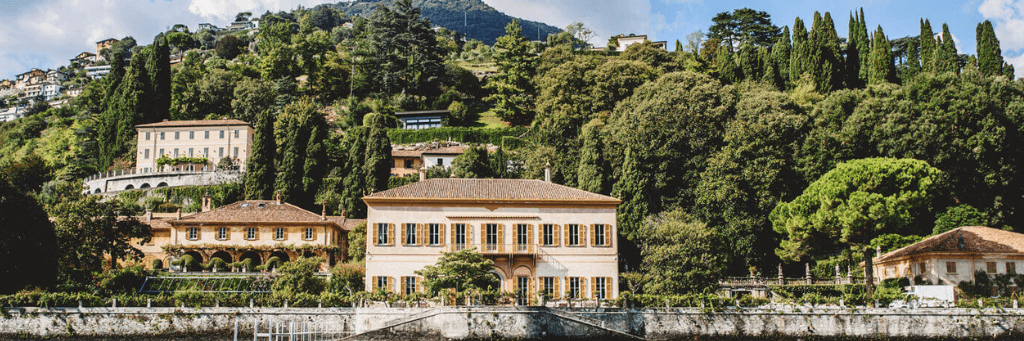
This is the part that surprises people. Many venues photograph beautifully, but only some can host a legally binding ceremony. In Italy, a civil wedding is conducted by the comune’s civil registrar, either at the town hall or at a venue the comune has approved, so the lake’s most famous villas are not automatically licensed.
Several well-known settings do host civil ceremonies, and local planners commonly work with them:
Villa del Balbianello in Lenno, on a wooded promontory, is one of the lake’s best-known wedding settings.
Villa Carlotta in Tremezzo has a camellia terrace and a historic interior, and it is also a museum with botanical gardens.
Villa Monastero in Varenna offers lakeside gardens and a classical portico.
Town halls in Como, Bellagio, Tremezzina, Varenna and Cernobbio are all options, and some are surprisingly charming.
Approval lists and availability change, so confirm any venue directly with the comune before you commit. Some venues can host a ceremony but not the reception, and vice versa, which affects your plans for the day.
You can also hold the ceremony and reception in separate places. A short legal ceremony at a town hall or villa, followed by a celebration at a hotel, private villa or lakeside restaurant, is common and practical. If you are weighing options across Italy, our guides to Tuscany and the Amalfi Coast show how those regions compare.
Plan for at least 9 to 12 months from the first step to the wedding, and 12 to 18 for a peak-season date. Contact the comune at least three to six months ahead, and earlier if you want a summer weekend. June and September are the most requested months, and the best villas and boat captains are often booked well over a year out.
Allow extra time if you need apostilles or translations, if either of you was previously married, or if you are marrying in peak season. Rushing the paperwork is a common reason couples change plans late.
If you are building a wider timeline, our destination wedding planning guides cover the typical order of decisions, and the free Wonderland Studio tools help you manage your guest list, budget and wedding website in one place.
Italy does not currently offer civil marriage to same-sex couples, but it does recognise same-sex civil unions, and foreign couples can register one if their home country will issue the required no-impediment document. Whether a civil union is recognised as a marriage at home depends on your country, so check before you choose. Many couples instead marry legally at home and hold a symbolic ceremony at the lake. The setting, vendors and experience can be exactly as you imagine. Laws change, so check current guidance before you plan.
Your Italian marriage certificate is the foundation, but you may need more steps back home. Depending on your country, these can include:
Obtaining an apostille on the marriage certificate
Ordering a certified translation if your authorities require one
Registering the marriage with your home government
Updating your name on passports, licences and bank accounts
Ask your home authority which documents it will accept, and order extra certified copies while you are in Italy. It is far easier than requesting them later.
The legal side of a Lake Como wedding is manageable when you take it in order: choose your comune, confirm your venue, gather documents early, and leave time for apostilles and translations. The couples who find it stressful are usually the ones who left the paperwork until last.
If you would rather not manage every step yourself, a Wedded Advisor can coordinate the legal paperwork with celebrants and lawyers on the ground, alongside venues, planners and guest travel. You can explore wedding venues and local vendors, or browse our wider collection of Italy wedding destinations to compare the lake with the coast and countryside. Once you are married, our honeymoon planning can carry the trip on from there.
Written by

SEO Specialist
Ayrton Christian Braga is an SEO Specialist at Wedded Wonderland, where he writes optimized articles and web pages that center on destination weddings, cultural wedding traditions, and guides for everything in between.
Search real weddings, venues and vendors from around the world.
Search Wedded Wonderland