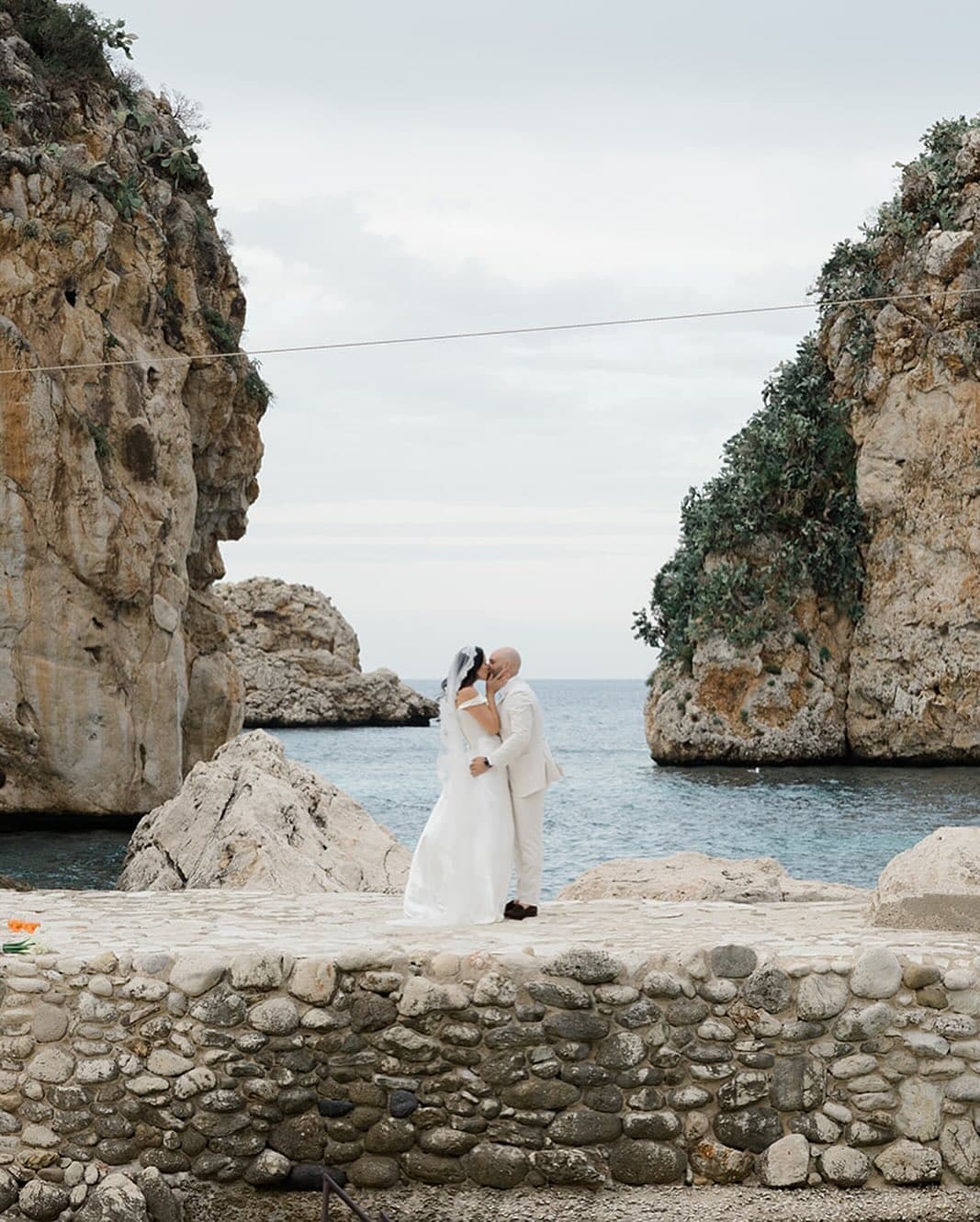
You've said your vows on a cliff in Santorini or a villa terrace in Tuscany, and the photos are already in the family group chat. Then a nagging question arrives: do we need to register our overseas marriage in Australia?
It's one of the most common post-wedding worries, and the answer surprises most couples. Here's how it works, what paperwork you do need, and how to avoid the name-change headaches that catch people out.
This article is general information, not legal advice. If your circumstances are complicated, speak to an Australian family or migration lawyer.
If you want to register an overseas marriage in Australia, here's the catch: you can't. Smartraveller, the Australian Government's travel advice service, states that you can't register an overseas marriage in Australia, but in most cases your marriage is legally recognised here.
Each state and territory Registry of Births, Deaths and Marriages (BDM) only records marriages that took place in that state or territory. Your overseas wedding sits outside that system. In most cases, it's still a legal marriage in Australia. It just isn't recorded on an Australian register.
So the real question isn't "how do I register it?" It's "is it recognised, and how do I prove it?"
Recognition is governed by the Marriage Act 1961. In broad terms, the law of the country where you married must consider the marriage valid, and Australian law must recognise it as valid as if it had taken place in Australia.
That second test is where problems can arise. Section 88D of the Act lists the situations where an overseas marriage won't be recognised. The main ones are:
One of you was already married. A prior marriage that Australia recognises as valid means the second marriage is void.
You're in a prohibited relationship, such as parent and child or siblings.
Consent wasn't genuine. This covers consent obtained through duress or fraud.
Age rules weren't met. Australian law is strict here. For example, a marriage where a party domiciled in Australia was under 18 can fall outside recognition. The rules around younger parties are nuanced, so get legal advice if this applies.
Marriages between same-sex couples are also recognised. Since the 2017 amendments, Australian law recognises overseas same-sex marriages provided they fulfil all the requirements of a valid marriage.
For most couples planning a destination wedding with a licensed local officiant, none of these exceptions apply. The bigger risk is a ceremony that isn't legally binding where it happens. Symbolic ceremonies, blessings and "commitment ceremonies" without the local legal paperwork won't create a legal marriage anywhere.
Many couples assume a beautiful ceremony equals a legal marriage. Overseas, that isn't always true. Common pitfalls include:
A non-legal ceremony by design. Some venues and celebrants offer ceremonies that are symbolic only. The legal marriage happens separately, or not at all.
Residency requirements. Some countries require you to live there for a number of days before you can marry.
Missing documents. Many countries ask for proof that you're free to marry, such as a birth certificate, divorce decree or a Certificate of No Impediment (CNI). Smartraveller notes that DFAT can issue a CNI in Australia, but some local authorities only accept CNIs issued in their country.
Religious or civil rules. Some destinations only recognise a civil ceremony. Others require a religious one.
Ask your venue, celebrant or the destination's embassy exactly which ceremony is the legal one before you book it. Our team at Wedded Wonderland can help you coordinate with celebrants and local lawyers, because requirements vary enormously from one country to the next.
Since there's no Australian registration, your marriage certificate does the work. Under section 88G of the Marriage Act, an original or certified copy of a marriage certificate or record of marriage issued by a competent authority in a foreign country is evidence of the occurrence and validity of the marriage.
In practice, here's what to do.
Get the official certificate. Request the government-issued marriage certificate, not just the commemorative certificate from your celebrant or resort. Many countries issue the official document weeks after the ceremony, so build this into your timeline.
Order several certified copies. You may need originals for different agencies. It's much easier to order extras from the issuing authority than to chase them later.
Get a translation if needed. If your certificate isn't in English, most Australian agencies require an accredited translation. The Australian Passport Office, for example, asks for a full translation by an approved translation service for foreign documents.
Check whether you need an apostille. Some agencies, particularly for visa or passport purposes, may ask for the document to be legalised through an apostille or authentication from the issuing country. Check this before you leave the destination, as it's far easier to arrange locally.
Keep digital and physical copies. Store scans securely and keep the originals somewhere safe. Changing Your Name After an Overseas Wedding This is where overseas marriages cause the most frustration. Because there's no Australian marriage record, your overseas certificate may not be accepted everywhere the way a BDM-issued certificate would be. The key one is your passport. Australian Passport Office guidance says that if you were born in Australia, were married overseas and want your married name in your passport, you need to apply to the Registry of Births, Deaths and Marriages in the state where you were born for a name change certificate or revised birth certificate. A foreign marriage certificate can't be used for this. Rules depend on where you were born, where you live and whether you were an Australian citizen at the time. Check the current requirements on the Australian Passport Office website before you apply.
A practical approach:
Start with your state or territory BDM. Ask whether you're eligible to register a change of name using your overseas certificate. Eligibility rules vary by state.
Update your passport once you have the right document. Don't book international travel on your new name until this is sorted.
Then update everything else. Banks, the ATO, Medicare, your driver's licence and superannuation fund each have their own requirements. Many will accept your marriage certificate, but they don't all follow the same rules.
Time your honeymoon carefully. If your honeymoon is booked straight after the wedding, travel on your existing passport in your existing name. Make sure it matches your flight tickets, then update your name when you're home.
If your spouse is a foreign national, recognition of your marriage is only one piece of the puzzle. Marrying an Australian citizen doesn't automatically allow someone to live in Australia. Smartraveller is clear that foreign citizens must follow Australia's immigration laws to enter and live here.
A partner visa application will ask you to show that your marriage is legally valid and that your relationship is genuine and ongoing. Your overseas marriage certificate, with any translation required, is a core piece of evidence. Speak to a registered migration agent or the Department of Home Affairs before you finalise your plans. Timing, evidence and eligibility all matter.
Many couples find the simplest way to avoid paperwork confusion is to complete the legal marriage in Australia and hold the destination ceremony as a celebration. It's a popular route, and it has real advantages:
You get an Australian marriage certificate. It's recorded by your state or territory BDM, and accepted without question for name changes and other official purposes.
You avoid residency rules and foreign legal requirements. No waiting periods, no CNIs, no apostilles.
Your overseas ceremony can be whatever you want. Bring your own celebrant, write your own vows and choose the setting purely for how it looks and feels.
Guests still get the full experience. Nobody at a clifftop dinner in Bali or a villa weekend on Lake Como cares which ceremony was the legal one.
To marry in Australia, you'll need to lodge a Notice of Intended Marriage with your authorised celebrant at least one month, and no more than 18 months, before the ceremony, and meet the usual identity and eligibility requirements. Your celebrant guides you through this. You can find local wedding vendors near you, or start with our network if you'd like a recommendation.
If this appeals, our wedding celebrations abroad service is built for exactly this: marry at home, then celebrate somewhere extraordinary with family and friends.
Before and after your wedding, run through this list:
Confirm which ceremony is the legal one in your destination.
Check the destination's document requirements, including a CNI if needed.
Confirm your eligibility to marry under Australian law (not already married, age rules met).
After the ceremony, collect the official government-issued certificate.
Order extra certified copies.
Arrange translations and apostilles if required.
Contact your state BDM about a name change if you're changing your name.
Update your passport, then other accounts and records.
Keep originals and digital copies somewhere secure.
Keeping this kind of paperwork organised is easier with the right tools. The free planning tools in Wonderland Studio keep your guest list, budget and timeline in one place.
A destination wedding should feel effortless on the day. A little planning around the legal side means you'll come home married in every sense that matters, with the right documents and no surprises at the passport office.
If you'd like help thinking through the legal ceremony, the destination or the logistics, speak with a Wedded concierge. Your first conversation is complimentary.
Written by

SEO Specialist
Ayrton Christian Braga is an SEO Specialist at Wedded Wonderland, where he writes optimized articles and web pages that center on destination weddings, cultural wedding traditions, and guides for everything in between.
Search real weddings, venues and vendors from around the world.
Search Wedded Wonderland