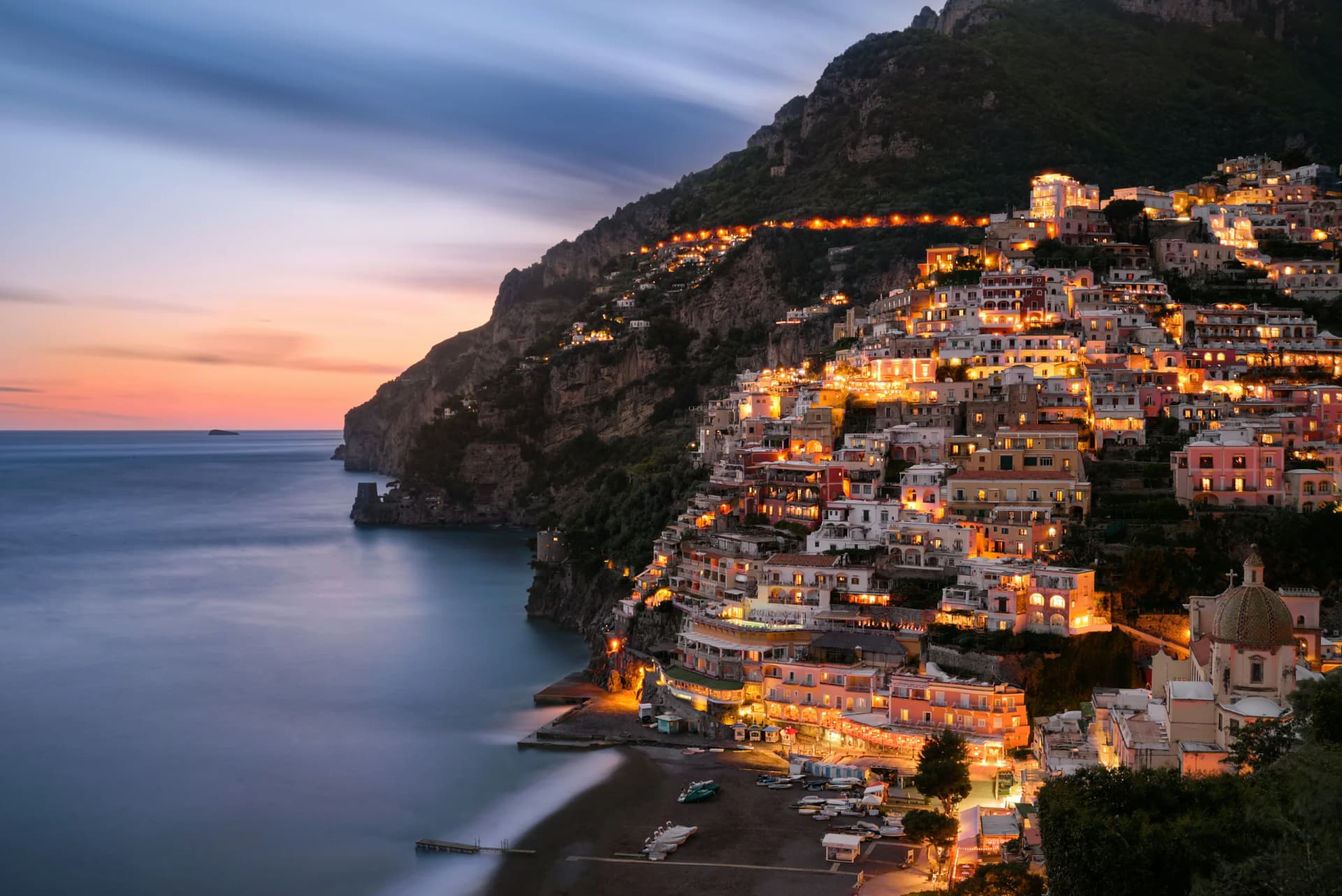
You have a date in mind, a guest list of around 90 and a shortlist of Italian planners whose Instagram feeds all look equally lovely. What you cannot see from Sydney is who answers the email in March, who is standing at the villa gates when the shuttle buses arrive, and where your deposits actually go. Choosing a wedding planner in Italy is less about taste than about scope, money and trust.
This guide is written for Australian couples planning a wedding in Italy, and for the parents often helping to pay.
About one in two foreign couples who held their wedding in Italy in 2025 used a professional wedding planner, according to an industry report presented with Italy's Ministry of Tourism. That also means plenty did not. The right level of help depends on your guest count, how many events you are hosting and how much happens outside a single property.
Type of help | What it covers | What it usually does not cover |
|---|---|---|
Venue in-house coordinator | Your day inside the property, with the venue's own team | Outside suppliers, guest transport, events at other places. Works for the venue, not for you |
On-the-day coordinator | Takes over a plan you have built, confirms suppliers and runs the timeline on the day | Finding the venue or suppliers, negotiating contracts |
Partial planner | Selected parts, such as the venue search and key suppliers, then coordination | Everything you keep for yourselves |
Full planner | Venue and supplier sourcing, contracts, budget, guest logistics, the run sheet (the timed plan for the day) and leading the team on the day | The planner's own travel and extra events, unless written into the scope |
Design-led studio | Full planning plus a strong creative direction, styling and production | Ask which parts of the fee are planning and which are design |
Advisory or matchmaking service | Helps you choose the destination, the venue and the level of planning, then introduces the right people | Running your wedding day |
Not every wedding needs a full planner. A wedding for 30 at one hotel with a strong in-house events team may need only a good coordinator and a clear contract. Bear in mind that a venue coordinator works for the venue, often starts about a month out and focuses on running the day rather than shaping the plan.
A celebration for 70 to 110 guests over three days is different. When most guests are flying from Australia, with a welcome dinner in one place, the ceremony in another and transfers in between, there is a lot of work that no venue coordinator is responsible for. That is usually full-planning territory, not because it is grander, but because someone has to own the gaps. Our guide to whether you need a planner at all goes deeper on that choice.

There are three common set-ups, and each has a trade-off.
Italy-based planner: Lives inside the supplier network, speaks the language and can walk your venue next week. The trade-off is the time difference, and contracts and invoices drafted the Italian way.
Australia-based or dual-based planner: Takes calls in your hours and understands Australian expectations about contracts and communication. Ask who their team in Italy is, and how many weddings they have run in your region.
Both: An Australian lead with an Italian team on the ground. This works when the contract says exactly who is responsible for what.
Lake Como, the Amalfi Coast and Tuscany each run on their own suppliers, transport and local rules. A planner who knows the Chianti hills well may never have moved 90 guests along a lake. A regional specialist knows one area closely while a nationwide agency covers more ground, so ask any planner where they have worked in the past two seasons, in your month, at venues like yours.
Sydney is between eight and 10 hours ahead of Italy, depending on the time of year: eight hours from early April to early October, 10 hours from late October to late March, and nine in the short weeks between. In practice, a 7pm call in Sydney lands between 9am and 11am in Italy. Perth is two or three hours behind Sydney, so the overlap shifts again.
Good planners make the gap work for you. Look for:
a fixed weekly or fortnightly call slot (Sydney evening, Italy morning);
one shared planning document that both sides update;
an agreed reply time for email, written into the contract;
a short written summary after every call.
Then ask who will be physically on site on the day, and whether that is the person you have been planning with. If the lead hands over to a coordinator you have never met, you want to know now.

Planners usually charge in one of three ways: a flat fee for a written scope, a percentage of the total wedding budget, or a hybrid of a smaller percentage plus a flat fee. What matters is that the scope is written down and you can see how the number was reached. Ask, too, whether there is a minimum fee.
Figures from the Italian consumer association Federconsumatori, reported by ItaliaOggi in June 2026, put planner fees in Italy at:
On-the-day coordination: about EUR 1,000 to 3,500 (about AUD 1,600 to 5,600).
Full organisation: from about EUR 2,500 (about AUD 4,000), rising to EUR 10,000 to 15,000 (about AUD 16,000 to 24,000) or more, for more complex weddings or the most established professionals.
Percentage fees: often around 10% of the total wedding budget.
AUD figures use the Reserve Bank of Australia rate on 22 October 2026 (EUR 1 is about AUD 1.60). These are whole-of-Italy figures, and they include domestic weddings. On a large multi-day budget, a percentage fee can land above EUR 15,000, the top of the quoted range for full organisation, which is why you ask every planner to quote against the same written brief.
Ask what each fee leaves out, such as travel and accommodation for the planner's team, site visits, extra events like a welcome dinner, and overtime on the night. Check, too, whether each quote includes Italian VAT (IVA): the standard rate is 22%, although treatment can vary from one business to another.
Then ask whether anyone else pays your planner, using the question our own cost guide recommends putting in writing:
"Do you receive any payment, discount or fee from suppliers you recommend, and do you mark up décor, production, entertainment or sound you supply?"
This is a standard question, not an accusation, and a good planner answers it plainly. An arrangement you know about can be fine; one you discover later is a problem.
For the full fee breakdown, see how planners quote and compare fees. For the wider budget, see our Italy budget guide by region and guest count.
A beautiful feed tells you about taste; these questions tell you about reliability. One term to know first: the partita IVA is an Italian business's VAT number.
Ask | A good answer sounds like | A warning sign |
|---|---|---|
How many weddings do you run a season, and how many on the same weekend? | A clear number, and who leads each one | "We can always fit you in" |
Who leads our wedding, and who is on site on the day? | A named lead, plus a named back-up | "The team", with no names |
When did you last work at our venue, or in our region, in our month? | Specific weddings, with detail on access, music curfew and covered space | Only styled shoots, or only other regions |
Can we speak to two past couples, ideally one who planned from overseas? | Names offered without hesitation | Written reviews only |
What is the Plan B at our venue, and when is the call made? | The actual covered space and a set decision time on the day | "It never rains in June" |
How do you choose suppliers, and can we bring our own? | Clear criteria, and openness to your choices | Their list or nothing |
How do you quote and invoice? | A written scope, a payment schedule and VAT shown | Verbal figures, or one lump sum |
What is your partita IVA and registered business name? | Given straight away, and it matches the contract | Reluctance, or a different name on invoices |
Italy has no licence or public register for wedding planners, so you check the business rather than a licence number. Ask for the planner's partita IVA (Italian VAT number) and full business name, then use the Agenzia delle Entrate's free online check, which shows whether a VAT number is valid and active.
Finally, ask to see a complete run sheet from a past wedding (with names removed) and one full gallery, not a highlight reel. A run sheet shows you how a planner thinks when the schedule slips by 40 minutes. For a broader vetting method, see how to vet suppliers you have never met and our general checklist for any destination.
Much of a planner's value sits in the parts nobody photographs. Ask each planner to walk you through these.
Guest transfers: Airport to hotels, hotels to the venue, and back again after a late finish at a Chianti hill venue. Ask for a draft transport plan with timings, vehicle sizes and the contact on the night.
Older or less mobile guests: Stairs, cobblestones, long walks and the boat shuttles to a Lake Como villa. A good answer describes a step-free route from car to seat, a seat in the shade near the ceremony and a cool room to rest in.
Room blocks (rooms a hotel holds for your guests until a set date): Ask who holds them, when unused rooms are released and who follows up guests who have not booked. Our wedding and honeymoon travel page covers how we help with guest travel and accommodation.
Welcome and farewell events: Is the same team running them, and are they in the fee?
No one can promise the weather, so ask for both plans in writing, and give heat as much thought as rain. According to LaMMA, Tuscany's regional weather service, July 2026 was the hottest month on record in Tuscany, with records going back to around 1955, as the regional health agency reported. In Florence, the maximum topped 36°C on 27 days across June and July 2026.
A good heat plan covers ceremony timing, shade, water and a cool room for older guests. A good wet-weather plan names the covered space, how it will be set and the time on the day when the decision is made.
In Italy, playing SIAE-protected music, live or recorded, at a wedding anywhere other than your own home needs a SIAE licence. One of the couple requests it through a private account on SIAE's portal for private events. A venue or planner cannot buy it there for you, and a venue's background-music subscription does not cover your wedding. Ask your planner to guide you through it and to check it is active before the day.
Noise rules are set town by town, so there is no single national curfew. Ask what the music curfew is at your venue, and who applies for any permit to play later.
If you would rather not vet planners yourself, Wedded Wonderland Concierge can recommend one from our partnered network.
A planner can coordinate the paperwork but cannot make you married. Legal validity comes from the Italian civil (or recognised religious) process, which for Australians includes declarations signed in person at the Italian consulate for your state (or a tribunal in Italy) and at the Australian Embassy in Rome or the Consulate-General in Milan. Town-hall marriage and Apostille appointments can be hard to get from May to September, so ask how your planner secures dates. An Apostille is the certificate that lets your Italian marriage certificate be used in Australia.
Symbolic ceremonies are the most common format for foreign couples, but a symbolic ceremony on its own does not create a legal marriage. Requirements can change, so a Wedded Wonderland advisor confirms the current process for your own passports before you book appointments. We checked these sources on 23 October 2026; the Embassy guidance is undated. For each step, see our step-by-step guide to the Italian legal process.
This is the section the person paying will read twice. A planner contract should state, at minimum:
the full scope, with inclusions and exclusions;
the named lead planner, and who replaces them if they cannot attend;
the payment schedule, with amounts and due dates in EUR;
cancellation and postponement terms, for both sides;
how supplier payments are handled.
Paying suppliers: You may pay suppliers directly or through your planner, and either can work. If money flows through the planner, ask for each supplier's own invoice and a running record of what was paid to whom, and when.
Language: Ask for the contract in English, or for a translation of the key terms (scope, payments, cancellation), before you sign.
Currency: Deposits and balances in EUR fall due in instalments over the planning period, and the AUD cost moves with the exchange rate. Keep every amount in EUR and AUD in one place with its due date, and ask your bank how and when each EUR instalment will be paid and what it will cost to send.
Wonderland Studio is free and keeps a multi-currency budget alongside your guest list and timeline. If you work with Wedded Wonderland, your concierge handles "deposits, payments and currency so nothing gets lost across borders".
Fees given verbally, or a quote with no written scope.
A vague or missing answer about supplier payments.
Pressure to use only their suppliers.
No named lead for the day.
Promises about the weather, or a "guaranteed" date before the venue or town hall has confirmed it.
Slow or inconsistent replies before you have even signed.
No references from couples who planned from overseas.
A portfolio made mostly of styled shoots rather than real weddings.
Wedded Wonderland Concierge is not a wedding planner but a paid advisory service that starts with a free, no-obligation Discovery Call. In the words of our concierge page: "Unlike a traditional wedding planner, we act as your trusted advisor and strategic partner during the sourcing and decision-making process. Depending on your wedding, we may recommend a partnered planner, or help you move forward confidently without one."
It works in six steps: Discovery Call, Destination and Venue Strategy, Planning Assessment, Vendor Curation, Concierge Support, and Travel and Honeymoon Concierge. If a planner is right for your wedding, your concierge recommends one from our partnered network, and you can browse planners in our vendor directory, "filtered to the ones our team has actually worked with in-market". The team has worked on more than 800 weddings and celebrations.
Ask your concierge the same question this guide asks of every planner: how the service is paid, and whether it receives anything from the partners it recommends. You can also meet the team in person at one of our Wedded World events.