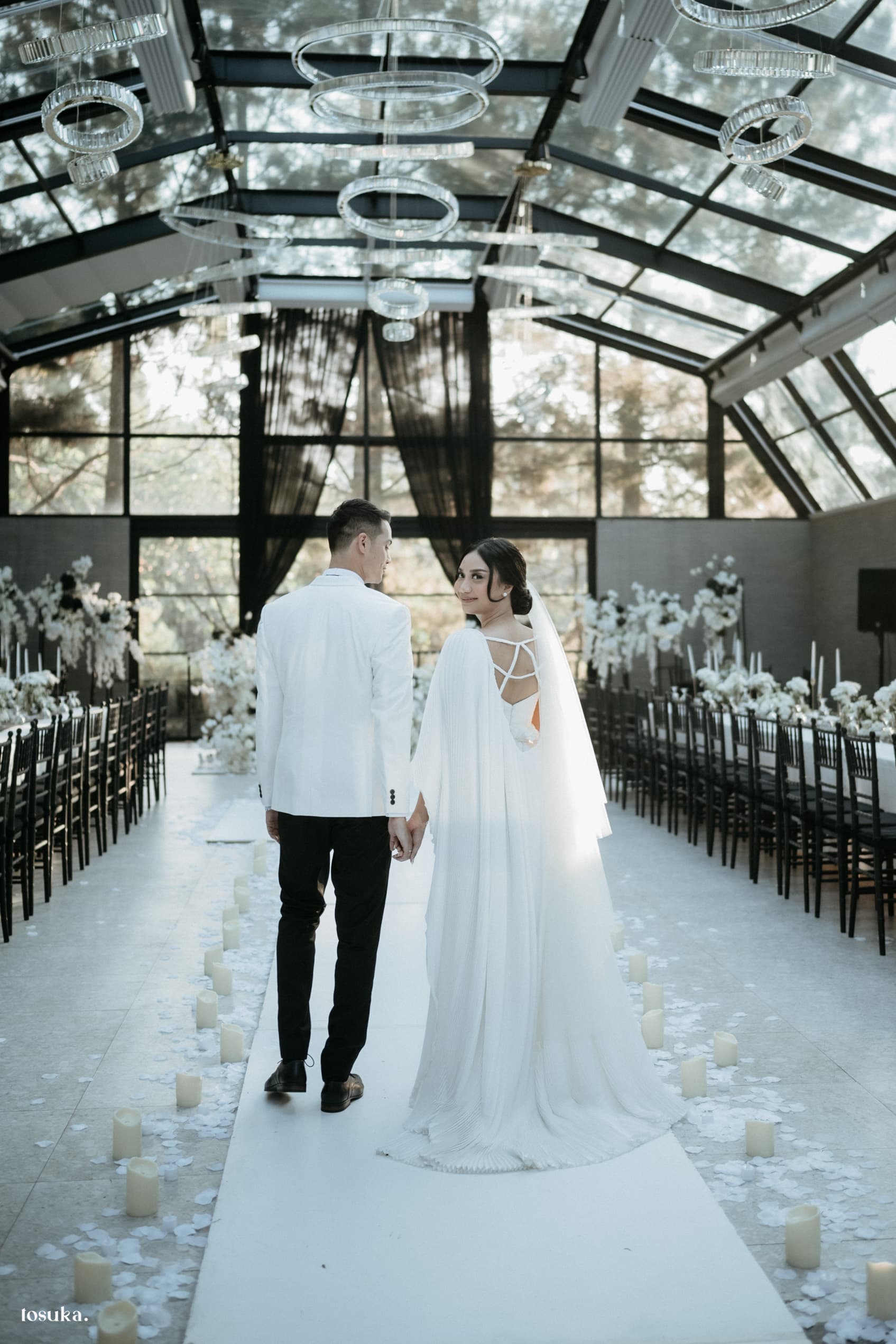
Getting married in Bali legally as an Australian involves obtaining a Certificate of No Impediment to Marriage (CNI), meeting Indonesia's religious marriage requirements and registering the marriage with the appropriate Indonesian authority. Wedded Wonderland coordinates destination weddings in Bali for Australian couples, bringing the legal arrangements and celebration planning together so that both follow a well-considered timeline.
Australian citizens marrying in Indonesia must meet both Indonesian marriage requirements and the applicable Australian requirements. Under Indonesian Marriage Law No. 1 of 1974, a marriage must be conducted according to the couple's recognised religion and comply with the laws governing the parties.
The Australian Government identifies the CNI as a key document for Australians marrying in Indonesia. Applications can be made through the Australian Embassy in Jakarta or the Australian Consulate-General in Denpasar, which handles Bali, West Nusa Tenggara and East Nusa Tenggara.
Importantly, the appropriate Australian diplomatic mission depends on where the marriage will take place. The local Indonesian Civil Registry Office or Office of Religious Affairs should confirm which mission's CNI it will accept.
Indonesia's marriage legislation requires couples to marry according to their religious beliefs, with both partners sharing the same recognised religion. Interfaith marriages therefore present additional legal complications for foreign couples.
The Australian Embassy explains that couples of different religions may need one partner to formally convert to the other's religion to meet Indonesian requirements. This is not simply a matter of declaring a different affiliation: couples should establish the applicable religious and registration requirements before proceeding.
For couples who do not wish to pursue this route, an alternative is to hold a symbolic ceremony or blessing in Bali and complete the legally recognised marriage in Australia.
A symbolic ceremony can retain the destination experience, including the venue, celebrant, personal vows and reception, without representing itself as an Indonesian legal marriage.
Requirements can differ between religious institutions and local registration offices. Australian couples should prepare the following as a starting point:
Valid passports: Original passports and photocopies for both partners.
Certificate of No Impediment: Issued by the appropriate Australian diplomatic mission or another authority accepted by the Indonesian registrar.
Birth certificates: Original documents, with translations if requested.
Previous marriage documentation: Final divorce documentation or the death certificate of a former spouse, where applicable.
Photographs: Passport-sized photographs may be requested by the local registry.
Religious documentation: Any certificates or supporting documents required by the relevant religious institution.
Translations: Indonesian translations may be required for foreign-language documents. Confirm whether translations must be completed by an Indonesian sworn translator.
Keep original documents accessible throughout the process. Some offices require both originals and photocopies, and document requirements can vary between districts.
Confirm eligibility: Establish that both partners meet Indonesia's religious marriage requirements and that the marriage can be recognised under Australian law.
Contact the local authority: Confirm the requirements with the relevant KUA or Catatan Sipil office before making arrangements.
Apply for the CNI: Arrange an application through the Australian Consulate-General in Denpasar or the appropriate diplomatic mission.
Prepare supporting documents: Gather passports, birth certificates and evidence of the termination of previous marriages, if applicable.
Arrange the religious ceremony: Coordinate with the appropriate religious institution and confirm its documentation and ceremony requirements.
Complete the registration: Muslim marriages are recorded through the KUA, while non-Muslim marriages require registration with the Civil Registry following the religious ceremony.
Secure the marriage documentation: Obtain the official marriage record or certificate and confirm whether any additional authentication or translation is required for Australian use.
For non-Muslim marriages, the Australian Embassy's guidance specifies that a Notice of Intention to Marry must generally be lodged with the Civil Registry at least 10 days before the ceremony. Confirm the current local procedure before setting the wedding date.
Australia does not provide a separate registration process for marriages already solemnised overseas. However, an overseas marriage is generally recognised if it was legally valid in the country where it took place and would also have been valid had it taken place in Australia.
Couples should retain their original Indonesian marriage documentation, including the Buku Nikah for Muslim marriages or the relevant civil marriage certificate for non-Muslim marriages.
An official translation may be useful when presenting the certificate to Australian institutions. Couples should also check with their state or territory's Registry of Births, Deaths and Marriages regarding name changes, as an overseas marriage certificate may not automatically satisfy every administrative requirement.
For more information, consult Smartraveller's guidance on getting married overseas.
Allow several weeks to coordinate documentation, appointments, translations and the religious and civil arrangements. The CNI may be issued relatively quickly when an application is complete, but its acceptance period is determined by the local Indonesian authority. The Australian Embassy advises that Indonesian registries do not normally accept CNIs issued more than three months before the marriage.
Costs may include the CNI application, document translation, authentication where required, religious arrangements and local registration fees. Australian consular fees are reviewed periodically, so check the Australian Consulate-General in Bali's current fee schedule.
A wedding planner or local administrative representative can also assist with communication between the religious institution, registry and international suppliers.
Bali offers several distinct settings for Australian couples, from ocean-facing estates to tropical gardens and secluded beachfront properties.
Uluwatu: Known for dramatic limestone cliffs, Indian Ocean views and private villa celebrations.
Ubud: Suits garden ceremonies, jungle surroundings, rice-terrace views and intimate estate weddings.
Nusa Dua: Offers beachfront resorts, established wedding infrastructure and convenient accommodation for larger guest lists.
Seminyak: Combines contemporary hospitality, private villas and proximity to restaurants and nightlife.
Direct flight connections from major Australian cities make Bali a practical destination for couples hosting guests from Australia. Nevertheless, travel arrangements should account for arrival times, document appointments and any pre-wedding administrative requirements.
A destination wedding in Bali involves more than securing a beautiful setting. Religious arrangements, official documentation, guest accommodation and the celebration itself need to work together.
Wedded Wonderland coordinates destination celebrations in Bali, bringing together venue selection, trusted local suppliers, guest experiences and wedding-day arrangements. The Wedded Concierge team can help manage the wider celebration while couples confirm their legal requirements with the appropriate authorities.
Certificate of No Impediment (CNI): An official document confirming that there is no known legal impediment to an individual's intended marriage.
Catatan Sipil: The Indonesian Civil Registry, responsible for recording non-Muslim marriages.
KUA (Kantor Urusan Agama): The Office of Religious Affairs responsible for registering Muslim marriages.
Buku Nikah: The official marriage book issued as evidence of a registered Muslim marriage.
Sworn translator: A translator authorised to provide certified translations for official administrative purposes.
Notice of Intention to Marry: A formal notice lodged with the Civil Registry before a non-Muslim marriage in Indonesia.
Written by

Editor & Content Writer
Jillian Arambulo is the Editorial and Content Writer at Wedded Wonderland, specialising in branded content strategy. Her writing spans luxury lifestyle, travel, culture, beauty and emerging trends, bringing together comprehensive guides and features that connect readers with the places, ideas and experiences worth discovering.