There are a few things you expect from your wedding photographer: good lighting, beautiful compositions, and, most importantly, the actual wedding you had.
That last part is becoming surprisingly complicated.
As AI editing tools become increasingly accessible, couples are discovering that some photographers are using artificial intelligence to alter their wedding galleries. And while AI can be useful for cleaning up an image or streamlining a photographer's workflow, brides online are questioning what happens when the technology starts changing the people, details and moments they actually hired someone to document.
The debate isn't really about whether AI belongs in photography. It's about consent, transparency and whether a wedding photograph should still represent something that genuinely happened.
And lately, brides have had plenty to say about it.
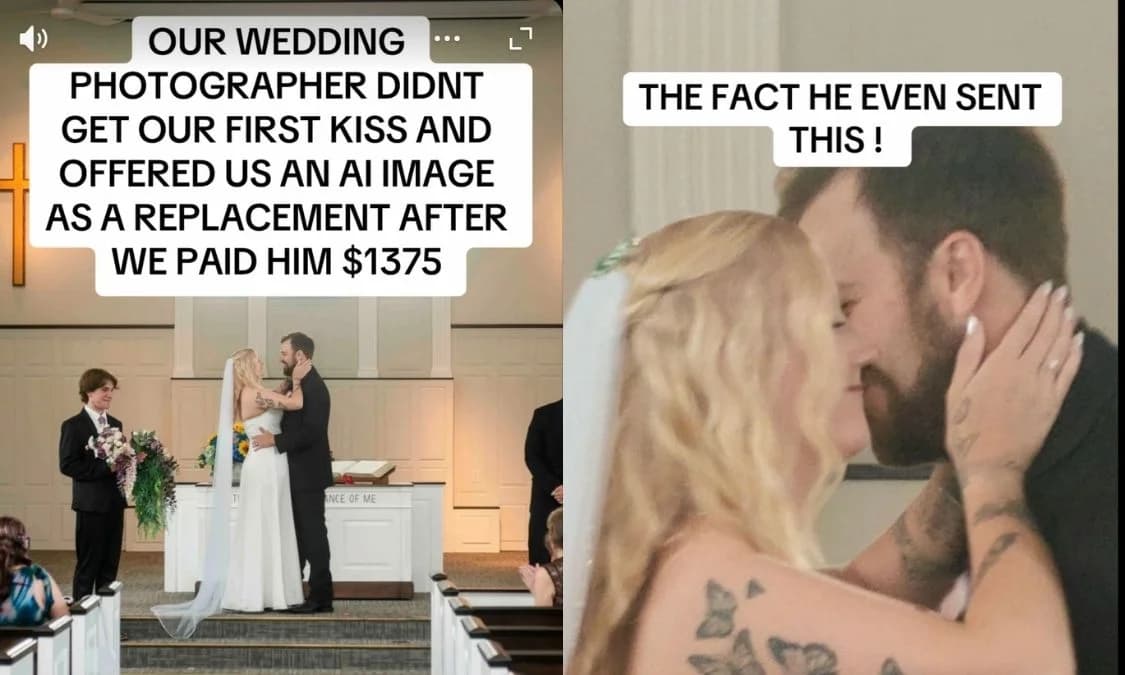
One particularly uncomfortable case came from bride Summer Rose, who said she paid $1,375 for her wedding photography package only to find that her gallery contained numerous blurry images and, more importantly, no usable photograph of her first kiss.
When Rose asked the photographer about it, he reportedly admitted that the couple had moved apart too quickly and that he had not captured the moment properly.
The proposed solution? AI.
Rather than simply acknowledging that the photograph had been missed, the photographer told Rose that he had sent the image to an AI lab to create or fix the kiss, assuring her that she would not be able to tell the difference.
Except she could. And, more importantly, she did not want a recreation.
Rose later showed that her videographer had captured the kiss from multiple angles, meaning there was a genuine record of the moment. What she wanted was a photograph of what happened, not an AI-generated interpretation of it.
That distinction is pretty significant when the photograph in question is your first kiss as a married couple.
Another bride shared a different kind of AI editing experience after hiring a photographer for her civil wedding.
At first, everything seemed promising. She found the photographer through Wedding Bug, and described the photographer as professional, kind and easy to work with during the shoot.
The finished gallery, however, left her questioning whether she was looking at herself at all.
In one photograph, AI appeared to have altered her father's smile by adding visible teeth, despite him never smiling that way. Her own portraits were changed so extensively that she said she did not recognize herself.
The contrast became even more noticeable when some images appeared relatively natural while others looked heavily manipulated.
Her concern was not that the photographs weren't polished enough. It was that they no longer felt like records of her wedding day.
And there was an added complication: the same photographer had already been booked for her upcoming church wedding.
With less than a week to go, she was left wondering whether to ask the photographer to stop using AI or find another photographer altogether.
That is not exactly the kind of wedding-week decision anyone wants to be making.
A separate bride's viral warning highlighted just how strange AI alterations can become when they start rewriting tiny details.
She compared the photographer's final images with photographs taken by wedding guests on point-and-shoot cameras. The differences were startling.
Her arm appeared to disappear in one image. The sleeve of her dress changed. Sparkly beads on her waistband vanished. Her skin was rendered an unnatural orange in another photograph.
Even accessories were affected. Her child's distinctive round glasses were changed, while earrings that had never been worn appeared in the finished image.
Facial features in dance photographs were also altered so dramatically that people became difficult to recognize.
The bride said she had specifically told her photographer that she wasn't looking for luxury-level editing. She simply wanted someone to document the day authentically.
After receiving the proofs, she asked whether the inaccuracies could be corrected or whether she could receive the raw files. According to her account, neither happened.
Her goal in speaking publicly was not to expose the photographer, but to encourage other couples to ask questions before booking.
Not necessarily.
There is a difference between using technology to assist with an editing workflow and generating something that was never photographed.
AI-powered tools can potentially help photographers with tasks such as removing distractions, reducing noise or making technical adjustments. The uncomfortable territory begins when the technology changes someone's appearance, invents details or reconstructs a moment that the photographer failed to capture.
And context matters.
If a photographer uses AI to remove an unwanted object from the background and tells the couple, that may feel very different from sending them a fabricated photograph of their first kiss without disclosure.
The bigger issue is whether the couple knows what they're receiving.
Because when you hire someone to photograph your wedding, you're not commissioning a collection of pretty images inspired by your day. You're paying for a visual record of it.
This debate makes one thing increasingly clear: “Do you use AI?” deserves to become part of the photographer consultation.
Couples can ask exactly what their photographer means by AI editing, whether it is used on final galleries, which parts of an image can be altered, and whether AI-generated or reconstructed images will ever be delivered without disclosure.
It is also worth checking the photographer's contract and editing policy before signing.
Because nobody wants to discover after the wedding that the person documenting their memories had a very different definition of “editing.”
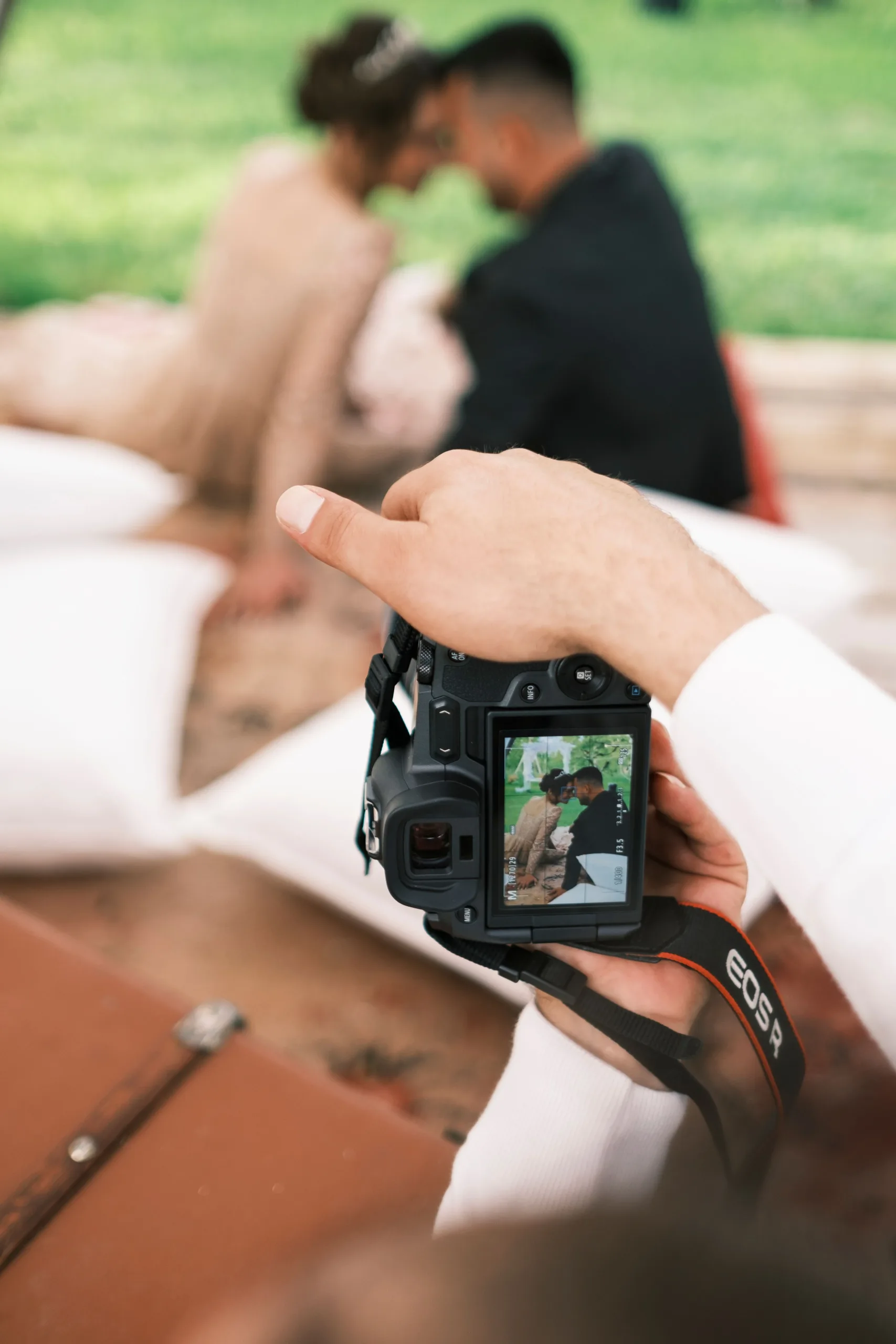
Wedding photography has always involved some degree of interpretation. Photographers choose the angle, composition, lighting and moment. Retouching is hardly new.
AI simply makes the boundary much easier to cross.
A beautifully edited photograph can still feel completely authentic. But if the technology changes someone's face, invents an accessory or creates a moment that was never actually captured, couples have every right to question whether that image belongs in their wedding album at all.
Perhaps the future of wedding photography isn't about choosing between AI and traditional photography. It is about being very clear about what was photographed, what was edited and what was created.
Because your wedding day only happens once. Your photos should know the difference.
Your photographer is one of the biggest decisions you'll make for your wedding, so finding someone whose approach matches your expectations matters.
Wedded Concierge can connect you with trusted wedding photographers, suppliers and experts based on your celebration, style and needs. Whether you're looking for a documentary-style photographer, a particular editing approach or simply someone whose creative vision feels right for you, tell us what you're looking for and we'll help you find the right match.
Search real weddings, venues and vendors from around the world.
Search Wedded Wonderland