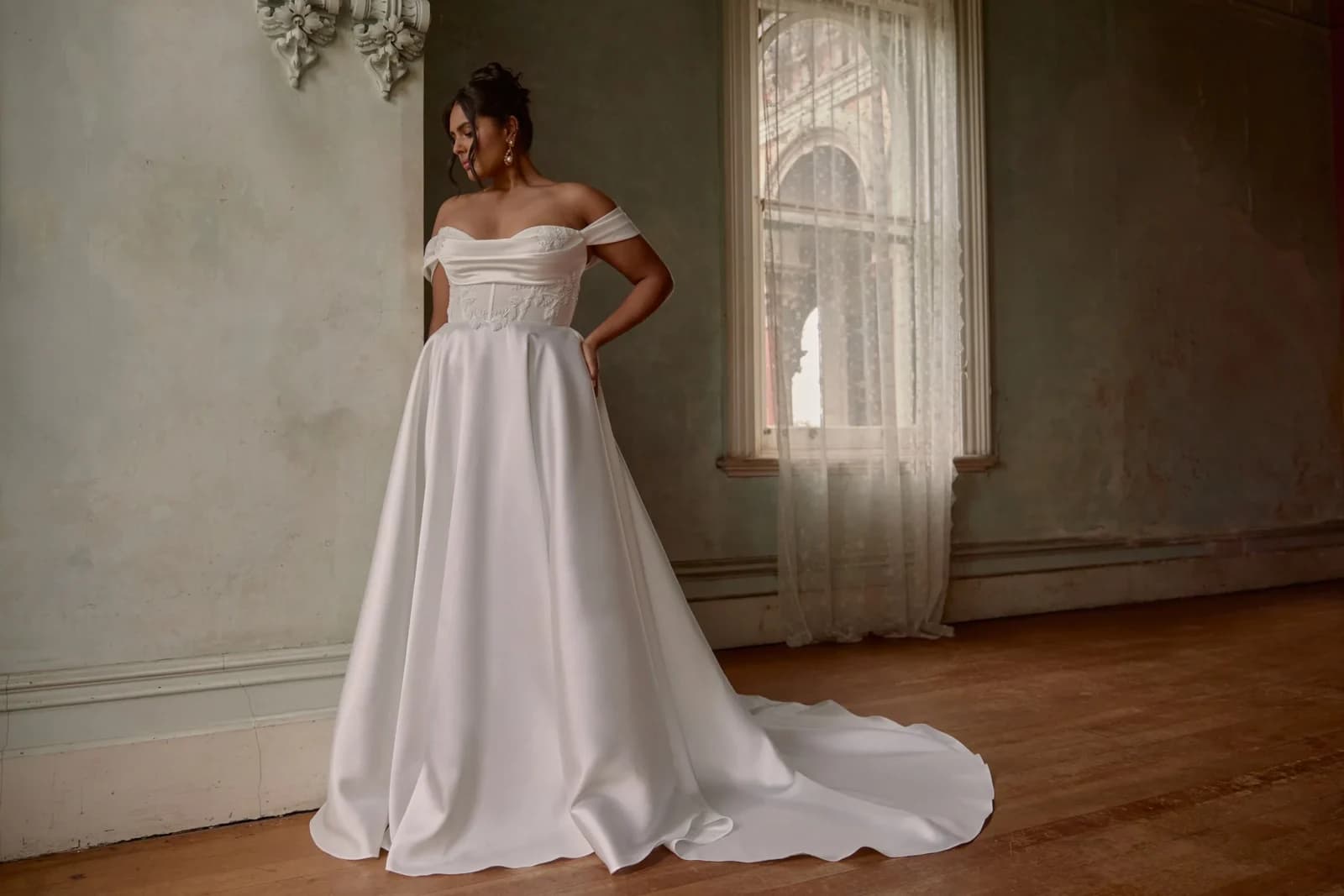
For several seasons, the aisle belonged to clean lines and minimalist silhouettes. Ballgown wedding dress trends for 2027 turn that around. The Knot put "Ballgown Renaissance" first on its 2027 list after this season's New York Bridal Fashion Week.
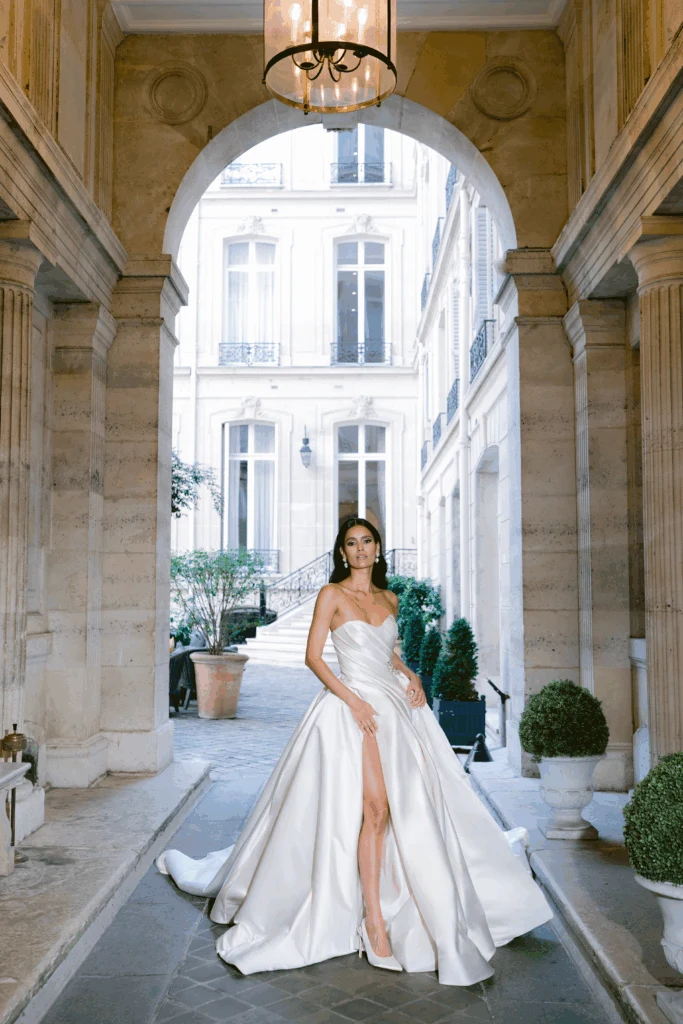
In New York, Vogue describes the new version as "clean, conservative, and accented with tulle, silk bows, and lace appliqués".
The Knot's editors covered 45 events and nearly 1,000 gowns at the Fall-Winter 2027 shows. Their verdict on skirts was plain: "bigger is better".
They saw volume at Justin Alexander, Elie Saab, Berta, KYHA, Mira Zwillinger, Ines Di Santo, Jenny Yoo, Mark Ingram and Sareh Nouri, among others.
Some are clouds of tulle. Others add a thigh-high slit under a corset-style bodice.
The fresh takes are in the details. KYHA cut asymmetric waists, Justin Alexander extended the basque, and Pnina Tornai and Ines Di Santo added dramatic pickups and splashes of colour.
Vogue's runway report saw the same: "Tiers of crinoline and tulle created dramatic ballgowns." Many designers kept them clean, with soft skirts; others added texture, lace and appliqué.
And this is the second season running. Bridal Guide's Spring 2027 report, from the earlier round of shows, had already called it: "big bridal is back".
Barcelona saw it too. Our Barcelona Bridal Fashion Week report said it in one line: "Volume is still here, but it has evolved."
Blame the outfit change. More brides now wear "two, three, or even four looks", Vogue notes, so the ceremony gown no longer has to last until midnight.
Bridal stylist Gabrielle Hurwitz says fitted gowns "feel quite accessible and appropriate for a number of occasions". A ballgown is the opposite, built for the ceremony rather than the whole night.
With so many brides changing into A-line, slip or tea-length skirts for the reception, the runway editors see "a go-big-or-go-home mentality" at the ceremony.
Clean doesn't mean easy. Australian designer Elly Sofocli puts it plainly: "Creating a clean ballgown is one of the more technically challenging exercises."
"Longer trains were also in full force," Vogue reports. A long train earns its place on a long entrance, but before the dancing it has to bustle or detach, so ask which before you commit.
Bows stayed small. Vogue saw silk bows as accents on clean ballgowns, and The Knot spotted long bows worn as headpieces at Cecile Bahnsen.
The Knot saw "antique-esque lace" all over the runways and named Berta, Rita Vinieris, Julie Vino, Sareh Nouri and Mark Ingram for lace-forward gowns.
Vogue calls lace "likely the most-used fabric" of the season, and warns that some looks "veered into gaudy territory".
On a full skirt, lace multiplies.
The elegant versions held back. Vivienne Westwood used lace on its classic draped silhouettes, and Monique Lhuillier kept hints of Chantilly as underlays.
Vogue's advice is to "check the craftsmanship behind your favorite designs". At your appointment, ask where the lace is made.
The bridge between ceremony and party is the detachable.
The Knot saw capes at Jenny Yoo and Mark Ingram and a veil-like hooded cape at Berta. Rita Vinieris showed detached opera-length sleeves. Each covers your shoulders for a church or temple ceremony and comes off for the reception.
Not quite. Vogue reports that many brides at Mark Ingram's New York salon choose "more body-skimming, boundary-pushing riffs" on the traditional gown.
Christy Baird of Los Angeles salon Loho Bride puts the shift another way: "Brides aren't necessarily looking to be more traditional; they're looking to make more of a statement."
Structure sits on both sides of the line. Vogue's sculptural shapes, pictured at Francesca Miranda, Yellow by Sahar and Marmar Halim, include "dramatic mermaid skirts, bubble tiers, and layers strengthened with horsehair and crinoline".
Dua Lipa made the case for the other side. Her Chanel was clean and backless, with a two-metre train and no exaggerated volume.
Our verdict: with two or more looks now common, you rarely have to choose. The ballgown takes the vows and the sleek line takes the party.
A ballgown is built, not draped. Its outline comes from what sits underneath.
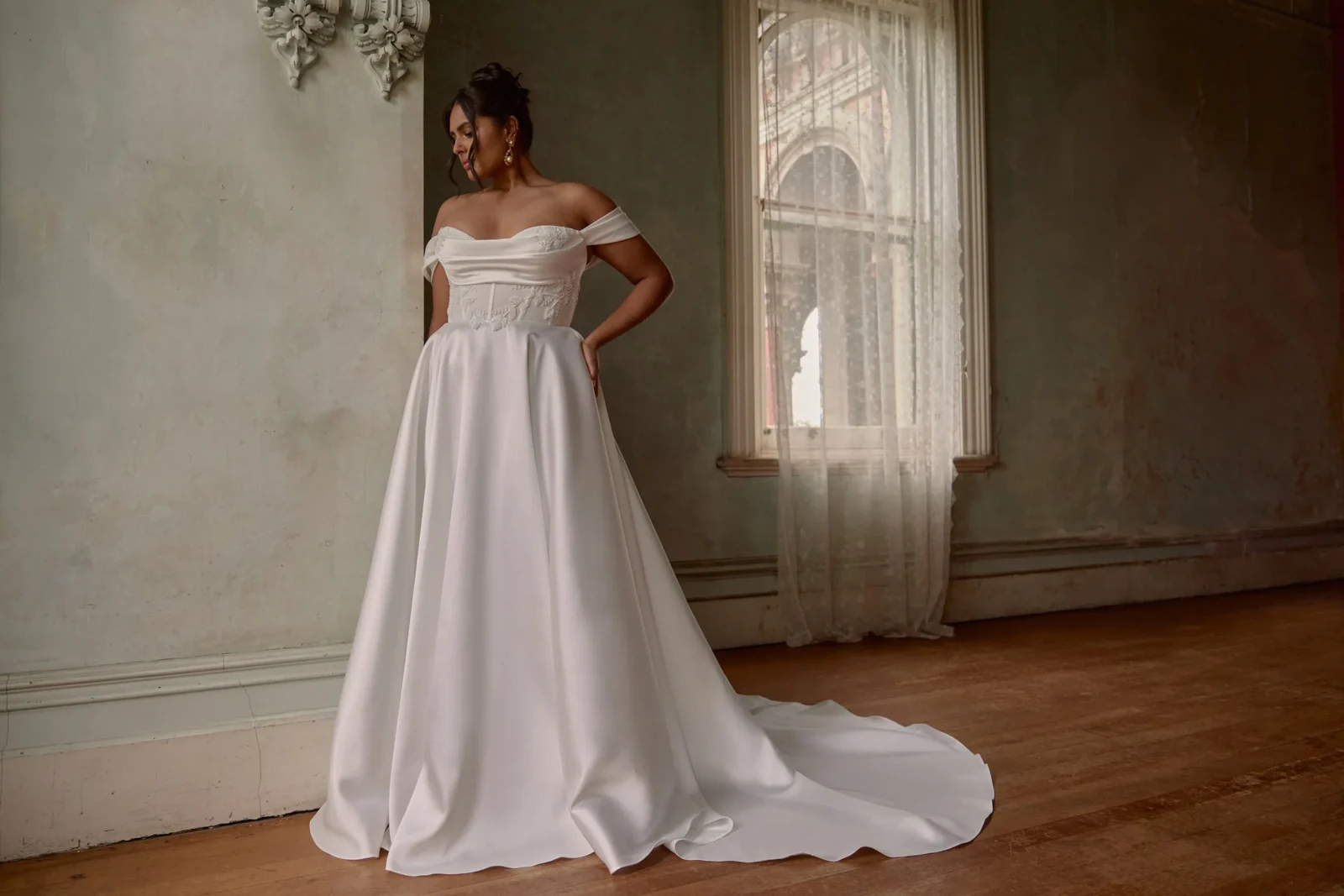
Anna Campbell's Alaska shows the build: cups, underwire and boning in the bodice, a "voluminous Mikado skirt", detachable off-the-shoulder sleeves "for multiple looks on your day" and an inbuilt train with "a ready-to-bustle finish".
The skirt needs room. A ballroom and a long aisle suit it. A narrow chapel or a period staircase works against it, so measure the doors and the aisle before you fall for one.
Heat is the other test. For an outdoor ceremony in spring or summer, ask whether the shape comes from a crisp Mikado or faille or from layers of tulle, and plan your change before the evening.
Mark Ingram's foundations of a traditional gown are "a fuller skirt, a sleeve, a classic neckline, and sophisticated fabrications such as lace satin or faille".
Choose one statement detail and pair it with a crisp fabric. The skirt then reads as couture rather than costume.
The Knot says it takes "roughly a year for new designs to debut in bridal salons", so most of these gowns reach the salon floor a year after the shows.
You don't have to wait for that. Mark Ingram's Madison Avenue atelier shows the Mark Ingram Bride Fall 2027 collection from 11 to 21 November.
Ines Di Santo and Mira Zwillinger also have Fall 2027 trunk shows listed there.
Made-to-order takes most of a year. Anna Campbell allows 9 to 12 months for production and alterations on the Alaska, with priority orders on request. By wedding date, that means:
First half of 2027: A June date is about seven months away, so a standard order has run out of road. Look at gowns already in the salon and samples, or ask about a priority order.
Late 2027: A September date is about ten months away, still inside that window, just. Order this season.
2028: The new collections reach salons about a year after the shows. Book appointments as they arrive, because couture still needs about a year.
Whatever your date, get the delivery date and the first fitting in writing.
Closer to home, two Wedded Marketplace designers make the full skirt to order.
Antoinette Fusillo makes one-off couture in Carlton, Melbourne, and starts about 12 months out, with the first fitting around ten months before the day.
Lillian Khallouf makes made-to-measure bridal in Alexandria, Sydney, including corseted ball gown alternatives for the bride leaning towards the column.
A skirt this size has to fit the whole day, including the moment you change out of it. Through Wedded Concierge, your Wedded Advisor builds the timeline around each look you wear.
Clean lines never left the aisle. For 2027, they come with a skirt.
Written by
Content and Creative Manager | Wonder Group
Joseph Joshua is the SEO & Content Manager at Wedded Wonderland, bringing an editorial and search strategy perspective to the publication’s coverage of luxury weddings, destination celebrations and bridal lifestyle. His approach to content centres on helping readers move from inspiration to informed decisions, with attention to the design, craftsmanship and personal details that give a celebration its character.
Search real weddings, venues and vendors from around the world.
Search Wedded Wonderland