


There are destination weddings, and then there are weddings that make the destination feel like part of the guest list.
For Brazilian couple Isabella Markman and Erick Brito, the setting was Teatro L’Occitane in Trancoso, Bahia, a monumental cultural venue surrounded by the Atlantic rainforest and the landscape of southern Bahia. The couple married on September 26, 2026, choosing a space whose dramatic architecture already looks more like an art installation than a conventional wedding venue.
The result was a celebration that leaned fully into the theatre of it all. Sculptural concrete forms became the backdrop, rows of white seats framed the ceremony, enormous swaths of red fabric turned the stage into a cinematic scene, and Isabella's Rebeca Nepomuceno gown brought its own dose of drama.
For couples planning a celebration where the venue matters just as much as the flowers, fashion, and food, finding the right team can make all the difference. Wedded Concierge connects couples with trusted venues, suppliers, and wedding professionals who can help turn an ambitious idea into an actual celebration.
The first thing that makes this wedding stand out is the venue itself.
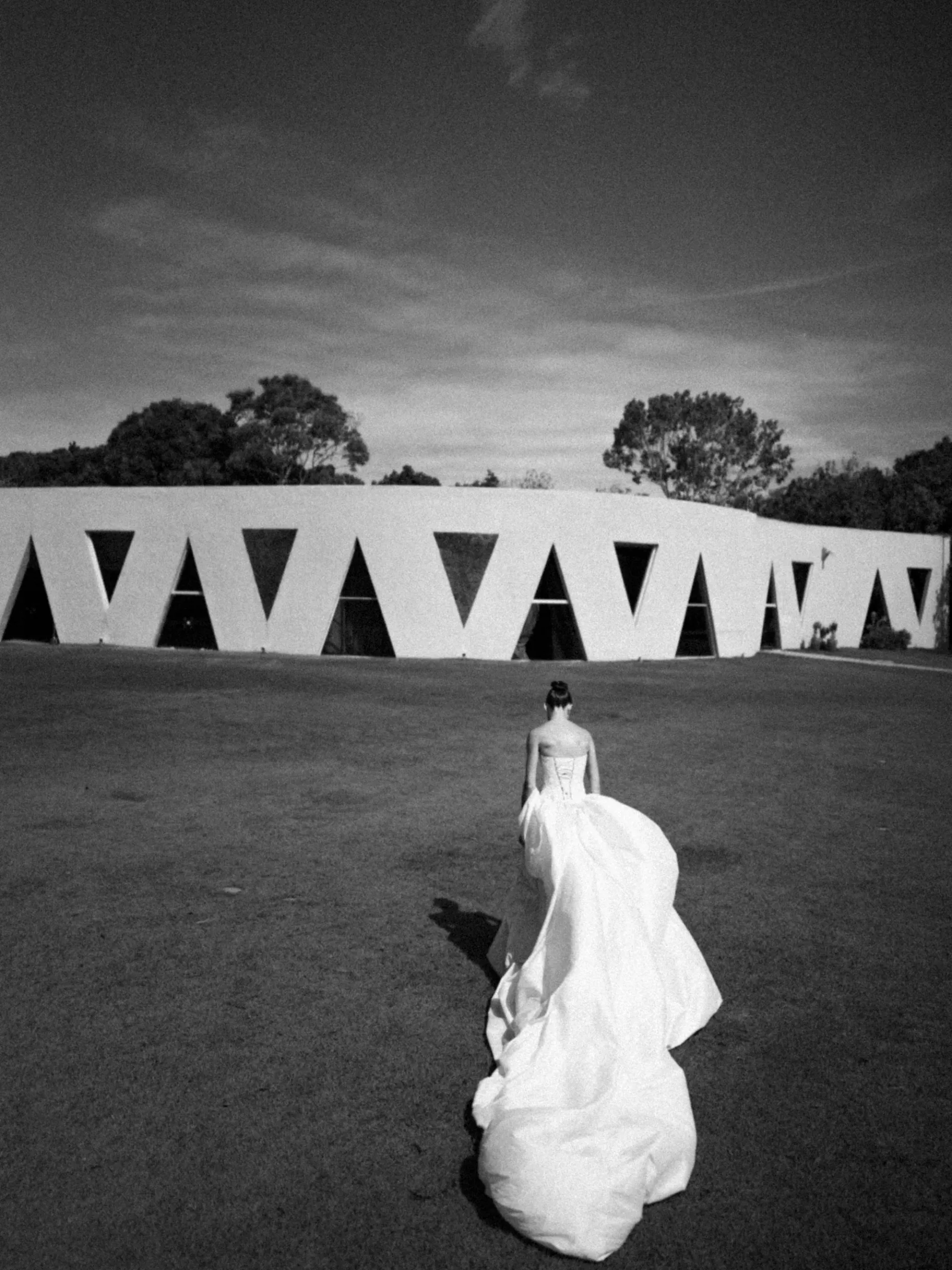
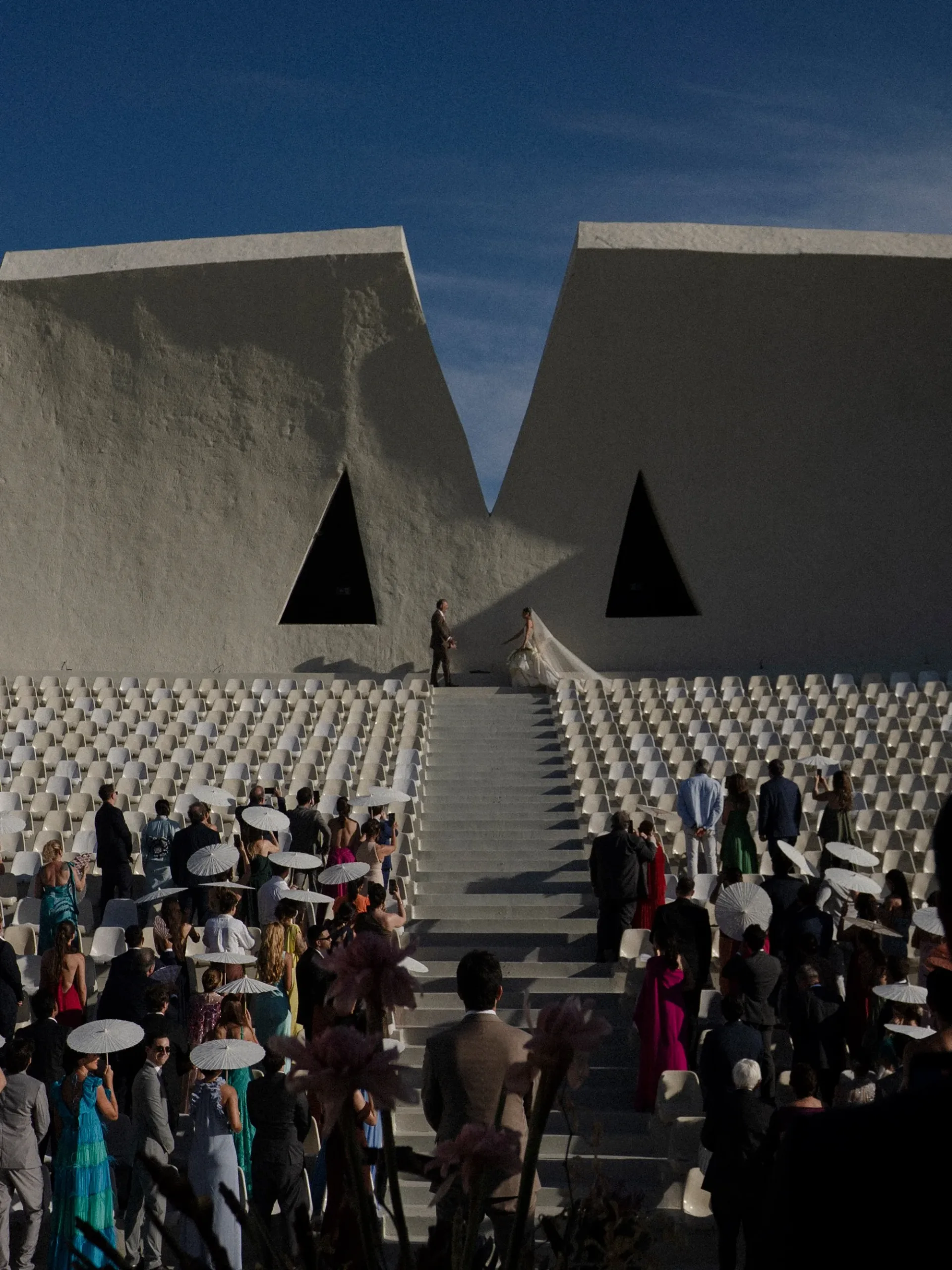
Located in Trancoso, Teatro L’Occitane was inaugurated in 2014 and was designed by Luxembourgish architect François Valentiny. Its architecture takes inspiration from the forms of native palm leaves, resulting in a series of monumental structures with sharp geometric lines, sweeping curves, and unusual openings.
In other words, this is not exactly a venue that needs much convincing.
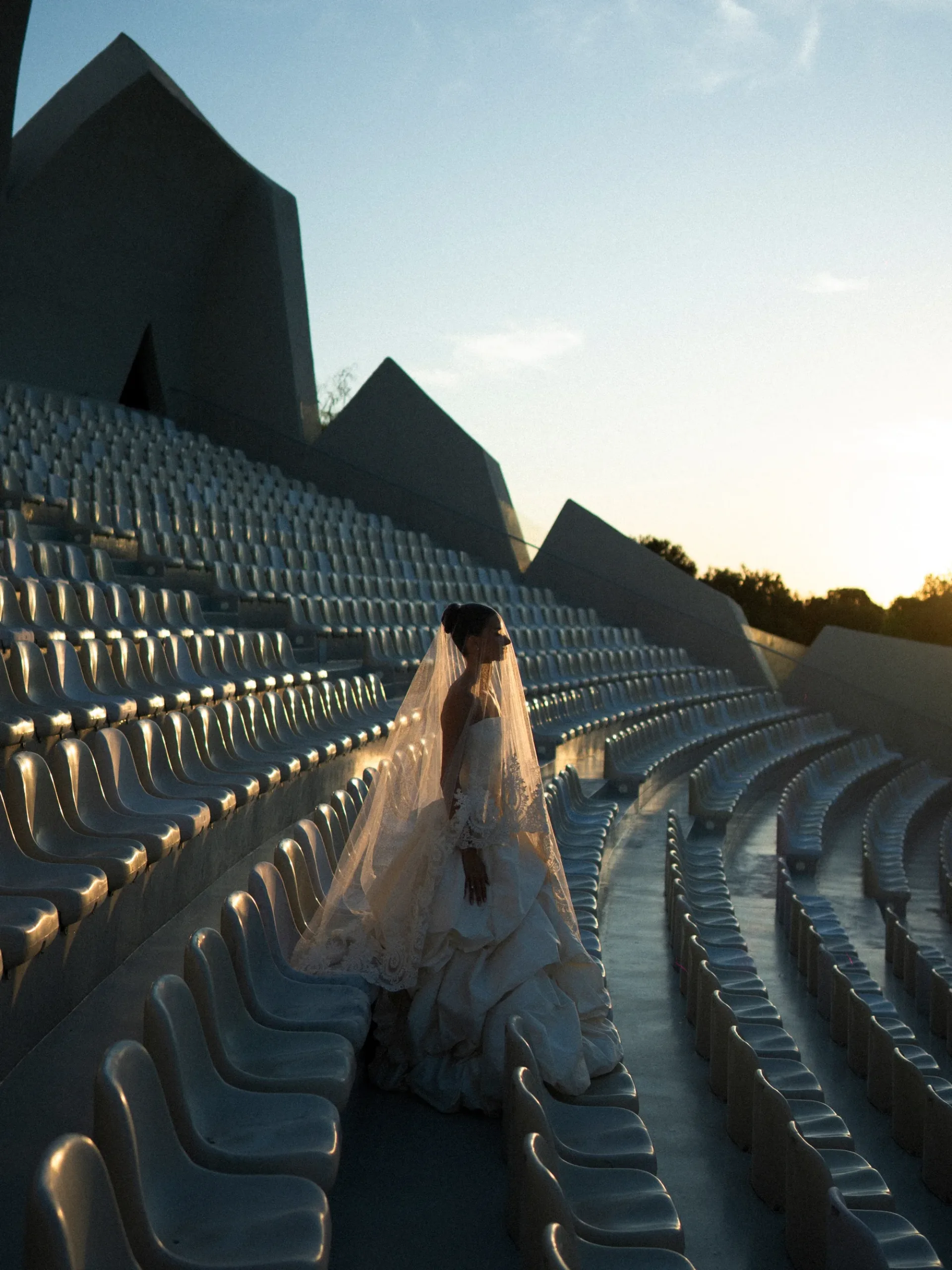
For Isabella and Erick's wedding, the architecture became part of the visual language of the day. The ceremony unfolded among hundreds of sculptural white seats, with the couple positioned high above their guests against the venue's striking concrete forms.
The effect was almost surreal. The architecture's minimalist palette gave the wedding plenty of room to introduce richer elements without competing with the surroundings.
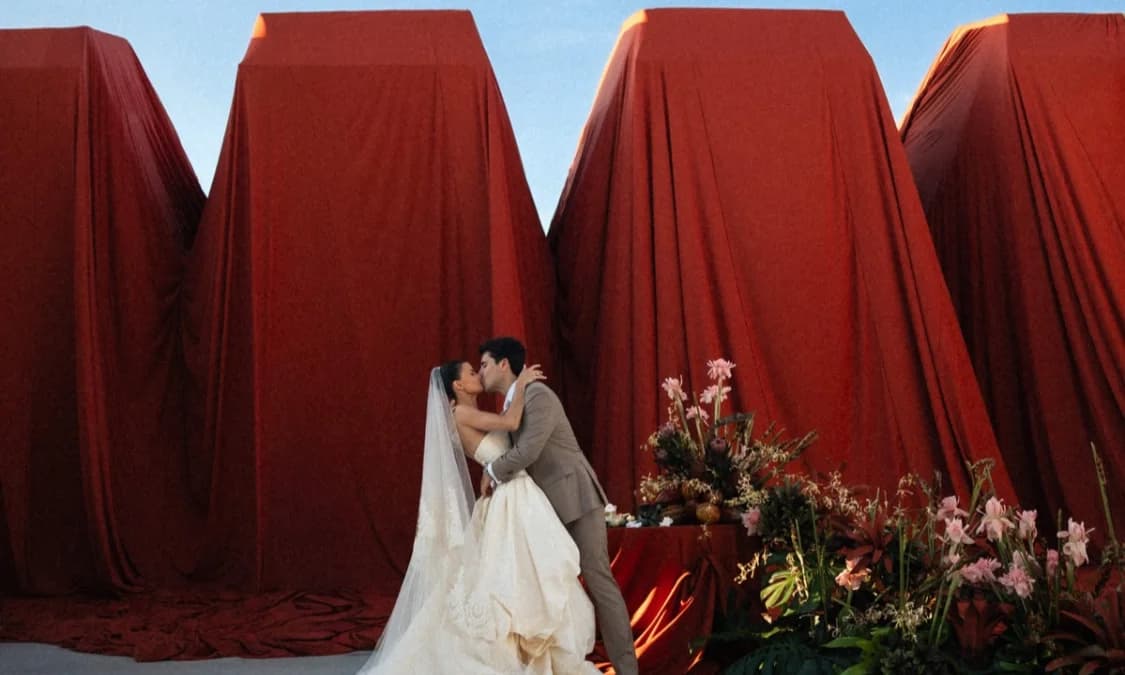
If there was one detail that instantly shifted the mood, it was the dramatic crimson draping.
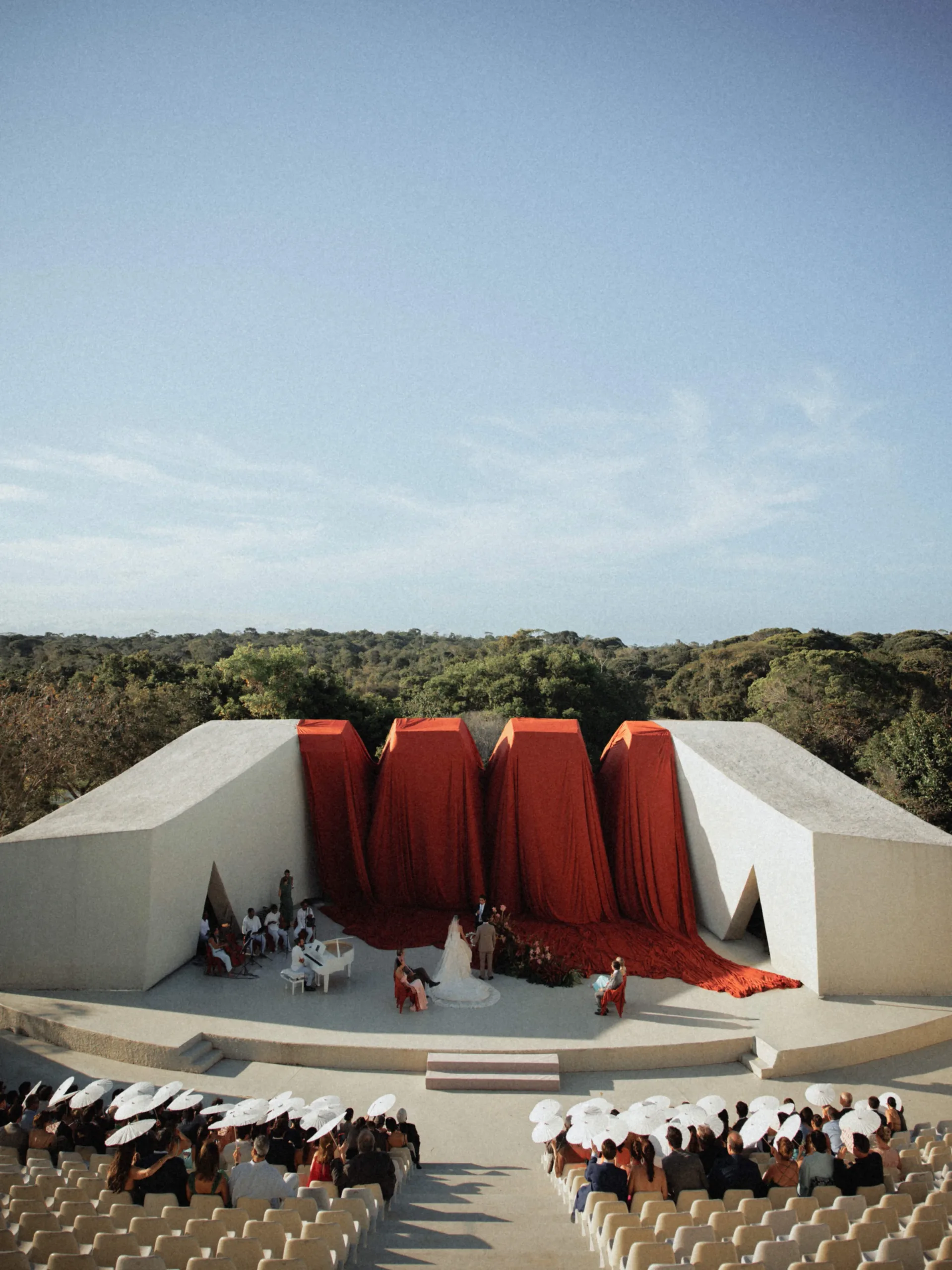
Huge panels of deep red fabric cascaded across the stage, creating a theatrical backdrop behind the couple. The fabric was gathered and arranged almost like oversized stage curtains, but instead of feeling like a traditional theatre production, it gave the ceremony a distinctly fashion-forward edge.
Floral arrangements added another layer, with tropical greenery and sculptural blooms placed low around the stage. The rest of the setting remained relatively restrained, allowing the red backdrop and the architecture to do most of the talking.
Guests sat beneath the bright Brazilian sky with white parasols in hand, creating an unexpectedly beautiful contrast against the concrete surroundings. It looked less like a traditional wedding aisle and more like a carefully composed editorial image.
Which, considering the setting, feels very on brand.
Then there was the dress.
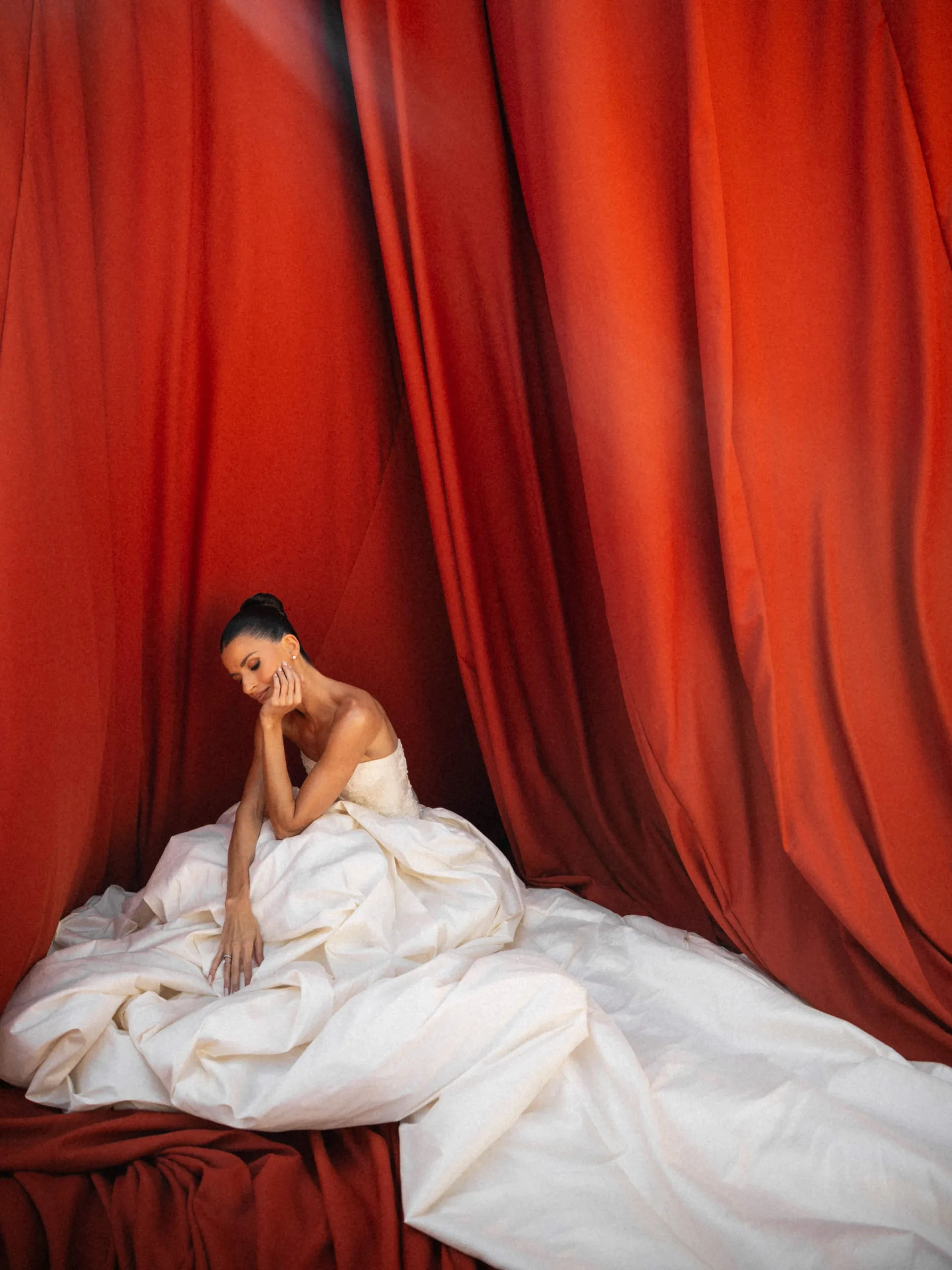
Designed by Rebeca Nepomuceno, Isabella's gown combined a structured strapless bodice with delicate floral appliqué and a dramatically gathered skirt. The fitted upper half kept the silhouette sleek and sculpted, while the voluminous lower half brought plenty of movement.
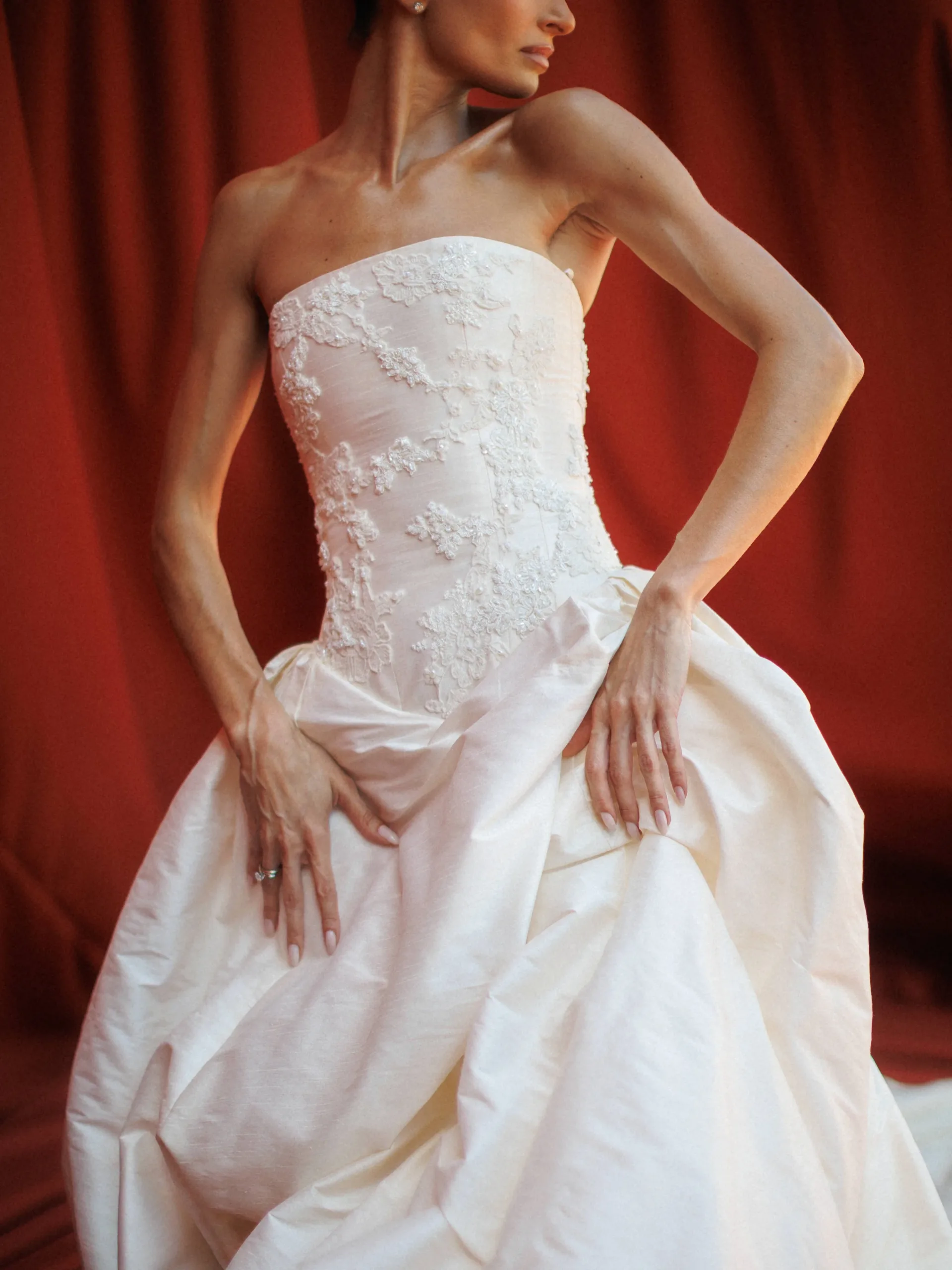
The lace detailing was particularly beautiful against the clean lines of the architecture. Instead of relying on excessive embellishment, the gown used texture and shape to make an impact.
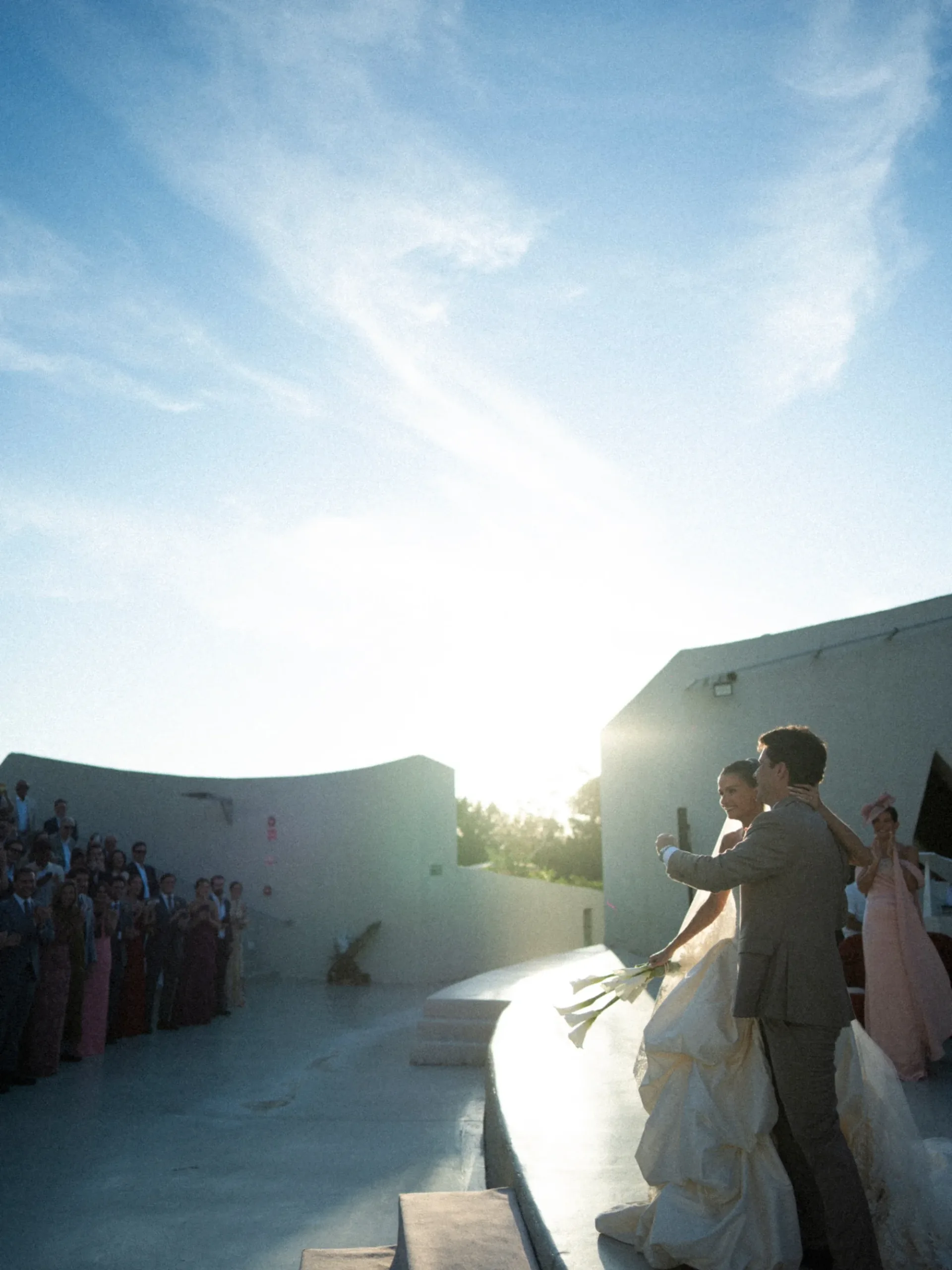
Her veil added another layer of romance, falling behind her in a long, delicate sweep with intricate lace edging. Worn with her hair pulled into a neat, understated style, the veil allowed the gown's neckline and structured bodice to remain the focus.
It was a bridal look that understood the assignment: sophisticated enough for the setting, but dramatic enough to hold its own against one of Brazil's most visually distinctive event spaces.
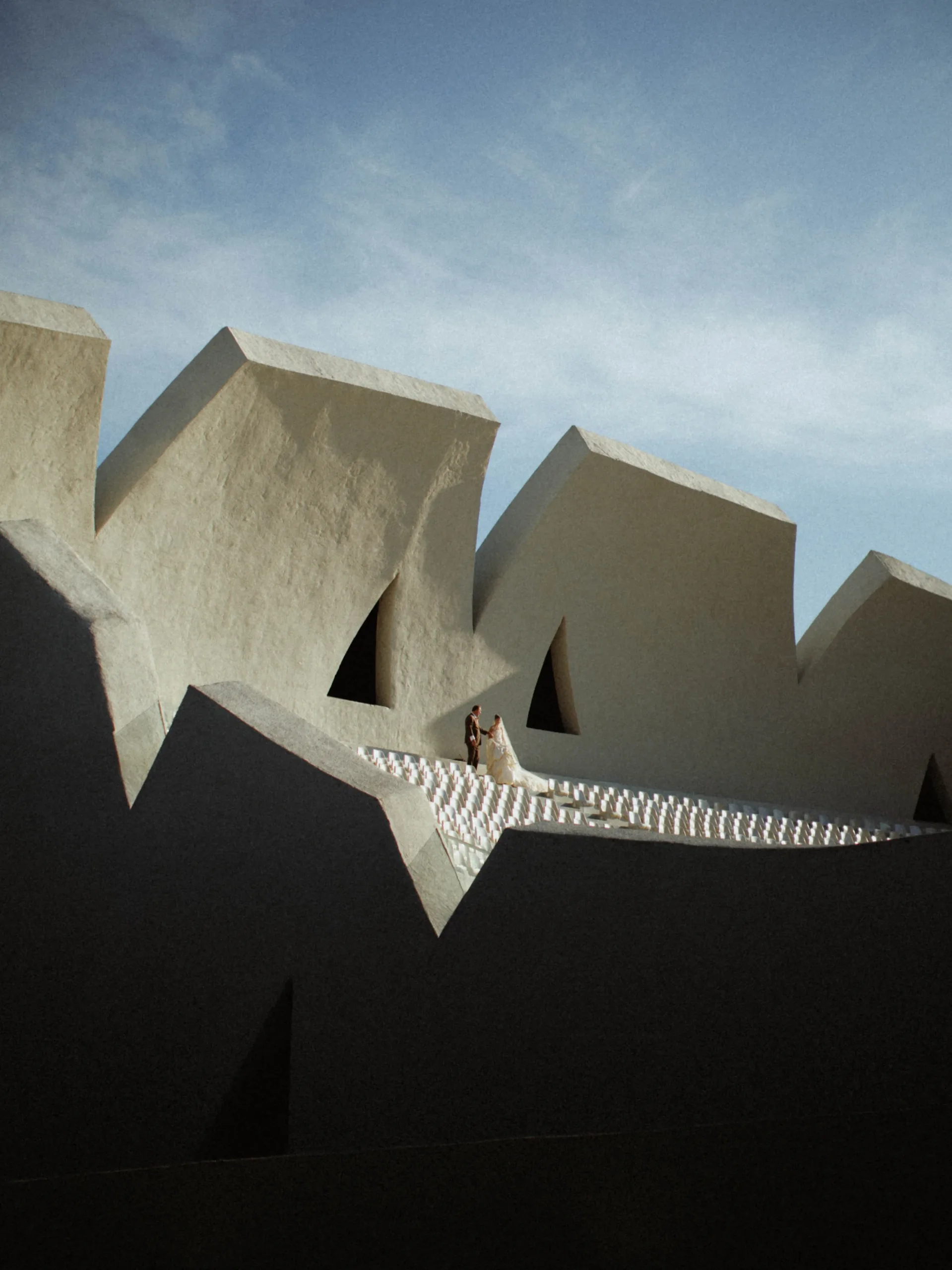
One of the best things about a venue this architectural is that the wedding portraits do not need much in the way of additional scenery.
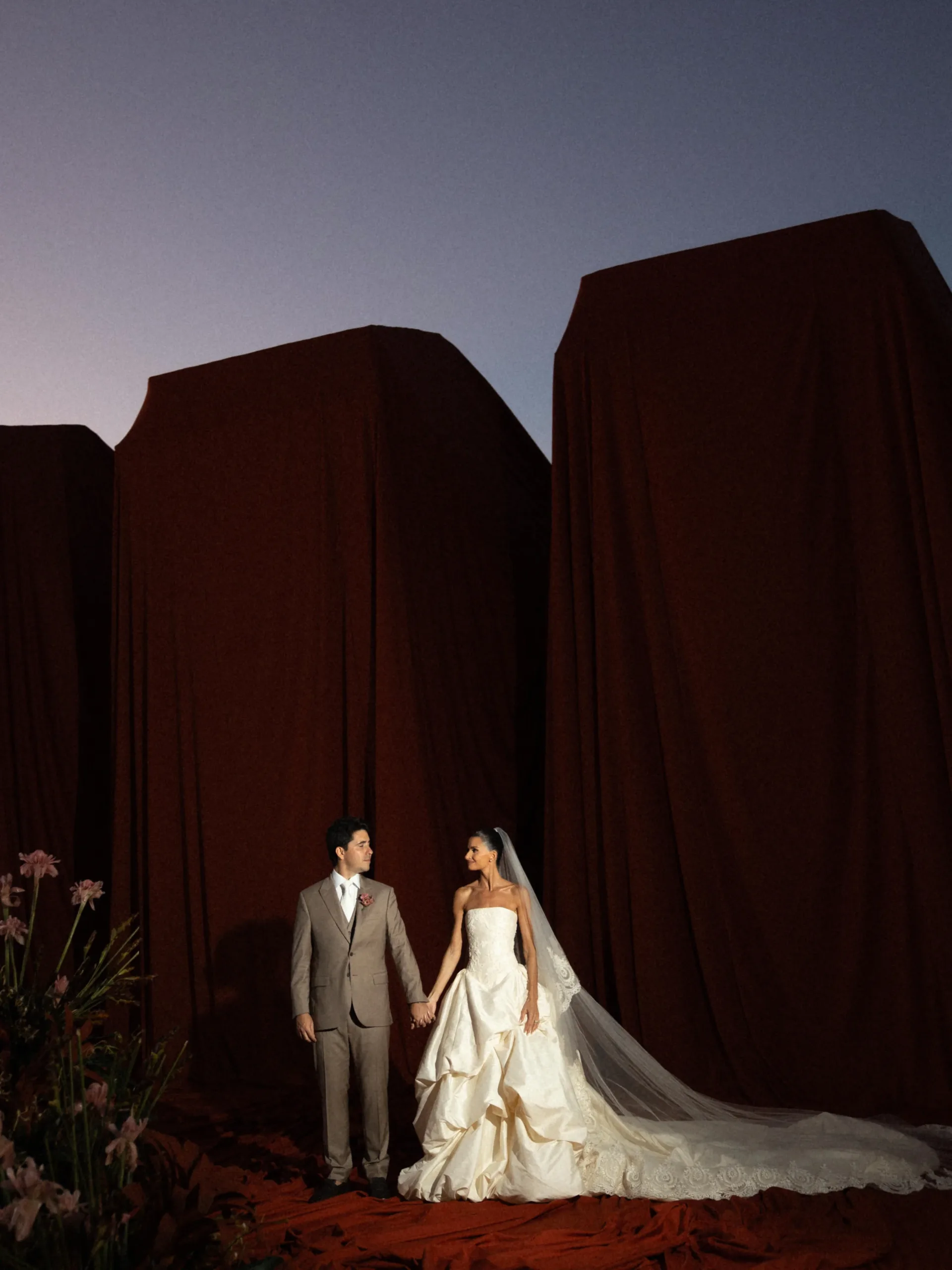
Isabella and Erick were photographed moving through the rows of sculptural seats, standing beneath the angular structures, and framed against the enormous geometric walls. At sunset, the concrete took on a warmer tone as the light hit the venue, creating a softer contrast against Isabella's white gown.
One particularly striking portrait places Isabella alone among the empty seats, her veil trailing behind her as the low sunlight catches the fabric. Another pulls the couple into the vastness of the architecture, making them appear almost tiny against the monumental structures.
It gives the wedding album a visual rhythm that feels closer to an editorial fashion story than a traditional collection of wedding portraits.
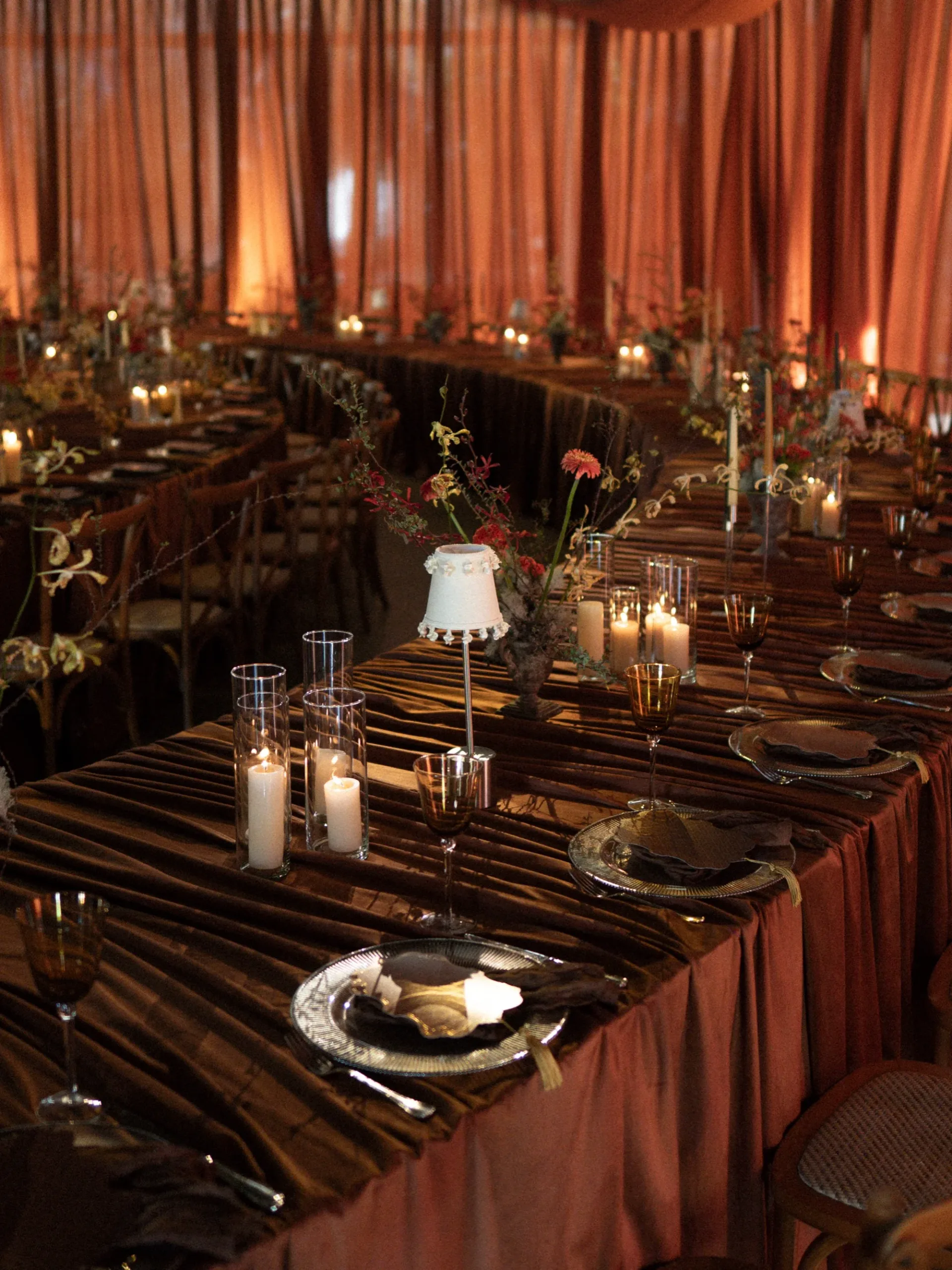
If the ceremony was all about scale and architecture, the reception brought the atmosphere down to a much more intimate level.
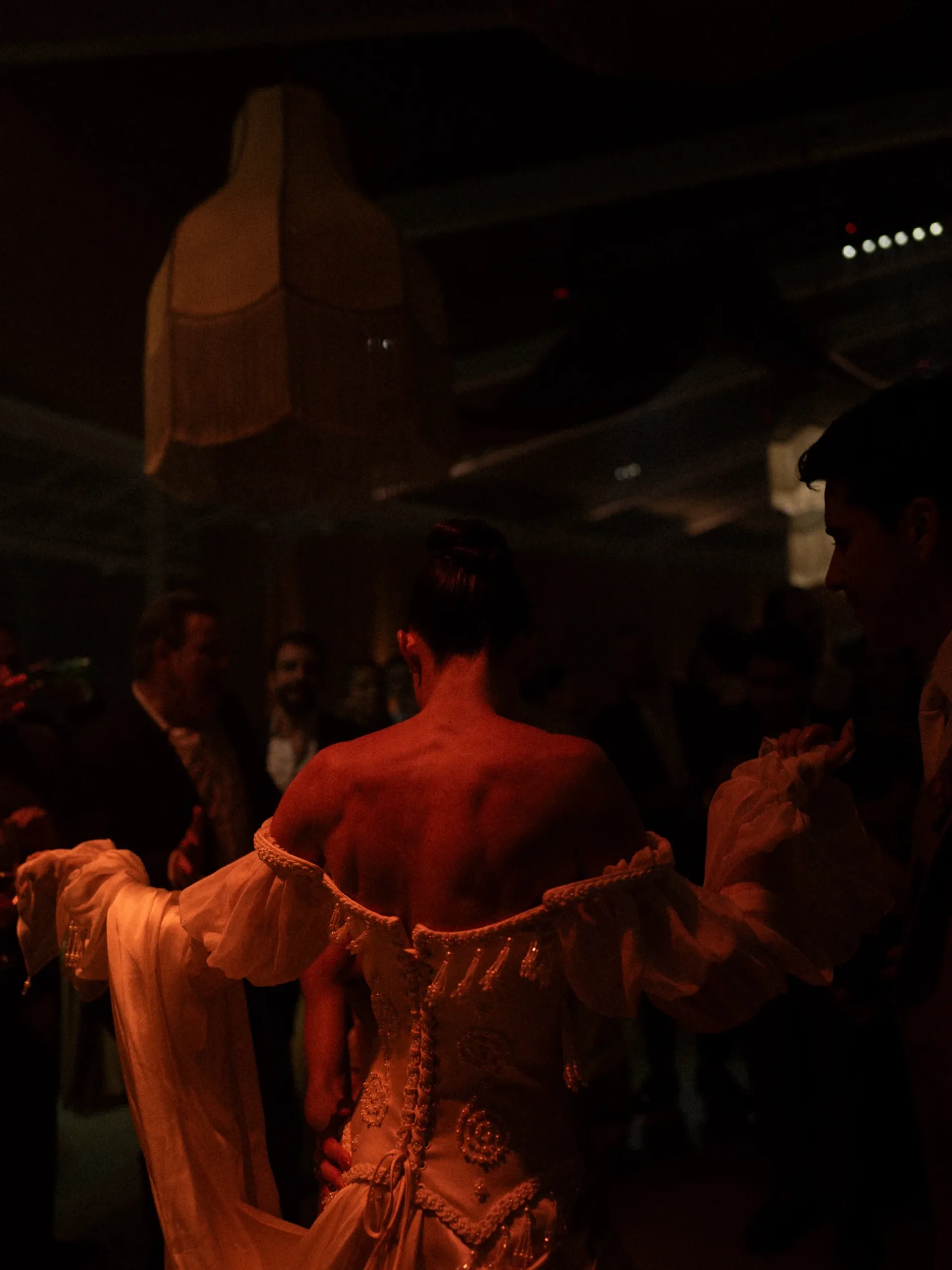
The tables were dressed in rich rust and terracotta tones, with dark wood, amber-toned glassware, silver-toned chargers, taper candles, and clusters of flowers arranged across the tables. The room was enveloped in warm reddish draping, giving the entire reception a dusky, almost cinematic quality.
The floral arrangements were deliberately organic, with tall stems, textured greenery, and deep red and muted pink blooms breaking up the long tables.
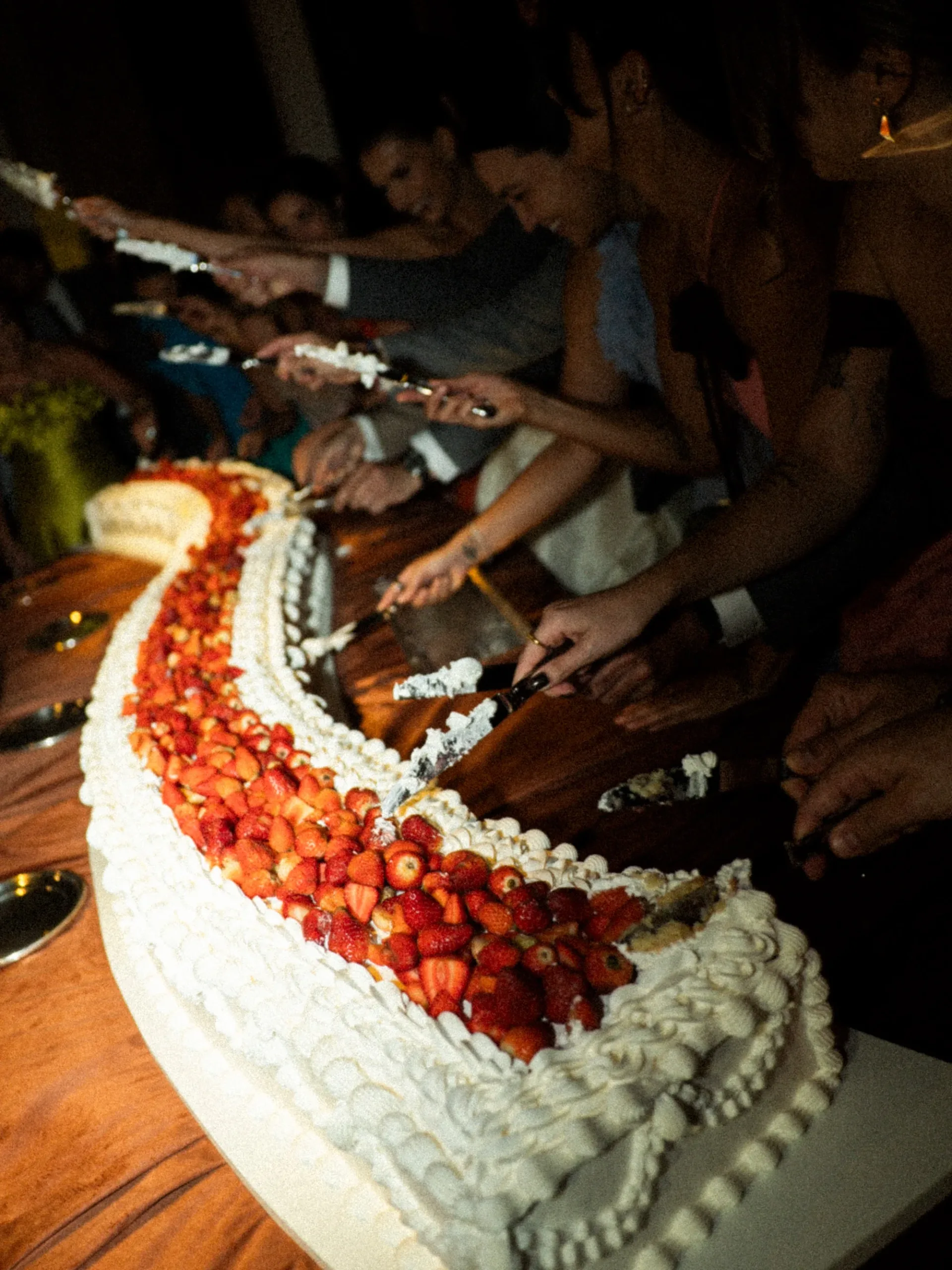
There was also a wonderfully unexpected cake moment.
Instead of a towering, hyper-sculptural confection, the couple had a large white cake covered in intricate piped detailing and piled generously with fresh strawberries. Guests gathered around to cut into it together, turning the dessert into part of the party rather than simply another decorative element.
There is a temptation with a spectacular destination venue to decorate every inch of it.
Isabella and Erick's wedding took a different approach. The architecture was already doing a lot of the work, so the design amplified it instead of trying to disguise it.
That is what made the celebration feel so cohesive. The white gown against the concrete, the red draping against the pale architecture, the warm reception against the cooler outdoor setting, and the lush Brazilian landscape surrounding everything created a visual story without making the wedding feel overly busy.
Teatro L’Occitane itself was designed with the surrounding landscape in mind, and today its spaces are used for cultural events, celebrations, and weddings. The venue includes an open-air stage, covered stage, main hall, and outdoor lawn, giving couples plenty of ways to build an entire celebration around the architecture and natural setting.
For Isabella and Erick, the choice was clear: instead of competing with the theatre, they let the theatre take centre stage.
And honestly, it was quite the supporting character.
Event Designer: @museudgn
Event Planning: @lecult
Venue: @teatroloccitane_
Makeup Artist: @gesibelan
Videographer: @zanifilmes
Photographer: @michaelbrito
Content: @fiducia.ae
Wedding Dress: @rebecanepomucenobrasil
Cake: @laisalmeida_bolos
Search real weddings, venues and vendors from around the world.
Search Wedded Wonderland