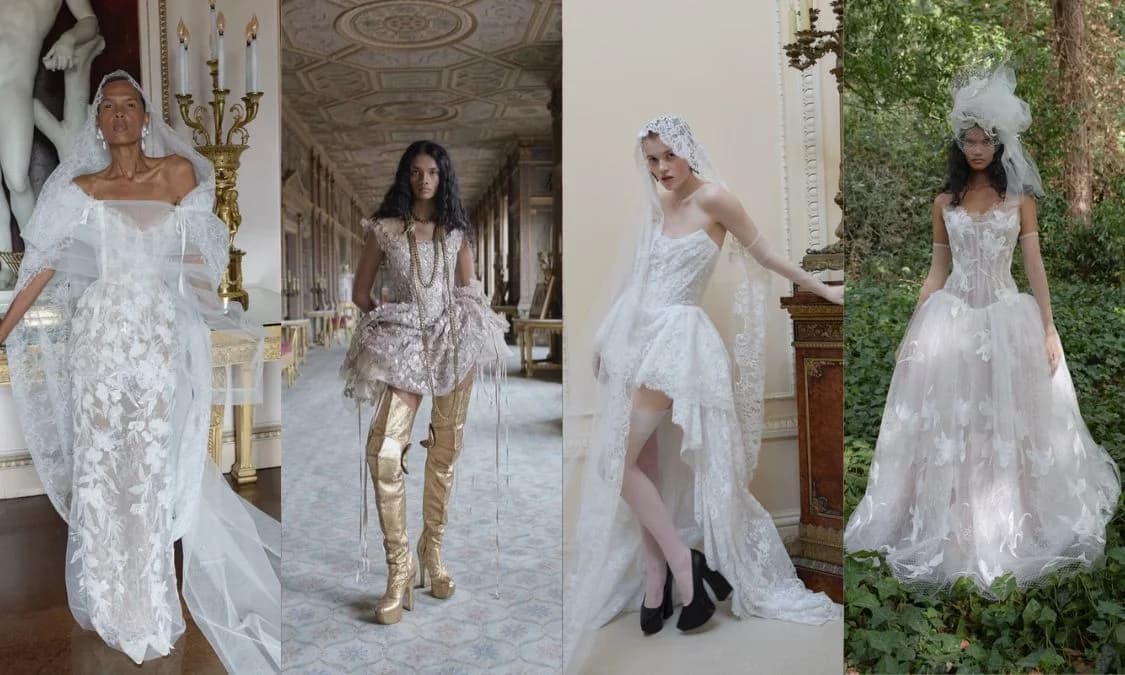
Captured at Syon House, the new Couture and Made-to-Order collections draw on the British fashion house’s signature blend of historical references and rebellious romance. The result is bridalwear that feels less concerned with following a prescribed idea of what a bride should look like and more interested in what a dress can do.
For couples translating this kind of fashion-forward vision into their own celebrations, Wedded Concierge can help connect the dots between a personal aesthetic and the venues, suppliers and wedding professionals who can bring it to life.
If there is one idea running through Vivienne Westwood’s 2027 bridal offering, it is transformation. Detachable trains, removable overskirts, interchangeable layers and boleros allow a single look to shift as the day unfolds. It is a practical answer to a familiar bridal dilemma: how do you make an entrance at the ceremony without spending the entire reception navigating metres of fabric?
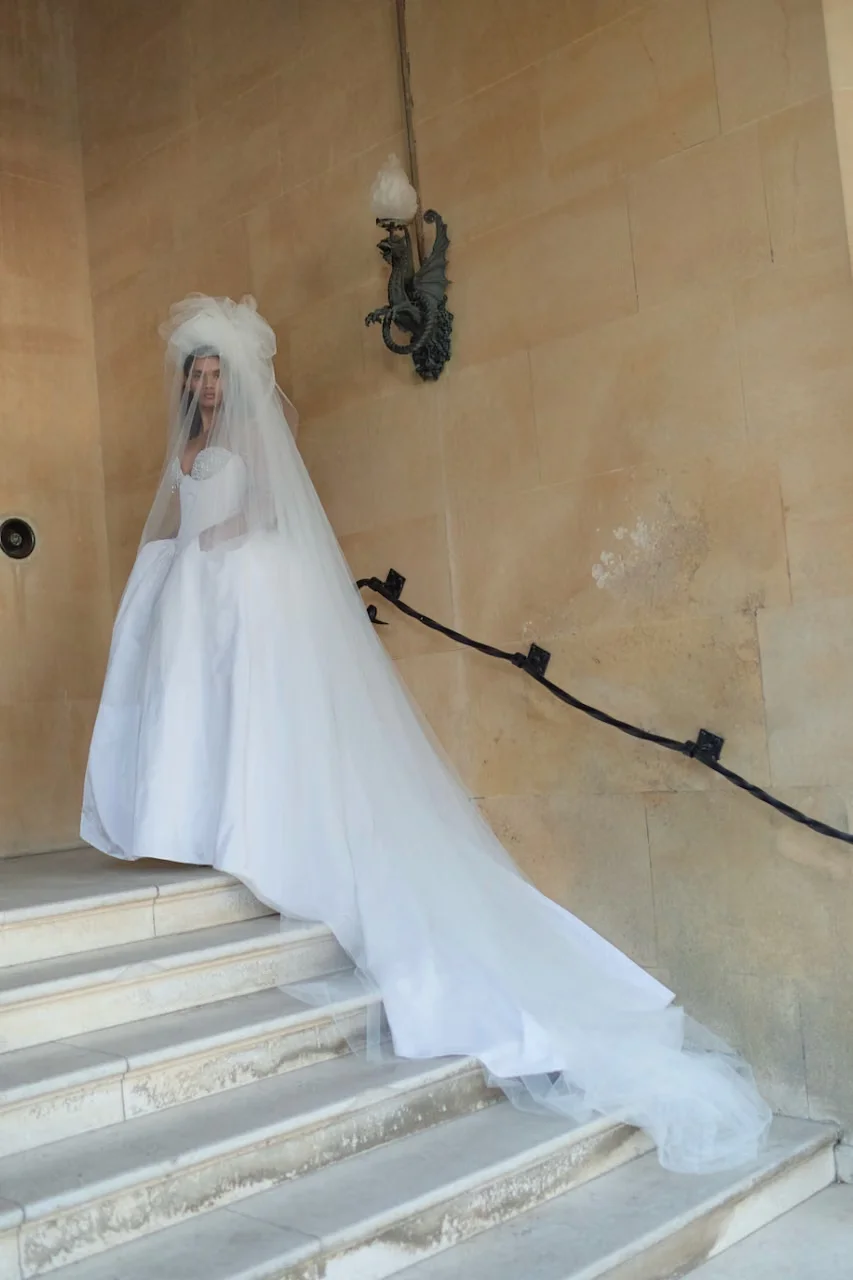
The Chrysalis gown makes the concept especially clear. A pearl-fringed mini dress sits beneath a voluminous silk taffeta overskirt with an expansive train and an oversized veil. Remove the outer layers, and the look changes from full-scale ceremony drama to a contemporary party dress.
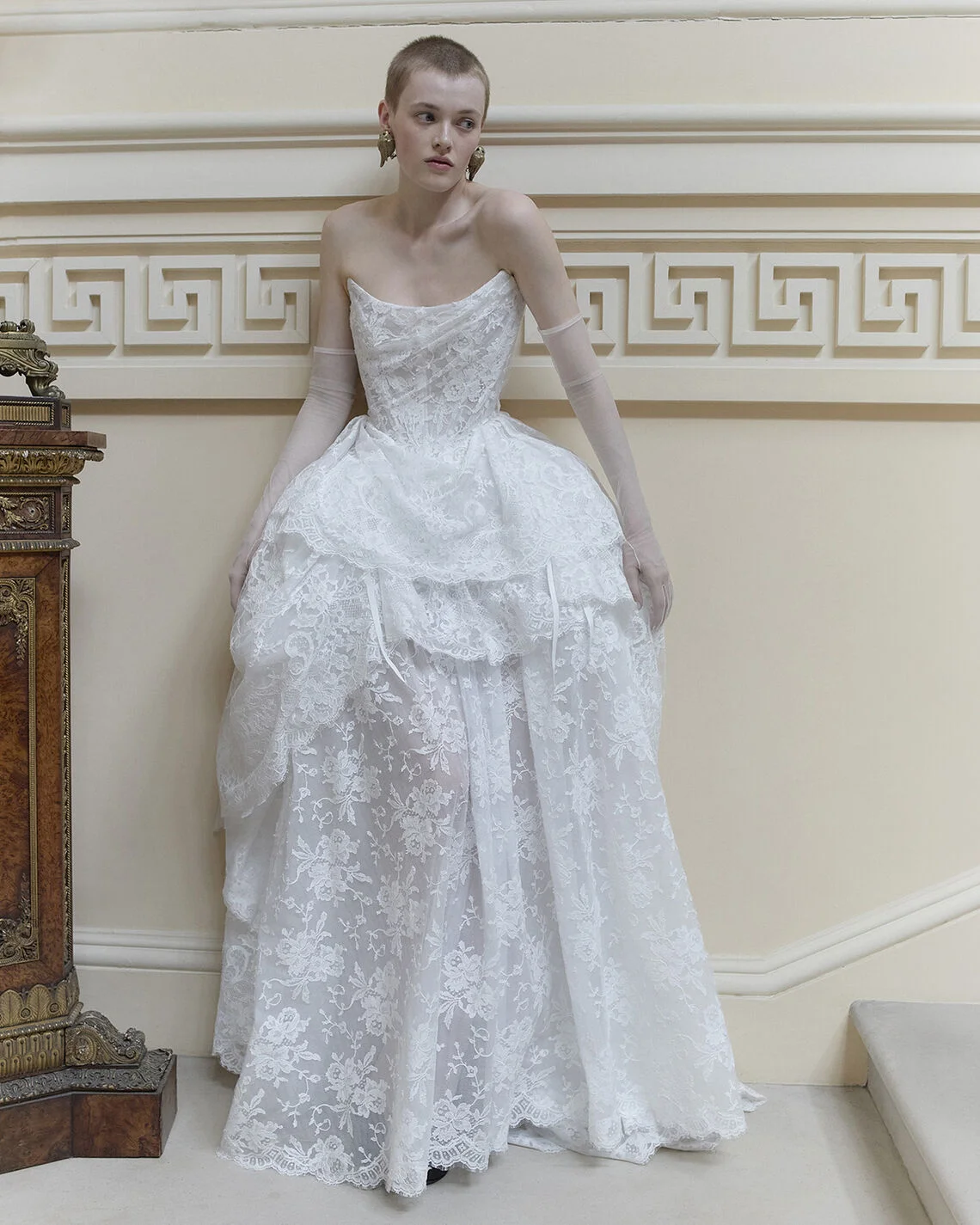
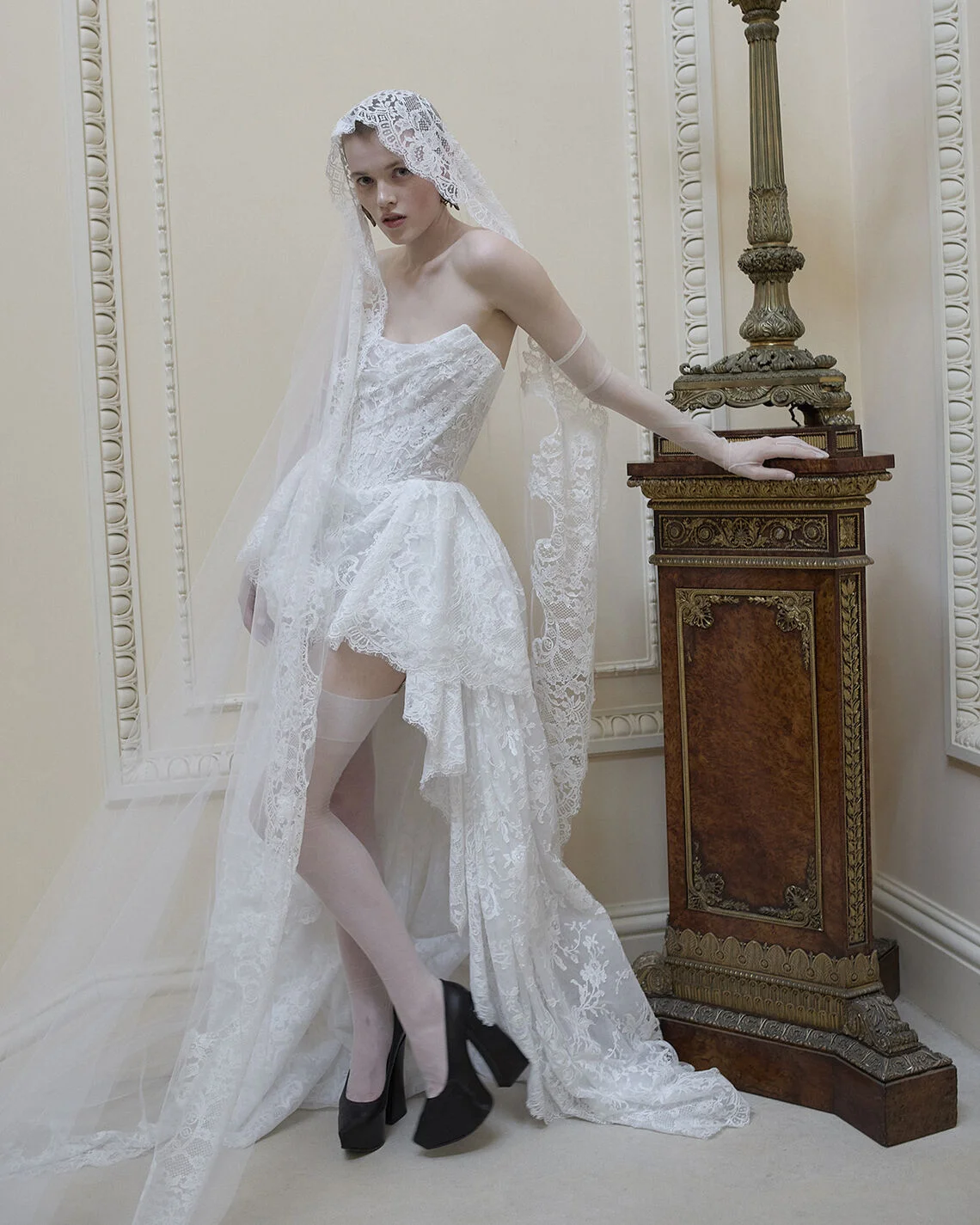
The Daphne gown takes the idea further, with layers and trains that can be removed until the dramatic lace gown becomes an ultra-short mini paired with coordinating lace bloomers. The message is simple: brides no longer have to choose between a statement ceremony look and something they can actually dance in.
Forget the idea that a corset has to disappear beneath the dress. Westwood puts structure front and centre, using defined bodices, shaped waists and exaggerated proportions to create silhouettes that feel architectural.
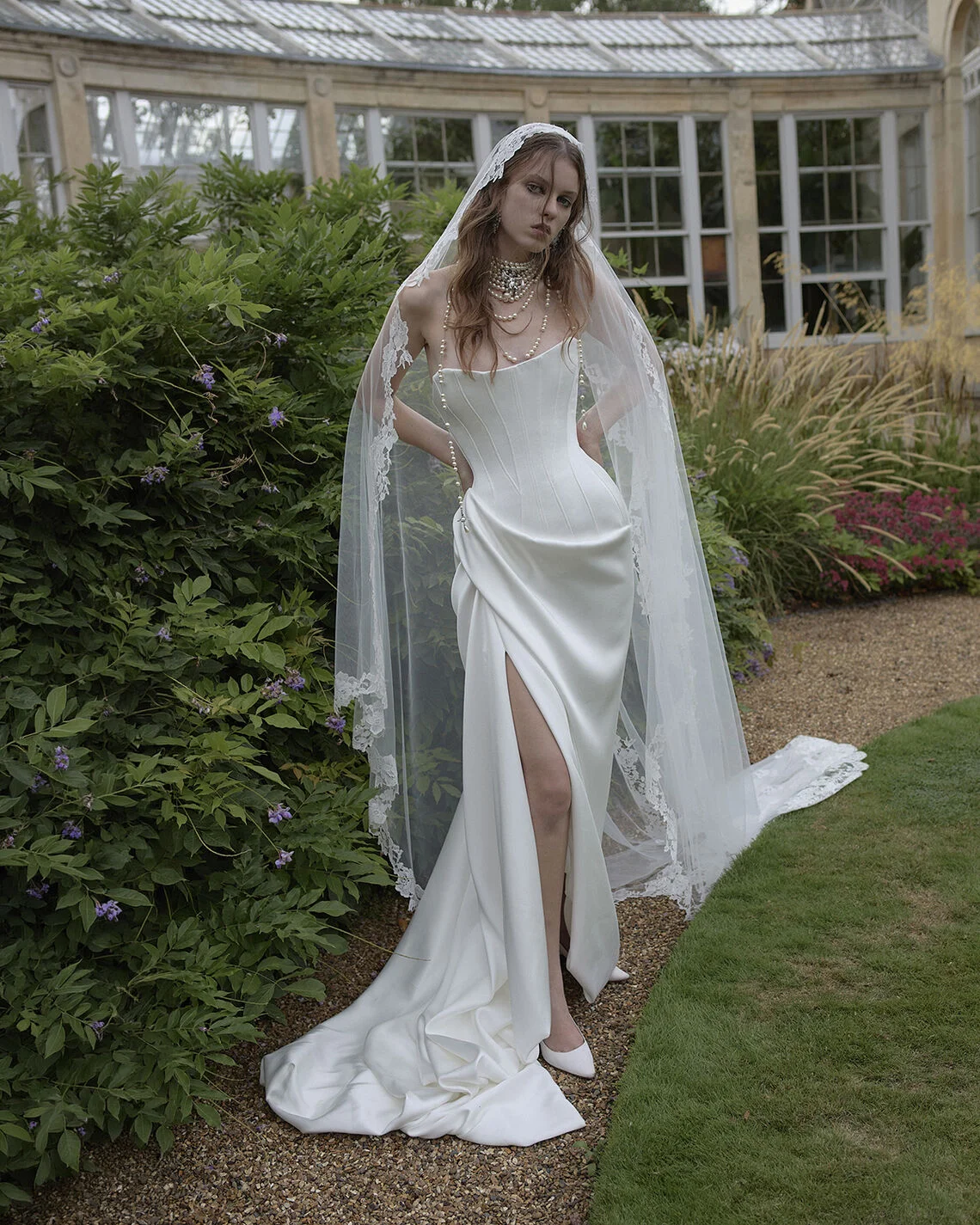
The Ophelia gown pairs a strapless corseted bodice with fluid draping and an asymmetric skirt featuring a dramatic side slit. Its long lace veil brings a softer, romantic counterpoint, while a detachable feather- and pearl-embellished bolero offers another way to shift the look for the celebrations that follow.
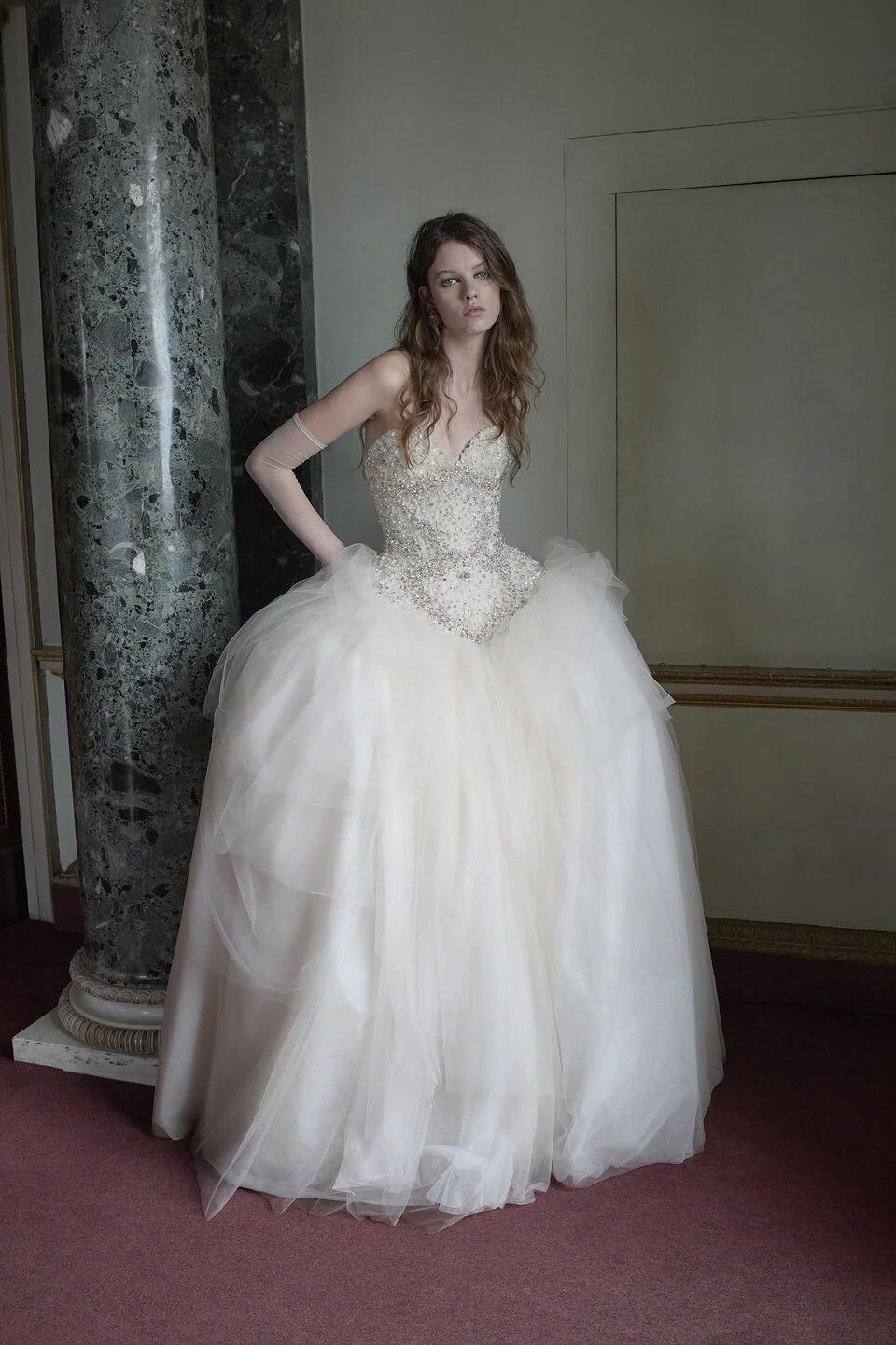
Elsewhere, Mariposa exaggerates the hips with a sculpted, embellished corset and a voluminous tulle pannier skirt. The silhouette references historical couture, but its removable mini skirt gives it a distinctly modern second act.
This is corsetry with personality. Rather than simply creating a traditional bridal shape, it becomes a defining design feature.
Lace remains a bridal favourite, but Westwood’s interpretation is far from predictable. In Daphne, layered lace and a strapless corset build a gown with a tiered skirt and multiple trains. The effect is romantic, but the proportions and eventual mini reveal keep it from feeling overly delicate.
The Made-to-Order collection also explores lace through dramatic sleeves and higher necklines, bringing historical references into a contemporary bridal context. It is a reminder that romance does not have to mean a simple, softly flowing gown. It can have volume, texture and a little theatricality, too.
Floral details are taking up more space, quite literally. Instead of limiting botanical motifs to delicate appliqués, the collection uses embroidery, dimensional flowers and butterfly-inspired embellishment to shape the entire look.
The Papillon Fleur gown features all-over three-dimensional floral embroidery, sculptural shoulders and an oversized tulle and lace hooded veil. Its detachable skirt reveals a shorter dress beneath, making the transformation part of the design rather than an afterthought.
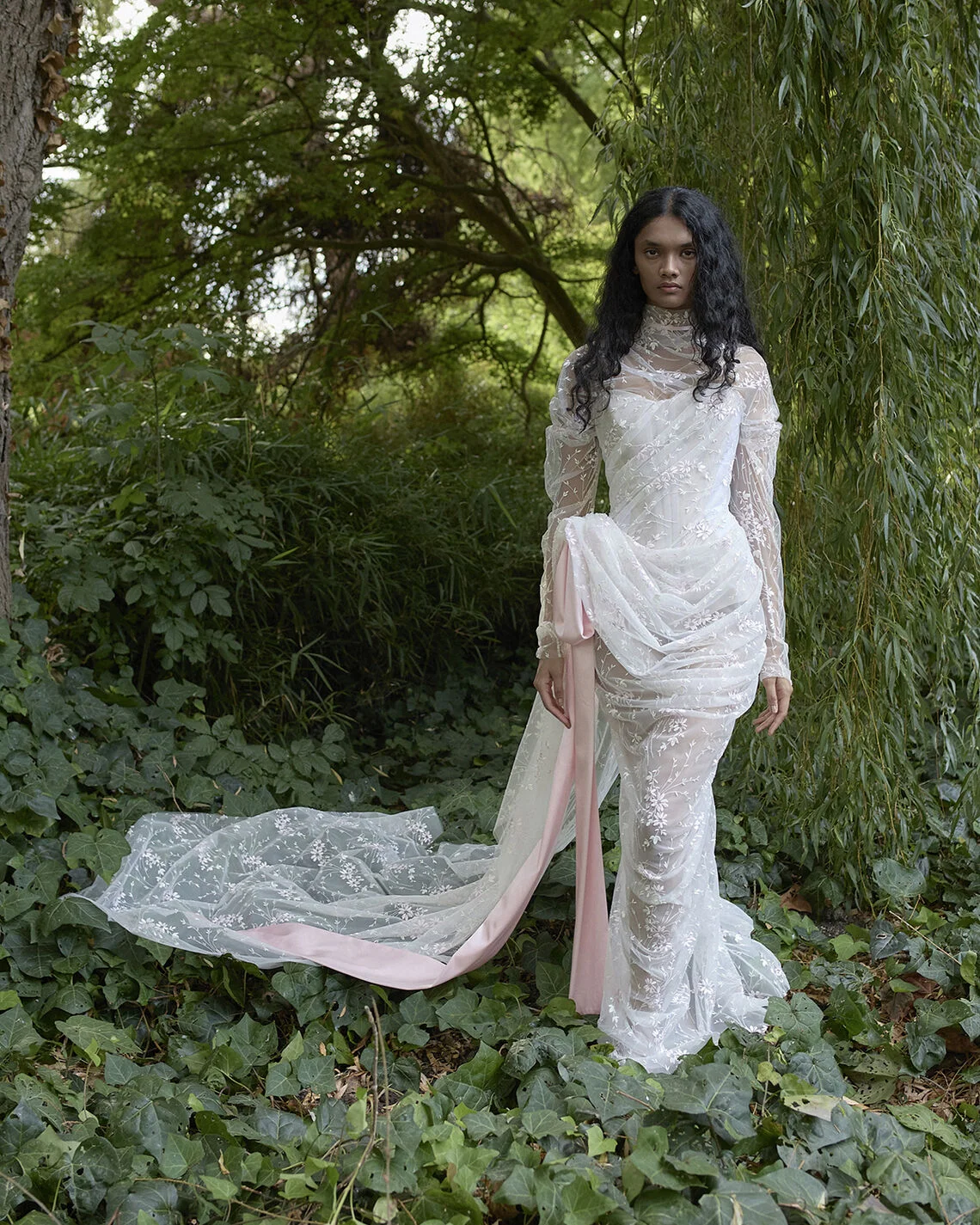
The Primrose gown offers a softer interpretation, with delicate floral embroidery across sheer tulle, gentle draping and a blush bow. Its matching embroidered bolero can be removed to reveal a lighter silhouette.
Then there is Aurelia, one of the collection’s more extravagant statements. Pink laser-cut floral embroidery sits over gold panniers, with silver and blush-toned flowers and butterflies adding detail. Inspired by the opulence of Marie Antoinette, the look embraces visible construction and historical grandeur rather than hiding its architecture.
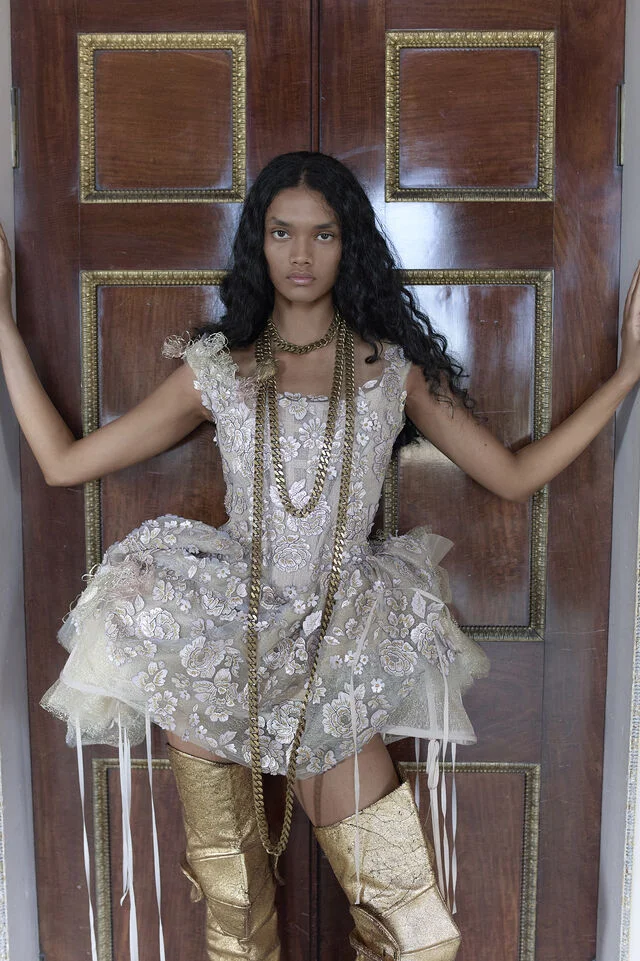
The rise of the reception mini is not necessarily about abandoning the traditional gown. Westwood’s designs suggest that a shorter silhouette can be built into the same look, ready to appear when the moment calls for it.
Alongside the transformations of Chrysalis and Daphne, Mariposa can exchange its dramatic layered tulle pannier skirt for a compact mini skirt. The result is a shift in proportion and energy without losing the design’s distinctive character.
For brides planning a full day of celebrations, this offers a compelling alternative to buying an entirely separate second dress. The change is also visual: a grand ceremony silhouette gives way to something more playful for the dance floor.
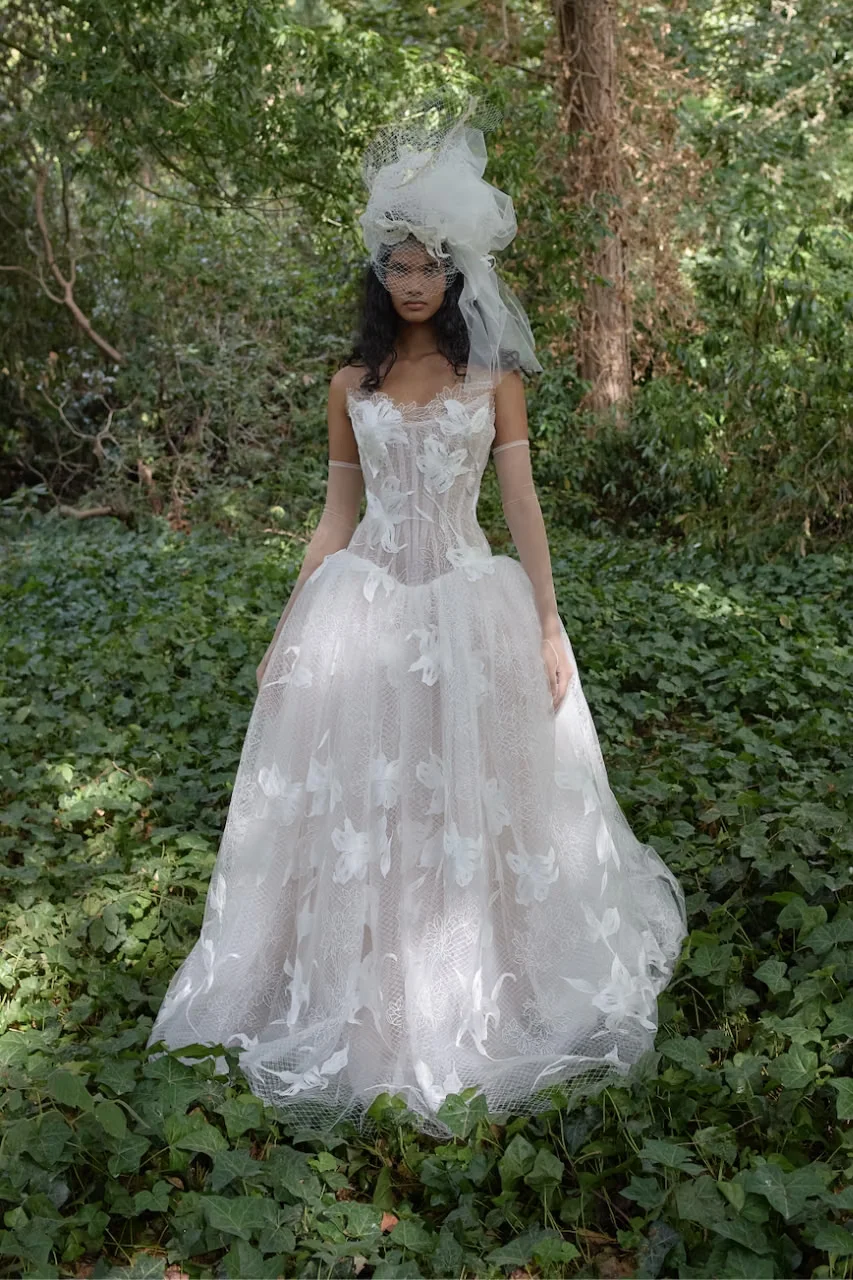
Not every bride wants understated minimalism, and not every bride wants a princess gown. The range of looks in Vivienne Westwood’s 2027 collections makes room for both historical romance and modern irreverence, from Larissa Lillie’s airy embroidered tulle and full skirt to Ophelia’s sleek draping and high slit.
The Couture collection comprises 11 bespoke looks, individually designed and handcrafted in the house’s London atelier, with personalised sketches, fittings and artisanal detailing. That process reinforces the collection’s central idea: a wedding dress can be a personal expression, not simply an outfit selected to meet tradition’s expectations.
Vivienne Westwood’s 2027 Bridal collections point towards a bridal wardrobe built around individuality, statement-making construction and the freedom to change things up. Corsetry is sculptural, lace has an edge, florals are dimensional and the ceremony dress can become something entirely different by the time the music starts.
The most interesting shift is not that every bride needs a detachable skirt or a dramatic veil. It is that bridal style is making more room for personal choices, even when those choices break with convention.
Search real weddings, venues and vendors from around the world.
Search Wedded Wonderland