
There's a new kind of bride walking down the aisle in 2026, and she's not asking for permission.
She still wants the pheras, the chooda, the sindoor. She still cries when her nani fixes her dupatta. But she's also the one who calmly told her mother the sangeet pooja needed to be capped at 15 minutes, because a room full of guests dressed for a party shouldn't be standing around a closed bar for an hour of ritual they're not part of.
We sat down with Parinaya Sutra, the planners behind some of India's most talked-about modern weddings, to understand what's actually happening beneath the trend reports and Pinterest boards. What we found wasn't a generation abandoning tradition. It was one editing it, ruthlessly, lovingly, and on their own terms.

Photography | Four Fold Pictures
Here's everything every bride-to-be needs to steal from this conversation.
Every Indian wedding has a moment where two generations quietly arm-wrestle over the run of show. The planners' most telling story: a bride who loved her family's traditions enough to keep them, she just refused to let them hijack the fun.
Her solve wasn't rebellion. It was relocation. Move the pooja to an intimate side space, invite only the people it actually belongs to, and let the main stage stay what it's meant to be, a party. Nobody loses. The ritual keeps its sanctity. The guests keep their night.
The takeaway: you don't have to choose between honouring your family and protecting your vibe. You just have to be willing to redesign the floor plan.
Here's the myth Parinaya Sutra wants every bride to stop believing: that your parents are going to fight you on your vision.
In their experience, most Indian parents, who are still footing some or all of the bill, rarely push back on aesthetics. The couple usually knows exactly what they want, and the family is on board. The real friction point is almost always the number on the invoice, not the shade of the décor.
Translation: bring your parents into the budget conversation early, and you'll find far less resistance in the creative one.

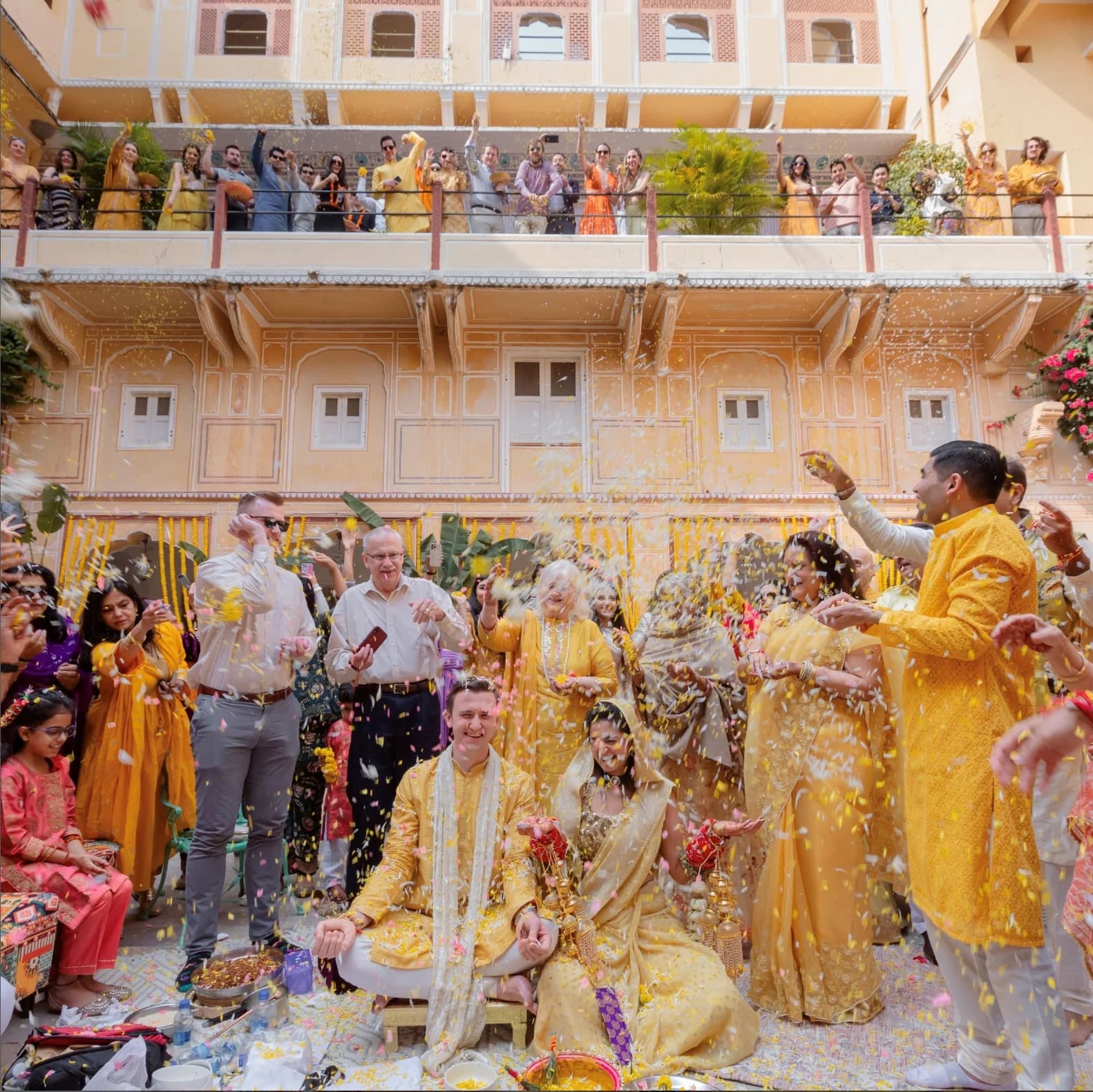
Forget the idea that Gen Z is streamlining culture out of their weddings. What's actually happening is a full-blown renaissance: folk musicians, mela-style bazaars, traditional dancers, and rituals like the Chooda and Gharouli being pulled into the main event itinerary instead of being treated as a formality to rush through.
The difference is intention. Where older weddings ran through rituals because they had to, today's couples are staging them like the meaningful, story-rich moments they always were, connected explicitly to where their families come from.
Every planner has that wedding, the one that reminds them why they do this. For Parinaya Sutra, it was a bride named Manshi in Gwalior, who had dreamed since childhood of walking down the aisle with a bouquet and a red veil. Minutes before the ceremony, the groom's mother said no, too cliché.
The bouquet and veil were already prepared. Instead of a standoff, the planners sat with the groom's mother and reframed the moment: this wasn't about trend versus tradition, it was about a few minutes that would live in Manshi's memory forever.
She said yes. Manshi got her entry.
The lesson for every bride reading this: the moments you're scared to ask for are usually smaller and more winnable than they feel in your head. Sometimes all it takes is someone in your corner framing the ask the right way, which, quietly, is exactly what a good planner is for.
Ask a Gen Z couple what they want and you'll hear the word "vibe" before you hear the word "theme." Parinaya Sutra breaks down what that actually means logistically: no single hero event anymore.
A decade ago, one wedding might have one big performance across an entire four-event celebration. Today, every single event: sangeet, haldi, wedding, reception, gets its own layer of entertainment, its own reason for guests to move, dance, and participate rather than sit and observe.
It's less "watch the show" and more "be in it." And the tempo is set from the very first event a guest walks into, which is exactly why the opening night of a multi-day wedding matters more than most couples realize.

Photography | Four Fold Pictures
We asked. They didn't hold back.
The reception gift-line, where hosts stand like doormen greeting guests, handing over favors, while the dance floor sits empty because the parents are too busy taking photos at the door, is officially on the chopping block. It's a structure that turns the people who should be celebrating hardest into the ones enjoying the party least.
Their prediction? Gift registries are coming to Indian weddings, and sooner than most people think.
The scale of Indian weddings isn't shrinking, but the why behind the scale is changing. Couples now want every design choice to trace back to their actual story.
One standout: a sangeet themed "A Tale of Two Cities," built around a couple who fell in love across London and New York, yellow cabs, black cabs, phone booths, and bridge motifs woven through the decor, down to a save-the-date illustrating two taxis crossing paths. Even a groom's sangeet outfit was custom-embroidered with symbols from their relationship.
Guests remember decor for a season. They remember a story that was actually theirs forever.
Chasing a "perfect" wedding and a "felt" wedding are not the same goal, and confusing them is the single biggest misstep couples make when trying to modernize.
Color-coordinated everything and Pinterest-precise styling can look flawless in photos while quietly editing out the parts of an Indian wedding that were never meant to be tidy: a grandmother re-pinning a dupatta mid-chaos, cousins dancing off-beat, rituals unfolding without a director calling cues.
Modern doesn't mean less culture. It means more of your personality inside the culture that's already there.

Photography | Four Fold Pictures
Not every unforgettable moment needs a viral hashtag. Parinaya Sutra's quiet signature: return gifts and guest touches designed around the senses, not just the eye, down to a "Cleansing Kit" from a Haridwar wedding, complete with a note card of intentions, a vessel of Ganga jal, a mirror, scented candles, a wind chime, dhoop and chandan.
The insight worth borrowing: luxury doesn't have to be loud to be remembered. Sometimes it's the detail a guest almost misses, until they feel it.
If there's one message this whole conversation builds to, it's this: wanting something different from your family doesn't make you difficult. It makes you a bride with a vision, and every family has a version of this negotiation somewhere in their history.
The real skill isn't confrontation. It's translation, someone who can sit between what you want and what your family needs to feel heard, and find the version where nobody has to lose. As Parinaya Sutra puts it, it's rarely an all-or-nothing choice between emotion and aesthetics. There's almost always a middle ground that keeps both intact.
The Gen Z Indian wedding isn't a rejection of tradition, it's the most intentional version of it yet. Every ritual kept is kept on purpose. Every rule broken is broken with a reason. And every bride quoted above got exactly what she wanted, without a single relationship left in ruins.
If you're standing at the start of that negotiation right now, caught between your vision and your family's expectations, that's precisely the conversation Wedded Concierge exists to navigate with you.
If you are planning your wedding, its time to simplify your wedding planning. Schedule your complimentary consultation.
Search real weddings, venues and vendors from around the world.
Search Wedded Wonderland