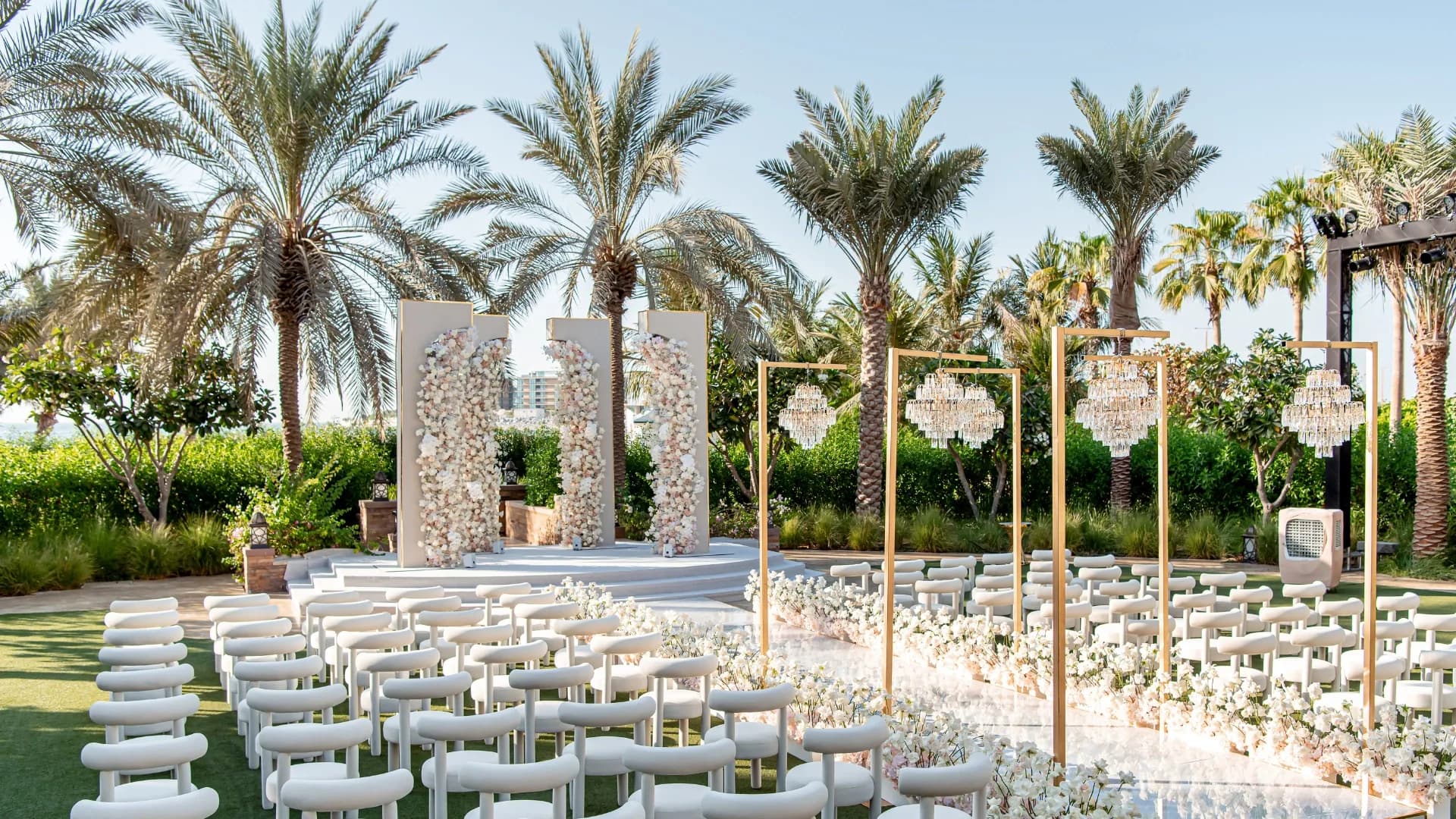
A wedding seating chart is the last thing you can finish and the first thing every guest notices. Build it in five steps: lock your final RSVPs, confirm the floor plan with your venue, seat the VIP tables, group everyone else by relationship, then choose how to display it. Most couples start about three to four weeks out, and most rebuild the chart more than once, because the guest list keeps moving until it does not.

Do not start from the invite list. Start from the people who have actually said yes. Every chart built on hoped-for guests gets rebuilt, and the rebuild is where the stress lives.
Set an internal RSVP deadline about 30 days before your venue's final-count deadline, leave a two-week window to chase stragglers, then treat silence as a no. If you are marrying abroad, expect the number to keep moving longer: destination weddings average roughly 60 to 70 percent attendance, because every guest is making a travel decision, not a calendar check.
Ask your venue for the actual room dimensions, the table shapes available, and how many people each table genuinely seats rather than the maximum it can technically fit. A round table sold as a ten often seats eight comfortably once chargers and centrepieces land.
Ask three questions in writing:
How many tables fit the room, at what shapes and sizes?
Where do the dance floor, band or DJ, bar, and service doors sit?
Which tables have a restricted view of the head table or the speeches?
The answers decide your chart more than any seating rule does.
Place the couple, then the wedding party, then parents and grandparents, then anyone with mobility needs or small children. These placements carry the most weight and the least flexibility, so they anchor everything else.

The two common configurations: a head table for the couple and wedding party, or a sweetheart table for the couple alone with the wedding party seated among guests. There is no correct answer. A sweetheart table gives you back a dozen seats and lets bridesmaids sit with their partners.
Work in blocs. College friends, work colleagues, your mother's side, your partner's cousins. People relax faster next to someone they already know, and a table needs only two or three connectors to hold a conversation for four hours.
Then apply the judgment calls a tool cannot make for you:
Seat by warmth, not symmetry. A table of nine that knows each other beats a table of ten that does not.
Split feuding guests across the room, not across the table. Same room, different sightlines.
Give every table one host. Somebody outgoing enough to start the conversation.
Keep the kids together, near an exit, and near the parents who will be up and down all night.
A seating chart tells guests their table. Escort cards tell them their table and can be picked up on the way in. Place cards tell them their exact seat. Larger weddings and plated dinners want place cards; a relaxed 60-person reception often does not.

Whatever you choose, print it last. Guests cancel in the final week, and a printed board is expensive to be wrong about.
This is where a generic template stops helping. At a wedding where the two families do not share a script, the room does not either. One side expects elders at the head table; the other assumes the couple sits alone. One culture reads open seating as warmth; the other reads every placement as a statement of respect.
Four things that rarely come up at a hometown wedding:
Hierarchy. Which family sits closest to the head table when one tradition prioritises elders and the other the bridal party.
Language. Seat bilingual guests as bridges, so no table is stranded without a shared language.
Dietary and religious custom. Kosher, halal and vegetarian guests seated and served without the venue treating it as an afterthought. Most venues can serve halal and kosher from the same kitchen if they are told well in advance.
Staggered arrivals. Guests landing a day apart, so the final chart keeps moving after you thought it had stopped.
Decide early which tradition leads where they conflict, flag the tables that carry the most cultural weight before you place anyone else, and brief the venue in writing with dietary flags and name pronunciations. A chart is a logistics document. At a cross-cultural wedding it is also a gesture of respect, and the venue cannot read it unless you write it down.
Excel and Google Sheets both work, and both break the moment the guest list changes, because a spreadsheet does not know that moving Aunt Marie off table 4 leaves an empty seat that has to be filled. You end up maintaining two documents: the guest list and the chart. Canva and similar design tools make a beautiful board but do not track who confirmed.
What you actually want is one place where the RSVP and the seat are the same record.
Wedded Wonderland's Planning Suite is now live, and it does exactly that: a drag-and-drop Seating Planner that reads from a Guest List managing invitees, RSVPs and dietary preferences, so the chart updates as people confirm instead of being rebuilt by hand. It is eleven tools including a Budget Calculator, Wedding Timeline, Task Checklist and Menu Planner, with unlimited guests.
For the calls a tool cannot make, which elder sits where and which placements read as respect, Wedded Concierge connects you with a Wonderland Luxury Advisor who has planned Lebanese, Egyptian, Indian and Western celebrations and can brief your venue in the language of your traditions. The same advisor looks past the room itself: who is flying in and when, where they stay, and what your guests actually do on the days either side of the wedding. The tool handles the layout. Your Wonderland Luxury Advisor handles the nuance, the travel and the experiences around it.
Build the chart on confirmed RSVPs, get the real floor plan first, seat the VIPs, group by relationship, and print last. Do those five things and the seating stops being the task you dread and becomes the one guests remember, because every person walks in and finds that somebody thought about where they should sit.
Search real weddings, venues and vendors from around the world.
Search Wedded Wonderland